


Juniper Juniperus
- Description
-
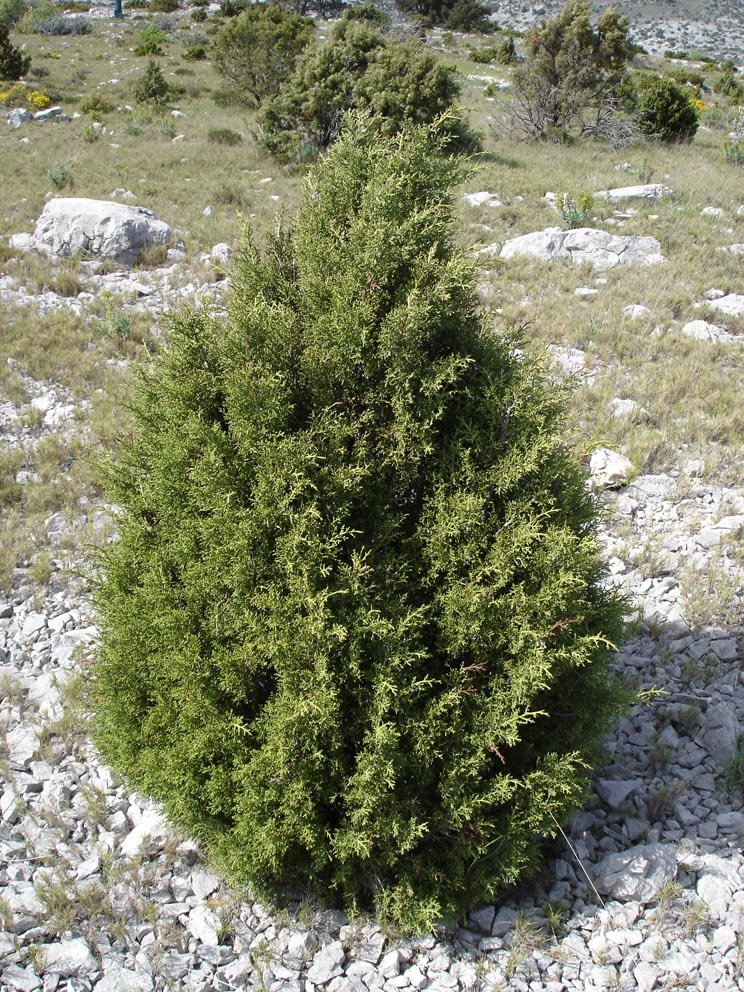
Junipers are are gemnosperms in the cypress family (Cupressaceae) with up to 73 species and can be found from the Arctic and as far south as tropical Africa. Most are native to the northern hemisphere of North America, Asia and Europe. The genus has been divided into distinct sections, containing three sections: Juniperus, Caryocedrus and Sabina, with section Sabina, divided into 5 clades.
Junipers can range in size from large trees up to 130 feet tall or short creeping groundcover species. Their growing needs vary per species. Copeous amounts of wind-borne pollen are produced by some species. Propagation can be by seed, stem cuttings and layering.
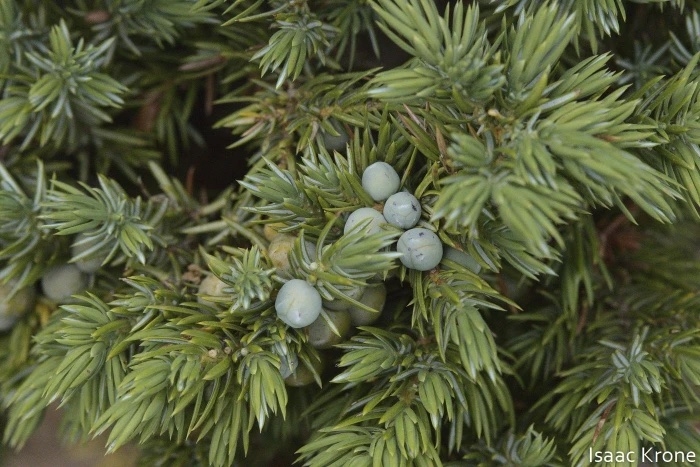
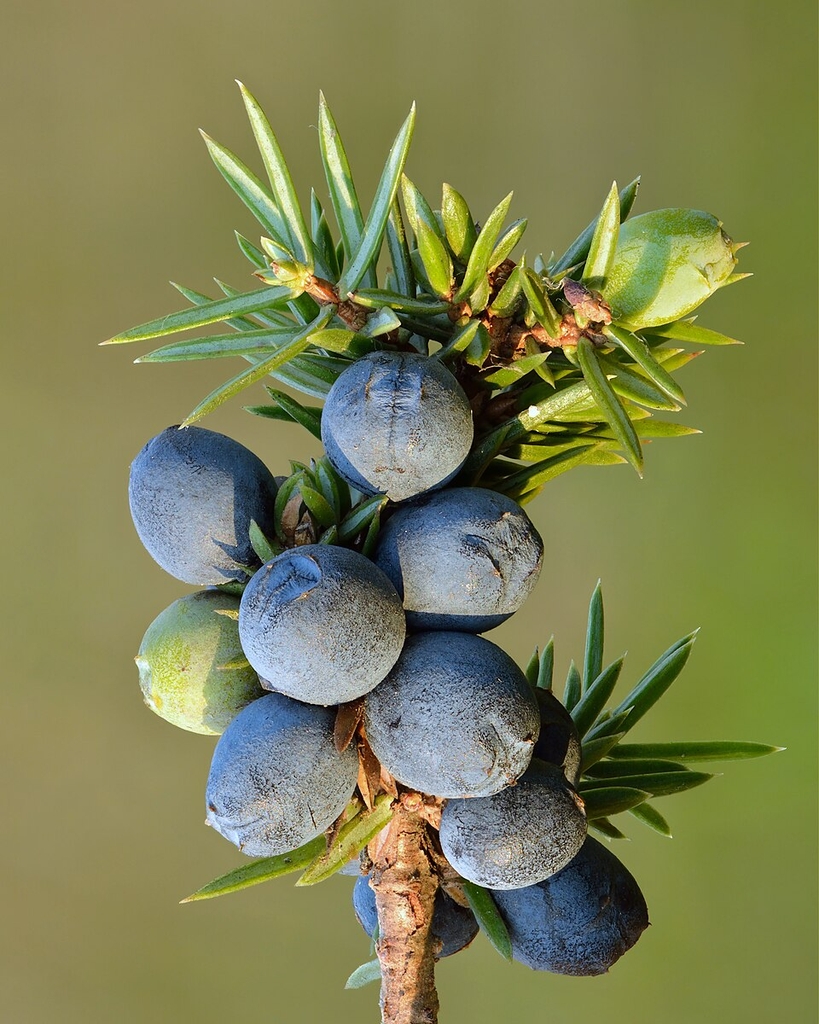
The leaves of junipers can be needle-like or scale-like, depending on the species. Some start with needles and mature to scale-like form. The female cones are berry-like structures that can be blue to red. Birds and small mammals eat the cones and disperse the seeds.
Junipers are widely used in the landscape as trees, shrubs or groundcovers.
Insects, Diseases, and Other Plant Problems: Apple-rust disease can be a problem with some junipers. They can be susceptible to twig blight and scale. Bagworms can be a problem. Mites may occur.
- See this plant in the following landscape :
- Cultivars / Varieties:
-
-
J. chinensis
Chineses juniper J. communis var. communis
Common juniper J. communis var. depressa
Canadian juniper J. conferta
Shore juniper J. horizontalis
Creeping juniper J. monosperma
One-seed juniper J. procumbens
Japanesse juniper J. scopulorum
Rocky mountain juniper J. virginiana
Eastern red cedar J. x pfitzeriana
Pfitzer juniper - J. chinensis, J. communis var. communis, J. communis var. depressa, J. conferta, J. horizontalis, J. monosperma, J. procumbens, J. scopulorum, J. virginiana, J. x pfitzeriana
- Tags:






- Cultivars / Varieties:
-
-
J. chinensis
Chineses juniper J. communis var. communis
Common juniper J. communis var. depressa
Canadian juniper J. conferta
Shore juniper J. horizontalis
Creeping juniper J. monosperma
One-seed juniper J. procumbens
Japanesse juniper J. scopulorum
Rocky mountain juniper J. virginiana
Eastern red cedar J. x pfitzeriana
Pfitzer juniper - J. chinensis, J. communis var. communis, J. communis var. depressa, J. conferta, J. horizontalis, J. monosperma, J. procumbens, J. scopulorum, J. virginiana, J. x pfitzeriana
- Tags:
-
-
Attributes:
- Genus:
- Juniperus
- Family:
- Cupressaceae
- Uses (Ethnobotany):
- The wood is used for construction and fuel. Has been used medicinally by native Americans.
- Life Cycle:
- Woody
- Recommended Propagation Strategy:
- Layering
- Seed
- Stem Cutting
- Country Or Region Of Origin:
- North America, Asia, Europe
- Wildlife Value:
- Provides cover to wildlife. Birds and small mamals eat the cones.
- Edibility:
- The female cones are edible on some species. An essential oil is obtained by distillation from wood and leaves
-
-
Whole Plant Traits:
- Plant Type:
- Ground Cover
- Shrub
- Tree
- Woody Plant Leaf Characteristics:
- Needled Evergreen
- Habit/Form:
- Cascading
- Dense
- Erect
- Growth Rate:
- Slow
- Maintenance:
- Low
- Texture:
- Coarse
-
-
Cultural Conditions:
- Light:
- Full sun (6 or more hours of direct sunlight a day)
- Partial Shade (Direct sunlight only part of the day, 2-6 hours)
- Soil pH:
- Acid (<6.0)
- Neutral (6.0-8.0)
- Soil Drainage:
- Good Drainage
- NC Region:
- Coastal
- Mountains
- Piedmont
- USDA Plant Hardiness Zone:
- 3a, 3b, 4a, 4b, 5a, 5b, 6a, 6b, 7a, 7b, 8a, 8b, 9a, 9b
-
-
Fruit:
- Fruit Color:
- Blue
- Brown/Copper
- Red/Burgundy
- Fruit Value To Gardener:
- Edible
- Fruit Description:
- Male and female cones can occur on seperate or the same tree. Female comes are the soft round berry-like structures and male cones have 6 to 20 scales.
-
-
Flowers:
- Flower Description:
- No flowers
-
-
Leaves:
- Woody Plant Leaf Characteristics:
- Needled Evergreen
- Leaf Color:
- Green
- Leaf Feel:
- Prickly
- Soft
- Leaf Type:
- Needles
- Leaf Arrangement:
- Alternate
- Whorled
- Leaf Shape:
- Linear
- Hairs Present:
- No
- Leaf Description:
- Mature leaves are usually overlapping and scale-like with a soft feel. Juvenile leaves are needle-like and sharp. They can be alternating or in whorls on the stem.
-
-
Bark:
- Bark Description:
- The bark is variable per species. The wood is fragrant, usually reddish or reddish-brown
-
-
Stem:
- Stem Is Aromatic:
- Yes
-
-
Landscape:
- Landscape Location:
- Lawn
- Slope/Bank
- Landscape Theme:
- Cottage Garden
- Drought Tolerant Garden
- Winter Garden
- Design Feature:
- Barrier
- Hedge
- Attracts:
- Butterflies
- Small Mammals
- Songbirds