


Iris japonica
Common Name(s):
- Phonetic Spelling
- EYE-ris ja-PON-i-ka
- Description
-
Fringed iris is an herbaceous perennial rhizomatous plant in the Iridaceae (iris) family. It is an evergreen crested iris from Asia and can be found in forest margins and wet grasslands of Japan and China. The genus is named for the Greek goddess of the rainbow. The specific epithet means of Japan.
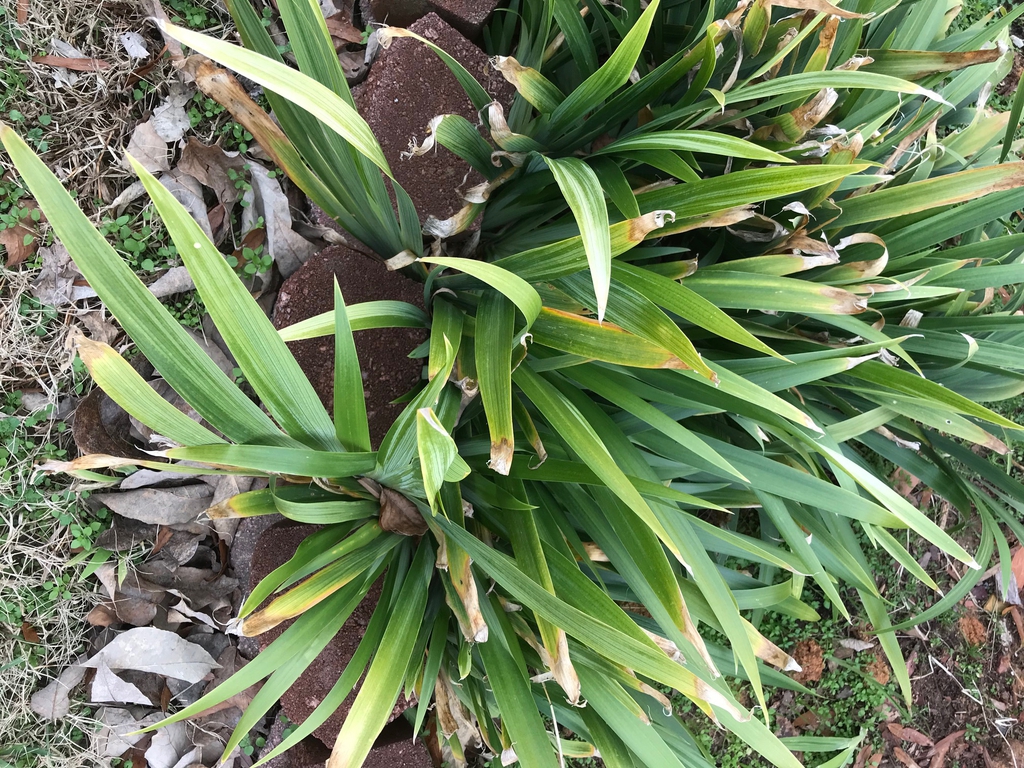
It is tolerant of a wide range of soil and pH types and needs good drainage in part shade. It is drought-tolerant and deer-resistant. It will readily spread by rhizomes to form clumps
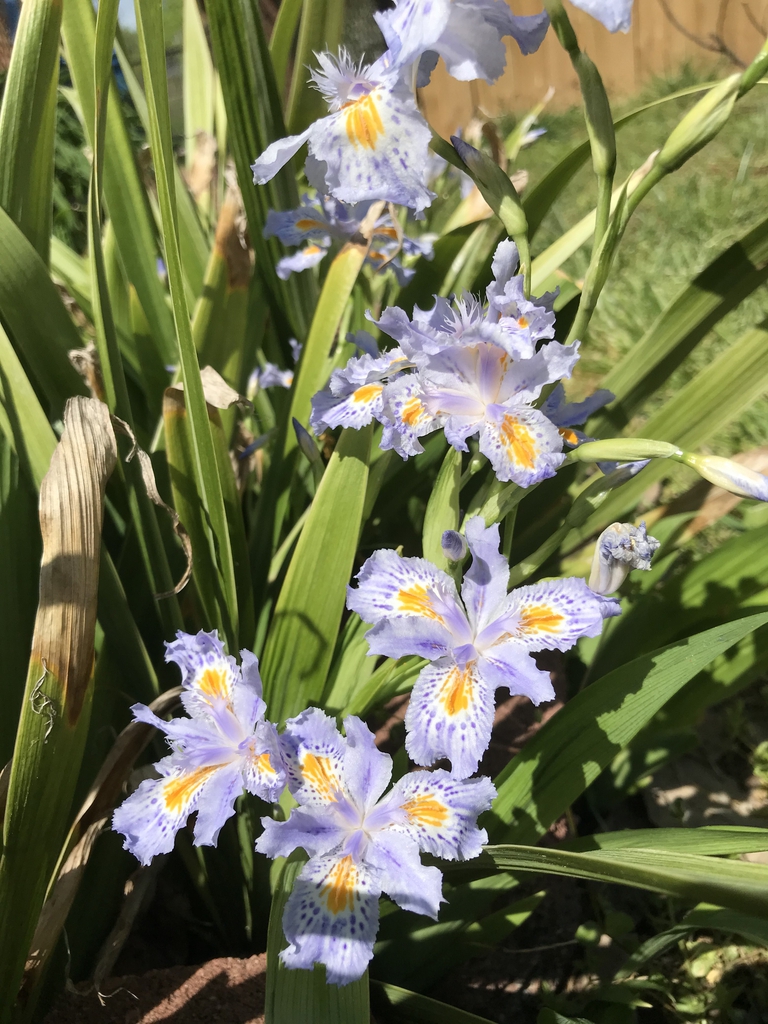
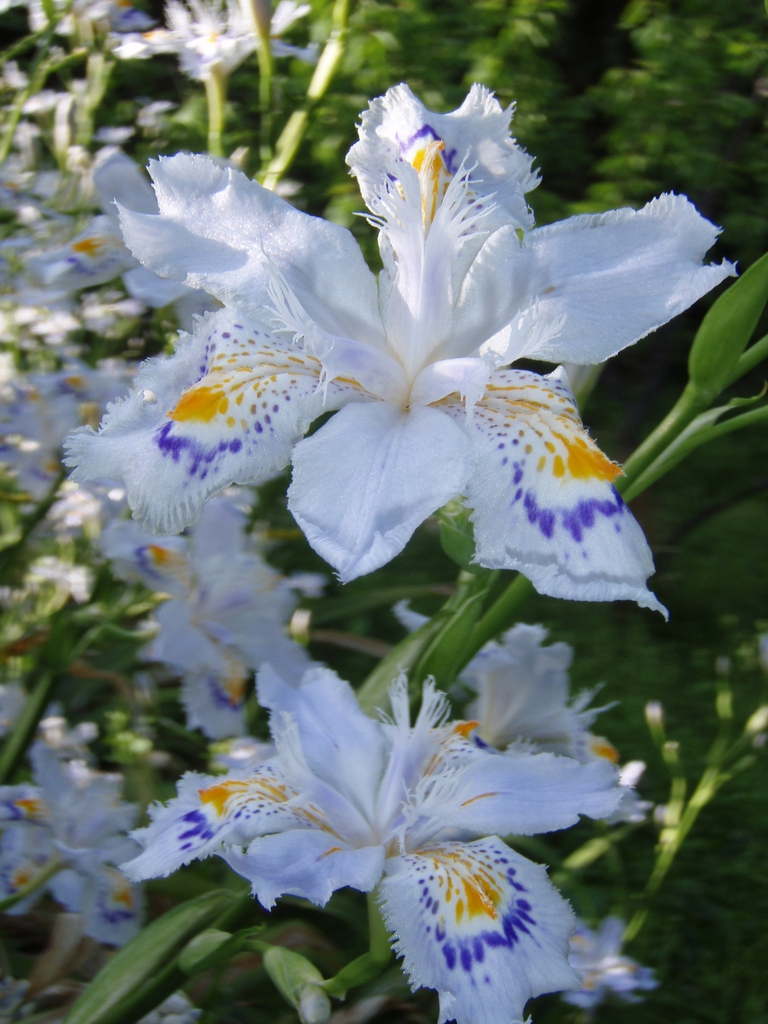
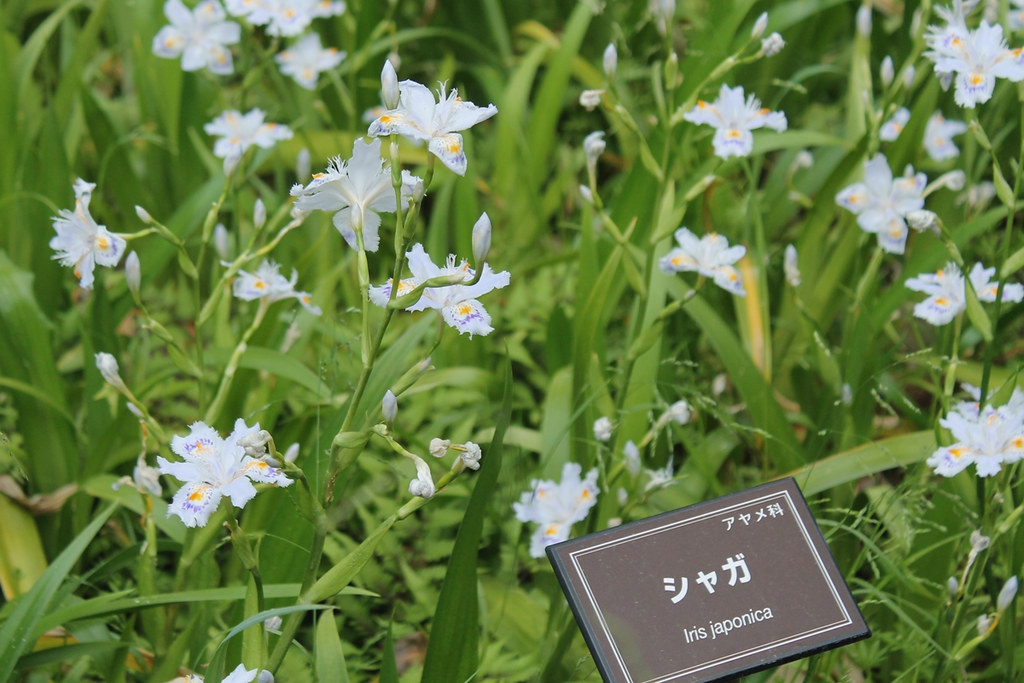
The showy blooms appear in April- May and range from white to pale blue to purple petals with orange crests. The foliage is sword-shaped and evergreen. It has received the Award of Garden Merit from the Royal Horticultural Society.
Use fringed iris as a ground cover for semi-shady areas, such as under trees or in rock gardens. Give it room to spread.
Insects, Diseases, and Other Plant Problems: Too wet soils in winter can cause root rot.
- See this plant in the following landscape :
- Cultivars / Varieties:
-
- Tags:


- Cultivars / Varieties:
-
- Tags:
-
-
Attributes:
- Genus:
- Iris
- Species:
- japonica
- Family:
- Iridaceae
- Life Cycle:
- Bulb
- Perennial
- Recommended Propagation Strategy:
- Division
- Seed
- Country Or Region Of Origin:
- China and Japan
- Wildlife Value:
- Bees and butterflies may visit the flowers
- Dimensions:
- Height: 0 ft. 10 in. - 1 ft. 0 in.
- Width: 1 ft. 0 in. - 1 ft. 6 in.
-
-
Whole Plant Traits:
- Plant Type:
- Ground Cover
- Herbaceous Perennial
- Habit/Form:
- Arching
- Clumping
- Spreading
- Growth Rate:
- Medium
- Maintenance:
- Medium
- Texture:
- Medium
-
-
Cultural Conditions:
- Light:
- Dappled Sunlight (Shade through upper canopy all day)
- Partial Shade (Direct sunlight only part of the day, 2-6 hours)
- Soil Texture:
- Clay
- Loam (Silt)
- Sand
- Soil pH:
- Acid (<6.0)
- Alkaline (>8.0)
- Neutral (6.0-8.0)
- Soil Drainage:
- Good Drainage
- Moist
- Occasionally Dry
- Available Space To Plant:
- 12 inches-3 feet
- NC Region:
- Coastal
- Mountains
- Piedmont
- USDA Plant Hardiness Zone:
- 7a, 8a, 8b, 9a, 9b
-
-
Fruit:
- Fruit Type:
- Capsule
- Fruit Description:
- Dry capsule releases seeds
-
-
Flowers:
- Flower Color:
- Blue
- Purple/Lavender
- White
- Flower Value To Gardener:
- Showy
- Flower Bloom Time:
- Spring
- Flower Shape:
- Saucer
- Flower Petals:
- 2-3 rays/petals
- Colored Sepals
- Flower Size:
- 1-3 inches
- Flower Description:
- Pale blue to purple to white 2-inch flowers with yellow or orange crests blooms April to May. The showy blooms are similar to orchid blooms. It has 2 pairs of petals, 3 large sepals (outer petals), known as the 'falls' and 3 inner, smaller petals
-
-
Leaves:
- Leaf Color:
- Green
- Leaf Type:
- Simple
- Leaf Shape:
- Lanceolate
- Leaf Margin:
- Entire
- Hairs Present:
- No
- Leaf Length:
- > 6 inches
- Leaf Width:
- 1-3 inches
- Leaf Description:
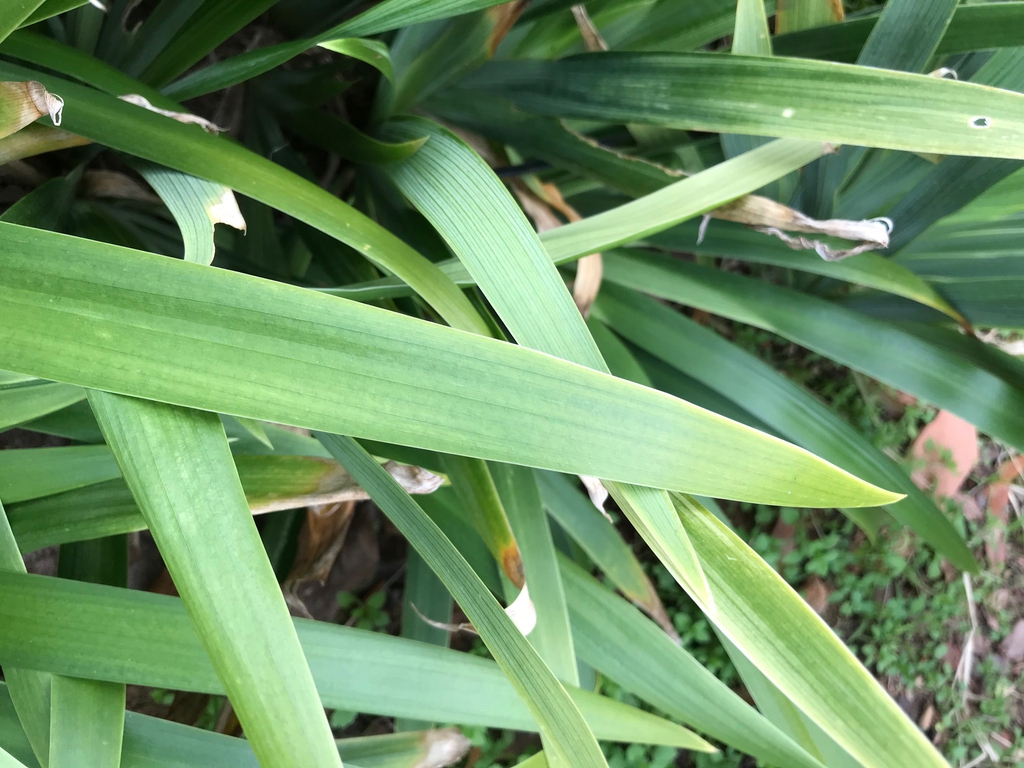
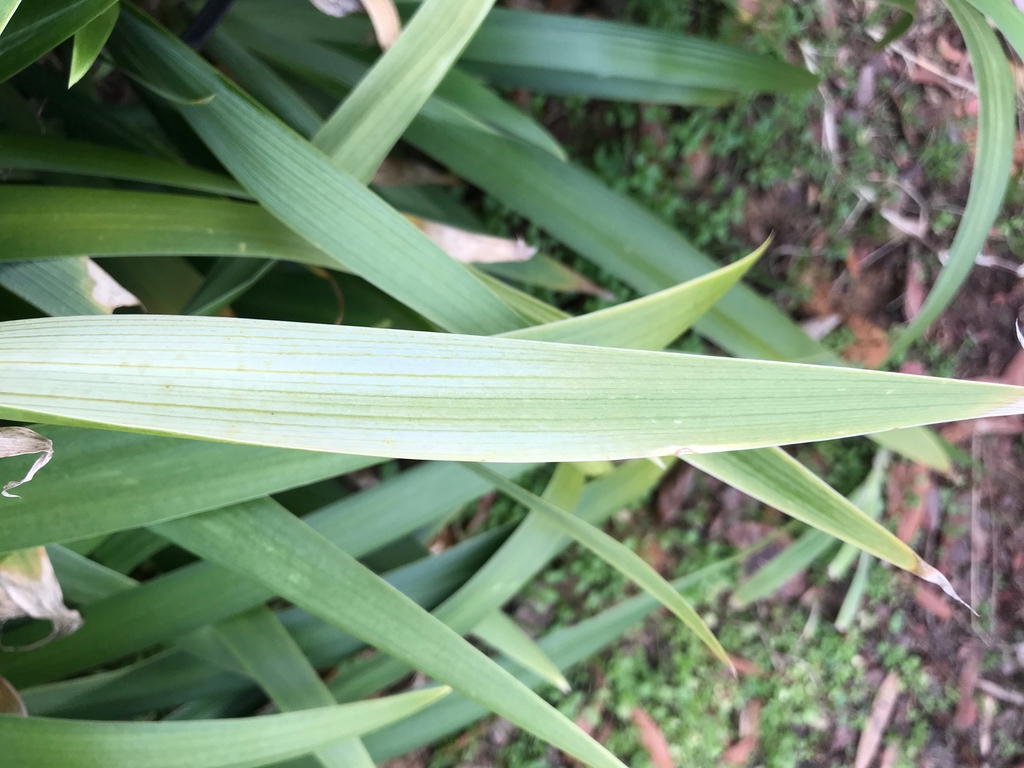
- Sword-shaped green basal leaves are 12-20 inches long and grow in a fan shape.. Margins are entire and the leaves are arching. The upper side is somewhat glossy and the underside is light dull green
-
-
Stem:
- Stem Color:
- Green
- Stem Is Aromatic:
- No
- Stem Surface:
- Smooth (glabrous)
- Stem Description:
- Thin green stems
-
-
Landscape:
- Landscape Location:
- Naturalized Area
- Woodland
- Landscape Theme:
- Rock Garden
- Shade Garden
- Design Feature:
- Mass Planting
- Attracts:
- Bees
- Butterflies
- Resistance To Challenges:
- Deer
- Drought
- Rabbits