



Ficus carica 'Celeste'
Common Name(s):
- Phonetic Spelling
- FY-kus KAIR-ih-kuh
- This plant has low severity poison characteristics.
- See below
- Description
-
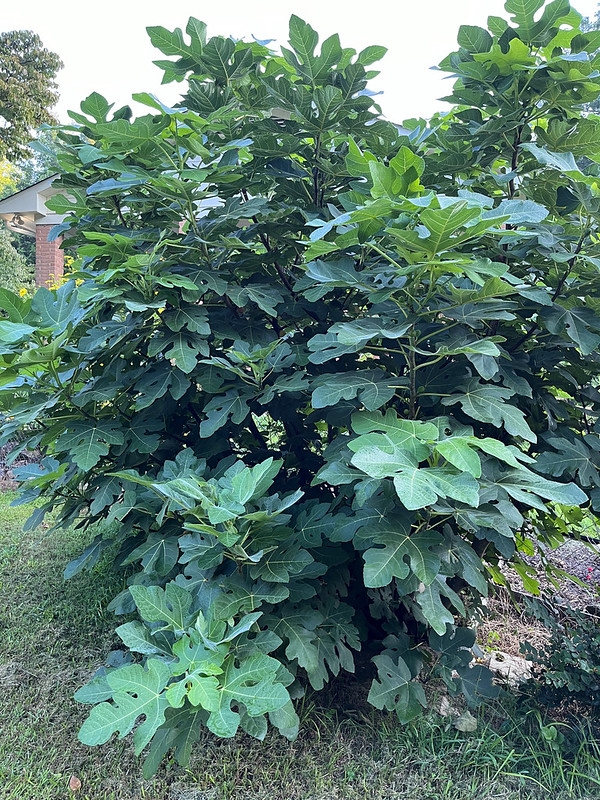
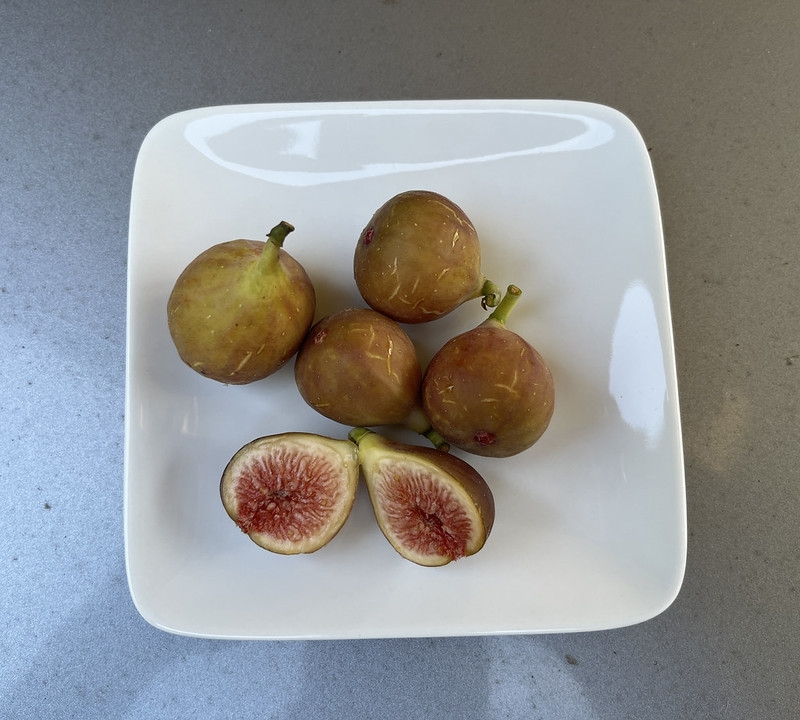
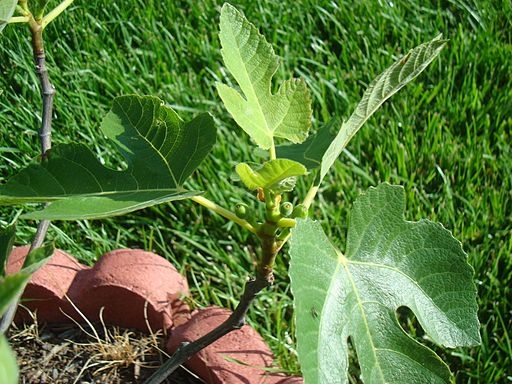
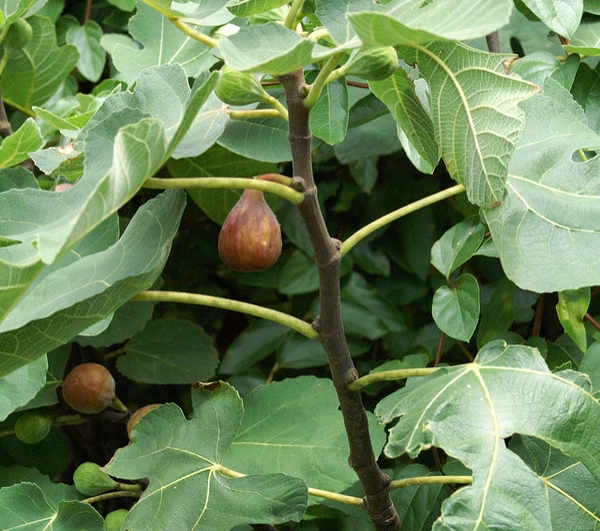
Ficus carica 'Celeste' is a cold-tolerant, multi-branched deciduous shrub and cultivar. It grows 6 to 10 feet tall and equally as wide, and produces abundant, edible, small to medium-sized figs that are both sweet and flavorful. It is sometimes called the sugar fig because of the fig's intensely sweet taste. The fruits are initially green and then ripen to a purplish-bronze with a pink flesh in late summer to early fall. These figs have a "closed eye" that helps resist the insects from entering the fruit and causing it to spoil. The leaves are green, leathery, lobed, and up to 12 inches long. 'Celeste' is one of the most frequently grown figs.
Prefers full sun to partial shade and rich organic, moist, well-drained soils with an acidic or neutral pH. It is winter-hardy in zones 6b to 10; however, it requires winter protection, as it often sustains cold injury in the southeastern United States. Best planted in a sheltered location, and recommend adding mulch at the roots for added cold-weather protection. It is heat-tolerant and self-pollinating. These plants are easy to grow and fast-growing. To maintain, prune dead, dying, or crowded branches in late winter. Propagated by hardwood cuttings.
Wear protective clothing and gloves when handling this shrub. A sunburn-like reaction can occur when the skin is exposed to the sap of Ficus carica and then exposed to sunlight, a condition known as phytophotodermatitis.
Ficus carica 'Celeste' may be used as a fruit or as an ornamental shrub in the landscape. The limbs are flexible and may be espaliered on a brick wall or fence. It may also be grown in a container and brought indoors during the winter months.
Insects, Diseases, and Other Plant Problems: This cultivar is an insect pest and disease-resistant variety. Monitor for scale, aphids, mealybugs, root knot nematodes, and spider mites. May be susceptible to leaf spot, rust, and blight. Fruit litter can be messy. Toxic to cats, dogs, and horses. Wear protective clothing and gloves when handling this shrub.
VIDEO Created by Elisabeth Meyer for "Edibles, Bulbs, and Houseplants", a plant identification course developed in partnership with Longwood Gardens.
- Profile Video:
- See this plant in the following landscape :
- Cultivars / Varieties:
-
- Tags:


- Cultivars / Varieties:
-
- Tags:
-
-
Attributes:
- Genus:
- Ficus
- Species:
- carica
- Family:
- Moraceae
- Life Cycle:
- Woody
- Recommended Propagation Strategy:
- Layering
- Stem Cutting
- Wildlife Value:
- Insects, wasps and birds eat the fruit.
- Play Value:
- Easy to Grow
- Edible fruit
- Wildlife Food Source
- Edibility:
- The small to medium-sized fruit is sweet with a smooth, rich flavor. The outside skin is purplish-bronze to light brown, and the flesh is rose-colored. When it ripens in July, it has a "closed eye" that helps resist the insects from entering the fruit and causing spoilage. It is good for eating fresh or making preserves.
- Dimensions:
- Height: 6 ft. 0 in. - 10 ft. 0 in.
- Width: 6 ft. 0 in. - 10 ft. 0 in.
-
-
Whole Plant Traits:
- Plant Type:
- Edible
- Shrub
- Woody Plant Leaf Characteristics:
- Deciduous
- Habit/Form:
- Erect
- Multi-stemmed
- Rounded
- Spreading
- Growth Rate:
- Rapid
- Maintenance:
- Medium
- Texture:
- Medium
-
-
Cultural Conditions:
- Light:
- Full sun (6 or more hours of direct sunlight a day)
- Partial Shade (Direct sunlight only part of the day, 2-6 hours)
- Soil Texture:
- High Organic Matter
- Loam (Silt)
- Sand
- Soil pH:
- Acid (<6.0)
- Neutral (6.0-8.0)
- Soil Drainage:
- Good Drainage
- Moist
- Available Space To Plant:
- 6-feet-12 feet
- NC Region:
- Coastal
- Mountains
- Piedmont
- USDA Plant Hardiness Zone:
- 6b, 7a, 7b, 8a, 8b, 9a, 9b, 10a, 10b
-
-
Fruit:
- Fruit Color:
- Brown/Copper
- Cream/Tan
- Purple/Lavender
- Fruit Value To Gardener:
- Edible
- Display/Harvest Time:
- Fall
- Summer
- Fruit Length:
- 1-3 inches
- Fruit Width:
- 1-3 inches
- Fruit Description:
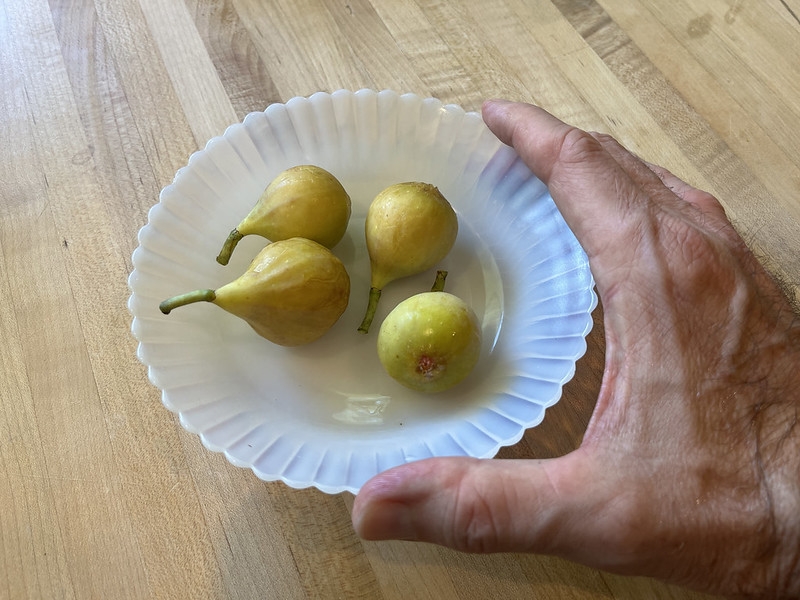
- The fruit is purplish-bronze to light brown, teardrop-shaped with soft, pink flesh, speckled with tiny seeds. It is very sweet and delicious, though it has a short shelf life. Starts to set fruit in July. Fruits develop without the need for cross-pollination.
-
-
Flowers:
- Flower Color:
- Green
- Flower Inflorescence:
- Insignificant
- Flower Bloom Time:
- Spring
- Flower Size:
- < 1 inch
- Flower Description:
- The flowers are unisexual and minute. Borne in leaf axils.
-
-
Leaves:
- Woody Plant Leaf Characteristics:
- Deciduous
- Leaf Color:
- Green
- Leaf Feel:
- Rough
- Smooth
- Soft
- Leaf Type:
- Simple
- Leaf Arrangement:
- Alternate
- Leaf Shape:
- Palmatifid
- Leaf Margin:
- Entire
- Lobed
- Hairs Present:
- No
- Leaf Length:
- > 6 inches
- Leaf Width:
- 3-6 inches
- Leaf Description:
- The bright dark green leaves are large, thick and rough. The leaves are 5-10 inches long and 4-7 inches across and can be up to 1 foot in length. It is usually deeply, palmately lobed with three to five sinuses lobed. The upper surface is green and rough with hairs and the underside is paler and smooth.
-
-
Bark:
- Bark Color:
- Light Gray
- Surface/Attachment:
- Smooth
- Bark Description:
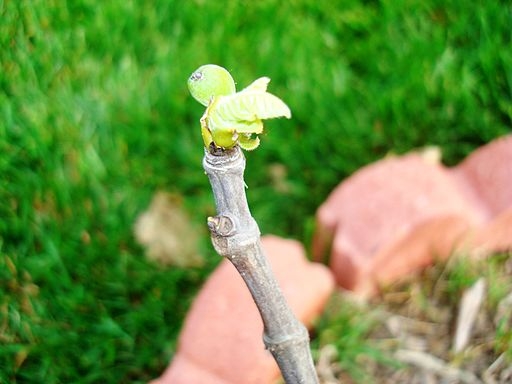
- The bark is silvery-gray, smooth, and becomes more bumpy with age.
-
-
Stem:
- Stem Color:
- Brown/Copper
- Stem Is Aromatic:
- No
- Stem Bud Terminal:
- Only 1 terminal bud, larger than side buds
- Stem Form:
- Straight
-
-
Landscape:
- Landscape Location:
- Container
- Landscape Theme:
- Edible Garden
- Design Feature:
- Accent
- Specimen
- Attracts:
- Songbirds
- Resistance To Challenges:
- Deer
- Salt
- Problems:
- Contact Dermatitis
- Problem for Cats
- Problem for Dogs
- Problem for Horses
-
-
Poisonous to Humans:
- Poison Severity:
- Low
- Poison Symptoms:
- In humans, phytophotodermatitis from the white, milky sap can occur, causing a sunburn-like reaction. In pets, the fruit, leaves, and sap can cause painful gastric and skin irritation.
- Poison Toxic Principle:
- Furanocoumarins
- Causes Contact Dermatitis:
- Yes
- Poison Part:
- Sap/Juice



