


Desert Candle Eremurus
Other Common Name(s):
Previously known as:
- Ammolirion
- Henningia
- Selonia
- Phonetic Spelling
- er-eh-MEUR-us
- Description
-
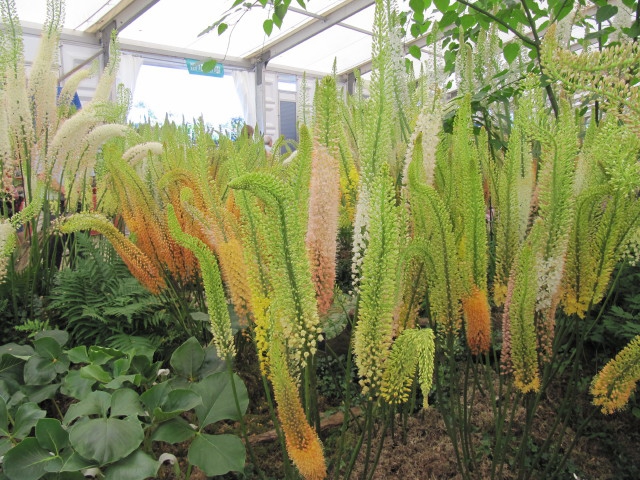
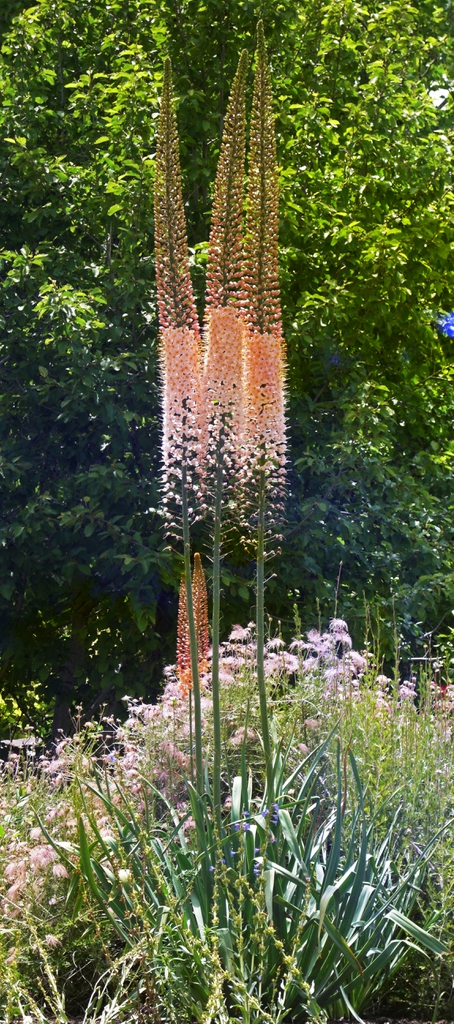
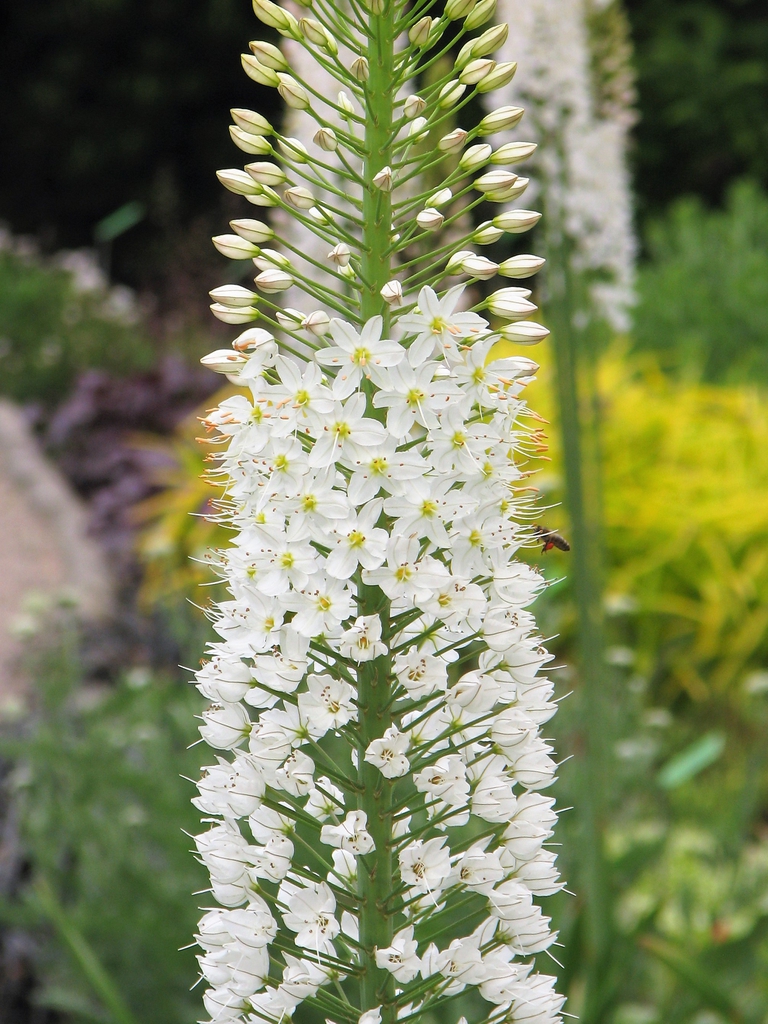
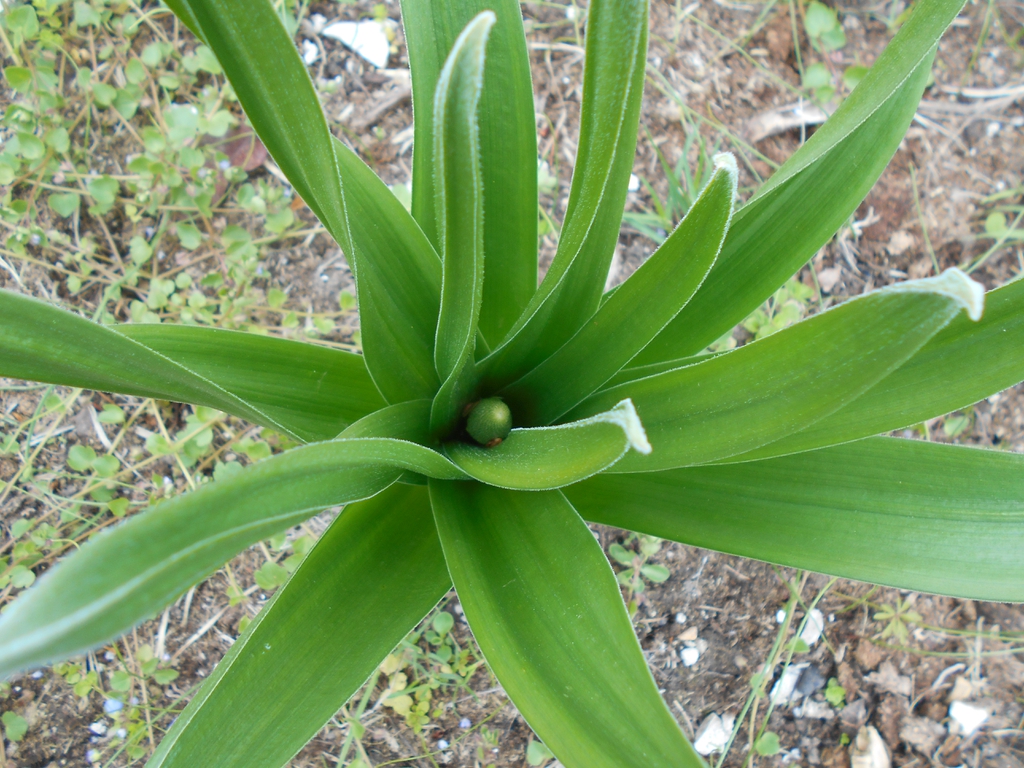
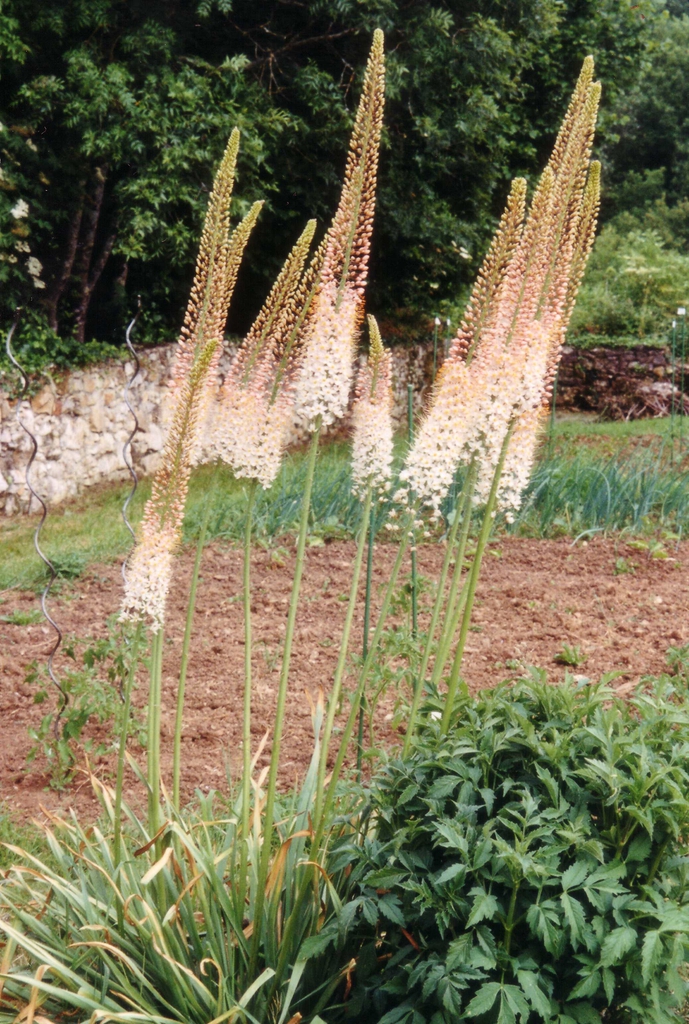
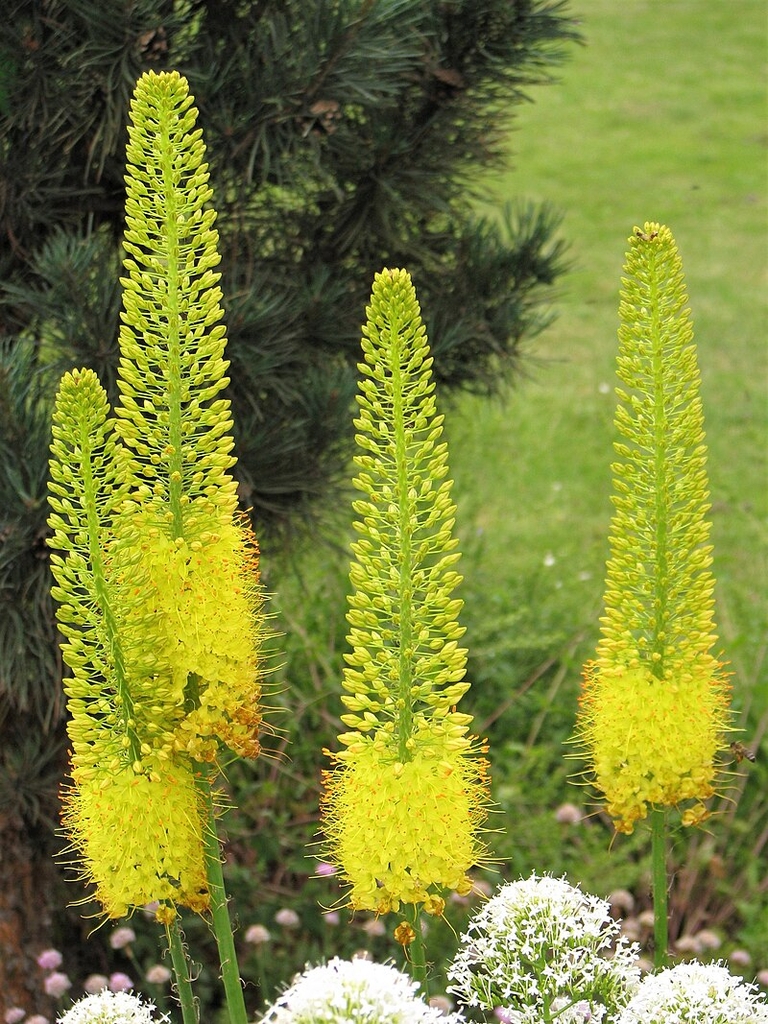
Eremurus is a genus of tuberous, ornamental, herbaceous perennial plants native to portions of Russia, Crimea, Mongolia, and Central China, and includes 62 accepted species. They are found in dry grasslands and dry, rocky slopes of central and western Asia. They are commonly known as the foxtail lily or desert candle and are used in landscaping and commercially for cut flowers. Depending on the species or cultivar, they may grow 3 to 10 feet tall and 20 inches to 5 feet wide, and are clump-forming with a fragile, fleshy root. They have a rosette of strap-like basal leaves and a leafless stem bearing a dense raceme of star-shaped flowers. The foliage emerges in early spring, and blooming occurs from spring to late summer. The genus is a member of the day lily family (Asphodelaceae). The genus name, Eremurus, is derived from two Greek words: eremia, meaning desert, and oura, meaning tail.
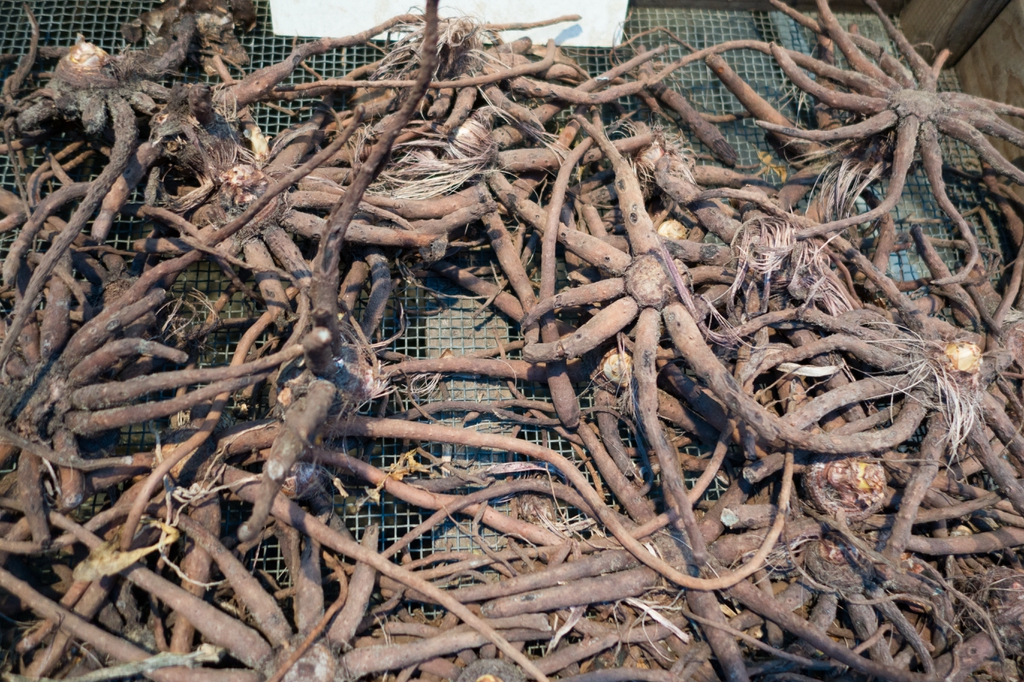
Thrives in full sun and organically rich, well-drained soil. They are drought-tolerant once they are established. They will require protection from wind and frost, and tall plants may need to be staked. Once blooming is complete, allow the foliage to die back. Mulching will help protect the tubers during the winter months. The plant needs drier soil during its dormant period. Propagation by seed can be erratic, and it will take 3 to 5 years for the plant to flower. Propagation by division is possible, but care must be taken to avoid damaging the fragile root system. When planting the tubers, place them 6 to 8 inches deep, laying them flat in the prepared site with the central crown facing upwards.
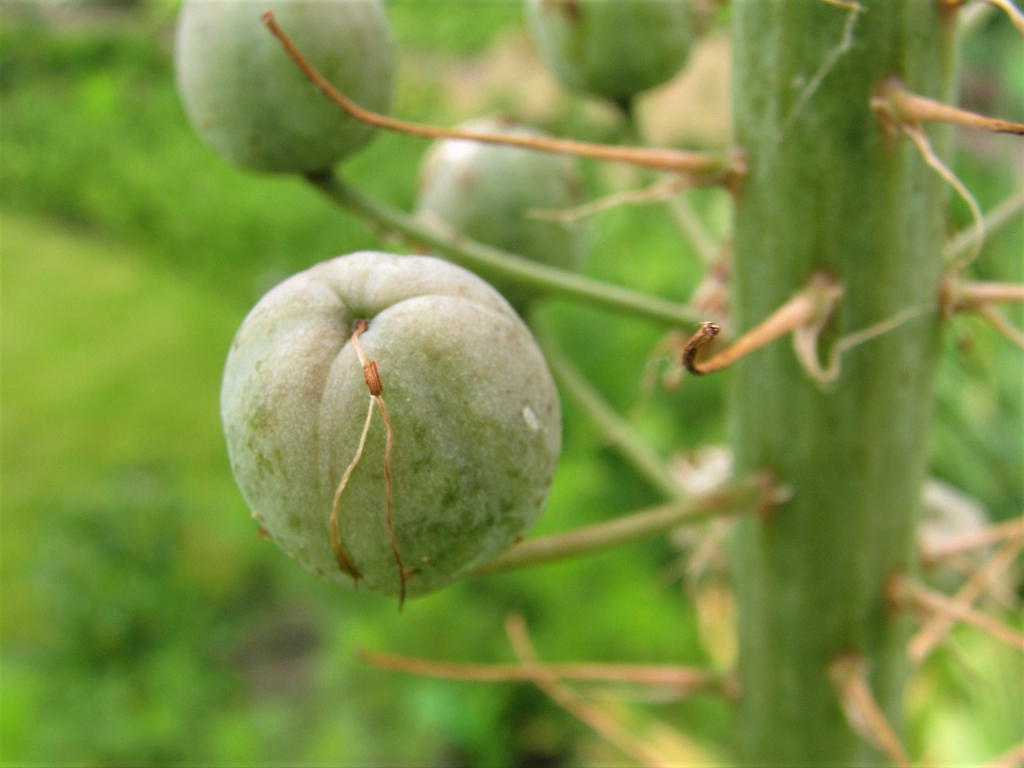
The fleshy roots radiate from a central crown and are star-shaped. resembling the spokes on a wheel. These long, brittle roots can be easily damaged when working in the garden, and they do not like to be disturbed. The plant's fruits consist of rounded seed pods containing winged seeds.
Under the right growing conditions, consider planting one of the species or cultivars as a striking, bright, and colorful back border or vertical accent
Insects, Diseases, and Other Plant Problems: No significant insect or disease problems. Monitor new growth for slugs and snails. Poor soil drainage can result in root rot. New growth needs protection from frost. They also need protection from wind, and staking is sometimes required to protect the delicate roots. Poor growing conditions will result in poor plant performance and a lack of flowers.
- See this plant in the following landscape :
- Cultivars / Varieties:
-
- Eremurus himalaicus (Himalayan Foxtail Lily)
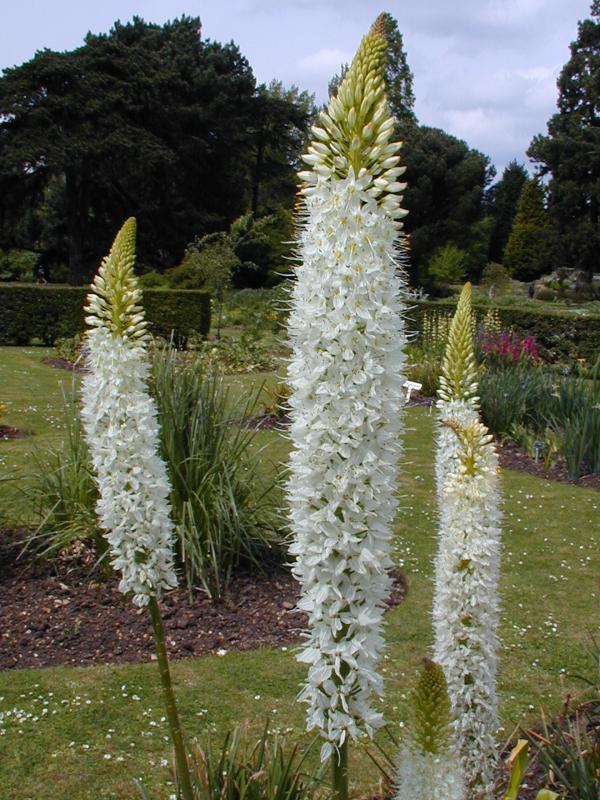
6 to 8-foot-tall stem, white blooms - Eremurus robustus (Giant Desert Candle)
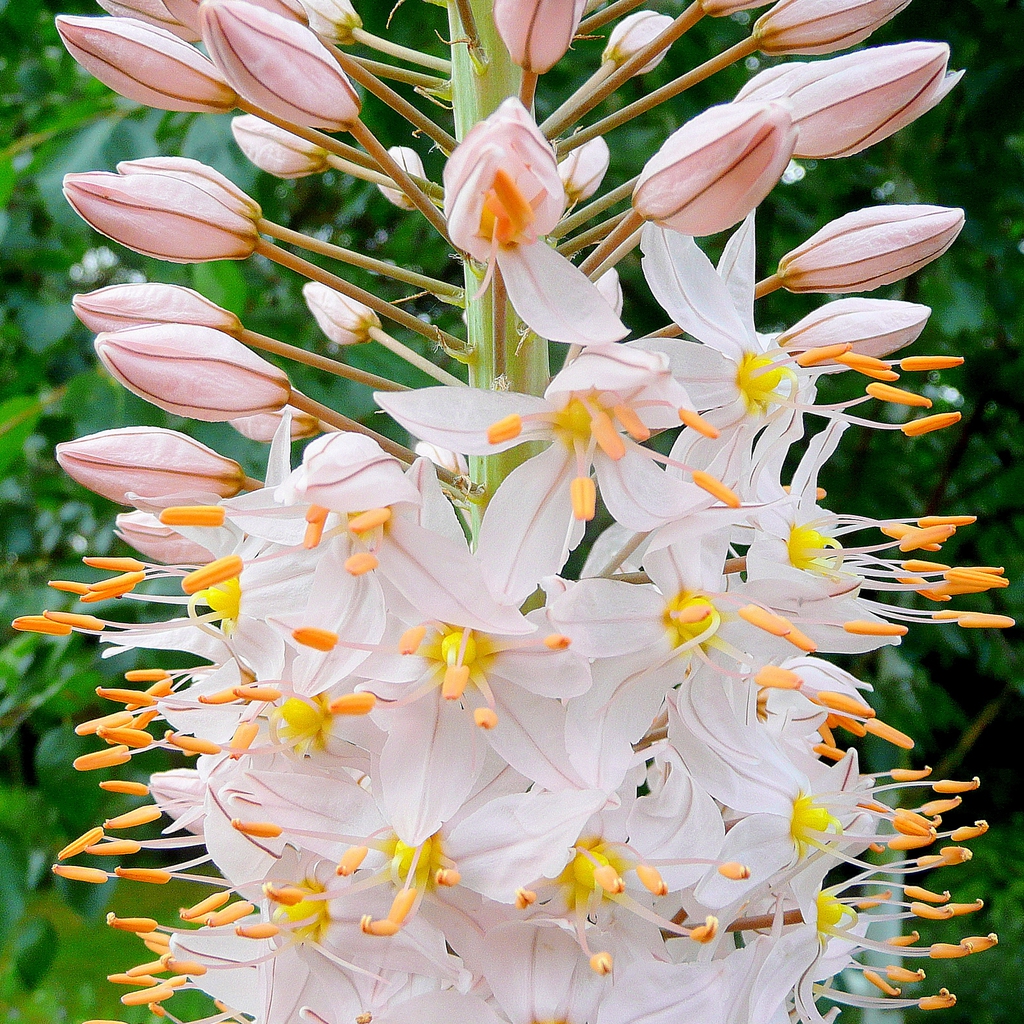
8 to 10-foot-tall stem, pale peach-pink blooms - Eremurus stenophyllus (Narrowed-leaved Foxtail Lily)
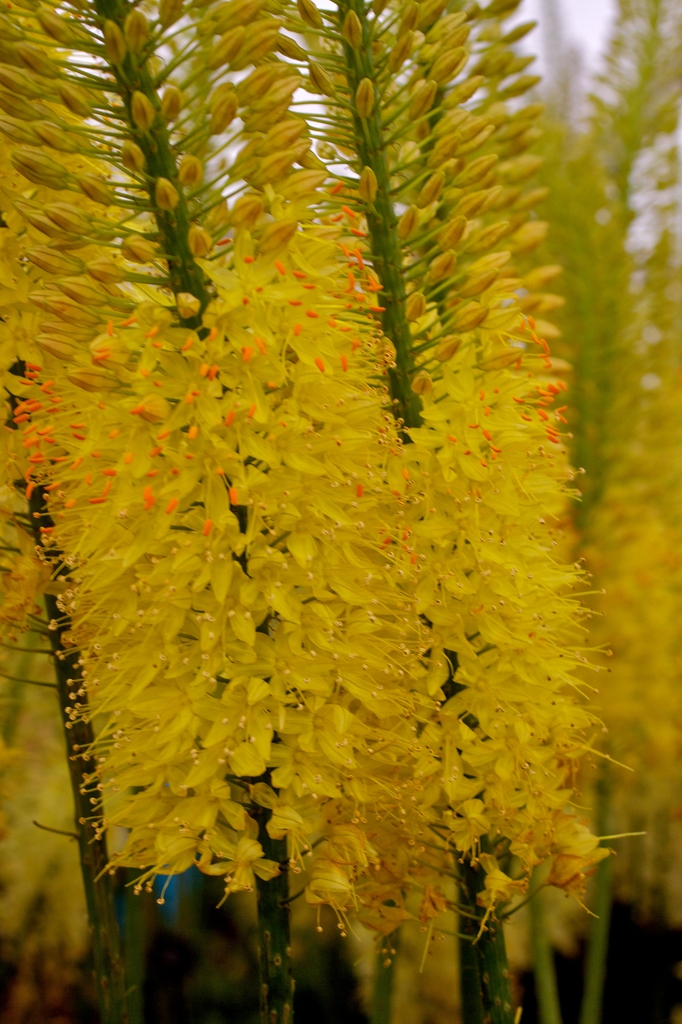
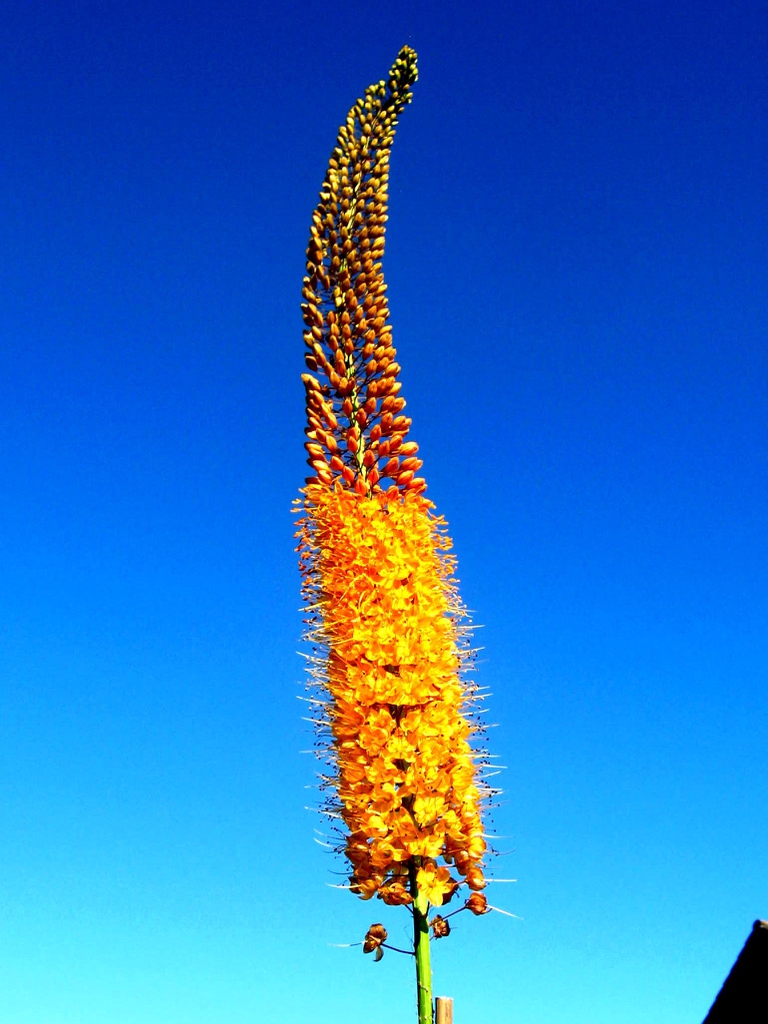
3 to 5-foot-tall stem, yellow flowers - Eremurus x isabellinus 'Cleopatra' (E. olgae x E. stenophyllus)
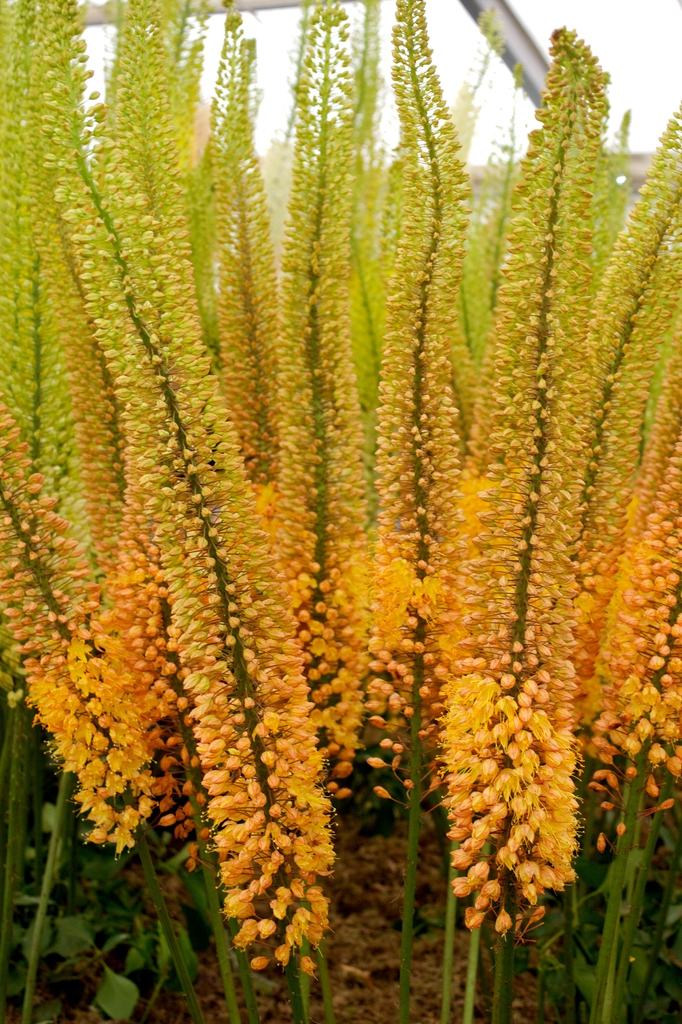
5-foot-tall stem, orange blooms - 'Foxtrot'
4 to 5-foot-tall, pink flowers - 'Oase'
4 to 5-foot-tall, peachy pink flowers with gold stamens. - 'Romance'
4 to 5-foot-tall stem, salmon/pink flowers with yellow/orange stamens. - 'White Beauty Favourite'
4-foot-tall stem, bright white flowers
- Eremurus himalaicus (Himalayan Foxtail Lily)
- Eremurus himalaicus (Himalayan Foxtail Lily), Eremurus robustus (Giant Desert Candle), Eremurus stenophyllus (Narrowed-leaved Foxtail Lily), Eremurus x isabellinus 'Cleopatra' (E. olgae x E. stenophyllus), 'Foxtrot', 'Oase', 'Romance', 'White Beauty Favourite'
- Tags:


- Cultivars / Varieties:
-
- Eremurus himalaicus (Himalayan Foxtail Lily)
6 to 8-foot-tall stem, white blooms - Eremurus robustus (Giant Desert Candle)
8 to 10-foot-tall stem, pale peach-pink blooms - Eremurus stenophyllus (Narrowed-leaved Foxtail Lily)
3 to 5-foot-tall stem, yellow flowers - Eremurus x isabellinus 'Cleopatra' (E. olgae x E. stenophyllus)
5-foot-tall stem, orange blooms - 'Foxtrot'
4 to 5-foot-tall, pink flowers - 'Oase'
4 to 5-foot-tall, peachy pink flowers with gold stamens. - 'Romance'
4 to 5-foot-tall stem, salmon/pink flowers with yellow/orange stamens. - 'White Beauty Favourite'
4-foot-tall stem, bright white flowers
- Eremurus himalaicus (Himalayan Foxtail Lily)
- Eremurus himalaicus (Himalayan Foxtail Lily), Eremurus robustus (Giant Desert Candle), Eremurus stenophyllus (Narrowed-leaved Foxtail Lily), Eremurus x isabellinus 'Cleopatra' (E. olgae x E. stenophyllus), 'Foxtrot', 'Oase', 'Romance', 'White Beauty Favourite'
- Tags:
-
-
Attributes:
- Genus:
- Eremurus
- Family:
- Asphodelaceae
- Uses (Ethnobotany):
- Used in traditional medicine as an anti-inflammatory, antibacterial, or antiprotozoal treatment.
- Life Cycle:
- Bulb
- Perennial
- Recommended Propagation Strategy:
- Division
- Seed
- Country Or Region Of Origin:
- Krym to Monogolia and Central China
- Distribution:
- Native: Afghanistan, Altay, China North-Central, China South-Central, East European Russia, Iran, Iraq, Kazakhstan, Kirgizstan, Krym, Lebanon-Syria, Mongolia, North Caucasus, Pakistan, Palestine, South European Russia, Tadzhikistan, Tibet, Transcaucasus, Turkmenistan, Turkey, Ukraine, Uzbekistan, West Himalaya, West Siberia, and Xinjiang
- Wildlife Value:
- Bees, hummingbirds, and butterflies are attracted to the flowers.
- Play Value:
- Attractive Flowers
- Attracts Pollinators
- Fragrance
- Bulb Storage:
- Store tuberous roots in slightly moist vermiculite or peat at 41-45 degrees F (5-7 degrees C). Prevent from drying out
- Dimensions:
- Height: 3 ft. 0 in. - 10 ft. 0 in.
- Width: 1 ft. 8 in. - 5 ft. 0 in.
-
-
Whole Plant Traits:
- Plant Type:
- Bulb
- Herbaceous Perennial
- Perennial
- Habit/Form:
- Clumping
- Columnar
- Erect
- Growth Rate:
- Medium
- Maintenance:
- Medium
- Texture:
- Medium
-
-
Cultural Conditions:
- Light:
- Full sun (6 or more hours of direct sunlight a day)
- Soil Texture:
- High Organic Matter
- Loam (Silt)
- Sand
- Soil pH:
- Acid (<6.0)
- Alkaline (>8.0)
- Neutral (6.0-8.0)
- Soil Drainage:
- Good Drainage
- Moist
- Available Space To Plant:
- 12 inches-3 feet
- NC Region:
- Coastal
- Mountains
- Piedmont
- USDA Plant Hardiness Zone:
- 5a, 5b, 6a, 6b, 7a, 7b, 8a, 8b, 9a, 9b
-
-
Fruit:
- Display/Harvest Time:
- Fall
- Summer
- Fruit Type:
- Capsule
- Fruit Description:
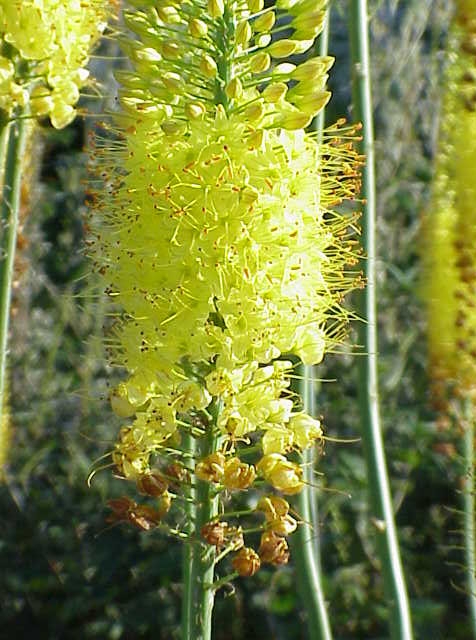
- The fruit is a small, rounded, 3-cell capsule and contains winged seeds. In late summer, the capsule dries out and releases the seeds.
-
-
Flowers:
- Flower Color:
- Brown/Copper
- Gold/Yellow
- Orange
- Pink
- White
- Flower Inflorescence:
- Raceme
- Spike
- Flower Value To Gardener:
- Fragrant
- Good Cut
- Showy
- Flower Bloom Time:
- Spring
- Summer
- Flower Shape:
- Star
- Flower Petals:
- Tepals
- Flower Size:
- < 1 inch
- Flower Description:
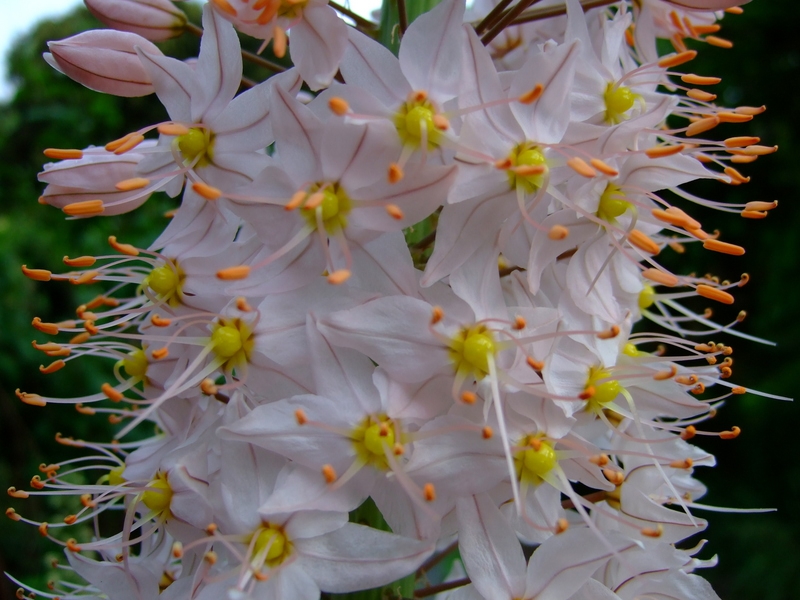
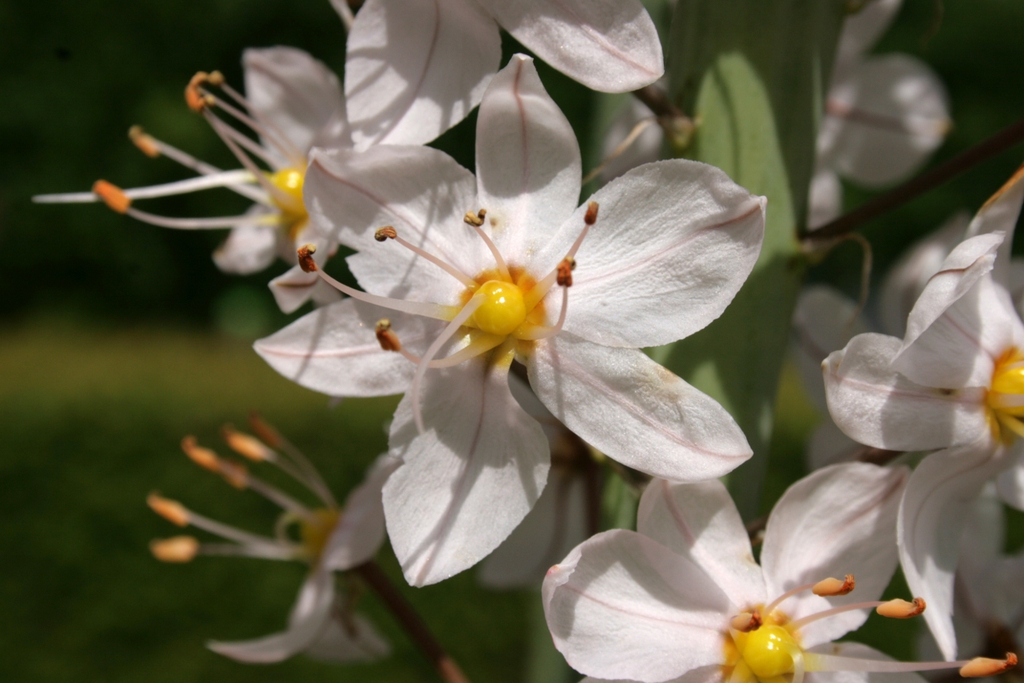
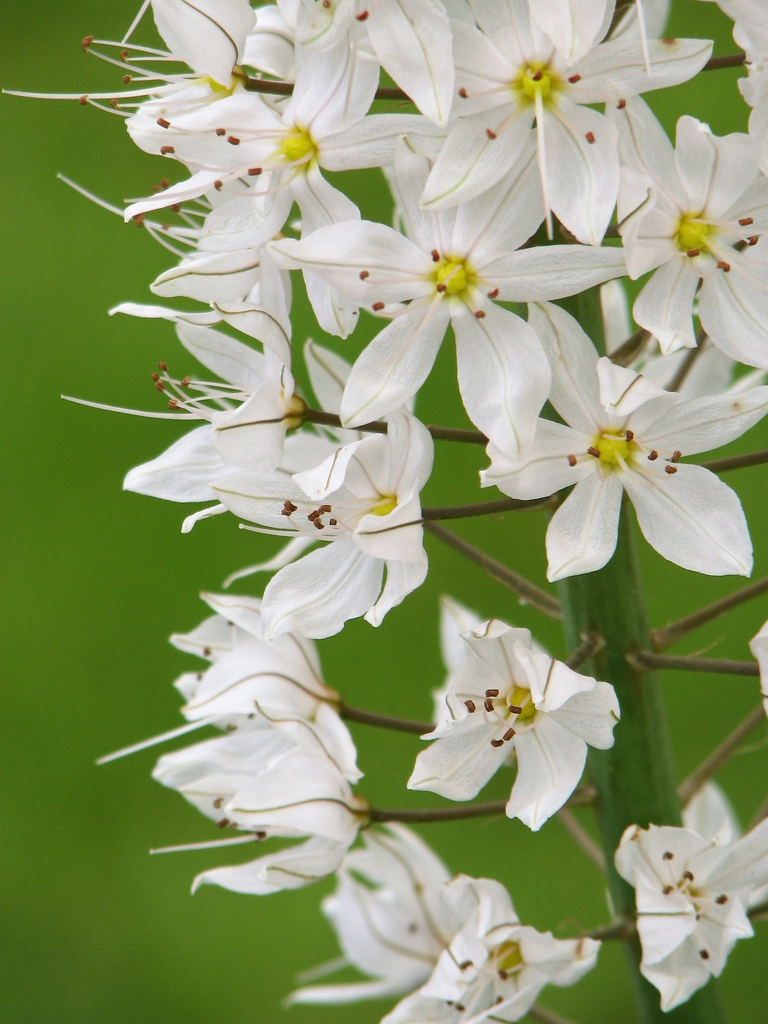
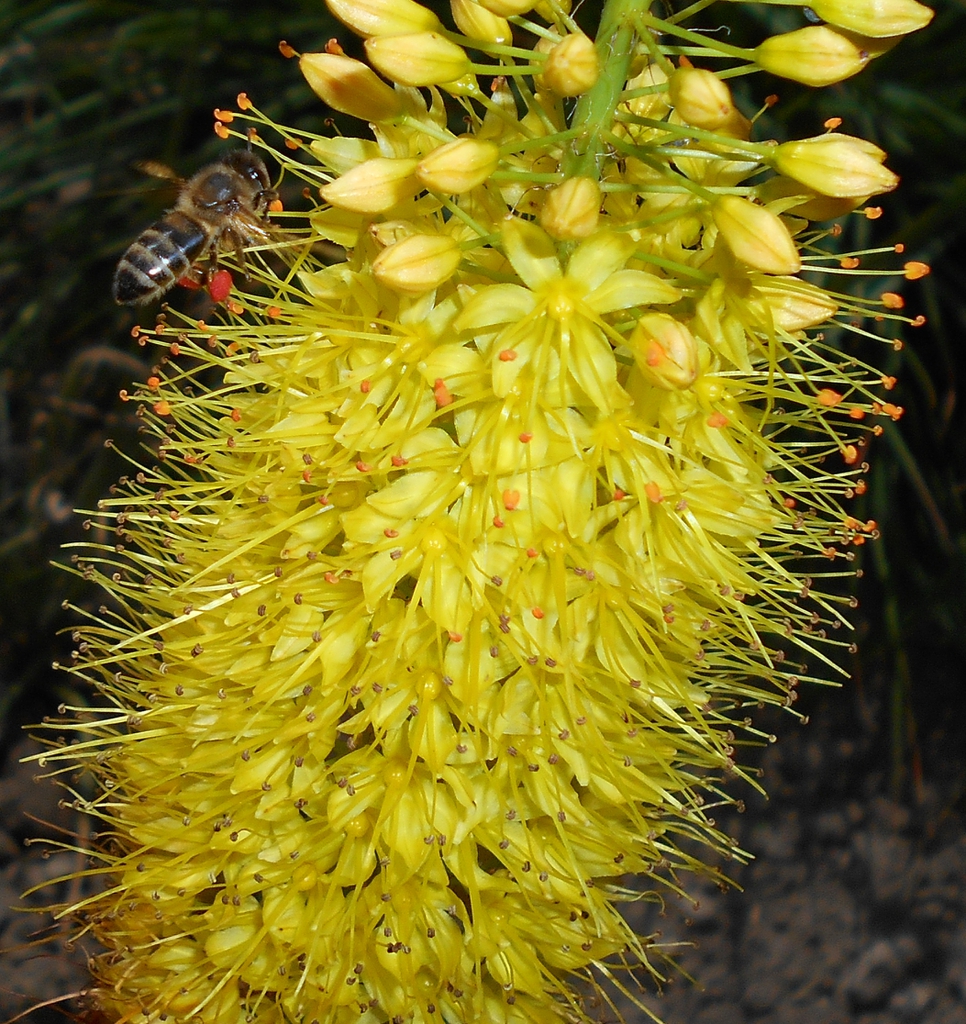
- The upper half of the stem bears 500 to 700 star-shaped flowers, arranged in a long spike, giving it a bottlebrush appearance. Each flower is about 0.5 inches wide, with 6 tepals, and may be in shades of yellow, white, orange, pink, or bronze. The fragrant blooms appear from late spring to early summer. They make good cut flowers.
-
-
Leaves:
- Leaf Color:
- Green
- Leaf Type:
- Simple
- Leaf Arrangement:
- Rosulate
- Leaf Shape:
- Lanceolate
- Leaf Margin:
- Entire
- Hairs Present:
- No
- Leaf Length:
- > 6 inches
- Leaf Width:
- < 1 inch
- Leaf Description:
- The leaves are basally arranged, green, narrow, strap-like, over 12 inches long, and 0.5 inches wide. The leaves emerge in early spring and are frost sensitive.
-
-
Stem:
- Stem Color:
- Green
- Stem Is Aromatic:
- No
- Stem Form:
- Straight
- Stem Description:
- Erect, leafless, green stalk
-
-
Landscape:
- Landscape Location:
- Meadow
- Patio
- Vertical Spaces
- Walkways
- Landscape Theme:
- Butterfly Garden
- Cottage Garden
- Cutting Garden
- Pollinator Garden
- Design Feature:
- Barrier
- Border
- Mass Planting
- Small groups
- Attracts:
- Butterflies
- Hummingbirds
- Pollinators
- Resistance To Challenges:
- Deer
- Diseases
- Drought
- Insect Pests
- Poor Soil
- Rabbits