



Cyclamen hederifolium
Common Name(s):
- Phonetic Spelling
- SIGH-kla-men hed-er-ih-FOH-lee-um
- This plant has low severity poison characteristics.
- See below
- Description
-
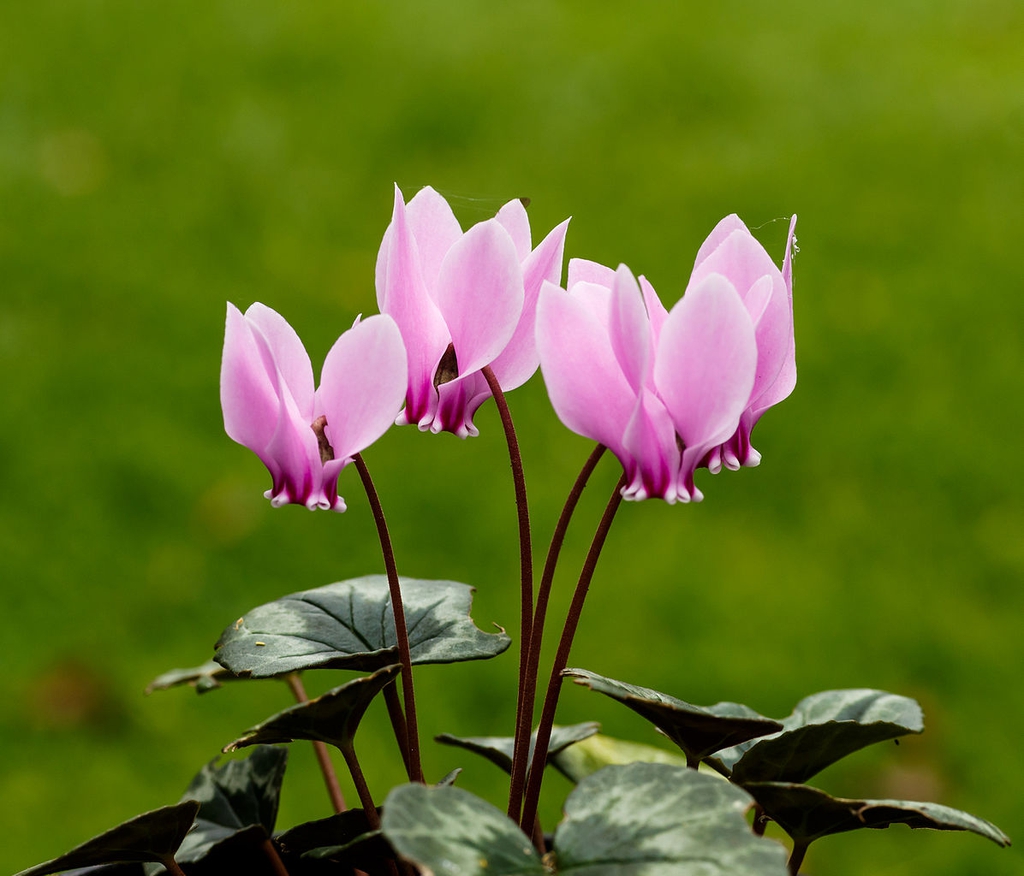
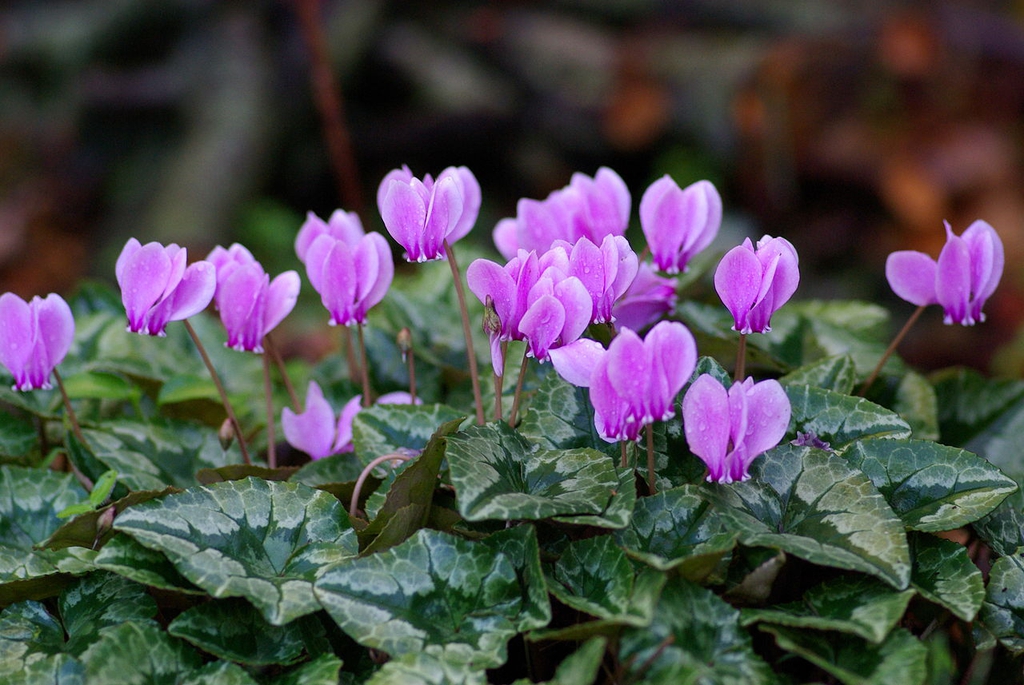
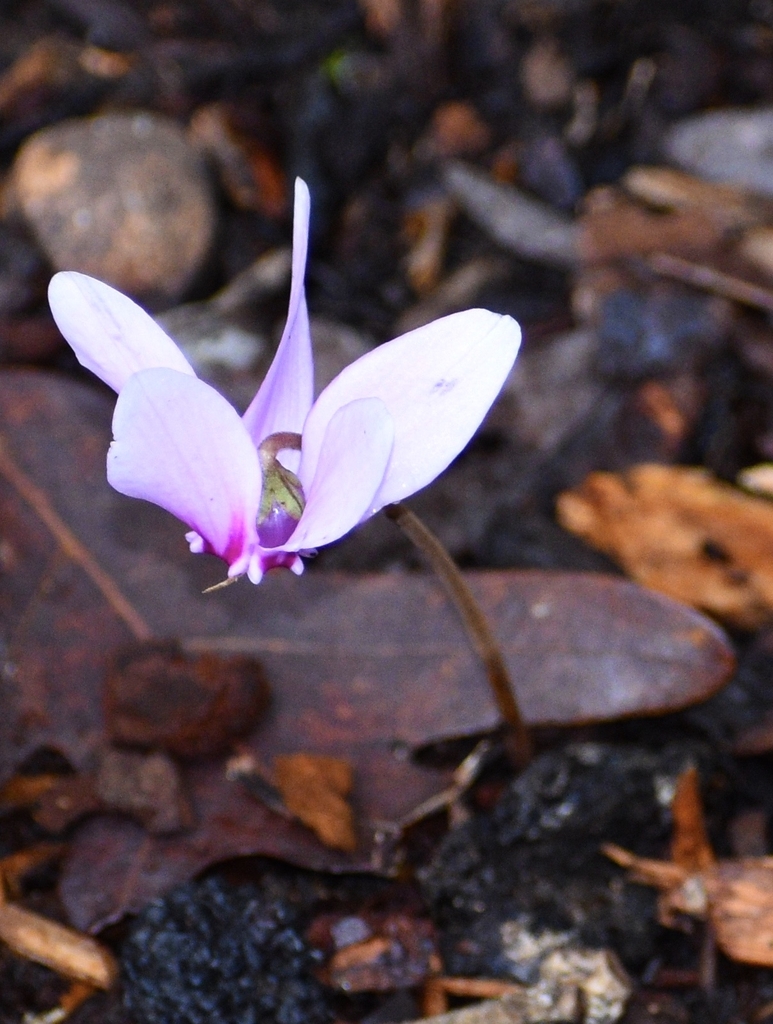
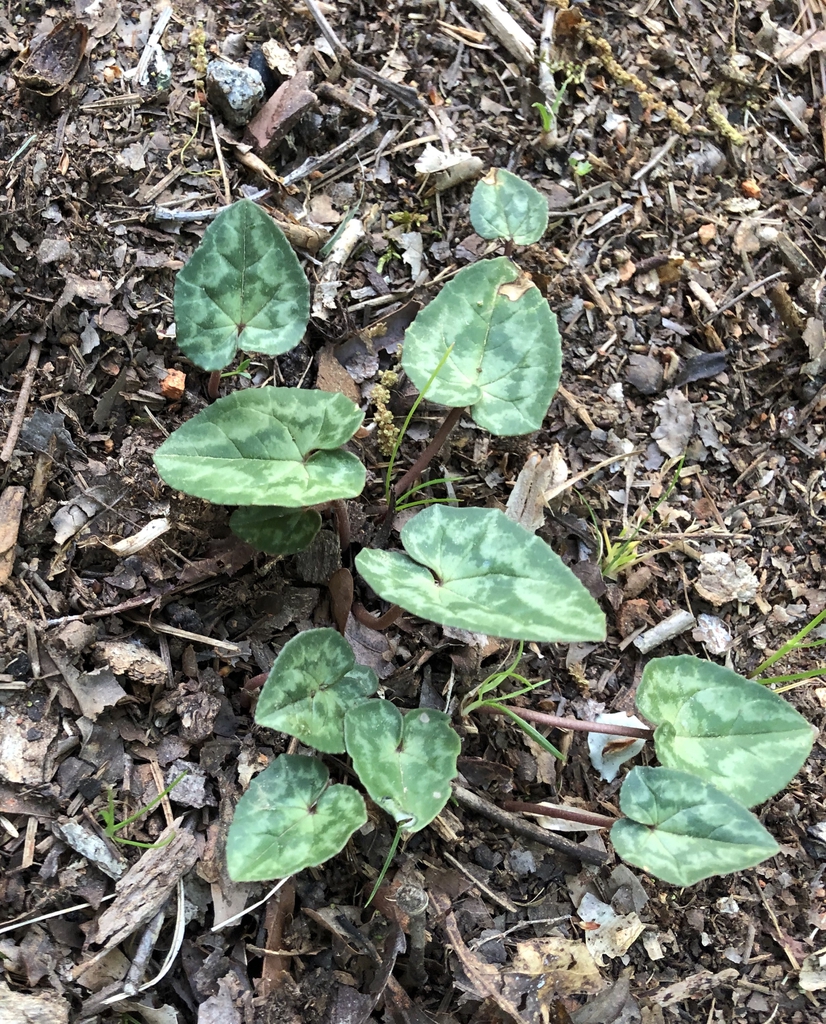
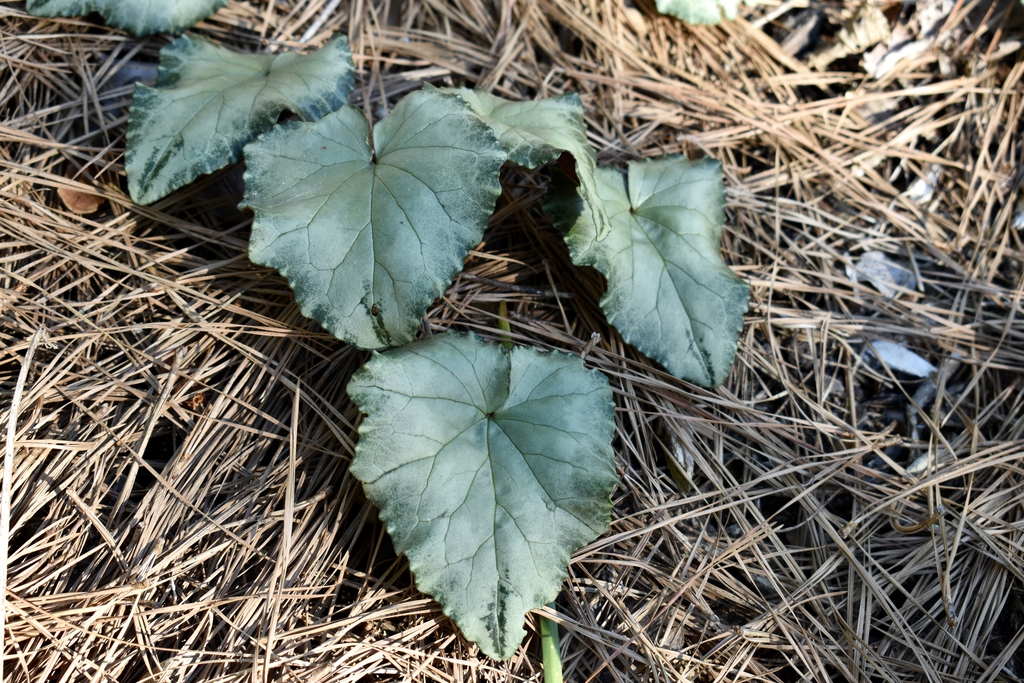
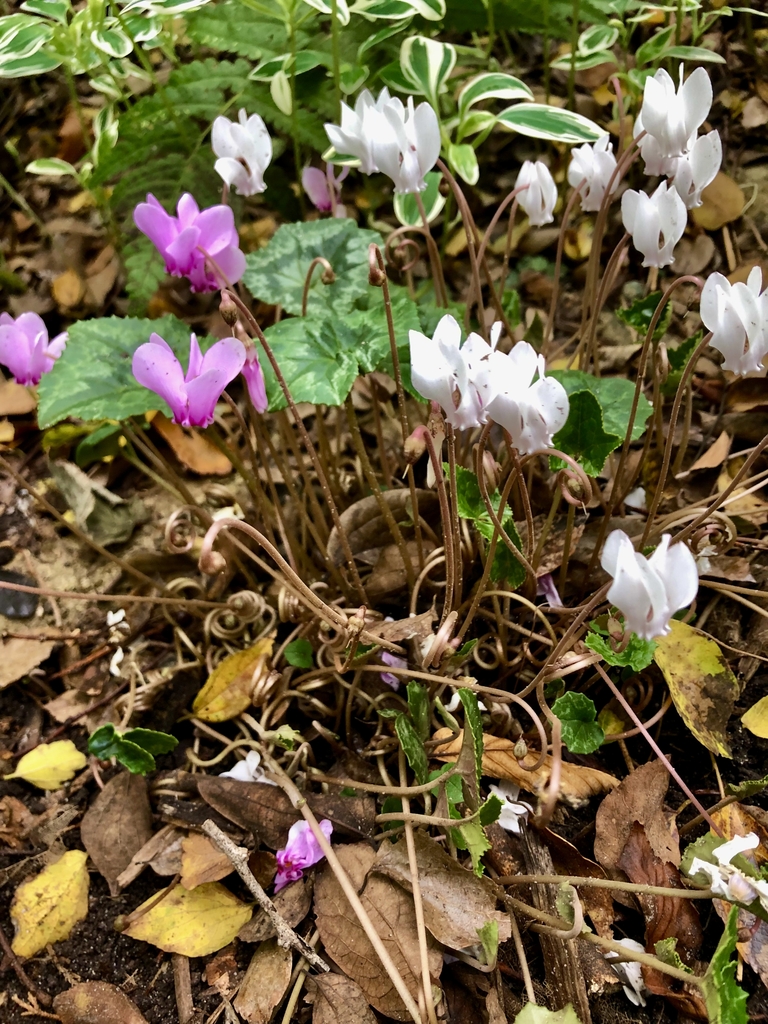
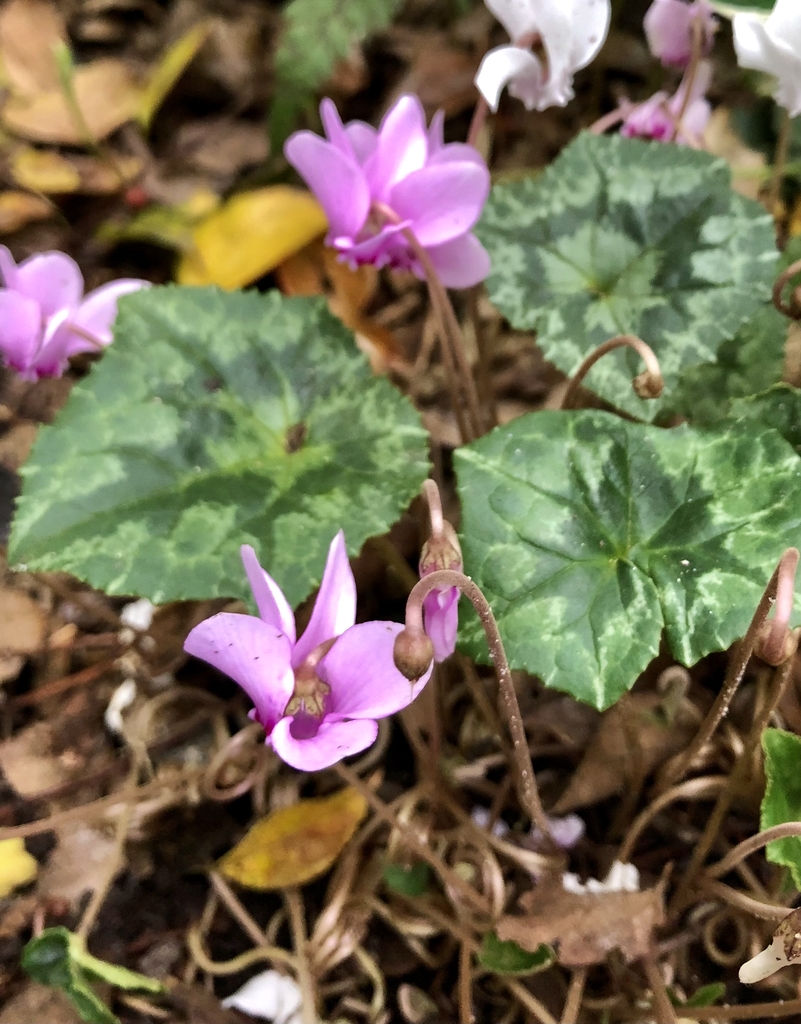
Hardy cyclamen is a tuberous herbaceous perennial in the primrose family (Primulaceae) and is native to the woodlands, shrublands, and rocky areas in the Mediterranean. It has showy pink flowers with tinges of white or pink and ivy-like greenish-gray leaves with silver or white marbling. Hardy cyclamen blooms and sprouts leaves in September to October, the leaves grow through the winter, and then the plant goes dormant before summer, when the seed pods ripen and open. The genus name, Cyclamen, is derived from the Greek word kylos, meaning circle, and refers to the plant's rounded tubers. The specific epithet, hederifolium, refers to its ivy-like leaves.
This plant prefers humus-rich, moist soil in partial shade but will grow in average dry to moist soil. It even tolerates dry shade. It grows from corms that should be planted about 1 inch deep. The roots emerge from the "shoulders" of the tuberous corm, so make sure that part of the corm is under the soil. It is best to keep them on the dry side when dormant. The hardy cyclamen will self-seed and naturalize if it is undisturbed and is best propagated by seeds.
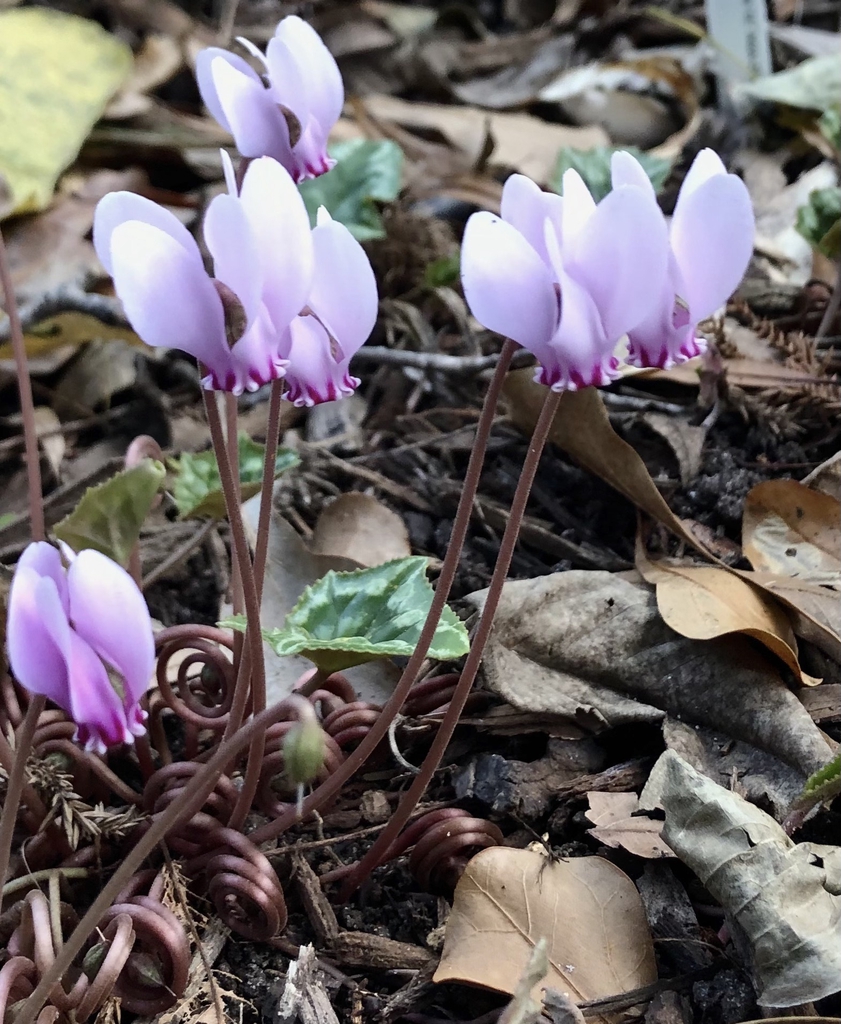
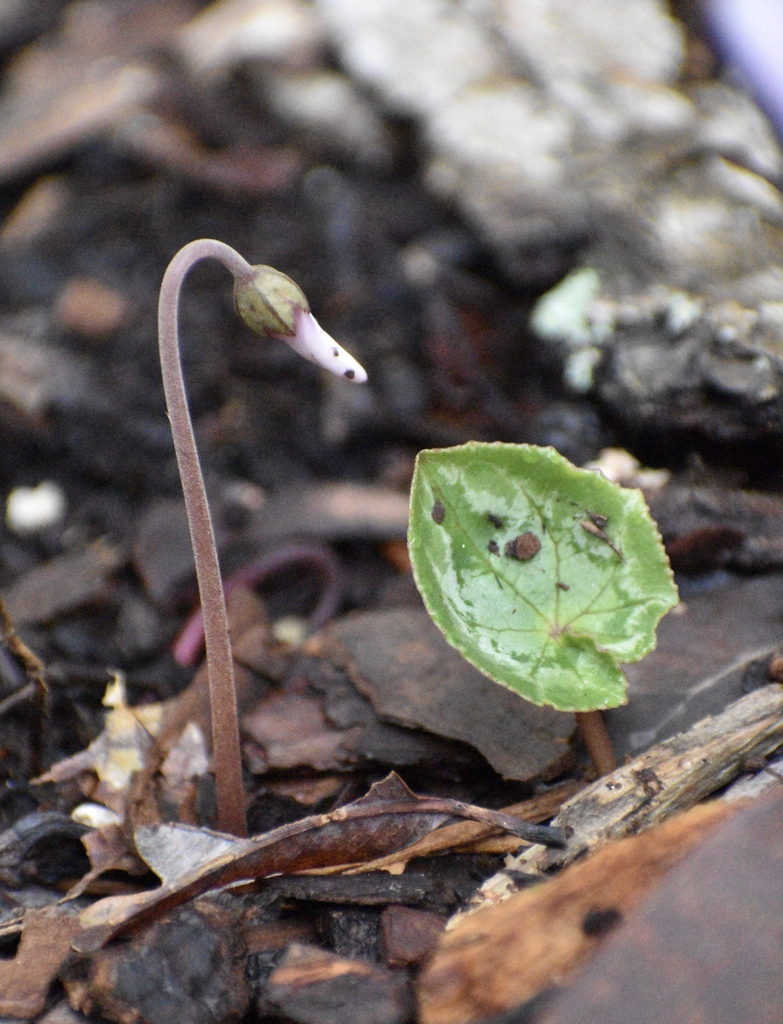
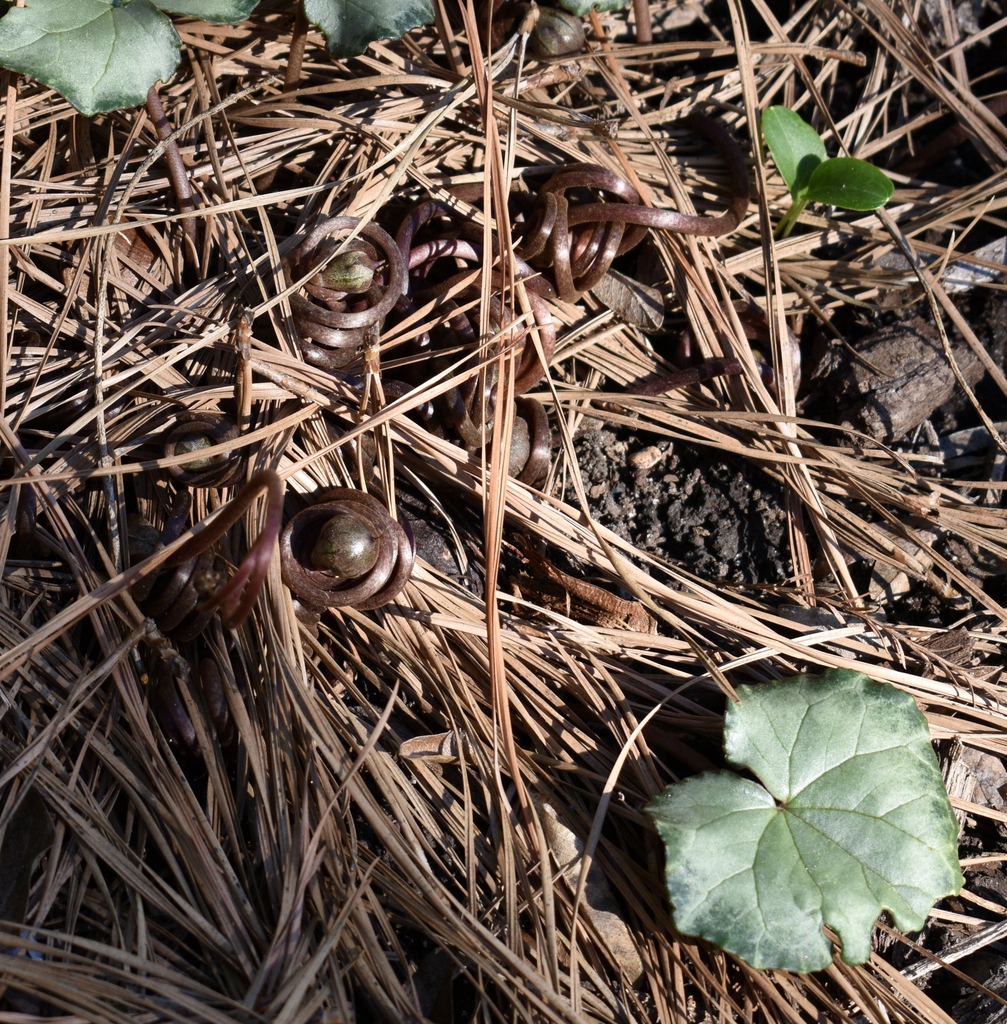
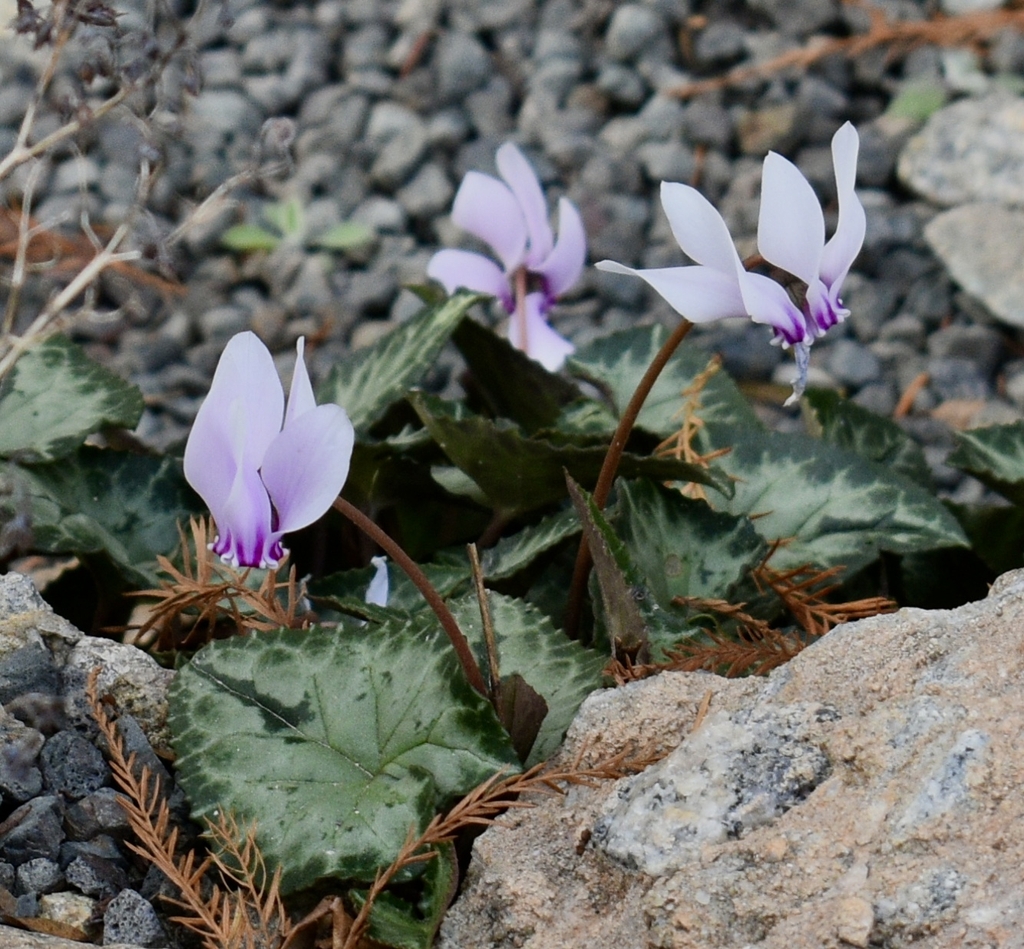
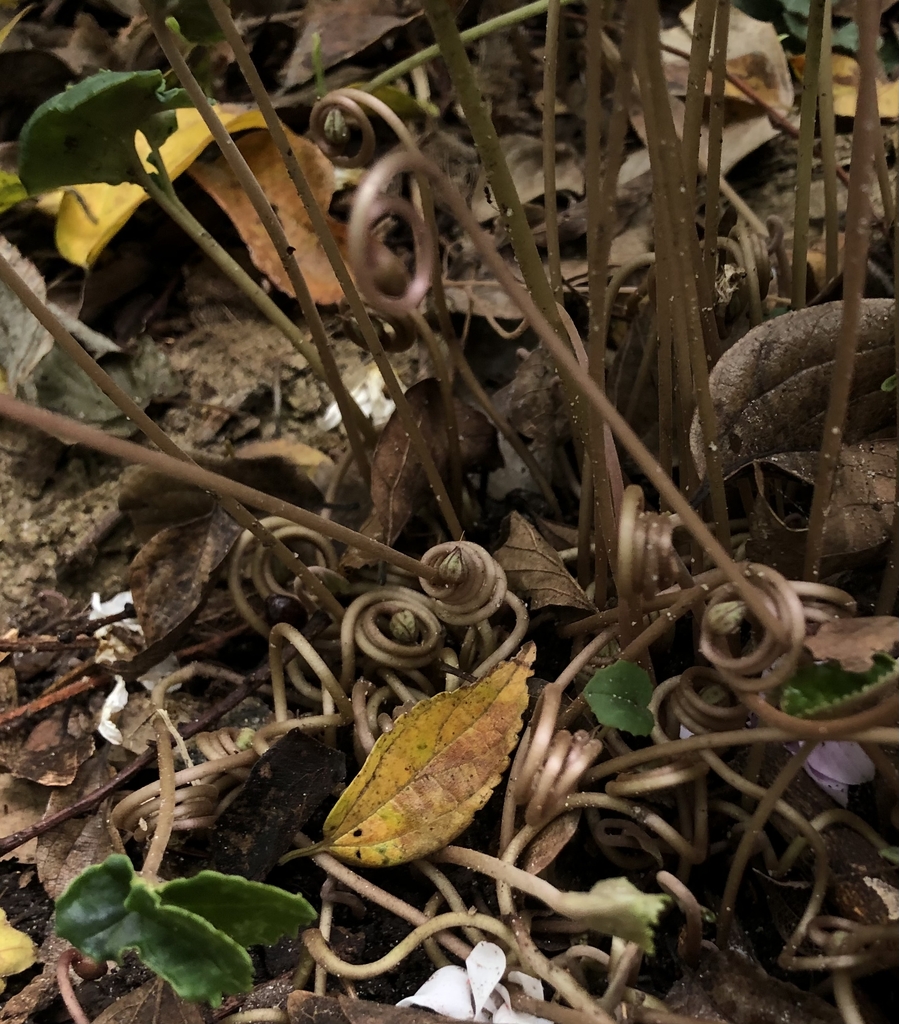
The plant grows 4 to 6 inches tall and spreads from 6 to 12 inches wide. The flower stalks emerge in late summer and early fall and have 1 to 2-inch-long nodding blooms with a dark eye and reflexed petals. After pollination, the flower stalk coils downward near the ground, and the small fruit capsule opens, depositing its seeds the following summer.
The hardy cyclamen is a colorful, attractive fall bloomer and has long-lasting variegated foliage. Planted in mass, it is perfect for a rock garden or woodland setting in partial shade. It is the hardest and easiest cyclamen to grow.
Insects, Diseases, and Other Plant Problems: No significant insect or disease problems. The corms are intolerant of poorly drained soils, especially during summer dormancy. Mice and squirrels may feed on the corms. This plant is toxic to humans, cats, dogs, and horses if ingested. Keep this plant out of the reach of children and pets.
- See this plant in the following landscape :
- Cultivars / Varieties:
-
- Cyclamen hederifolium subsp. crassifolium 'Silver Shield'
pink flowers, deep green leaves with a silver or pale green shield-like pattern in the leaf center - Cyclamen hederifolium subsp. hederifolium 'Antiochus'
deep pinkish-red flowers, marbled leaves - 'Silver Anniversary'
grows up to 3 inches tall, usually pink to white blooms with pink tips, silver leaves with dark green border - 'Silverella'
Grows up to 3 inches tall, usually with lavender flowers, silver leaves with green edges, and a small stripe in the leaf center - 'White Pearls'
grows up to 4 inches tall with white flowers, and marbled leaves
- Cyclamen hederifolium subsp. crassifolium 'Silver Shield'
- Cyclamen hederifolium subsp. crassifolium 'Silver Shield', Cyclamen hederifolium subsp. hederifolium 'Antiochus', 'Silver Anniversary', 'Silverella', 'White Pearls'
- Tags:

 Download Image



- Cultivars / Varieties:
-
- Cyclamen hederifolium subsp. crassifolium 'Silver Shield'
pink flowers, deep green leaves with a silver or pale green shield-like pattern in the leaf center - Cyclamen hederifolium subsp. hederifolium 'Antiochus'
deep pinkish-red flowers, marbled leaves - 'Silver Anniversary'
grows up to 3 inches tall, usually pink to white blooms with pink tips, silver leaves with dark green border - 'Silverella'
Grows up to 3 inches tall, usually with lavender flowers, silver leaves with green edges, and a small stripe in the leaf center - 'White Pearls'
grows up to 4 inches tall with white flowers, and marbled leaves
- Cyclamen hederifolium subsp. crassifolium 'Silver Shield'
- Cyclamen hederifolium subsp. crassifolium 'Silver Shield', Cyclamen hederifolium subsp. hederifolium 'Antiochus', 'Silver Anniversary', 'Silverella', 'White Pearls'
- Tags:
-
-
Attributes:
- Genus:
- Cyclamen
- Species:
- hederifolium
- Family:
- Primulaceae
- Life Cycle:
- Bulb
- Perennial
- Recommended Propagation Strategy:
- Seed
- Country Or Region Of Origin:
- Europe, western Asia
- Distribution:
- Native: Albania, Bulgaria, East Aegean Islands, France, Greece, Italy, the Northwest Balkan Peninsula, Switzerland, and Turkey. Introduced: Belgium, Germany, Great Britain, Ireland, and the United States--OR.
- Wildlife Value:
- Attracts bees
- Play Value:
- Attractive Flowers
- Attracts Pollinators
- Colorful
- Dimensions:
- Height: 0 ft. 4 in. - 0 ft. 6 in.
- Width: 0 ft. 6 in. - 1 ft. 0 in.
-
-
Whole Plant Traits:
- Plant Type:
- Bulb
- Herbaceous Perennial
- Habit/Form:
- Clumping
- Growth Rate:
- Slow
- Maintenance:
- Medium
- Texture:
- Medium
-
-
Cultural Conditions:
- Light:
- Partial Shade (Direct sunlight only part of the day, 2-6 hours)
- Soil Texture:
- High Organic Matter
- Loam (Silt)
- Soil pH:
- Acid (<6.0)
- Alkaline (>8.0)
- Neutral (6.0-8.0)
- Soil Drainage:
- Good Drainage
- Moist
- Occasionally Dry
- Available Space To Plant:
- Less than 12 inches
- NC Region:
- Coastal
- Mountains
- Piedmont
- USDA Plant Hardiness Zone:
- 5a, 5b, 6a, 6b, 7a, 7b, 8a, 8b, 9a, 9b
-
-
Fruit:
- Fruit Color:
- Brown/Copper
- Display/Harvest Time:
- Summer
- Fruit Type:
- Capsule
- Fruit Length:
- < 1 inch
- Fruit Width:
- < 1 inch
- Fruit Description:
- The fruit is a small, round capsule that has 5 to 7 chambers. The capsule will mature during the plant's dormancy and then split open to deposit the seeds. The seeds usually ripen in early to mid-summer.
-
-
Flowers:
- Flower Color:
- Pink
- White
- Flower Inflorescence:
- Head
- Flower Value To Gardener:
- Showy
- Flower Bloom Time:
- Fall
- Flower Size:
- 1-3 inches
- Flower Description:
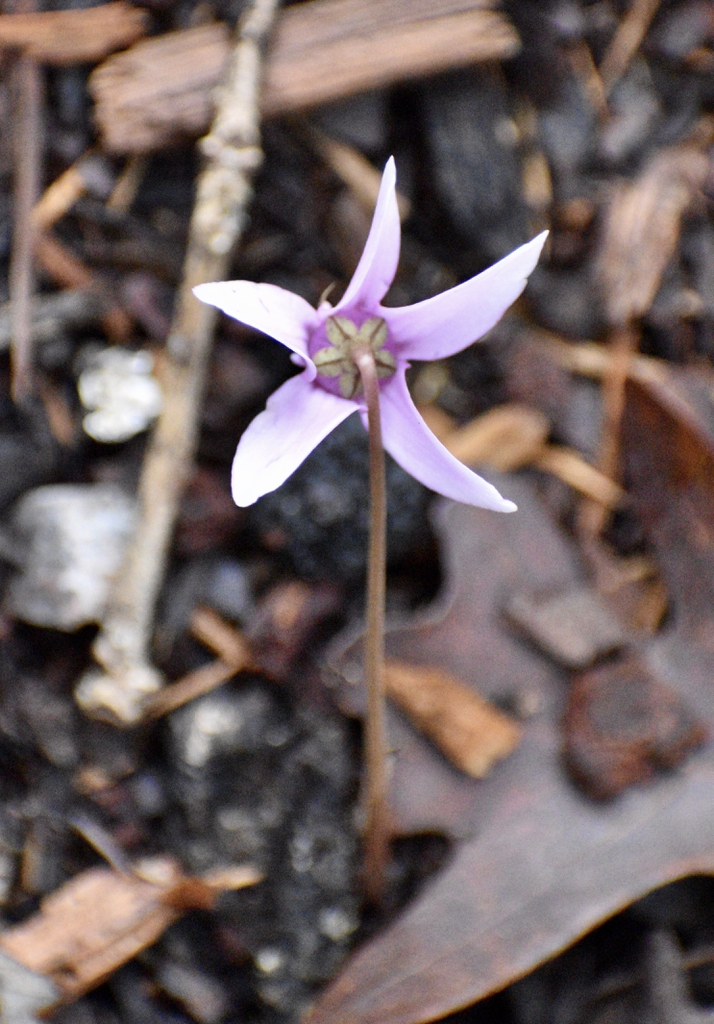
- The flowers are pink, tinged with pink or white, and have a darker eye. They measure about 1.5 to 2 inches long with nodding flowers and upswept petals. There is only one flower per stem. Blooming occurs in late summer and early fall.
-
-
Leaves:
- Leaf Color:
- Gray/Silver
- Green
- Variegated
- Leaf Value To Gardener:
- Showy
- Leaf Type:
- Simple
- Leaf Shape:
- Cordate
- Leaf Margin:
- Lobed
- Hairs Present:
- No
- Leaf Length:
- 3-6 inches
- Leaf Width:
- 3-6 inches
- Leaf Description:
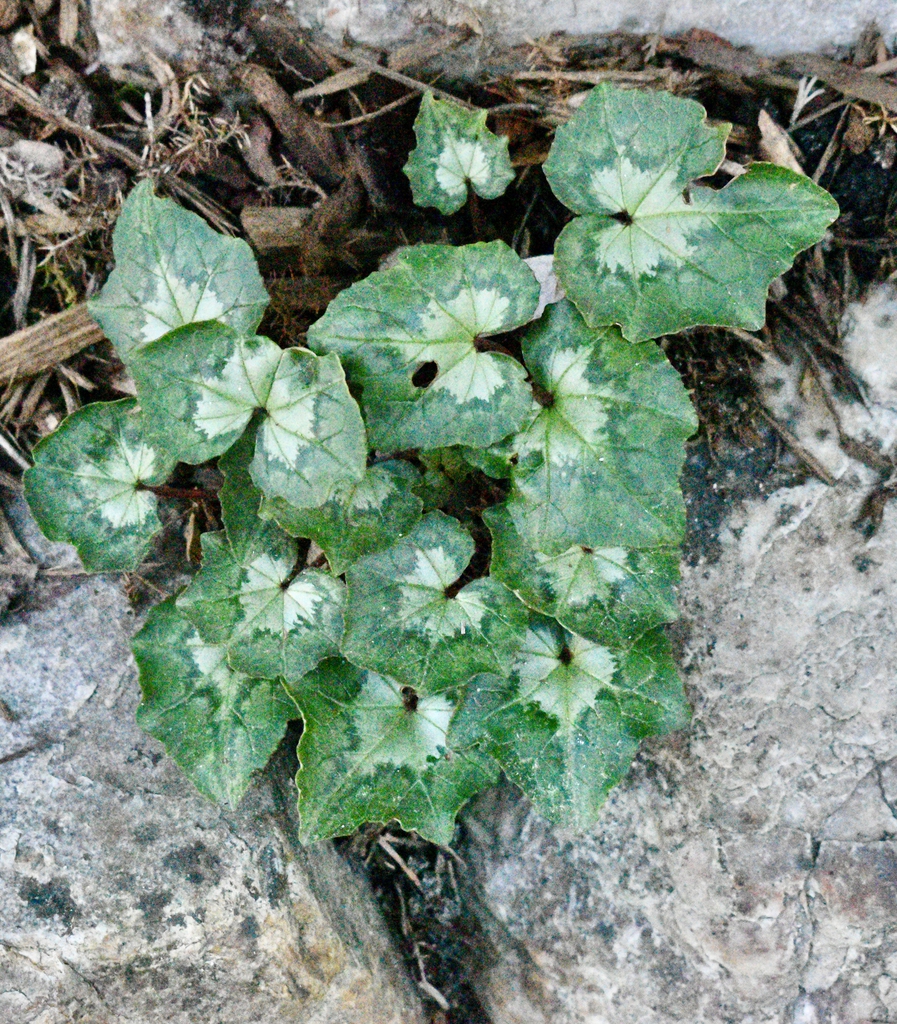
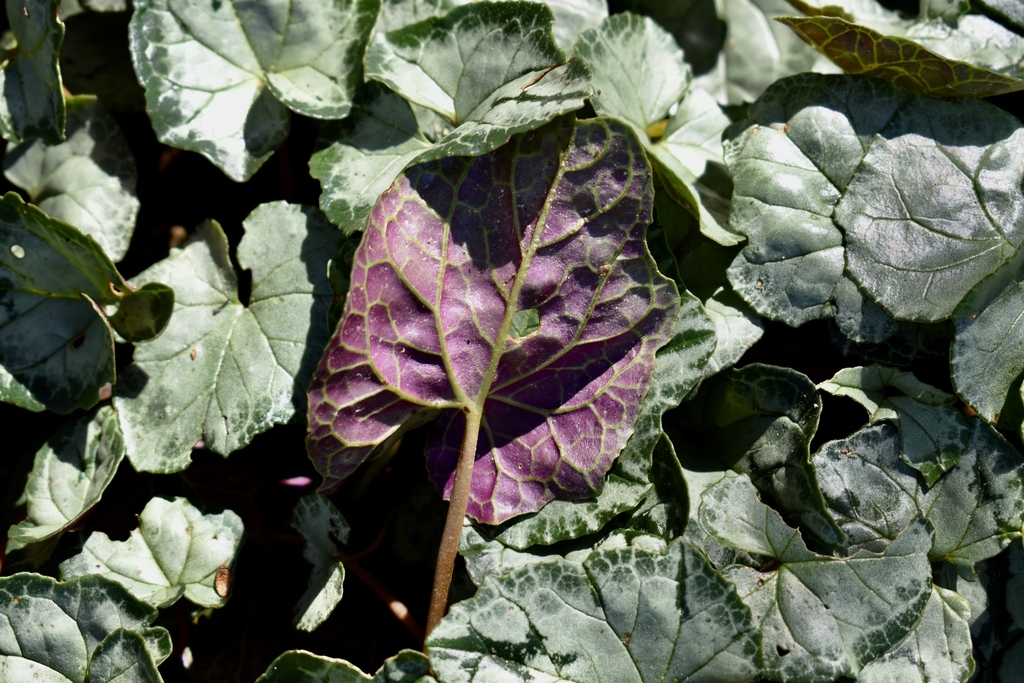
- The leaves are heart-shaped or ivy-shaped with 2 to 3 angled lobes on each side. They are grayish-green and mottled with silver and white, and the undersides may be purple or green. The leaf measures 1 to 6 inches long and 0.75 to 5 inches wide. The foliage appears after the flower stalks appear in late summer and early fall. The leaves will remain throughout the winter, and the plant becomes dormant in late spring.
-
-
Stem:
- Stem Is Aromatic:
- No
-
-
Landscape:
- Landscape Location:
- Container
- Naturalized Area
- Patio
- Small Space
- Woodland
- Landscape Theme:
- Cottage Garden
- Rock Garden
- Shade Garden
- Design Feature:
- Border
- Mass Planting
- Small groups
- Attracts:
- Bees
- Resistance To Challenges:
- Deer
- Drought
- Dry Soil
- Rabbits
- Problems:
- Poisonous to Humans
- Problem for Cats
- Problem for Children
- Problem for Dogs
- Problem for Horses
-
-
Poisonous to Humans:
- Poison Severity:
- Low
- Poison Symptoms:
- Salivation, vomiting, diarrhea. Following large ingestions of tubers: heart rhythm abnormalities, seizures, death
- Poison Toxic Principle:
- Terpenoid saponins
- Causes Contact Dermatitis:
- Yes
- Poison Part:
- Flowers
- Fruits
- Leaves
- Roots
- Sap/Juice
- Seeds
- Stems



