



Cirsium arvense
Common Name(s):
Previously known as:
- Carduus muticus
- Cirsium muticum
- Phonetic Spelling
- SIR-see-um ar-VEN-see
- This plant is an invasive species in North Carolina
- Description
-
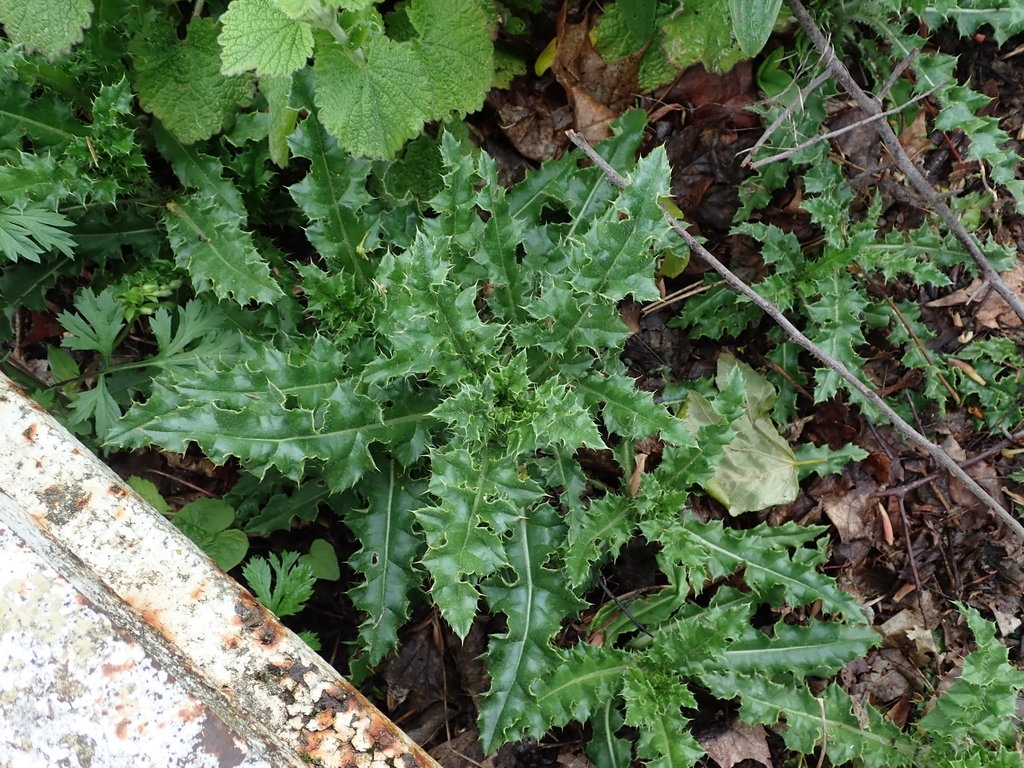
Creeping thistle is an upright, herbaceous perennial weed in the daisy family (Asteraceae). It is native to Europe, Asia and Africa, where it is found in wet meadows, swamps, bogs and moist woodlands. It was introduced to the United States in the 1600s and today it is an invasive species in North Carolina, most commonly found in disturbed areas, clearings or agricultural sites.
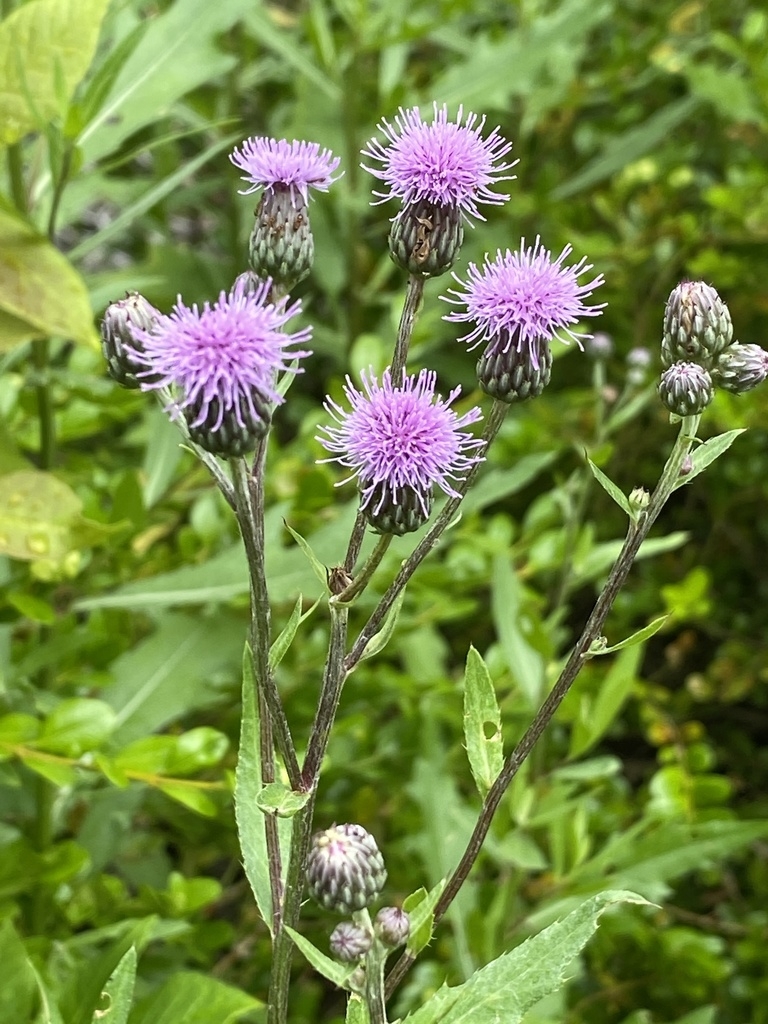
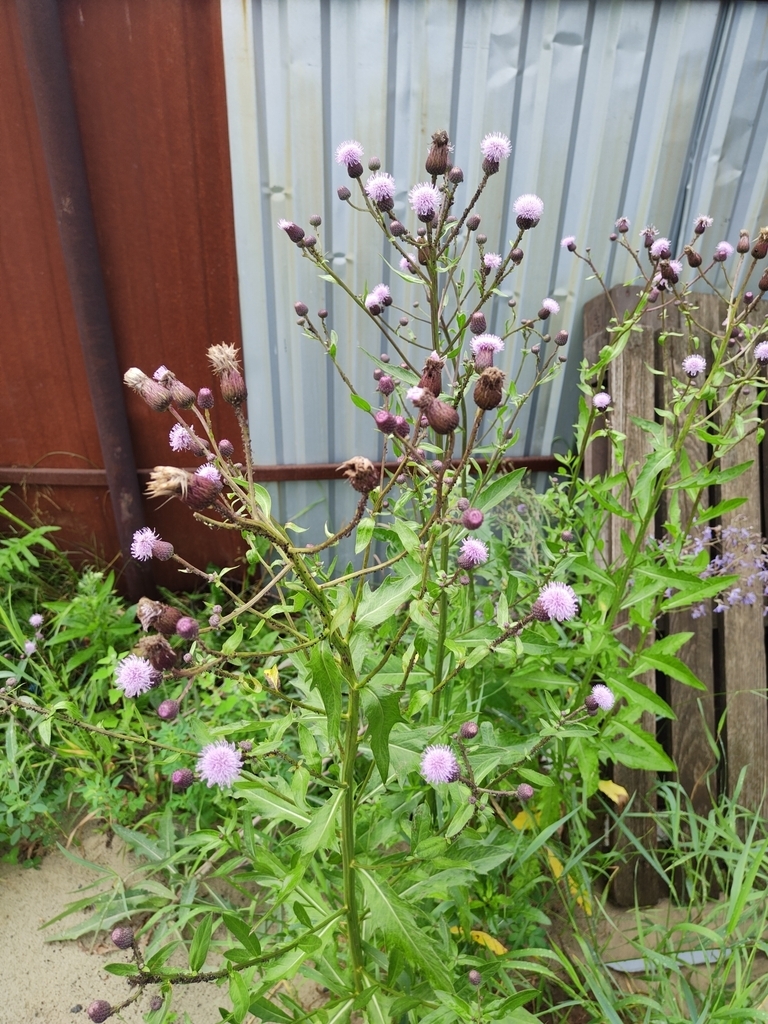
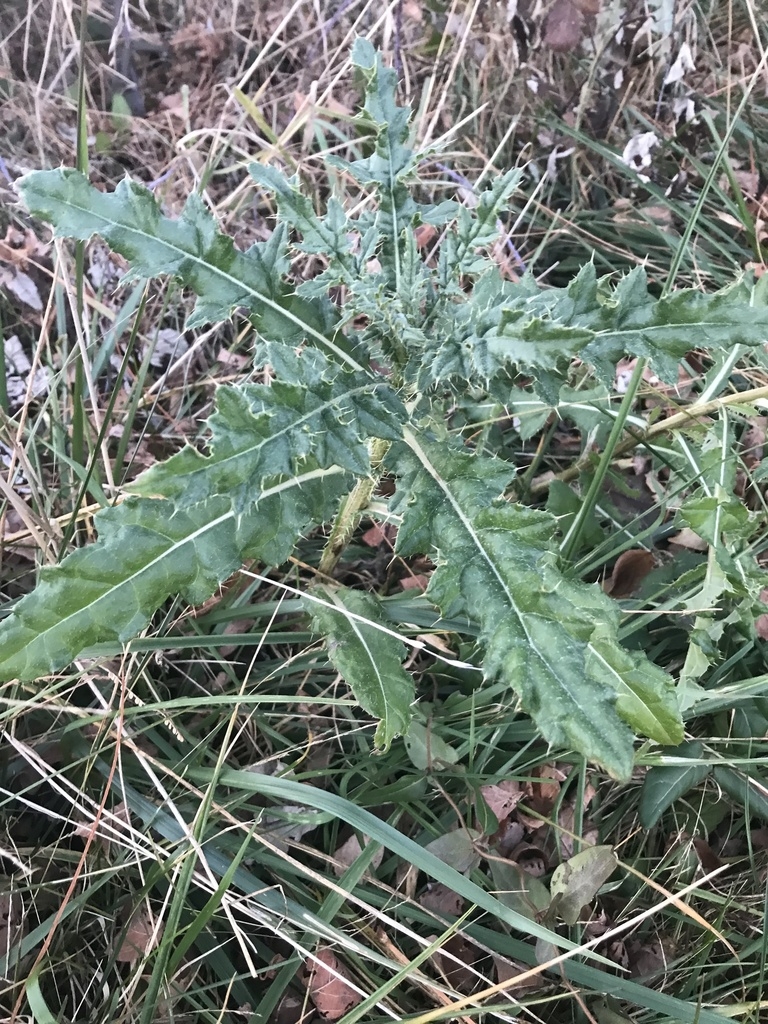
The plant grows up to 6 feet tall with stems branched only at the top. The leaves are long, deeply lobed and prickly. It has pink, purple or white flowers that appear in summer. The female flowers, which produce seed, are fragrant.
It rapidly spreads by lateral root growth and wind-dispersed seeds, allowing it to form dense stands that can shade out native plants. Its root system can extend more than fifteen feet out and six feet down from the plant, making management difficult. Consistent repeated mowing or hand pulling can deplete the root system’s energy storage over a series of years. Biological and chemical management may need to be used in conjunction with these mechanical measures.
Please choose a native or less problematic plant. Suggestions appear to the left. Creeping thistle should not be introduced into the garden.
Insects, Diseases and Other Plant Problems: Creeping thistle is classified as a Class B noxious weed in North Carolina, meaning it should be actively managed to prevent further spread. Its extensive and aggressive root and shoot system coupled with its prolific seed production make it very difficult to manage.
- See this plant in the following landscape :
- Cultivars / Varieties:
-
- Tags:


- Cultivars / Varieties:
-
- Tags:
-
-
Attributes:
- Genus:
- Cirsium
- Species:
- arvense
- Family:
- Asteraceae
- Uses (Ethnobotany):
- The feathery pappus from the fruits was used by the Cherokee as fletching on their blow darts.
- Life Cycle:
- Perennial
- Recommended Propagation Strategy:
- Seed
- Country Or Region Of Origin:
- Eurasia, Northwestern Africa
- Distribution:
- Most of the US and southern Canada
- Wildlife Value:
- The seeds are rich in oil, an important food source for seed-eating birds.
-
-
Whole Plant Traits:
- Plant Type:
- Herbaceous Perennial
- Perennial
- Weed
- Habit/Form:
- Erect
- Growth Rate:
- Rapid
- Maintenance:
- High
- Texture:
- Coarse
- Appendage:
- Prickles
- Spines
-
-
Cultural Conditions:
- Light:
- Full sun (6 or more hours of direct sunlight a day)
- Partial Shade (Direct sunlight only part of the day, 2-6 hours)
- Soil Texture:
- Clay
- High Organic Matter
- Loam (Silt)
- Sand
- Soil pH:
- Alkaline (>8.0)
- Neutral (6.0-8.0)
- Soil Drainage:
- Moist
- Occasionally Dry
- Occasionally Wet
- Very Dry
- Available Space To Plant:
- 12 inches-3 feet
- NC Region:
- Mountains
- USDA Plant Hardiness Zone:
- 4a, 4b, 5a, 5b, 6a, 6b, 7a, 7b
-
-
Fruit:
- Fruit Color:
- Cream/Tan
- Display/Harvest Time:
- Fall
- Fruit Type:
- Achene
- Fruit Length:
- < 1 inch
- Fruit Width:
- < 1 inch
- Fruit Description:
- Tiny dry 0.1" long with feathery white to light brown pappus
-
-
Flowers:
- Flower Color:
- Pink
- Purple/Lavender
- White
- Flower Inflorescence:
- Head
- Flower Value To Gardener:
- Fragrant
- Flower Bloom Time:
- Summer
- Flower Shape:
- Dome
- Flower Petals:
- Bracts
- Flower Size:
- < 1 inch
- Flower Description:
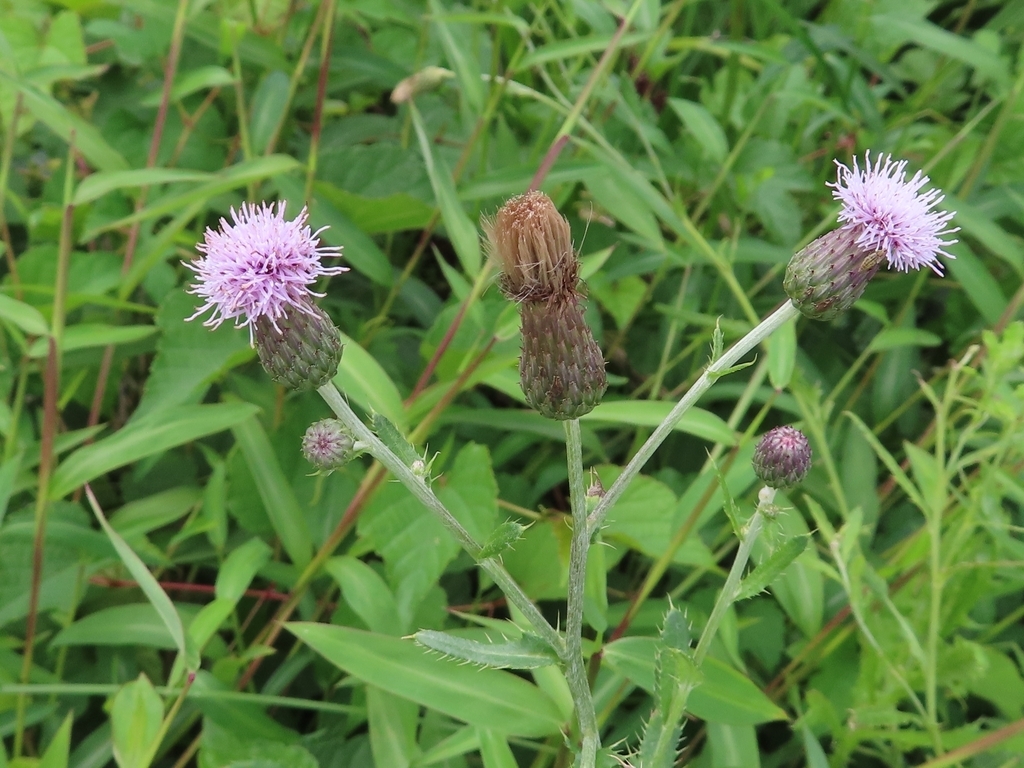
- There are male and female plants. Female flowers have a scent and male flowers do not. Pink, deep lavender, or white flowers; bracts are tomentose without spines. Flowering occurs from June-August and an average flower produces 2000 seeds per plant.
-
-
Leaves:
- Leaf Color:
- Green
- Leaf Feel:
- Prickly
- Leaf Type:
- Simple
- Leaf Arrangement:
- Alternate
- Rosulate
- Leaf Shape:
- Elliptical
- Lanceolate
- Oblong
- Leaf Margin:
- Lobed
- Hairs Present:
- Yes
- Leaf Length:
- 3-6 inches
- Leaf Width:
- 1-3 inches
- Leaf Description:
- Dark green, deeply lobed, elliptic to oblong-lanceolate leaves 2"-6" long (5"-8" basal leaves) sometimes slightly clasping the stems; tomentose below and very prickly.
-
-
Stem:
- Stem Color:
- Green
- Stem Is Aromatic:
- No
- Stem Surface:
- Hairy (pubescent)
- Stem Description:
- Slender, smooth, grooved stems that sometimes have short hairs. Stems do not have conspicuous spines.
-
-
Landscape:
- Attracts:
- Songbirds
- Problems:
- Invasive Species
- Spines/Thorns
- Weedy



