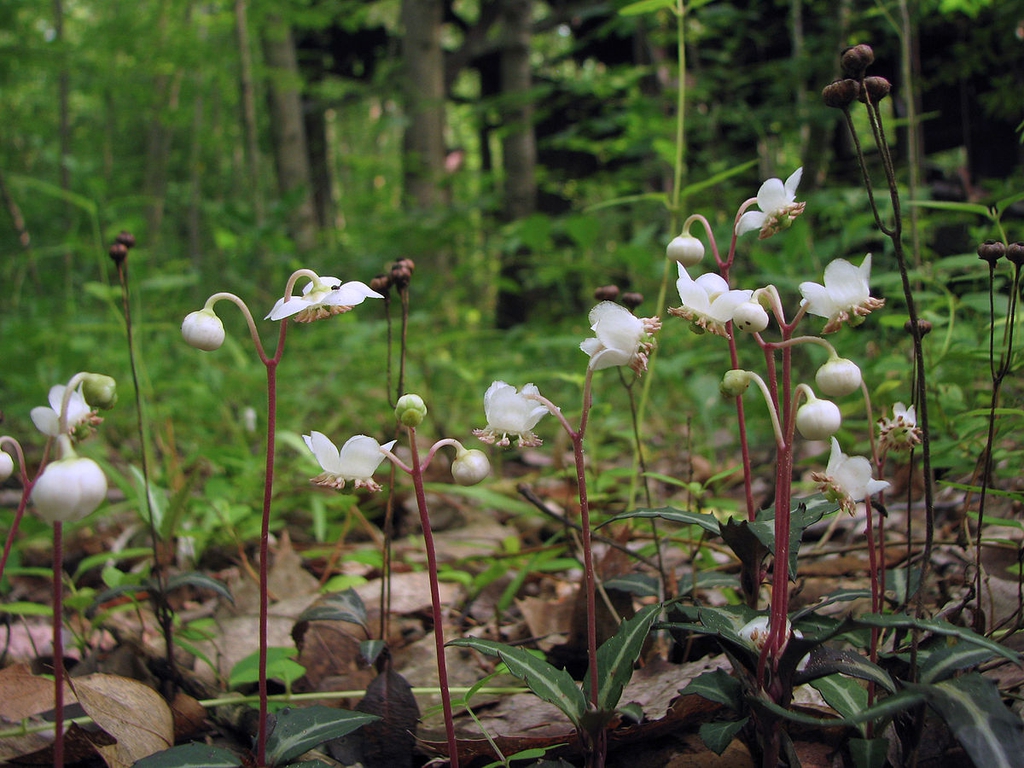


Rat's Bane Chimaphila maculata
Other Common Name(s):
Previously known as:
- Chimaphila maculata var. dasystemma
- Pyrola maculata
- Phonetic Spelling
- ky-MAF-ih-luh mak-yuh-LAY-tuh
- Description
-
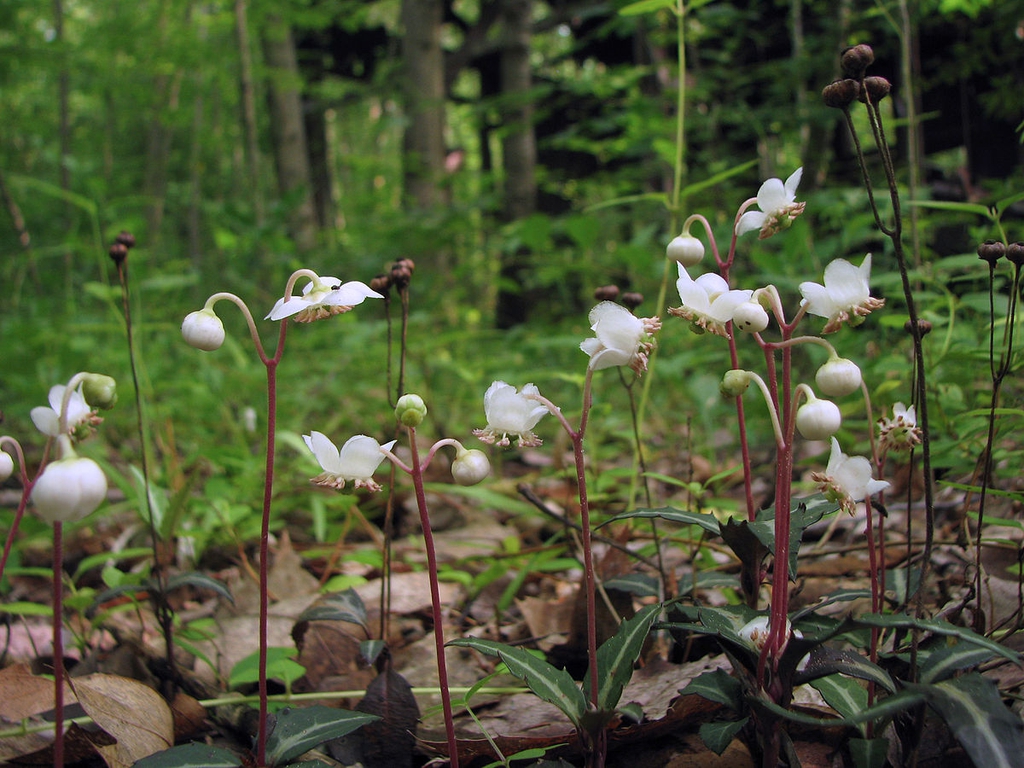
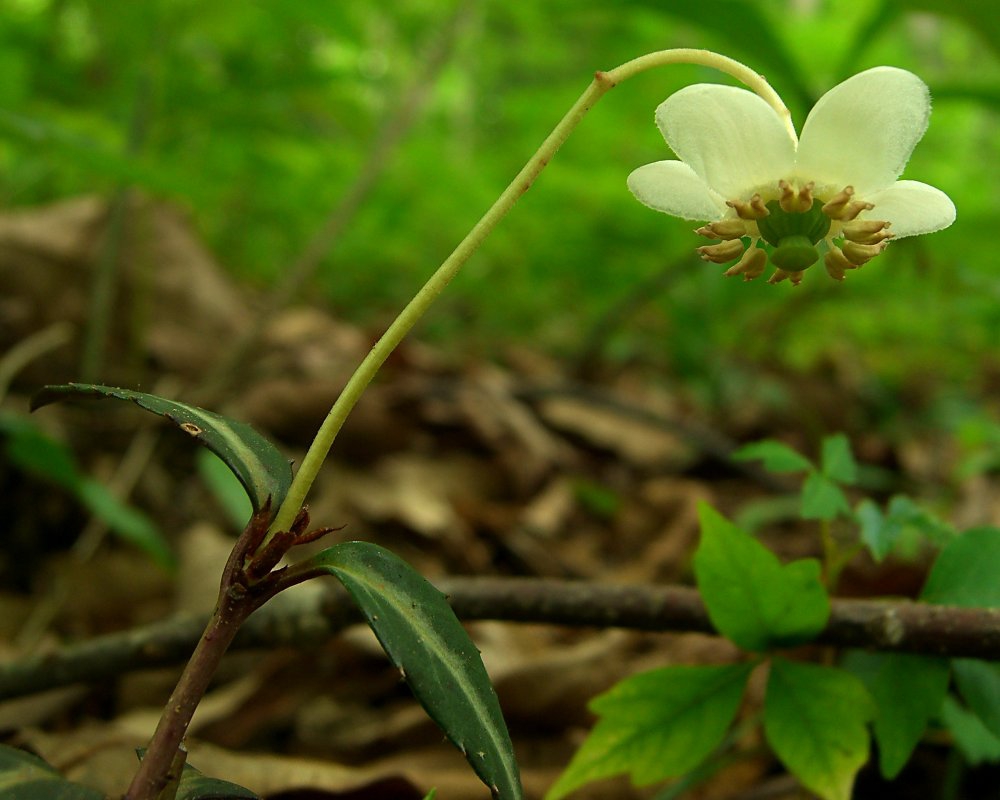
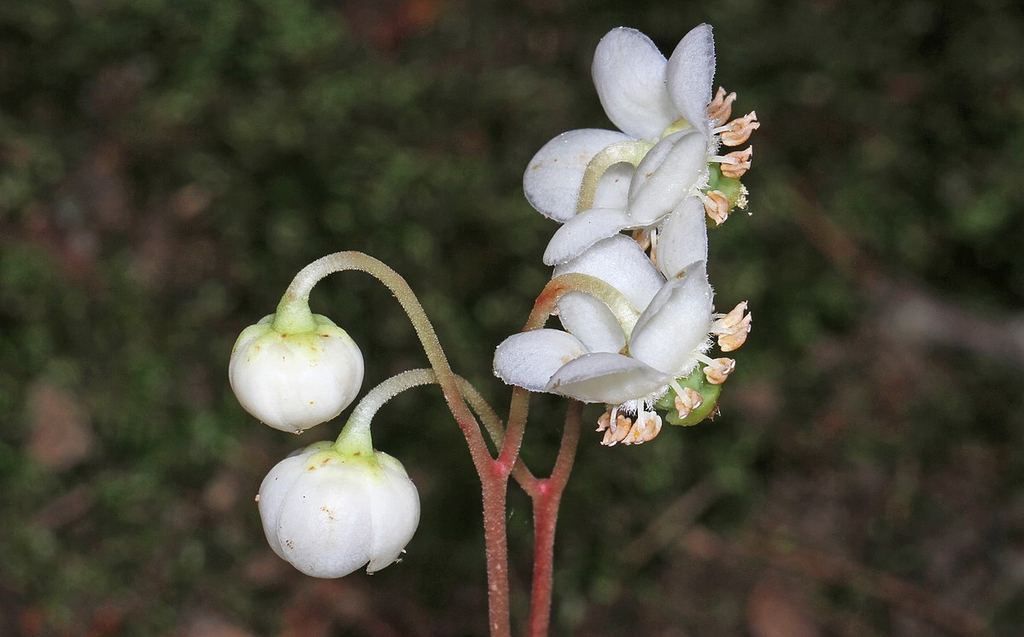
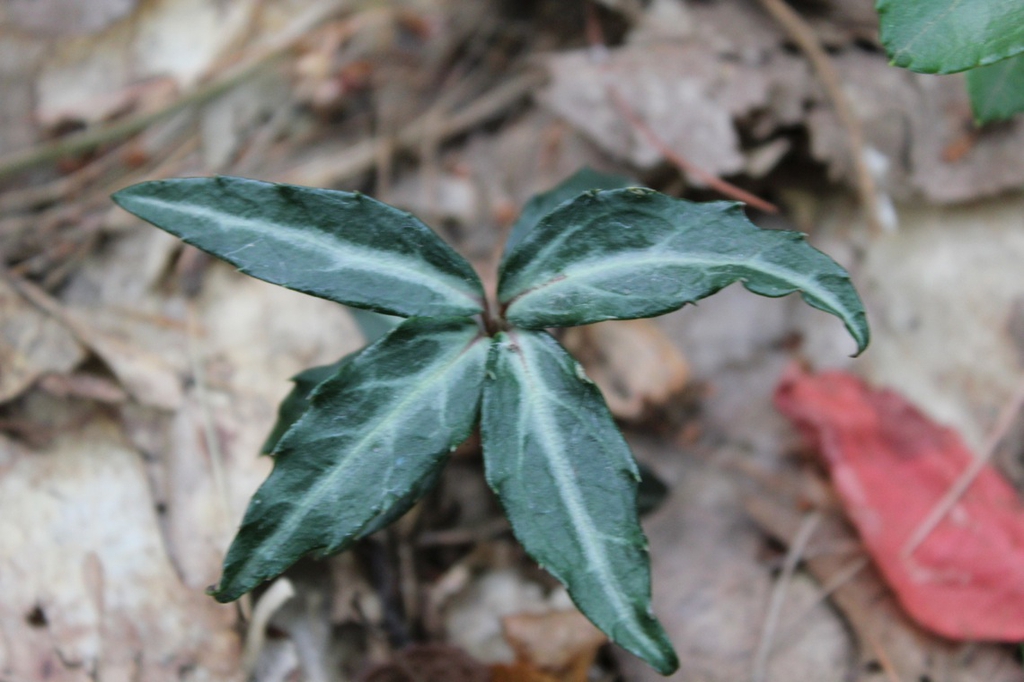
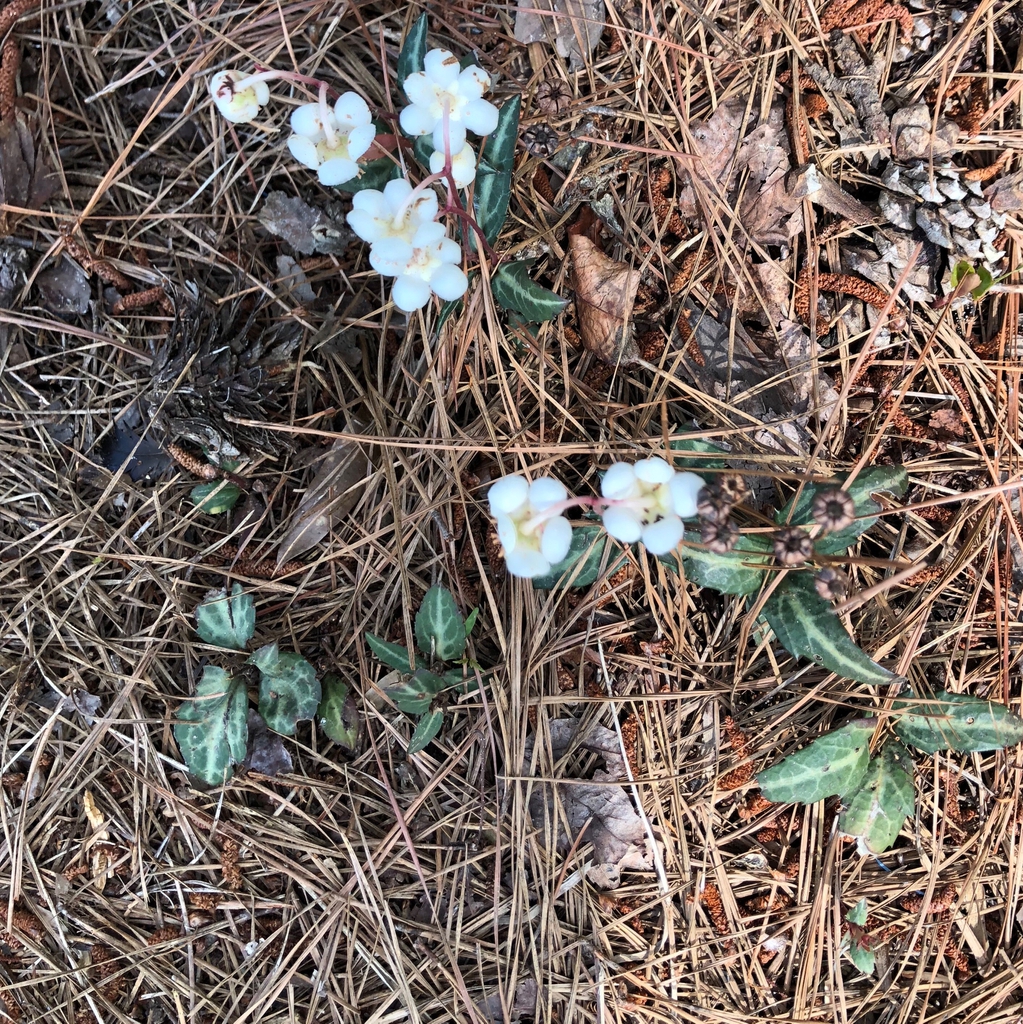
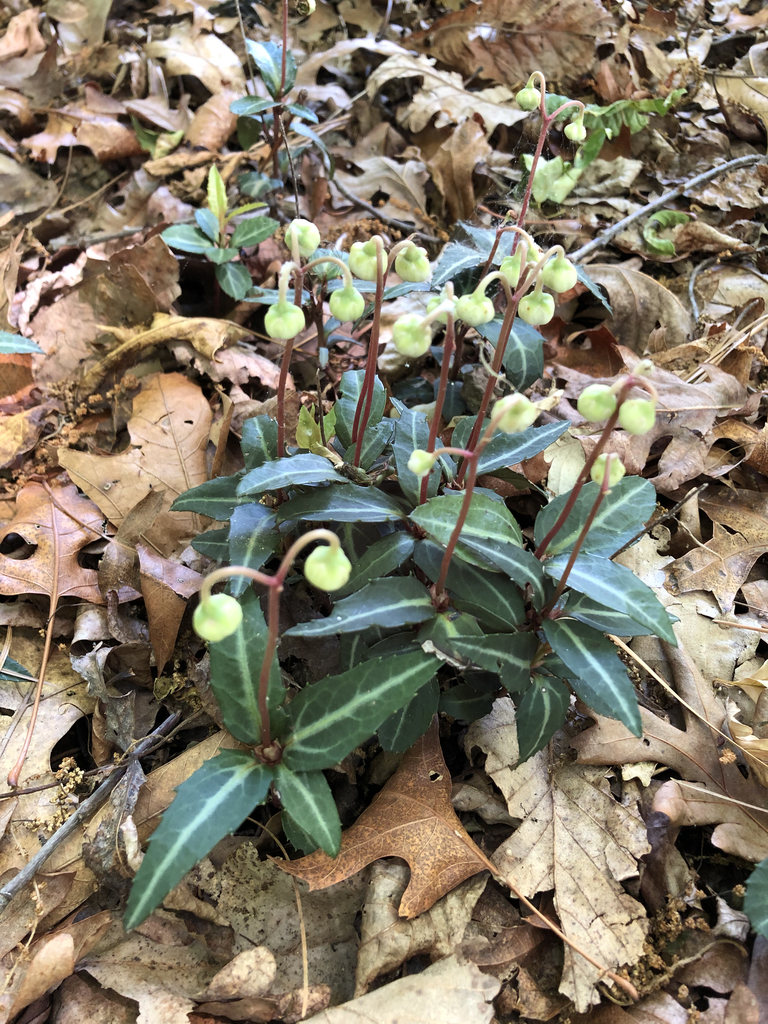
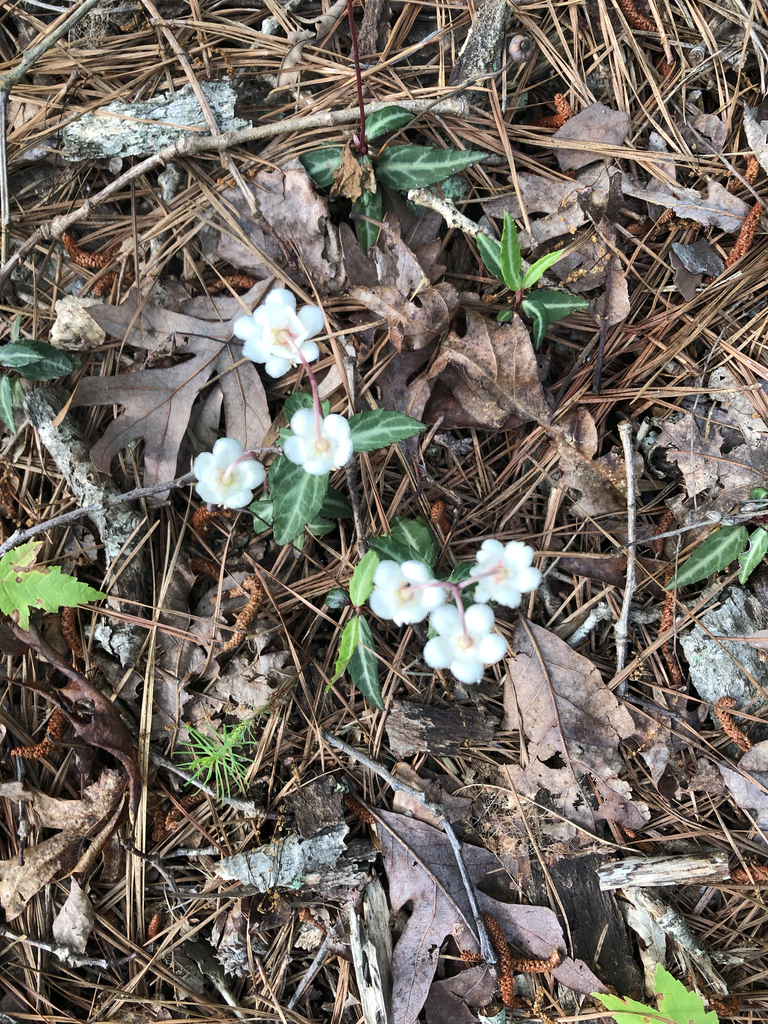
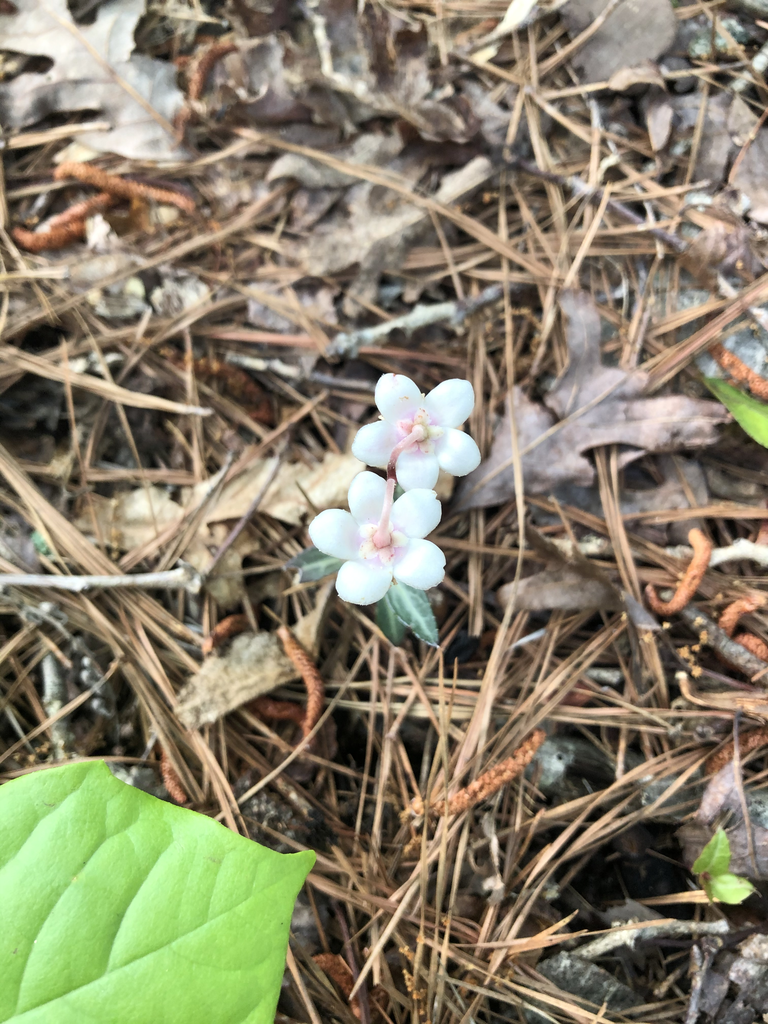
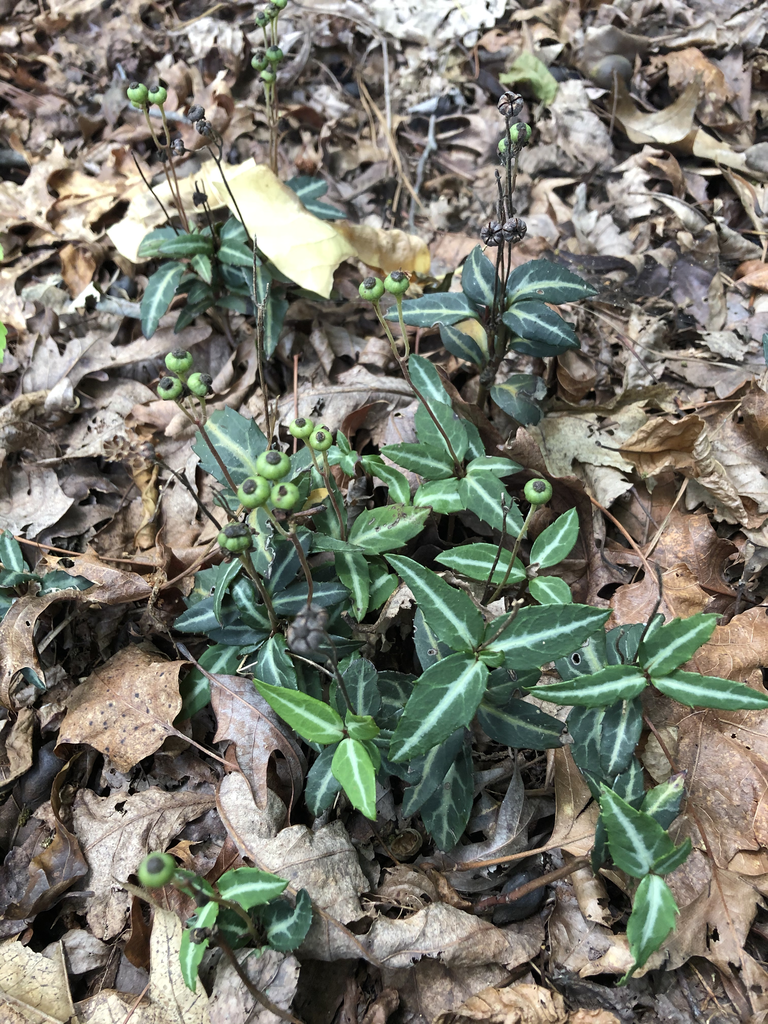
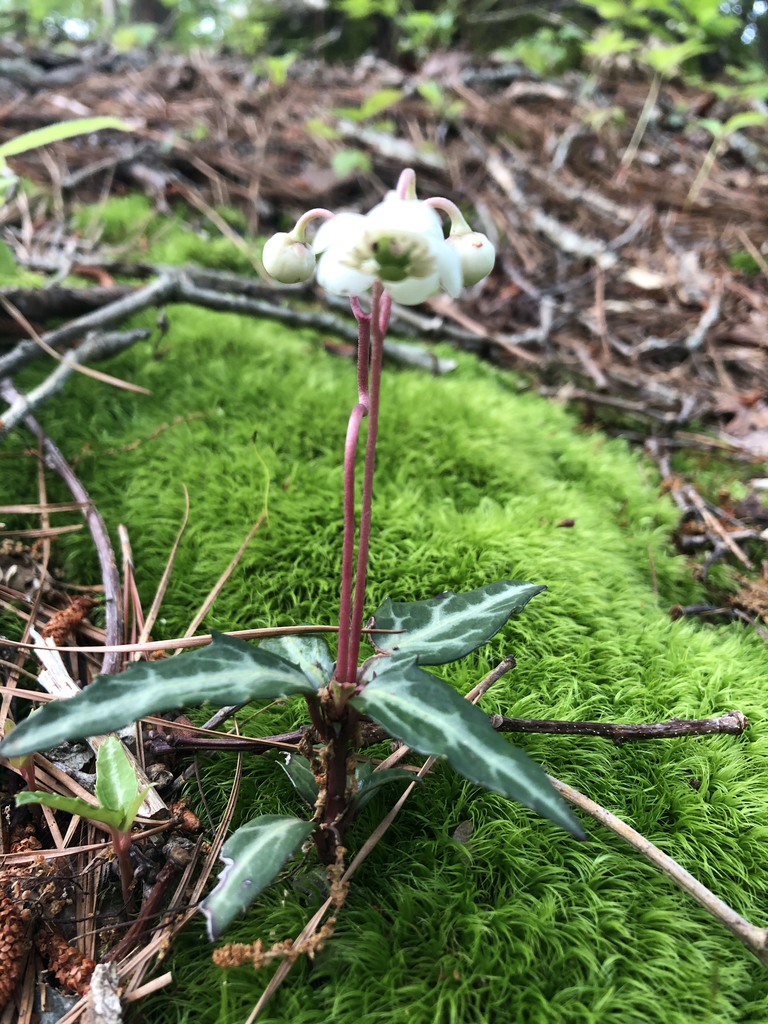
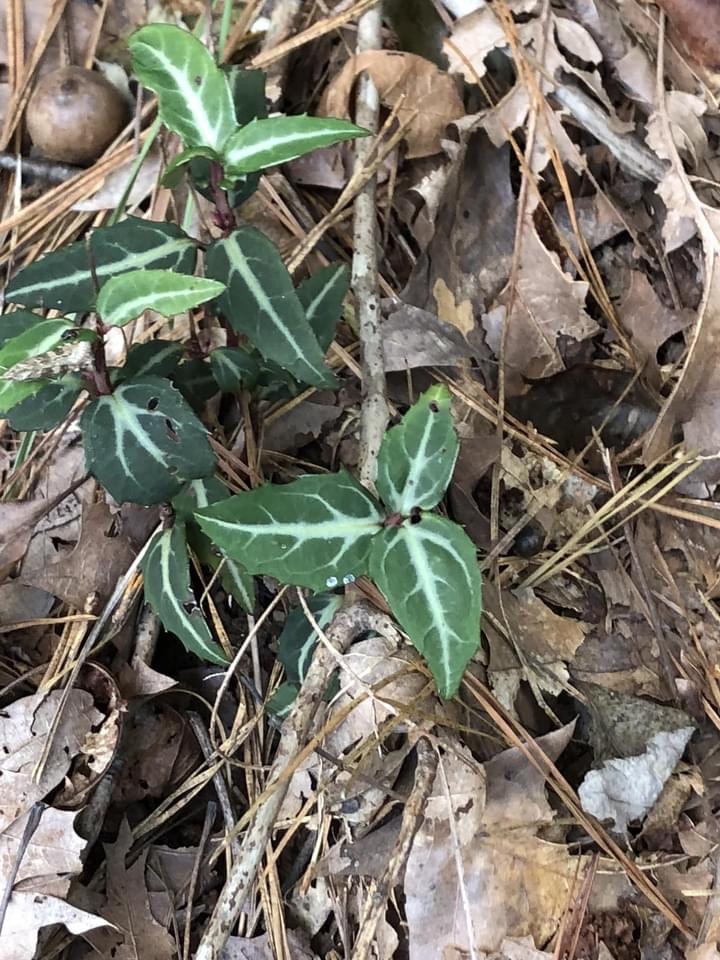
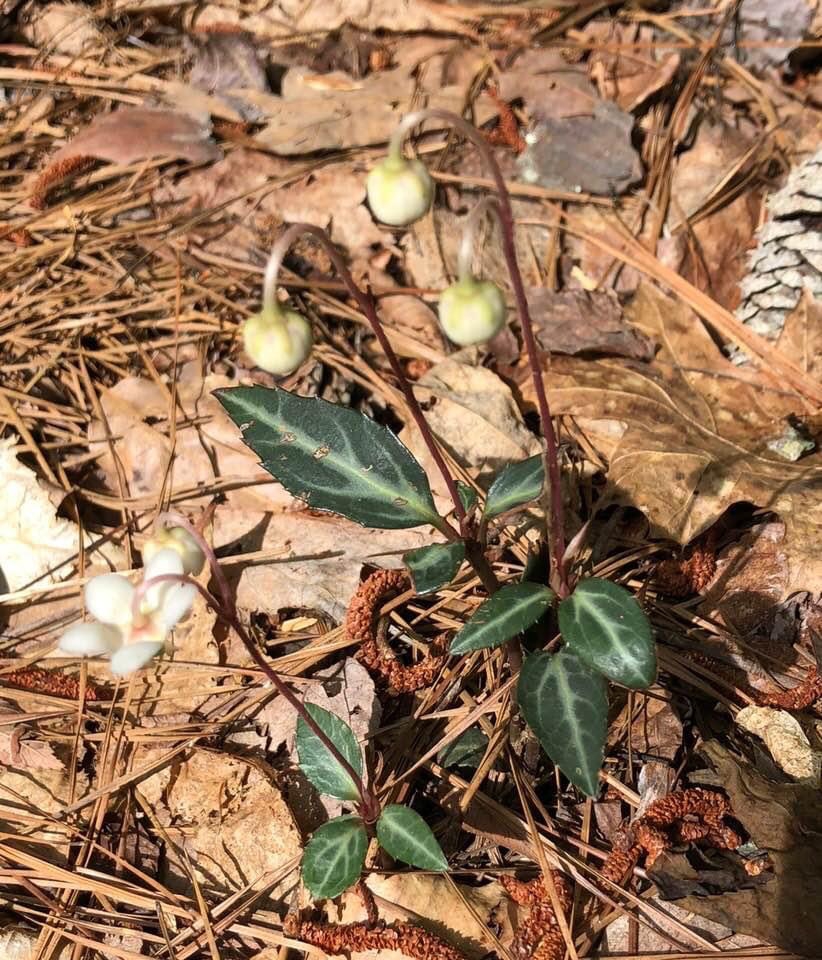
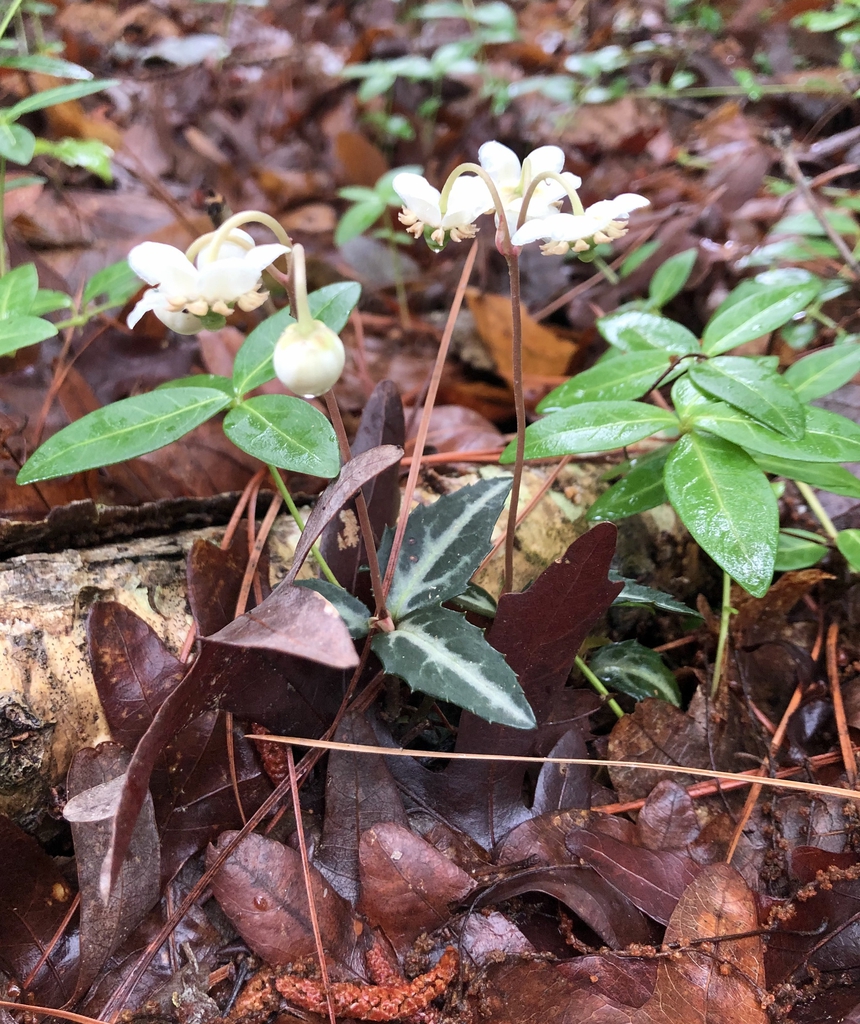
Striped wintergreen is a native, evergreen, rhizomatous, perennial wildflower in the blueberry family (Ericaceae). It is found in dry woods and hardwood forests in the eastern United States, Canada, and Mexico. It grows upright, 4 to 8 inches tall, and has an unbranched, slightly woody stem. The leaves are dark bluish-green, whorled, lanceolate with serrated margins, and they are mottled with white along the leaf veins. The flowers appear in small clusters of 2 to 5. Each bloom is borne on a short, nodding stalk. The flowers are waxy-white to pinkish-white with 5 concave petals, a conspicuous green ovary, and 10 stamens encircle the ovary, forming a crown-like appearance. The genus name Chimaphila originates from two Greek words: cheima, meaning winter, and philein, meaning love. The specific epithet maculata is from the Latin maculosus, meaning spotted, and refers to its mottled leaf pattern. The common name striped wintergreen refers to the plant's evergreen habit; however, it has no minty scent.
This plant needs very well-drained, preferably acidic, organically rich, loamy, or sandy soils in shady conditions. After the blooms fade, a small capsule appears. When it matures, the dry capsule dehisces, and then the seeds are dispersed by the wind. This plant can be slow to develop, and its seeds may have difficulty germinating, and sometimes depend on a mycorrhizal fungus for their establishment. Its fibrous roots may also be divided for propagation. The tannins in the foliage tend to deter deer and other mammals, but bees and other pollinators are attracted to the flowers' nectar.
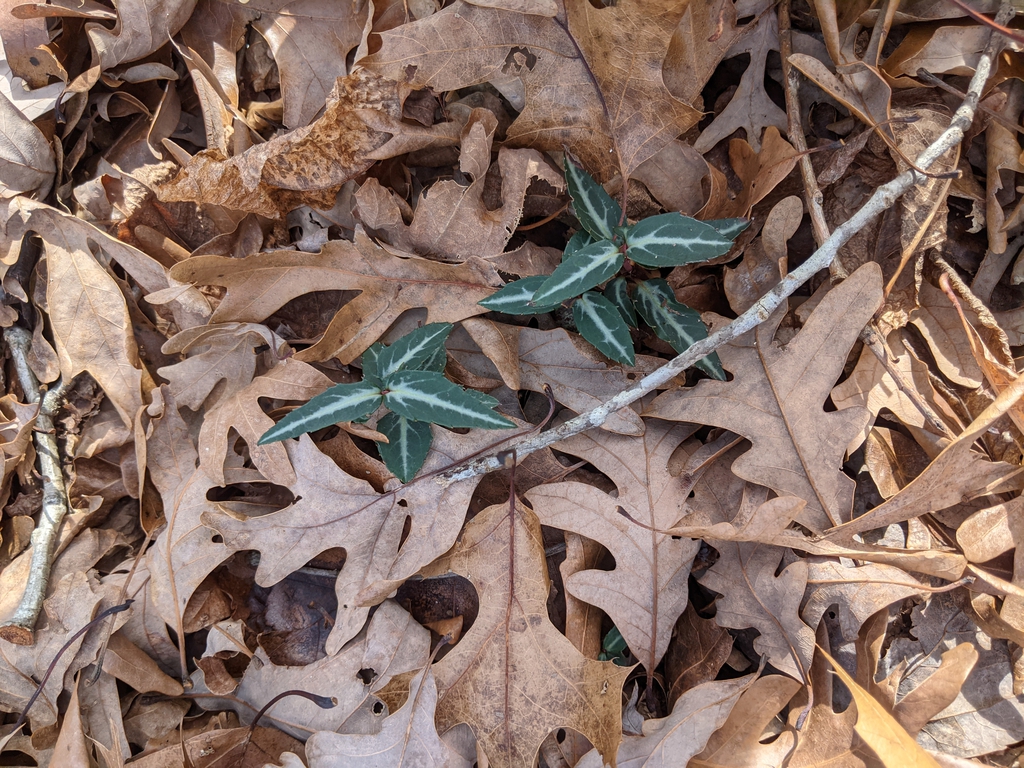
This species is widespread in North Carolina except for the northeastern region. It is easily recognizable by its dark green, white-striped leaves. It is considered endangered in some states, specifically, Maine and Illinois, and rare to uncommon in Vermont.
Use striped wintergreen in a dry woodland setting as a ground cover, for naturalizing, or under shrubs to provide color.
Insects, Diseases, and Other Plant Problems: Tends to be disease and pest-free. The foliage is toxic to sheep.
- See this plant in the following landscape :
- Cultivars / Varieties:
-
- Tags:


- Cultivars / Varieties:
-
- Tags:
-
-
Attributes:
- Genus:
- Chimaphila
- Species:
- maculata
- Family:
- Ericaceae
- Uses (Ethnobotany):
- Native Americans used its leaf tea to treat rheumatism and stomach problems, and crushed leaves were applied as a poultice to sores and wounds
- Life Cycle:
- Perennial
- Recommended Propagation Strategy:
- Division
- Seed
- Country Or Region Of Origin:
- Southeast Canada to Central America
- Distribution:
- Native: USA--AL, AZ, CT, DE, DC, FL, GA, IL, IN, KY, ME, MD, MA, MI, MS, NH, NJ, NY, NC, OH, PA, RI, SC, TN, VT, VA, and WV; Canada--Ontario and Quebec; Costa Rica, El Salvador, Guatemala, Honduras, Mexico Central, Mexico Gulf, Mexico Northeast, Mexico Northwest, Mexico Southeast, Mexico Southwest, Nicaragua. Introduced: France
- Wildlife Value:
- Attracts bumblebees and other bees seeking nectar.
- Dimensions:
- Height: 0 ft. 6 in. - 1 ft. 0 in.
- Width: 0 ft. 6 in. - 0 ft. 9 in.
-
-
Whole Plant Traits:
- Plant Type:
- Ground Cover
- Native Plant
- Wildflower
- Woody Plant Leaf Characteristics:
- Broadleaf Evergreen
- Habit/Form:
- Erect
- Growth Rate:
- Medium
- Maintenance:
- Low
-
-
Cultural Conditions:
- Light:
- Dappled Sunlight (Shade through upper canopy all day)
- Deep shade (Less than 2 hours to no direct sunlight)
- Partial Shade (Direct sunlight only part of the day, 2-6 hours)
- Soil Texture:
- High Organic Matter
- Loam (Silt)
- Sand
- Soil pH:
- Acid (<6.0)
- Soil Drainage:
- Good Drainage
- Very Dry
- Available Space To Plant:
- Less than 12 inches
- NC Region:
- Coastal
- Mountains
- Piedmont
- USDA Plant Hardiness Zone:
- 5a, 5b, 6a, 6b, 7a, 7b, 8a, 8b
-
-
Fruit:
- Fruit Type:
- Capsule
- Fruit Length:
- < 1 inch
- Fruit Width:
- < 1 inch
- Fruit Description:
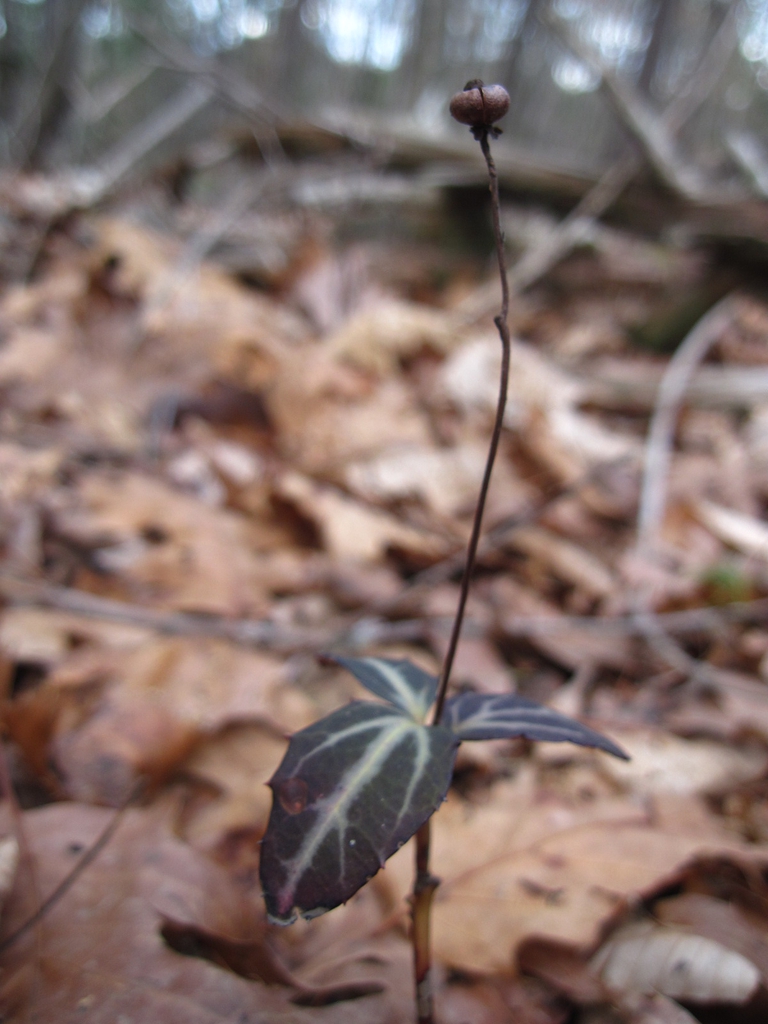
- The fruit is a ribbed, round capsule about 1/3 inch across, and becomes dry, dehiscent, and dark brown at maturity. The seed are very fine and numerous.
-
-
Flowers:
- Flower Color:
- Pink
- White
- Flower Inflorescence:
- Cyme
- Flower Value To Gardener:
- Fragrant
- Showy
- Flower Bloom Time:
- Summer
- Flower Shape:
- Bell
- Cup
- Flower Petals:
- 4-5 petals/rays
- Flower Size:
- < 1 inch
- Flower Description:
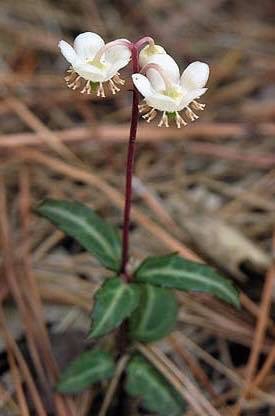
- The fragrant flowers appear singularly or in small clusters of 2 to 5 blooms at the top of a pinkish, 8-inch-long stem. Each flower appears on a nodding stalk that branches from the stem. The blooms are white or pinkish-white, waxy, 0.5 inches wide, and have 5 spreading concave petals and 5 light green sepals. The petals surround a conspicuous green ovary, and 10 stamens encircle the ovary. The anthers are pink, and the pistil is green and knobby. Blooming occurs from June through August. The flowers fade after 2 to 3 weeks.
-
-
Leaves:
- Woody Plant Leaf Characteristics:
- Broadleaf Evergreen
- Leaf Color:
- Blue
- Green
- White
- Leaf Feel:
- Leathery
- Leaf Value To Gardener:
- Long-lasting
- Showy
- Leaf Type:
- Simple
- Leaf Arrangement:
- Alternate
- Whorled
- Leaf Shape:
- Lanceolate
- Ovate
- Leaf Margin:
- Serrate
- Hairs Present:
- No
- Leaf Length:
- 1-3 inches
- Leaf Width:
- < 1 inch
- Leaf Description:
- The leaves are petiolate, dark blue green, alternate to whorled, ovate to lanceolate, 1.5 to 3 inches long, and 0.25 to 1 inches wide. They are leathery, smooth, have sharp-toothed margins, and are mottled with white along the leaf's mid-vein. The underside of the leaf is pale green. There are two pairs of smaller leaves at the base and a whorl of 3 larger leaves below the flower.
-
-
Stem:
- Stem Color:
- Brown/Copper
- Stem Is Aromatic:
- No
- Stem Cross Section:
- Round
- Stem Surface:
- Smooth (glabrous)
- Stem Description:
- The stems are slender, smooth, reddish-brown, semi-woody, and usually unbranched.
-
-
Landscape:
- Landscape Location:
- Naturalized Area
- Woodland
- Landscape Theme:
- Cottage Garden
- Native Garden
- Shade Garden
- Design Feature:
- Mass Planting
- Attracts:
- Bees
- Resistance To Challenges:
- Deer
- Dry Soil
- Heavy Shade