


Causonis japonica
Common Name(s):
Previously known as:
- Cayratia japonica
- Phonetic Spelling
- kaw-SOH-niss ja-PO-ni-ka
- This plant is an invasive species in North Carolina
- Description
-
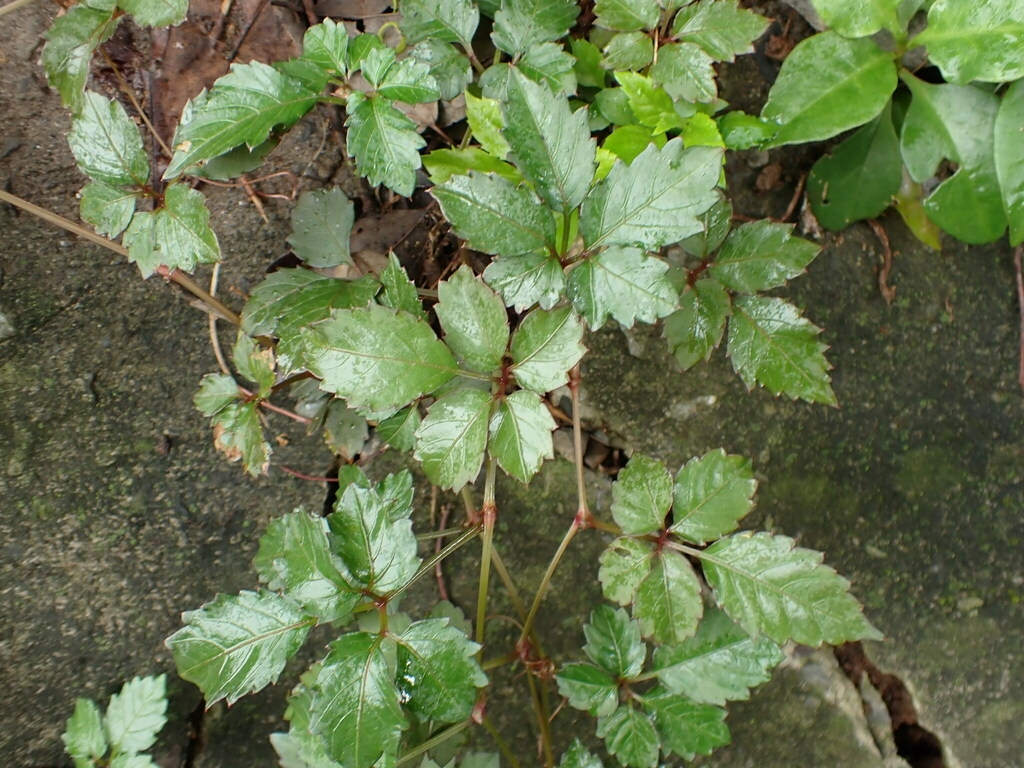
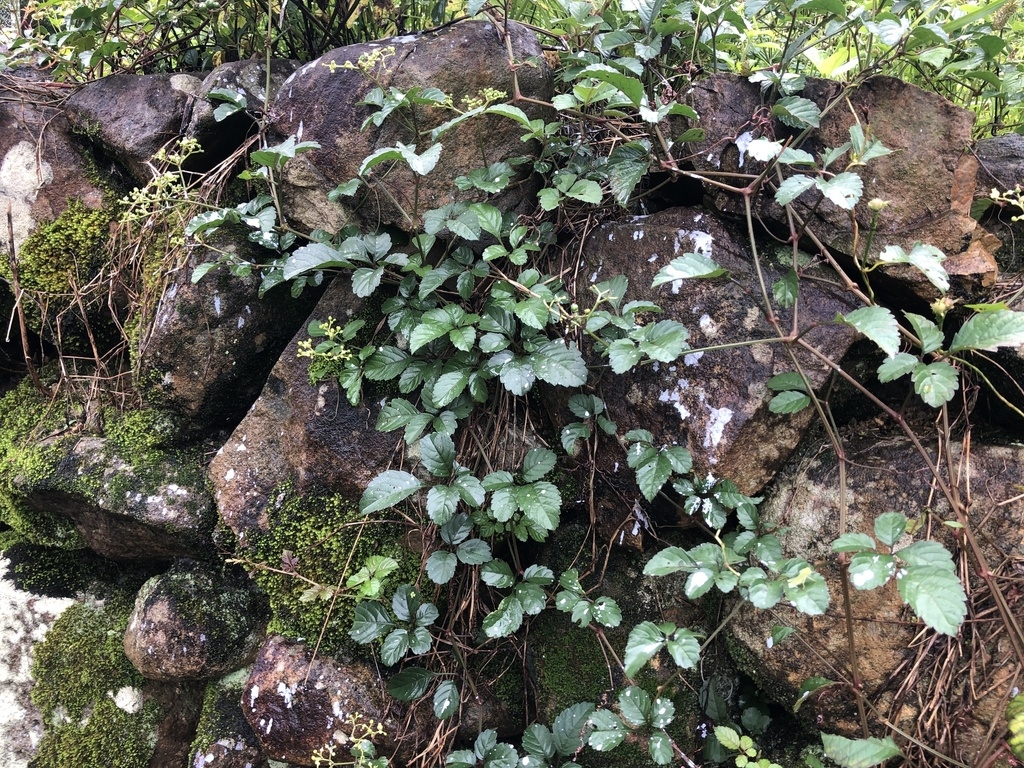
Bushkiller is a vigorous, perennial, climbing vine in the grape family (Vitaceae). It is largely herbaceous though older growth at the base can be woody. It is native to Tropical and Subtropical Asia, Australia and the West Pacific and has found its way to North Carolina where it is an invasive species.
This vine grows in damp areas along streams and ponds. It can grow up to 40 feet long and adheres to trees and surfaces by long tendrils. Its weight can break branches of trees. Its leaflets can block sunlight from reaching plants growing nearby. It spreads by rhizomes and regenerates when the rhizomes are cut or disturbed, which contributes to its weedy nature. Cutting it down to the ground and treating it with herbicides has had some success.
Please choose a native or less problematic plant instead. Suggestions appear to the left.
Insects, Diseases and Other Plant Problems: It is listed as invasive by the NC Invasive Plant Council.
- See this plant in the following landscape :
- Cultivars / Varieties:
-
- Tags:


- Cultivars / Varieties:
-
- Tags:
-
-
Attributes:
- Genus:
- Causonis
- Species:
- japonica
- Family:
- Vitaceae
- Life Cycle:
- Perennial
- Country Or Region Of Origin:
- Tropical and Subtropical Asia, Australia and the West Pacific
- Distribution:
- HI, LA, MS, NC, TX
- Climbing Method:
- Tendrils
-
-
Whole Plant Traits:
- Plant Type:
- Vine
- Weed
- Habit/Form:
- Climbing
- Growth Rate:
- Rapid
- Maintenance:
- High
- Texture:
- Medium
-
-
Cultural Conditions:
- Light:
- Dappled Sunlight (Shade through upper canopy all day)
- Deep shade (Less than 2 hours to no direct sunlight)
- Full sun (6 or more hours of direct sunlight a day)
- Partial Shade (Direct sunlight only part of the day, 2-6 hours)
- Soil Texture:
- Clay
- Loam (Silt)
- Sand
- Soil Drainage:
- Good Drainage
- Moist
- NC Region:
- Piedmont
- USDA Plant Hardiness Zone:
- 7a, 7b, 8a, 8b, 9a, 9b, 10a, 10b
-
-
Fruit:
- Fruit Color:
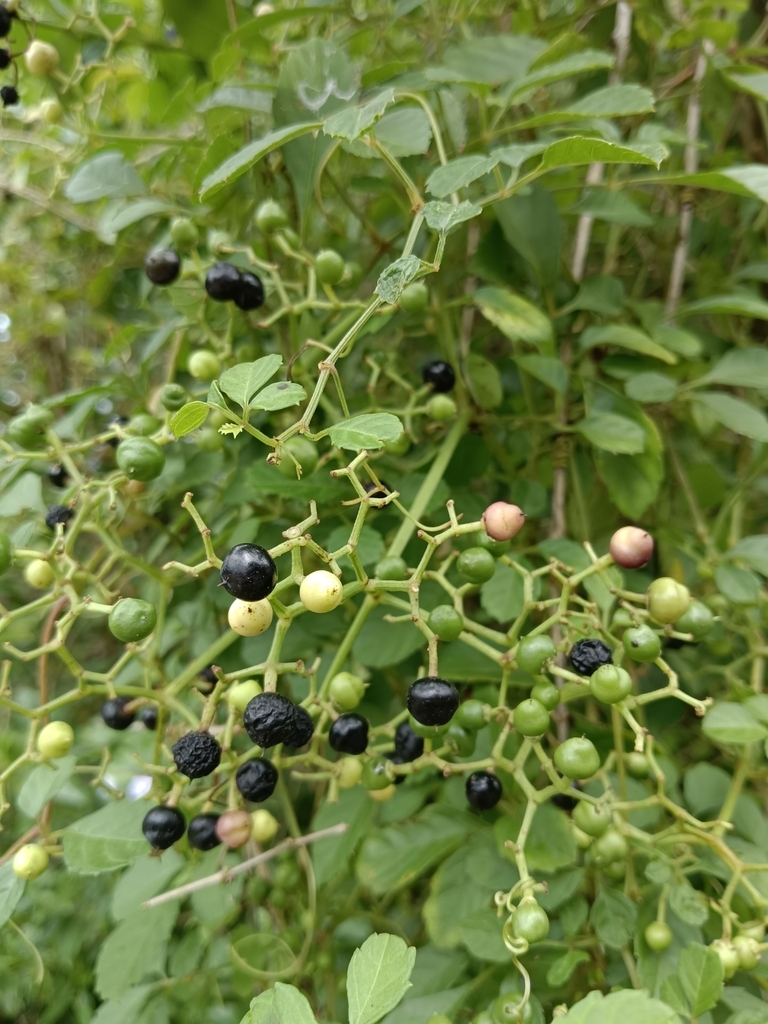
- Purple/Lavender
- White
- Display/Harvest Time:
- Fall
- Fruit Type:
- Berry
- Fruit Length:
- < 1 inch
- Fruit Width:
- < 1 inch
- Fruit Description:
- White or purple grape-like fruit with 2-4 triangular seeds
-
-
Flowers:
- Flower Color:
- Gold/Yellow
- Orange
- Pink
- Flower Inflorescence:
- Umbel
- Flower Shape:
- Cup
- Flower Size:
- < 1 inch
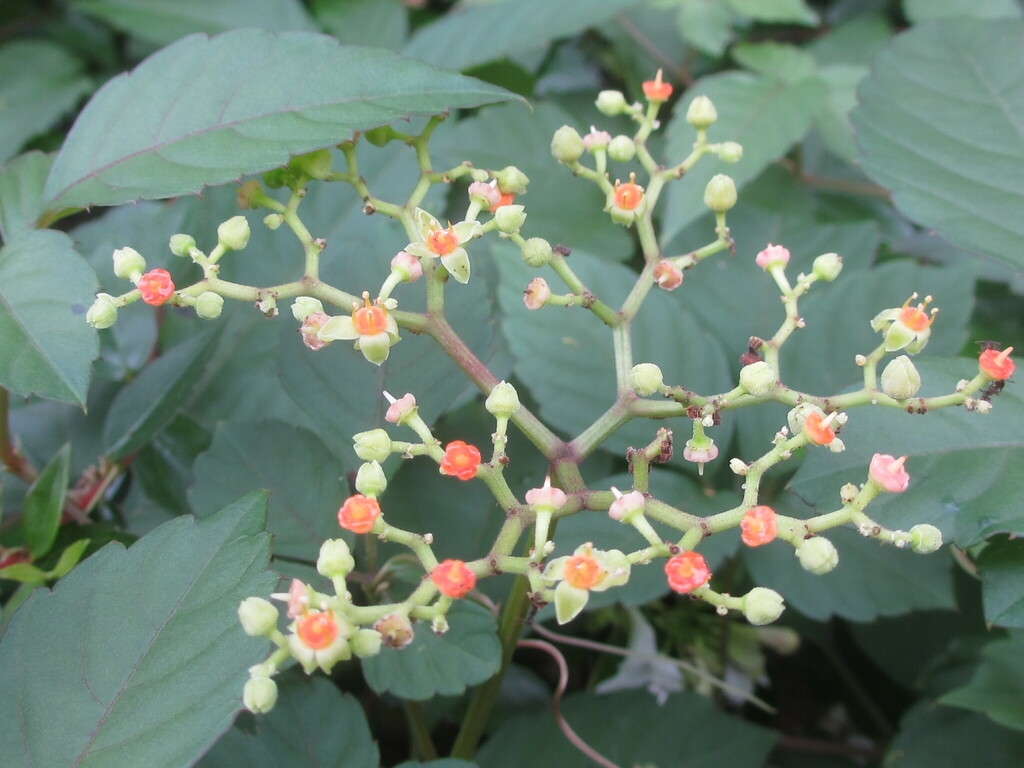
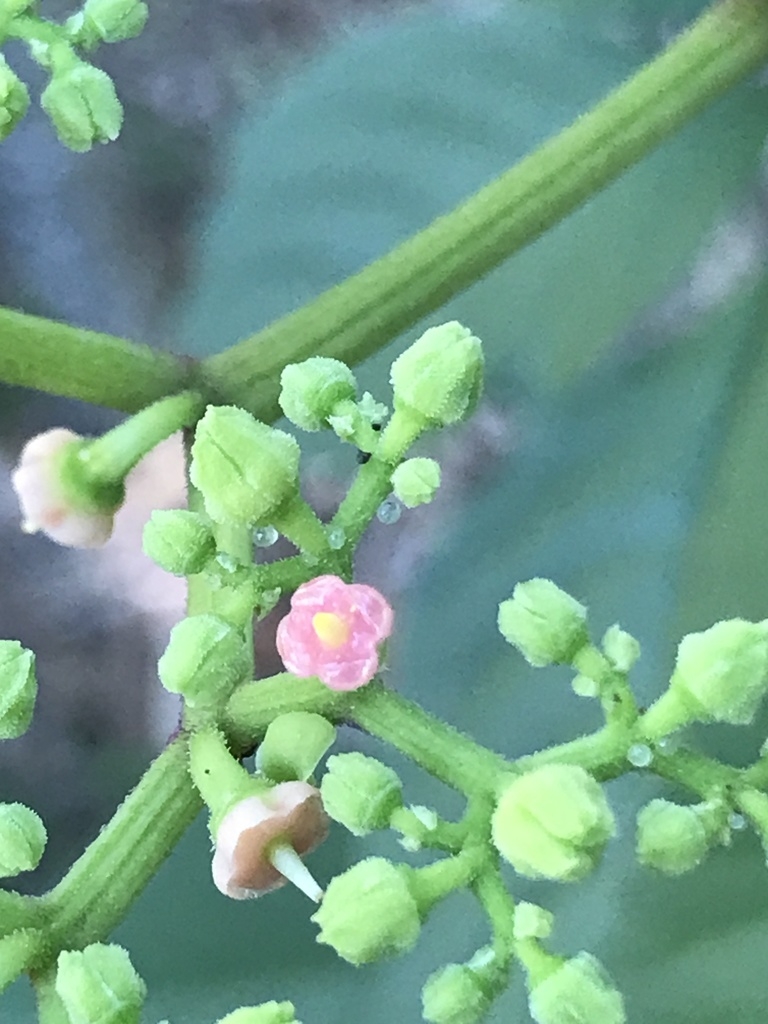
- Flower Description:
- Small cup-shaped pinkish or yellowish flowers occur in umbrels late summer
-
-
Leaves:
- Leaf Color:
- Green
- Leaf Type:
- Compound (Pinnately , Bipinnately, Palmately)
- Leaf Arrangement:
- Alternate
- Leaf Shape:
- Ovate
- Leaf Margin:
- Dentate
- Hairs Present:
- Yes
- Leaf Length:
- 1-3 inches
- Leaf Width:
- < 1 inch
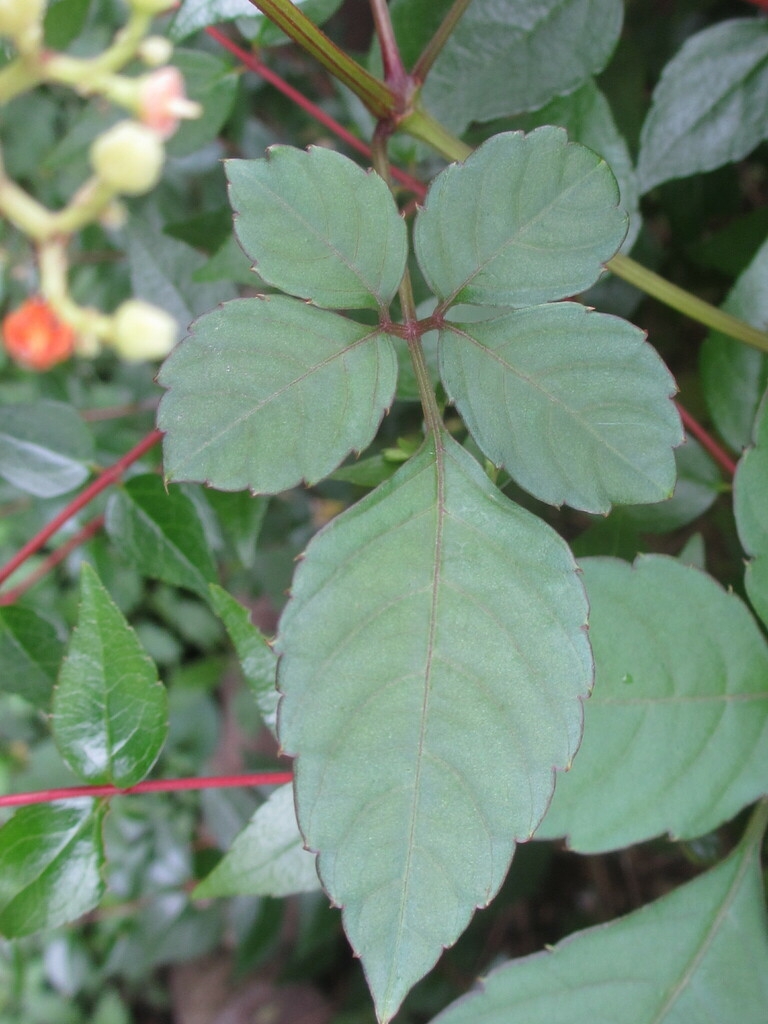
- Leaf Description:
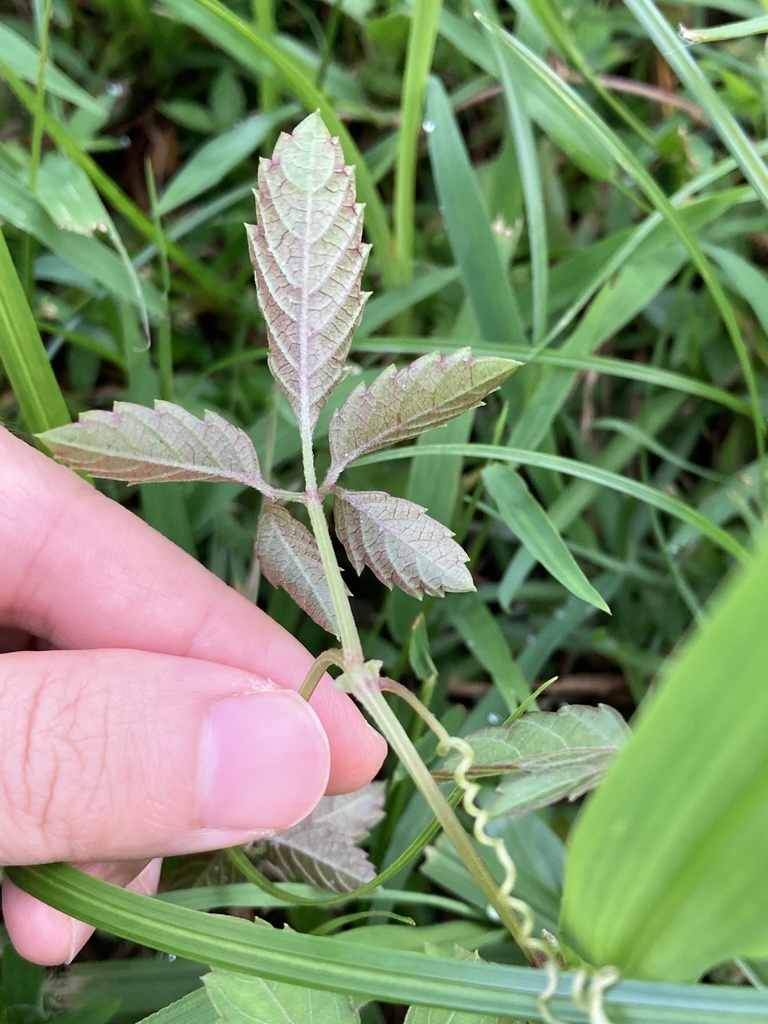
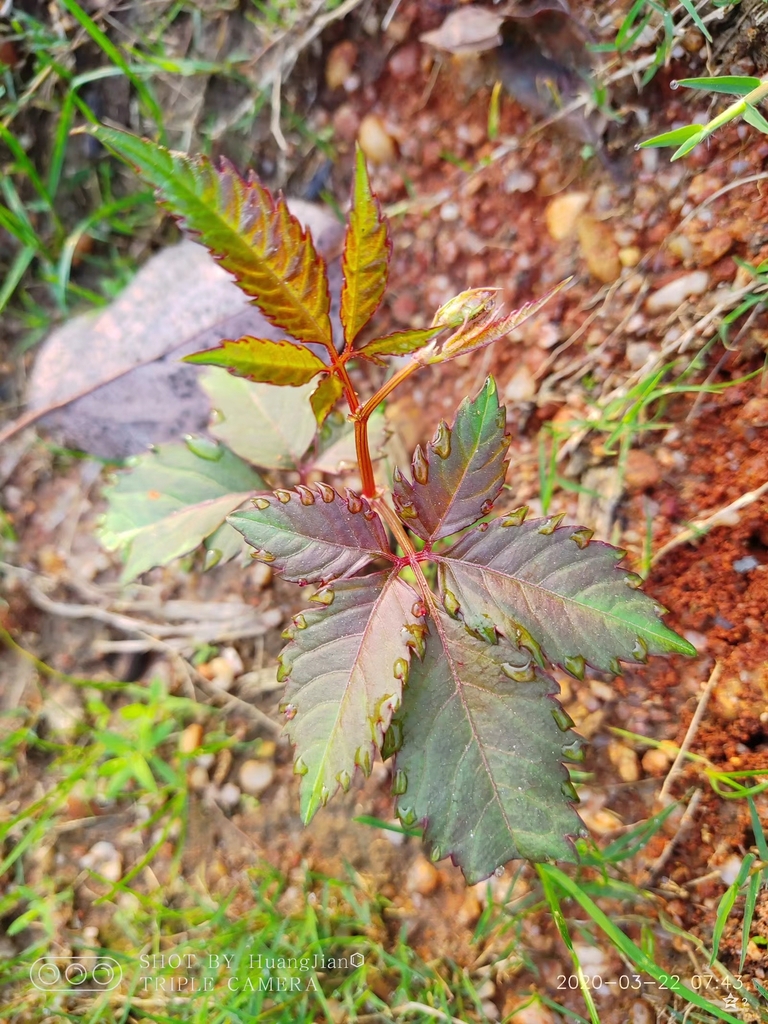
- The green leaves are compound with five leaflets, 2 on each side and one at the tip with a longer stem. Margins are toothed and the undersides are whitish in color. Hairs can be present on both surfaces. Leaflets are 1-3 inches long and 1/2 to 1.5 inches wide. New growth can have a reddish color. Tendrils grow opposite of the leaves.
-
-
Stem:
- Stem Color:
- Green
- Purple/Lavender
- Stem Is Aromatic:
- No
- Stem Cross Section:
- Angular
- Stem Description:
- Stems are laterally flattened. Cut stems produce a sticky exudate. Branches can have a purplish-green color
-
-
Landscape:
- Problems:
- Invasive Species
- Weedy