



Utricularia
Common Name(s):
- Phonetic Spelling
- yoo-trik-u-LAR-ee-uh
- Description
-
Bladderworts are annuals or herbaceous perennials, usually growing as aquatic plants or found in other wet environments. There are 285 species worldwide, making it the largest genus of carnivorous plants. It is a member of the bladderwort family (Lentibulariaceae). The genus name is derived from the Latin for “a small vessel” and refers to the traps.
Cultivation is best accomplished by mimicking the natural habitat of the plant. Aquatic bladderworts prefer growing in still, shallow, acidic water with low nutrient value. Most species want full sun. Some species can spread aggressively and are not suitable for small ponds. Terrestrial species are grown in containers of pure sand that must be kept moist or wet at all times. Use rainwater or distilled water on these plants. They are sensitive to chemicals used in water treatment.
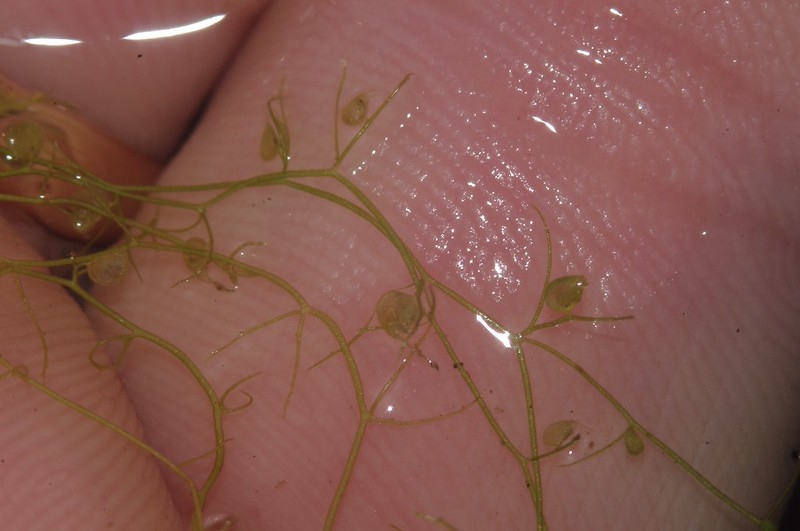
Bladderworts trap small organisms in their tiny bladders, which have a trap door that is triggered by hairs on the door. When prey comes in contact with the hairs, the door opens in a millisecond, sucking the animal in, and closing in about 2.5 milliseconds. The primary food is rotifers and mosquito larvae, but some bladderworts capture and absorb vegetable matter. The aquatic species are completely submerged in water except for the stem and blooms. They may anchor themselves or float freely. Other species grow in very wet soil or are epiphytic and are usually tropical. None of them has true roots.
Tropical bladderworts can be grown successfully in containers as houseplants. Temperate species are perfect for ponds, aquaria or container water gardens. As the trapping mechanism cannot be easily observed, they are not as popular as other carnivorous plants in children’s gardens. They would be perfect for an aquatic pollinator garden.
Insects, Diseases, and Other Plant Problems: No serious problems.
- See this plant in the following landscape :
- Cultivars / Varieties:
- Utricularia gibba, Utricularia inflata, Utricularia purpurea, Utricularia subulata
- Tags:






- Cultivars / Varieties:
- Utricularia gibba, Utricularia inflata, Utricularia purpurea, Utricularia subulata
- Tags:
-
-
Attributes:
- Genus:
- Utricularia
- Family:
- Lentibulariaceae
- Life Cycle:
- Annual
- Perennial
- Recommended Propagation Strategy:
- Division
- Seed
- Country Or Region Of Origin:
- North America and most places in the world
- Distribution:
- Every state
- Wildlife Value:
- The flowers are rich in nectar and visited by bees.
-
-
Whole Plant Traits:
- Plant Type:
- Annual
- Carnivorous
- Herbaceous Perennial
- Water Plant
- Woody Plant Leaf Characteristics:
- Deciduous
- Habit/Form:
- Spreading
- Growth Rate:
- Medium
- Maintenance:
- Low
- Texture:
- Fine
-
-
Cultural Conditions:
- Light:
- Full sun (6 or more hours of direct sunlight a day)
- Soil Texture:
- Sand
- Soil pH:
- Acid (<6.0)
- Soil Drainage:
- Frequent Standing Water
- NC Region:
- Coastal
- Piedmont
-
-
Fruit:
- Fruit Color:
- Brown/Copper
- Fruit Type:
- Capsule
- Fruit Length:
- < 1 inch
- Fruit Width:
- < 1 inch
-
-
Flowers:
- Flower Color:
- Cream/Tan
- Gold/Yellow
- Pink
- Purple/Lavender
- White
- Flower Inflorescence:
- Raceme
- Flower Value To Gardener:
- Showy
- Flower Bloom Time:
- Spring
- Summer
- Flower Shape:
- Lipped
- Flower Petals:
- 4-5 petals/rays
- Flower Size:
- 1-3 inches
- Flower Description:
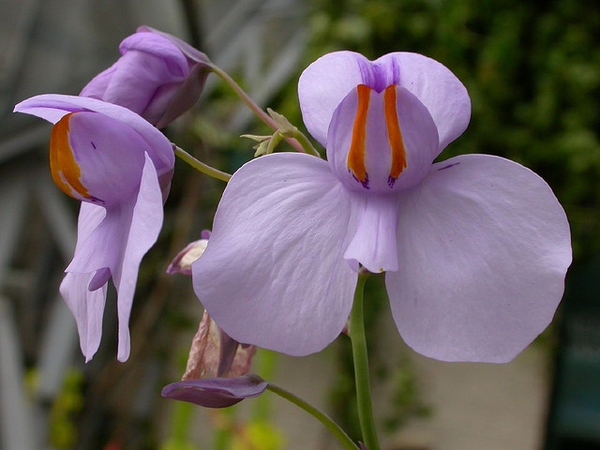
- Small flowers with 2 asymmetrical lips in pink, purple, white or yellow appear in spring and summer and are held above the water on 1- to 5-inch stems. They range in size from ¼ inch to 1½ wide. The epiphytic species of South America have the showiest flowers.
-
-
Leaves:
- Woody Plant Leaf Characteristics:
- Deciduous
- Leaf Color:
- Green
- Leaf Type:
- Compound (Pinnately , Bipinnately, Palmately)
- Leaf Arrangement:
- Opposite
- Leaf Margin:
- Lobed
- Hairs Present:
- Yes
- Leaf Description:
- Modified stems and leaves act as anchors and storage. Bladders trap small water insects. Leaves are a star-shaped mat with delicate, threadlike stems. Terrestrial species sometimes produce a few photosynthetic leaf-shoots.
-
-
Stem:
- Stem Is Aromatic:
- No
- Stem Description:
- Most species form long, thin, sometimes branching stems or stolons beneath the surface of the substrate whether it be water or soil.
-
-
Landscape:
- Landscape Location:
- Container
- Houseplants
- Pond
- Landscape Theme:
- Pollinator Garden
- Rain Garden
- Water Garden
- Attracts:
- Bees
- Problems:
- Weedy



