


Alternanthera philoxeroides
Common Name(s):
Previously known as:
- Achyranthes philoxeroides
- Phonetic Spelling
- al-ter-nan-THER-ra fi-LOX-er-OY-deez
- This plant is an invasive species in North Carolina
- Description
-
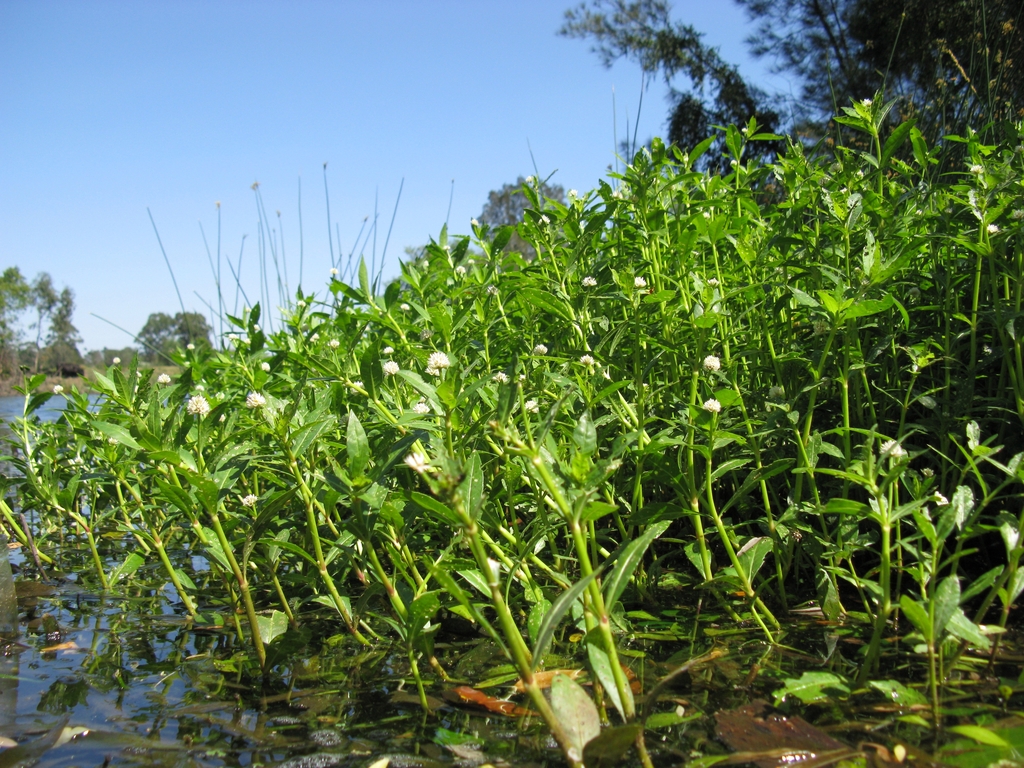
Alligatorweed is an annual or herbaceous perennial weed in the Amaranth family (Amaranthaceae) usually found growing on moist, occasionally wet sites or even in areas with frequently standing water. Native to South America, it was introduced to the southeastern United States in the 1880s, likely from ships’ ballast water. In North Carolina, where it is an invasive species, it is widely found in the coastal plain, less common in the piedmont, and rare in the mountains.
Alligatorweed can grow upright, but typically sprawls to form dense, prostrate masses. Its flowers rarely produce seed, but roots, leaves and stems all grow from leaf nodes, facilitating invasive spread from even small plant fragments, typically through water.
Its slender round stems are hollow in aquatic areas, but more solid in terrestrial plants. Alligatorweed can form mats more than 30 feet wide along shorelines or across rivers. These are unsightly, interfere with fishing, swimming, navigation and harbor mosquitoes. Floating mats caught in dams or other areas contribute to both flooding and erosion. Terrestrial infestations can affect row crops, and it is allelopathic to some plants.
Please choose a native or less problematic plant for landscapes. See plant suggestions to the left.
Insects, Diseases and Other Plant Problems: It is listed as invasive by the NC Invasive Plant Council. Biological control insects, including flea beetles (Agasicles hygrophila) and stem-borer moths (Arcola malloi), which effectively manage Alligatorweed elsewhere do not reliably overwinter in North Carolina.
- See this plant in the following landscape :
- Cultivars / Varieties:
-
- Tags:


- Cultivars / Varieties:
-
- Tags:
-
-
Attributes:
- Genus:
- Alternanthera
- Species:
- philoxeroides
- Family:
- Amaranthaceae
- Life Cycle:
- Perennial
- Country Or Region Of Origin:
- South America
- Distribution:
- Southeastern United States, California, parts of Central America, Asia, and Australia
-
-
Whole Plant Traits:
- Plant Type:
- Annual
- Herbaceous Perennial
- Water Plant
- Weed
- Habit/Form:
- Creeping
- Dense
- Prostrate
- Spreading
- Growth Rate:
- Rapid
- Maintenance:
- High
- Texture:
- Medium
-
-
Cultural Conditions:
- Light:
- Full sun (6 or more hours of direct sunlight a day)
- Partial Shade (Direct sunlight only part of the day, 2-6 hours)
- Soil Drainage:
- Frequent Standing Water
- Moist
- Occasionally Wet
- NC Region:
- Coastal
- Mountains
- Piedmont
- USDA Plant Hardiness Zone:
- 7a, 7b, 8a, 8b, 9a, 9b, 10a, 10b
-
-
Fruit:
- Display/Harvest Time:
- Fall
- Summer
- Fruit Type:
- Achene
- Fruit Length:
- < 1 inch
- Fruit Width:
- < 1 inch
- Fruit Description:
- Plants rarely form viable seeds in this country. The utricle (an achene-like structure) rarely has seeds.
-
-
Flowers:
- Flower Color:
- White
- Flower Inflorescence:
- Raceme
- Spike
- Flower Bloom Time:
- Fall
- Spring
- Summer
- Flower Shape:
- Dome
- Flower Petals:
- Tepals
- Flower Size:
- < 1 inch
- Flower Description:
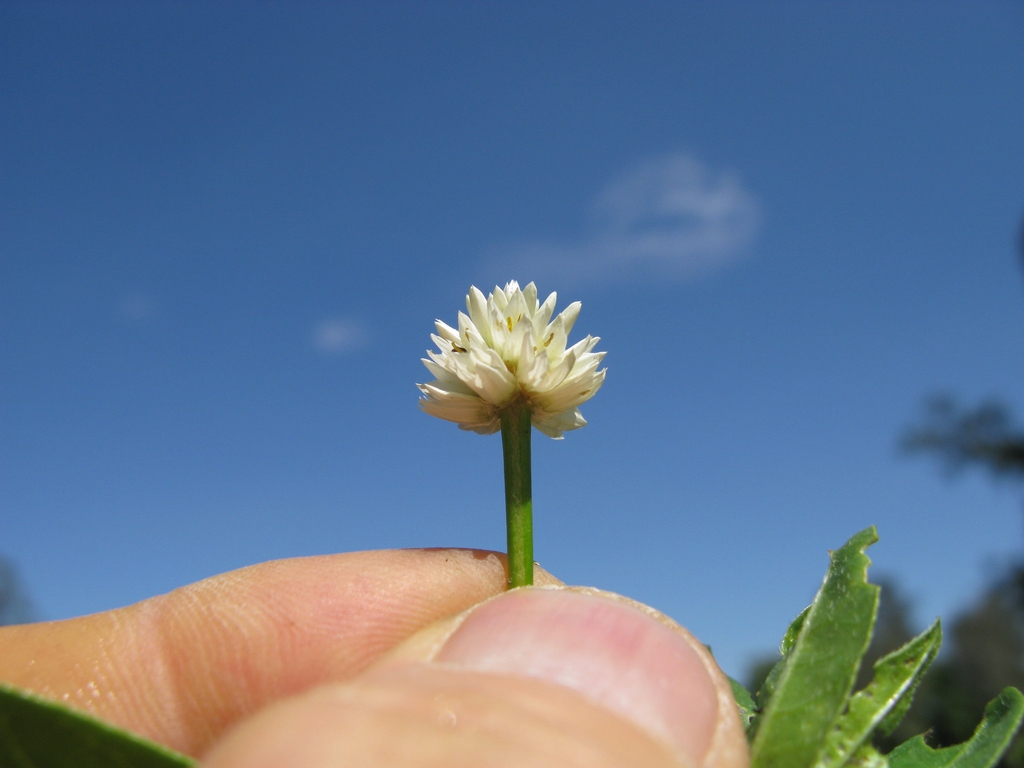
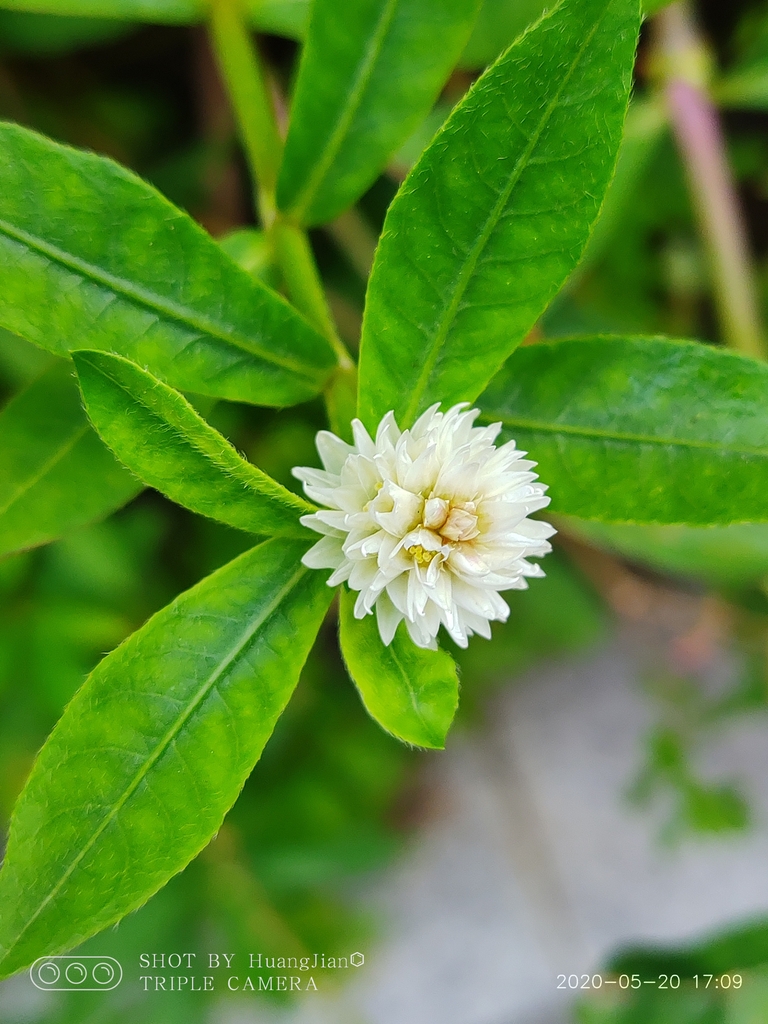
- Flowers are small, white, papery, and clover-like on short petioles borne on dense axillary spike-like racemes.
-
-
Leaves:
- Leaf Color:
- Green
- Leaf Type:
- Simple
- Leaf Arrangement:
- Opposite
- Leaf Shape:
- Elliptical
- Ovate
- Leaf Margin:
- Entire
- Hairs Present:
- No
- Leaf Length:
- 1-3 inches
- Leaf Width:
- < 1 inch
- Leaf Description:
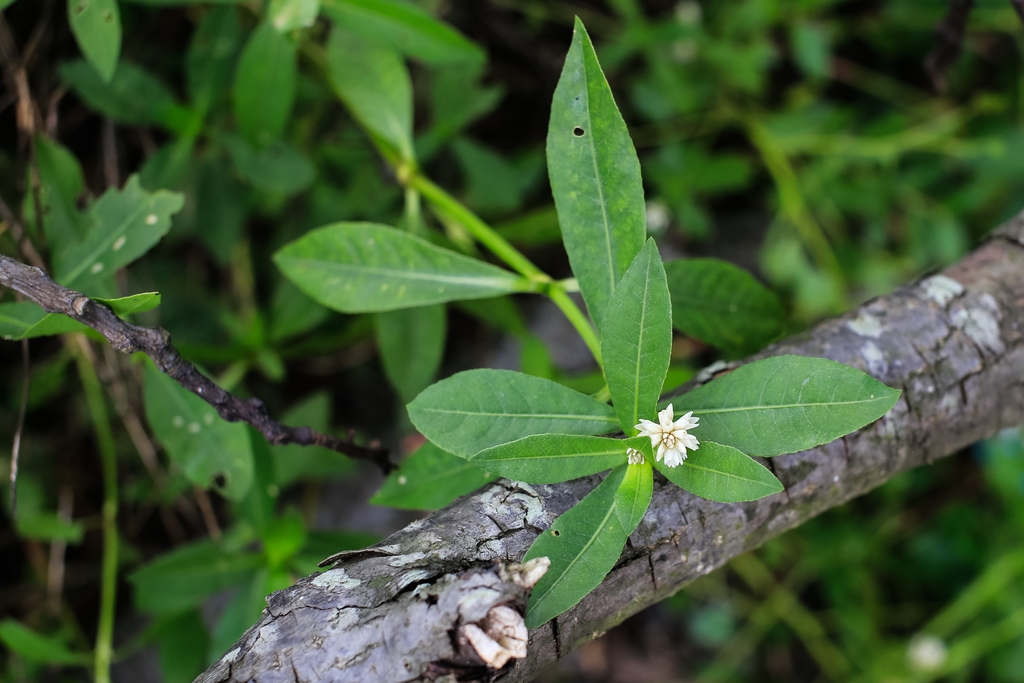
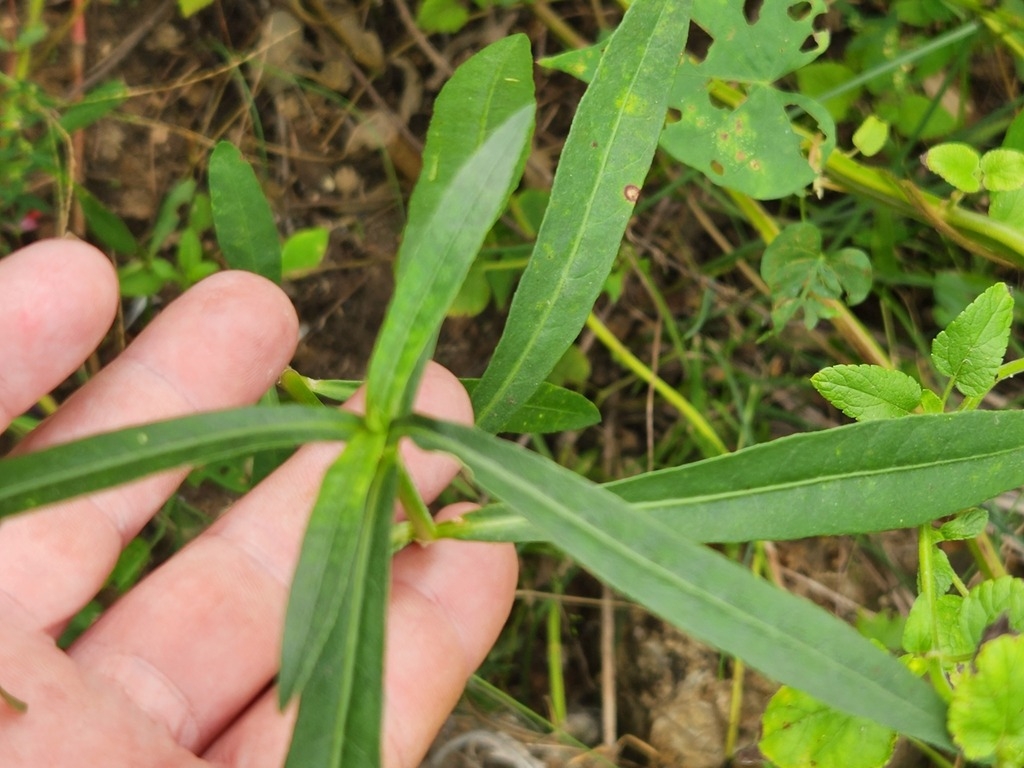
- 1.5 to 4 inch elliptical to ovate simple green leaves grow oppositely with a distinct midrib.
-
-
Stem:
- Stem Color:
- Green
- Pink
- Red/Burgundy
- Stem Is Aromatic:
- No
- Stem Cross Section:
- Round
- Stem Description:
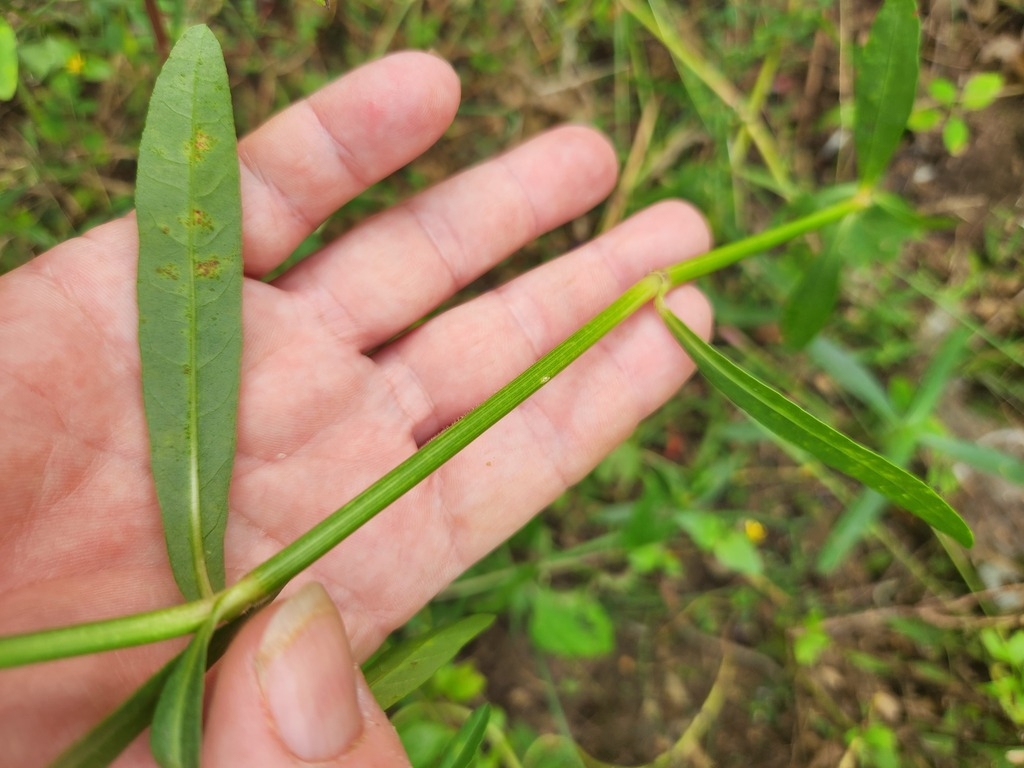
- Round green stems turn pink or red when stressed. Aquatic plant stems are hollow; terrestrial plants have woodier (lignified) stems.
-
-
Landscape:
- Resistance To Challenges:
- Wet Soil
- Problems:
- Invasive Species
- Weedy