


Festuca glauca
Common Name(s):
Previously known as:
- Festuca cinerea var. glauca
- Festuca eragrostoides
- Festuca veneris
- Phonetic Spelling
- fes-TOO-kah GLAW-kah
- Description
-
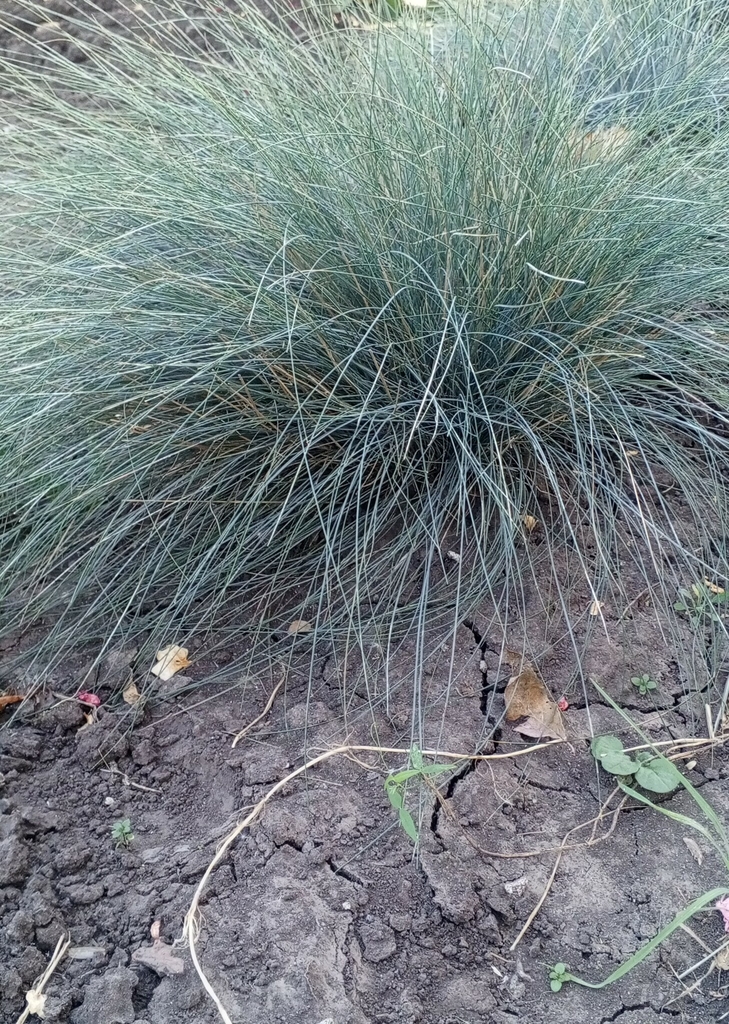
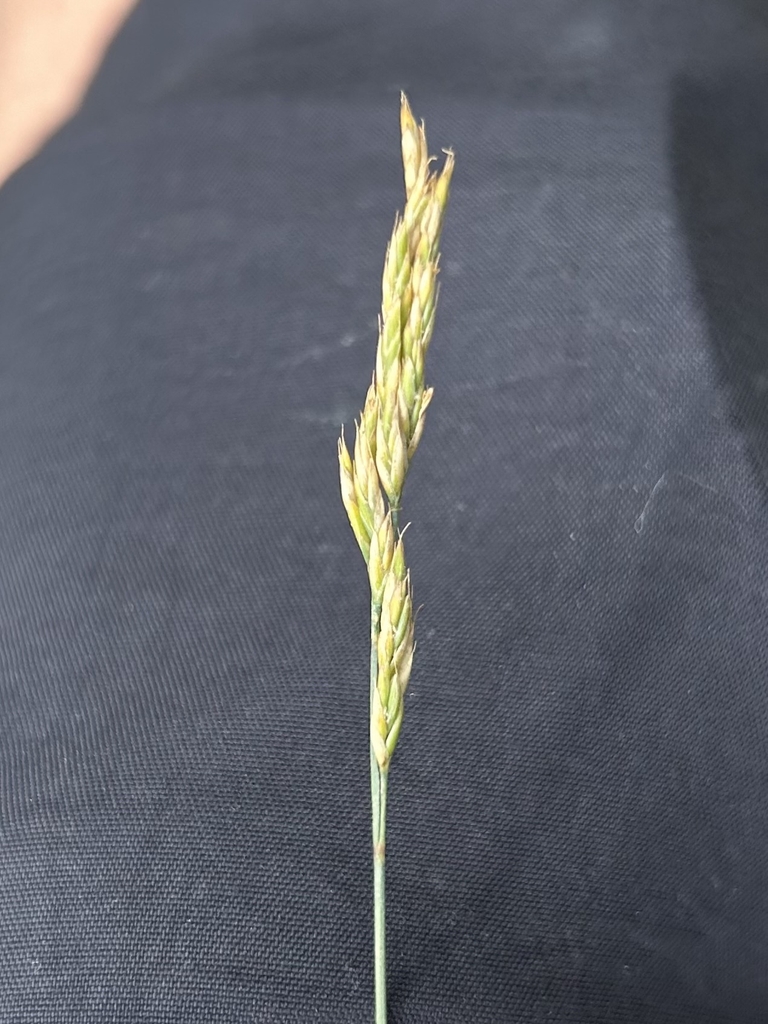
Blue fescue is a semi-evergreen, clumping, low-growing, short-lived, cool-season, perennial, ornamental grass. It has a dome-shaped habit with fine, needle-like, blue-gray blades that project upward and outward. It matures to a height of 9 to 12 inches and spreads from 12 to 18 inches. In late spring to early summer, green, purple-tinged flowers appear in terminal panicles, and seed heads follow. It is native to Spain and as far as north and northwestern Italy, and is a member of the grass family (Poaceae). The genus name Festuca is derived from Latin and means "stalk" or "straw." The specific epithet glauca is Latin and means bluish-green.
This ornamental grass prefers full sun but will tolerate some partial shade. Thrives in medium-moist to dry, well-drained soils. It is drought and poor-soil-tolerant, but is intolerant of wet or poorly drained soils. In mild climates, the grass may retain its bluish-gray color over winter, but in colder climates or during severe winter weather, the grass will show signs of browning. The grass also tends to decline in hot, humid summer months. Clumps tend to die and require division every two to three years, and are either replaced or replanted. The best method of propagation is by division. The grass may be propagated by seed, but there may be variations in the leaf blade color.
Blue fescue is grown for its blue-gray foliage and may be used as a semi-green ground cover or accent plant. It is most attractive in the spring and fall, and it blends well with other ornamental grasses.
Insects, Disease, and Other Plant Problems: No significant insect or disease problems. Short-lived ornamental grass that does not tolerate hot or humid conditions. Deer and rabbits are known to graze the foliage.
- See this plant in the following landscape :
- Cultivars / Varieties:
-
- 'Blue Whiskers'
10 to 12 inches tall, 18 to 22 inches tall when blooming, vigorous, bright silvery-blue foliage, yellow-green flowers - 'Boulder Blue'
stiffer, more upright, slate blue foliage, heat and humidity tolerance - 'Cool As Ice"
blue foliage with a powdery texture, blue-green flowers, matures to a golden tint - 'Elijah Blue'
most popular, 8 to 12 inches tall, compact, bright silver-blue, needle-like foliage, bluish flowers - 'Golden Toupee'
compact, vibrant yellow-green foliage - 'Harz'
olive green foliage - 'Seeigel' (Sea Urchin)
compact, steel blue foliage - 'Tom Thumb'
grows up to 4 inches tall
- 'Blue Whiskers'
- 'Blue Whiskers', 'Boulder Blue', 'Cool As Ice", 'Elijah Blue', 'Golden Toupee', 'Harz', 'Seeigel' (Sea Urchin), 'Tom Thumb'
- Tags:


- Cultivars / Varieties:
-
- 'Blue Whiskers'
10 to 12 inches tall, 18 to 22 inches tall when blooming, vigorous, bright silvery-blue foliage, yellow-green flowers - 'Boulder Blue'
stiffer, more upright, slate blue foliage, heat and humidity tolerance - 'Cool As Ice"
blue foliage with a powdery texture, blue-green flowers, matures to a golden tint - 'Elijah Blue'
most popular, 8 to 12 inches tall, compact, bright silver-blue, needle-like foliage, bluish flowers - 'Golden Toupee'
compact, vibrant yellow-green foliage - 'Harz'
olive green foliage - 'Seeigel' (Sea Urchin)
compact, steel blue foliage - 'Tom Thumb'
grows up to 4 inches tall
- 'Blue Whiskers'
- 'Blue Whiskers', 'Boulder Blue', 'Cool As Ice", 'Elijah Blue', 'Golden Toupee', 'Harz', 'Seeigel' (Sea Urchin), 'Tom Thumb'
- Tags:
-
-
Attributes:
- Genus:
- Festuca
- Species:
- glauca
- Family:
- Poaceae
- Recommended Propagation Strategy:
- Division
- Seed
- Country Or Region Of Origin:
- Northeast Spain to Northwest Italy
- Distribution:
- Native: France, Italy, Spain, and Switzerland. Introduced: Canary Island, Colombia, Corsica, El Salvador, Great Britain, Ireland, Madeira, and Morocco
- Wildlife Value:
- Seed heads attract small birds.
- Dimensions:
- Height: 0 ft. 9 in. - 1 ft. 0 in.
- Width: 1 ft. 0 in. - 1 ft. 6 in.
-
-
Whole Plant Traits:
- Plant Type:
- Ground Cover
- Ornamental Grasses and Sedges
- Woody Plant Leaf Characteristics:
- Semi-evergreen
- Habit/Form:
- Clumping
- Dense
- Mounding
- Maintenance:
- Medium
- Texture:
- Fine
-
-
Cultural Conditions:
- Light:
- Full sun (6 or more hours of direct sunlight a day)
- Partial Shade (Direct sunlight only part of the day, 2-6 hours)
- Soil pH:
- Acid (<6.0)
- Alkaline (>8.0)
- Neutral (6.0-8.0)
- Soil Drainage:
- Good Drainage
- Moist
- Occasionally Dry
- Available Space To Plant:
- 12 inches-3 feet
- NC Region:
- Coastal
- Mountains
- Piedmont
- USDA Plant Hardiness Zone:
- 4a, 4b, 5a, 5b, 6a, 6b, 7a, 7b, 8a, 8b
-
-
Fruit:
- Fruit Color:
- Brown/Copper
- Fruit Type:
- Caryopsis
- Fruit Description:
- Brown seed heads follow the flowers. The seeds are self-sowing.
-
-
Flowers:
- Flower Color:
- Green
- Purple/Lavender
- Flower Inflorescence:
- Insignificant
- Panicle
- Flower Bloom Time:
- Summer
- Flower Description:
- The flowers are green and purple-tinted and present on terminal panicles. Blooms from June to July. Brown seed heads follow.
-
-
Leaves:
- Woody Plant Leaf Characteristics:
- Semi-evergreen
- Leaf Color:
- Blue
- Green
- Leaf Feel:
- Glossy
- Leaf Value To Gardener:
- Long-lasting
- Showy
- Leaf Type:
- Sheath
- Leaf Shape:
- Linear
- Hairs Present:
- No
- Leaf Length:
- > 6 inches
- Leaf Width:
- < 1 inch
- Leaf Description:
- The leaves are linear, up to 10 inches long, finely-textured, upright, and radiate outward to form a dense clump
-
-
Stem:
- Stem Is Aromatic:
- No
-
-
Landscape:
- Landscape Location:
- Container
- Small Space
- Walkways
- Landscape Theme:
- Butterfly Garden
- Cottage Garden
- Drought Tolerant Garden
- Rock Garden
- Design Feature:
- Border
- Foundation Planting
- Attracts:
- Butterflies
- Resistance To Challenges:
- Black Walnut
- Drought
- Dry Soil
- Poor Soil
- Urban Conditions