


Festuca arvernensis
Common Name(s):
Previously known as:
- Festuca cinerea var. glauca
- Schedonorus glaucus
- Phonetic Spelling
- fes-TOO-kah ar-VER-nen-sis
- Description
-
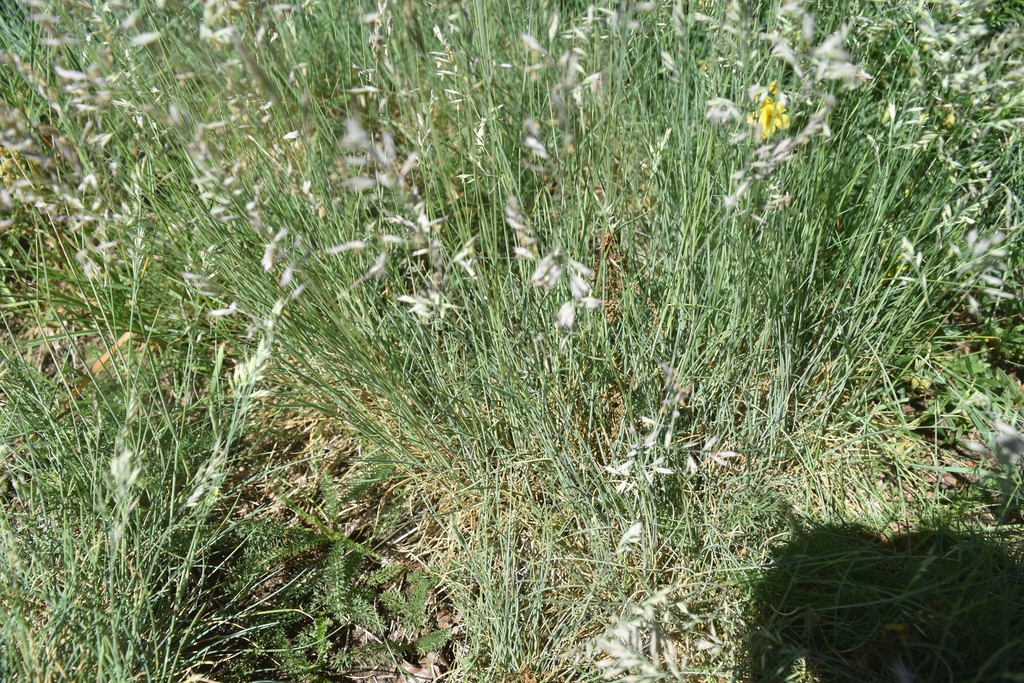
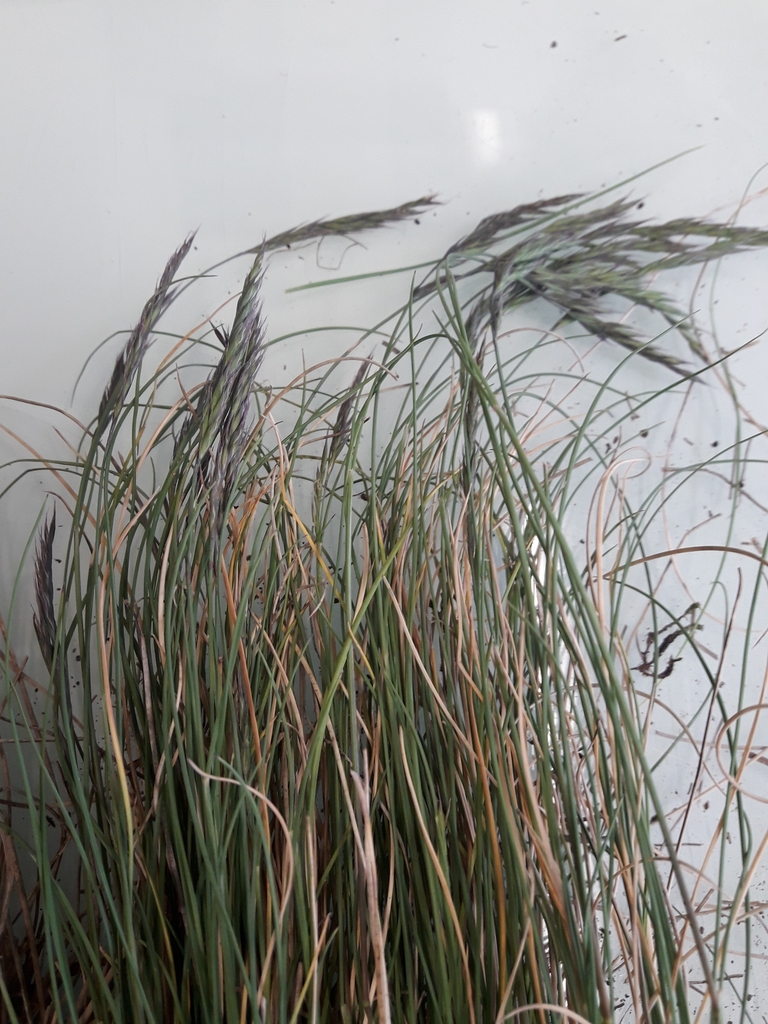
Field fescue is a fine-textured, semi-evergreen, perennial, ornamental grass that may grow 1 to 3 feet tall and 1 to 2 feet wide, with dense clumping tufts, and linear, blue-green leaves. In mid-summer, the inconspicuous, yellowish-gold flowers appear as delicate, feathery spikes. This grass is native to the mountains of South Central and Southwestern France and has become naturalized in California and New Mexico. It is a member of the grass family (Poaceae). The genus name Festuca is Latin and means "stem" or "stalk". The specific epithet, arvernensis, honors the Celtic tribe, Arverni, who once resided in the Auvergne region of France.
Prefers full sun and is tolerant of occasional dry soil. It is adaptable to a variety of well-drained soil types. It is drought-tolerant and is intolerant of intense summer heat and high humidity. The grass is dormant in the winter, but semi-evergreen in milder climates. It is winter hardy in zones 4 to 9. The seeds may be dispersed by the wind or sown. This grass is typically not aggressive.
Field fescue is frequently confused with other blue fescue species. This species was formally described in 1977, and hopefully, the confusion has been resolved.
Field fescue is used for erosion control and is a low-maintenance ornamental grass. It will maintain its color most of the year. Suitable for edging, rock gardens, groundcover, or accent.
Insects, Diseases, and Other Plant Problems: Usually disease-resistant, but rust can occur in overly wet conditions. Heat and humidity can cause the grass to decline. The leaf blades are stiff and pointed. Contact with the grass may cause stinging or itchy skin
- See this plant in the following landscape :
- Cultivars / Varieties:
-
- Tags:




- Cultivars / Varieties:
-
- Tags:
-
-
Attributes:
- Genus:
- Festuca
- Species:
- arvernensis
- Family:
- Poaceae
- Life Cycle:
- Perennial
- Recommended Propagation Strategy:
- Seed
- Country Or Region Of Origin:
- Mountains of South Central & Southwestern France
- Distribution:
- Native: France Introduced: California
- Dimensions:
- Height: 1 ft. 0 in. - 3 ft. 0 in.
- Width: 1 ft. 0 in. - 2 ft. 0 in.
-
-
Whole Plant Traits:
- Plant Type:
- Ground Cover
- Ornamental Grasses and Sedges
- Perennial
- Woody Plant Leaf Characteristics:
- Semi-evergreen
- Habit/Form:
- Clumping
- Dense
- Growth Rate:
- Medium
- Maintenance:
- Low
- Texture:
- Fine
-
-
Cultural Conditions:
- Light:
- Full sun (6 or more hours of direct sunlight a day)
- Partial Shade (Direct sunlight only part of the day, 2-6 hours)
- Soil Texture:
- Clay
- Loam (Silt)
- Sand
- Shallow Rocky
- Soil pH:
- Alkaline (>8.0)
- Neutral (6.0-8.0)
- Soil Drainage:
- Good Drainage
- Occasionally Dry
- Available Space To Plant:
- Less than 12 inches
- NC Region:
- Coastal
- Mountains
- Piedmont
- USDA Plant Hardiness Zone:
- 4a, 4b, 5a, 5b, 6a, 6b, 7a, 7b, 8a, 8b, 9a, 9b
-
-
Fruit:
- Fruit Type:
- Caryopsis
- Fruit Length:
- < 1 inch
- Fruit Width:
- < 1 inch
- Fruit Description:
- The fruit is a small, 2-3 mm long, elongated, dry caryopsis.
-
-
Flowers:
- Flower Color:
- Gold/Yellow
- Flower Inflorescence:
- Insignificant
- Spike
- Flower Bloom Time:
- Summer
- Flower Size:
- < 1 inch
- Flower Description:
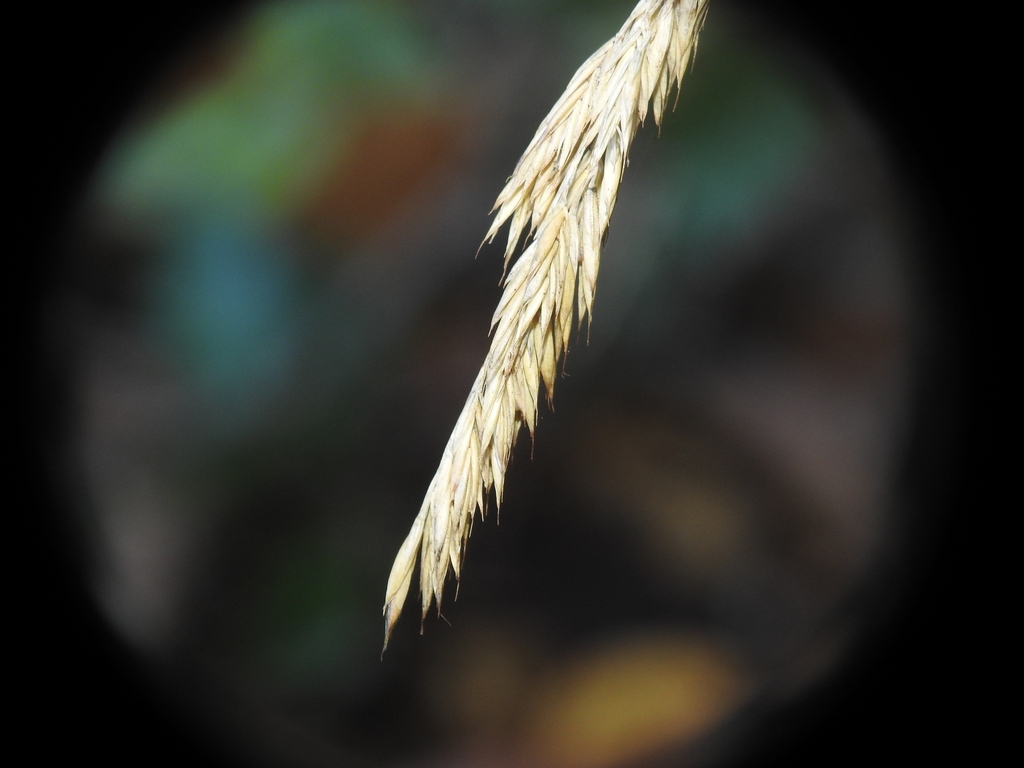
- The flowers appear on a thin, spike-like panicle, measuring 2 to 4 inches long. Each spikelet is less than 0.5 inches long and has 3 to 6 florets. The panicle ripens to a straw-colored spike in mid-summer from May to July.
-
-
Leaves:
- Woody Plant Leaf Characteristics:
- Semi-evergreen
- Leaf Color:
- Blue
- Green
- Leaf Type:
- Sheath
- Leaf Shape:
- Linear
- Hairs Present:
- No
- Leaf Length:
- > 6 inches
- Leaf Width:
- < 1 inch
- Leaf Description:
- The leaves are bluish-green, linear, tightly folded, prickly, with a pointed tip. The basal leaves measure 3 to 8 inches tall and less than 1mm wide when they are tightly folded.
-
-
Stem:
- Stem Is Aromatic:
- No
-
-
Landscape:
- Landscape Location:
- Lawn
- Landscape Theme:
- Rock Garden
- Design Feature:
- Accent
- Resistance To Challenges:
- Drought
- Dry Soil