


Vaccinium myrtilloides
Common Name(s):
- Description
-
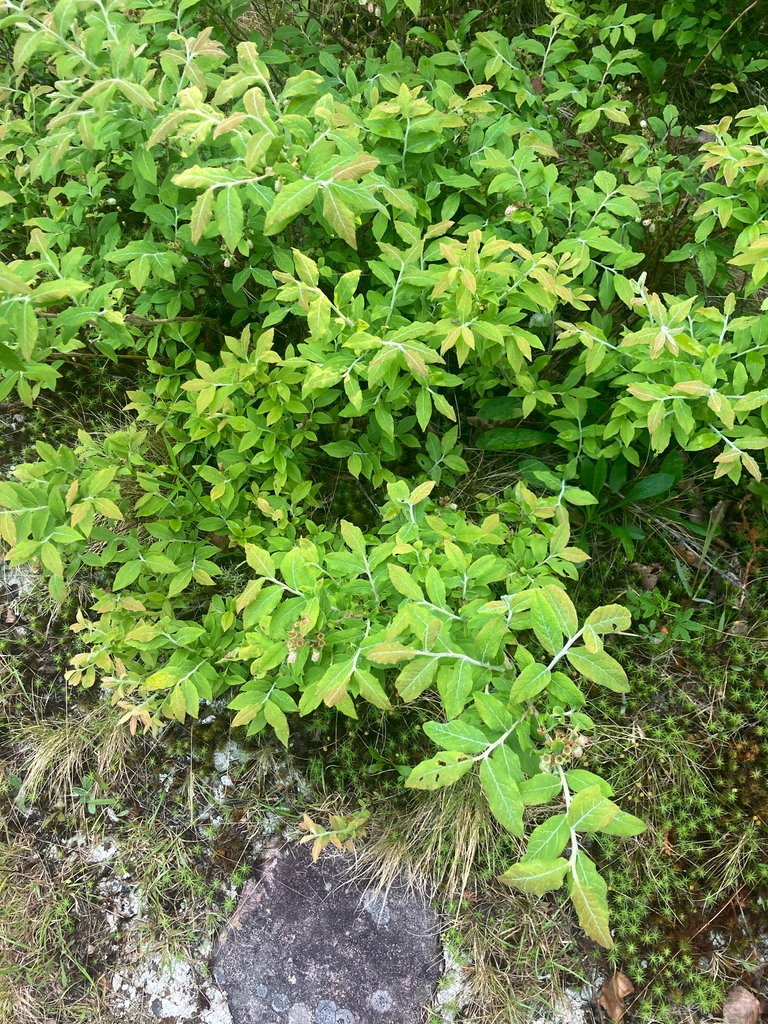
The velvetleaf blueberry is a deciduous shrub in the heather family (Ericaceae), native to the northeastern and Great Lakes states of the United States, as well as to Montana and Washington. It can be found in the mountains of North Carolina and most of Canada. It is primarily found at higher elevations on ridges, mountaintops, wet meadows, bogs, fens and forests. It will cross-pollinate with the low-bush blueberry and can be distinguished from it by hairs on the leaves.
Velvetleaf blueberry grows 1 to 2 feet tall in part shade to full sun in moist sandy or rocky, well-drained acidic soils. It will often form colonies.
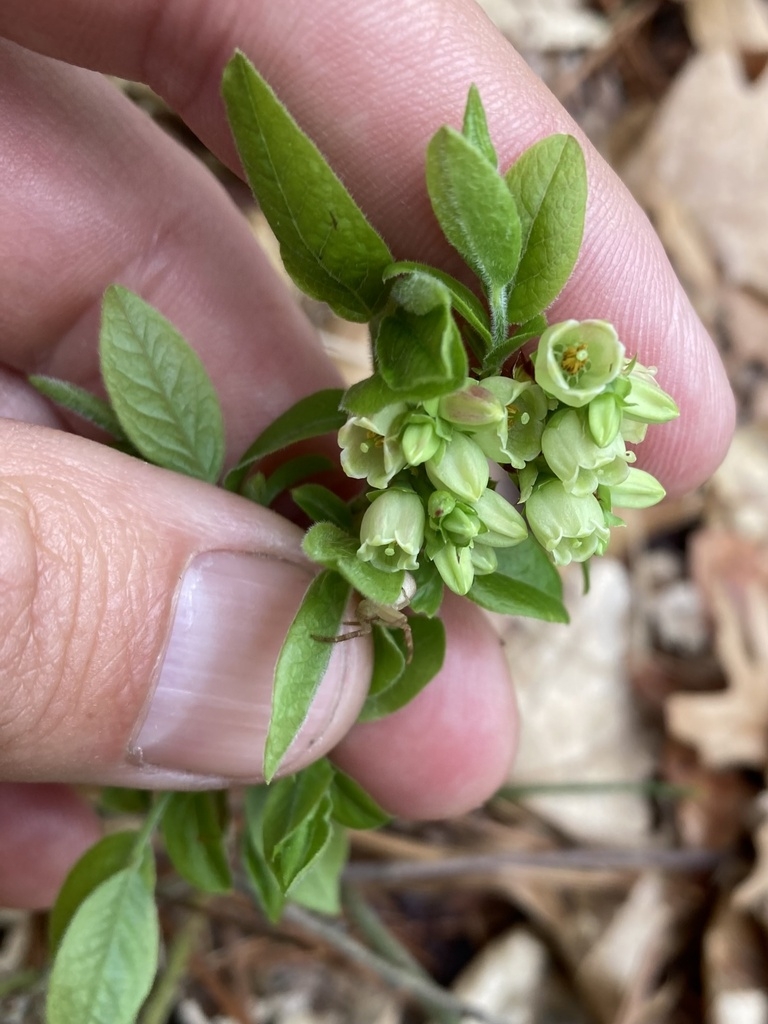
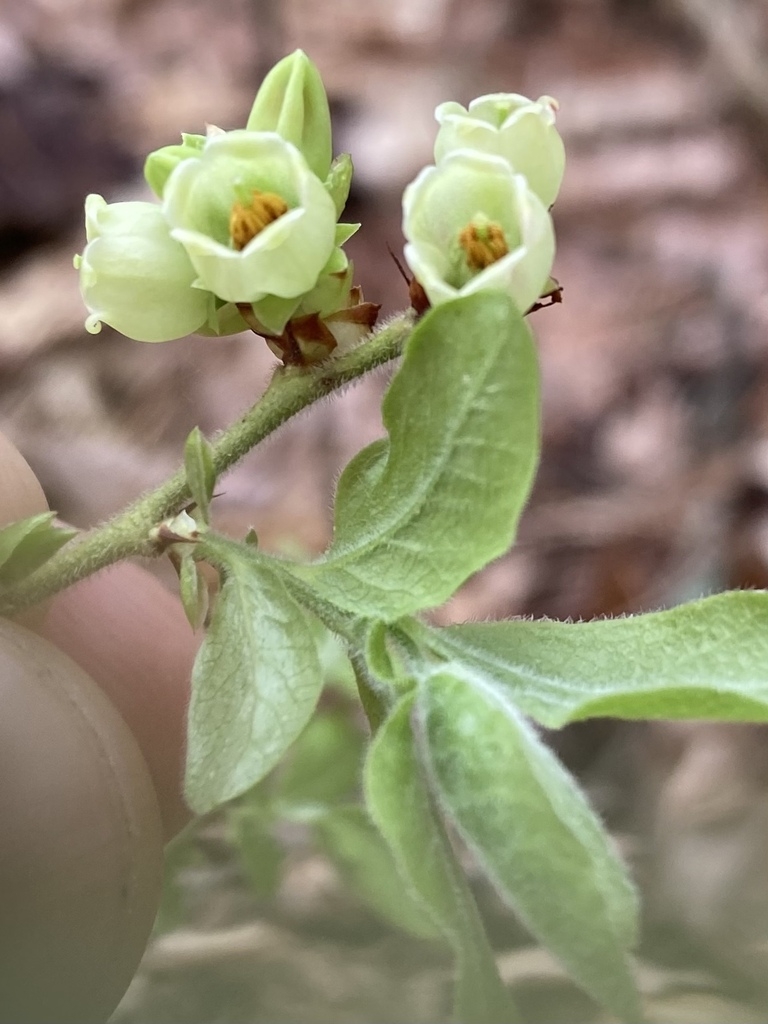
Clusters of hanging bell-shaped pink to white flowers appear in spring. There are 5 fused petals with lips that curl backward. The leaves are up to 2 inches long and are densely covered with fine white hairs. The berries are up to 1/3 inch in diameter and are purple, usually with a waxy, powdery blue coating. They are grown commercially as the berries are very good.
This shrub can be grown in zones 7 or lower in the edible garden and prefers cool summers.
Insects, Diseases, and Other Problems: Deer and rabbits will eat the leaves. Potential diseases include mummy berry, witches' broom, twig and stem blight, fruit rot and leaf spot. Potential insects include cranberry fruit worm, aphids, leafrollers, winter moths and whiteflies.
- See this plant in the following landscape :
- Cultivars / Varieties:
-
- Tags:


- Cultivars / Varieties:
-
- Tags:
-
-
Attributes:
- Genus:
- Vaccinium
- Species:
- myrtilloides
- Family:
- Ericaceae
- Life Cycle:
- Woody
- Recommended Propagation Strategy:
- Stem Cutting
- Country Or Region Of Origin:
- Northern USA and Canada
- Wildlife Value:
- It is an important food source for black bears, deer, small mammals, and birds. Bees and butterflies visit the flowers.
- Edibility:
- Fruit is edible raw or cooked
-
-
Whole Plant Traits:
- Plant Type:
- Edible
- Shrub
- Woody Plant Leaf Characteristics:
- Deciduous
- Habit/Form:
- Erect
- Multi-stemmed
- Spreading
- Growth Rate:
- Medium
- Maintenance:
- Medium
- Texture:
- Medium
-
-
Cultural Conditions:
- Light:
- Full sun (6 or more hours of direct sunlight a day)
- Partial Shade (Direct sunlight only part of the day, 2-6 hours)
- Soil Texture:
- Loam (Silt)
- Sand
- Shallow Rocky
- Soil pH:
- Acid (<6.0)
- Soil Drainage:
- Good Drainage
- Moist
- Available Space To Plant:
- 12 inches-3 feet
- NC Region:
- Mountains
- Piedmont
- USDA Plant Hardiness Zone:
- 2a, 2b, 3a, 3b, 4a, 4b, 5a, 5b, 6a, 6b, 7a, 7b
-
-
Fruit:
- Fruit Color:
- Blue
- Purple/Lavender
- Fruit Value To Gardener:
- Edible
- Display/Harvest Time:
- Summer
- Fruit Type:
- Berry
- Fruit Length:
- < 1 inch
- Fruit Width:
- < 1 inch
- Fruit Description:
- The berries are up to 1/3 inch in diameter and are purple, usually with a waxy, powdery blue coating.
-
-
Flowers:
- Flower Color:
- Pink
- White
- Flower Inflorescence:
- Raceme
- Flower Value To Gardener:
- Showy
- Flower Bloom Time:
- Spring
- Flower Shape:
- Bell
- Urn
- Flower Petals:
- 4-5 petals/rays
- Flower Size:
- < 1 inch
- Flower Description:
- Clusters of white to pink small bell-shaped flowers appear in spring. They have 5 fused triangular petals that curl back at the tips. A cluster of tubular stames surround a center pale green style.
-
-
Leaves:
- Woody Plant Leaf Characteristics:
- Deciduous
- Leaf Color:
- Green
- Leaf Feel:
- Leathery
- Leaf Type:
- Simple
- Leaf Arrangement:
- Alternate
- Leaf Shape:
- Elliptical
- Leaf Margin:
- Entire
- Hairs Present:
- Yes
- Leaf Length:
- 1-3 inches
- Leaf Width:
- < 1 inch
- Leaf Description:
- Elliptical green leaves are 1 to 2 inches long and 1/3 to1/2 inch wide. They are covered in short white hairs, have smooth margins and have short stalks or are nearly stalkless.
-
-
Bark:
- Bark Color:
- Dark Brown
- Bark Description:
- Thin, smooth brown bark
-
-
Stem:
- Stem Color:
- Brown/Copper
- Green
- Red/Burgundy
- Stem Is Aromatic:
- No
- Stem Bud Scales:
- No scales, covered in hair
- Stem Cross Section:
- Round
- Stem Surface:
- Hairy (pubescent)
- Stem Description:
- Twigs are green to brown to reddish with fine hairs
-
-
Landscape:
- Landscape Location:
- Naturalized Area
- Pond
- Woodland
- Landscape Theme:
- Edible Garden
- Design Feature:
- Mass Planting
- Attracts:
- Bees
- Butterflies
- Small Mammals
- Songbirds
- Problems:
- Frequent Disease Problems
- Frequent Insect Problems