


Spigelia marilandica
Common Name(s):
- Phonetic Spelling
- spy-GEEL-ee-ah mar-i-LAND-ih-ka
- This plant has low severity poison characteristics.
- See below
- Description
-
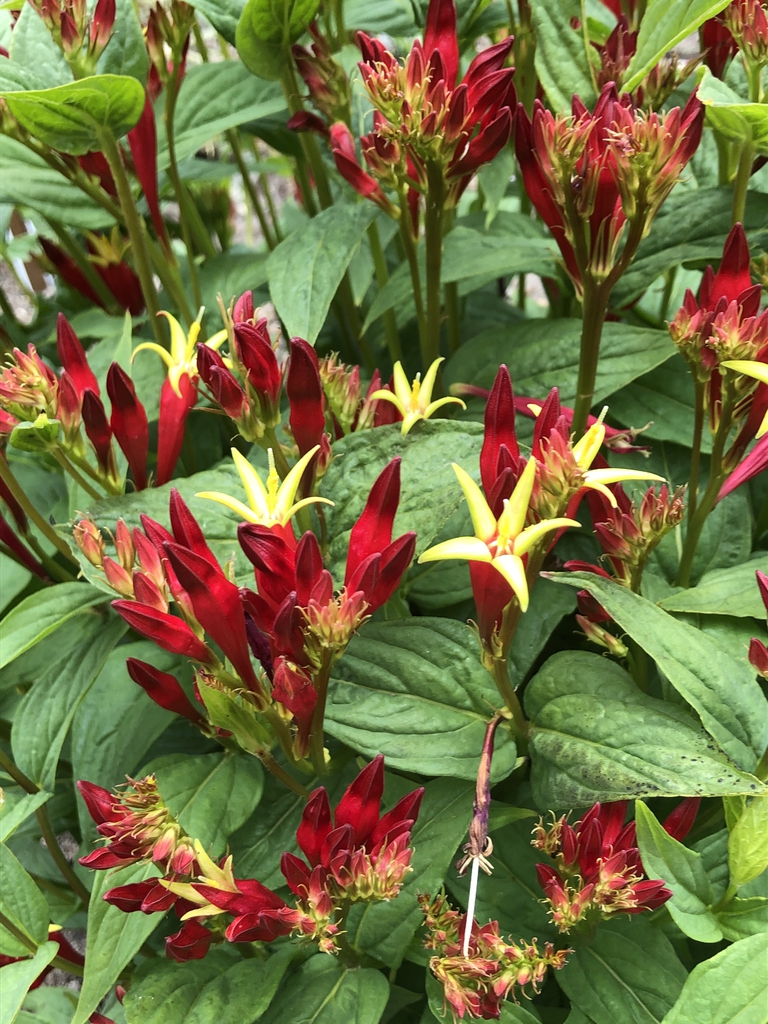
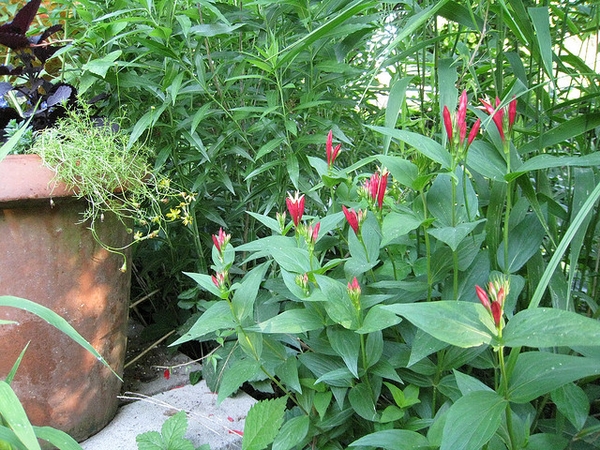
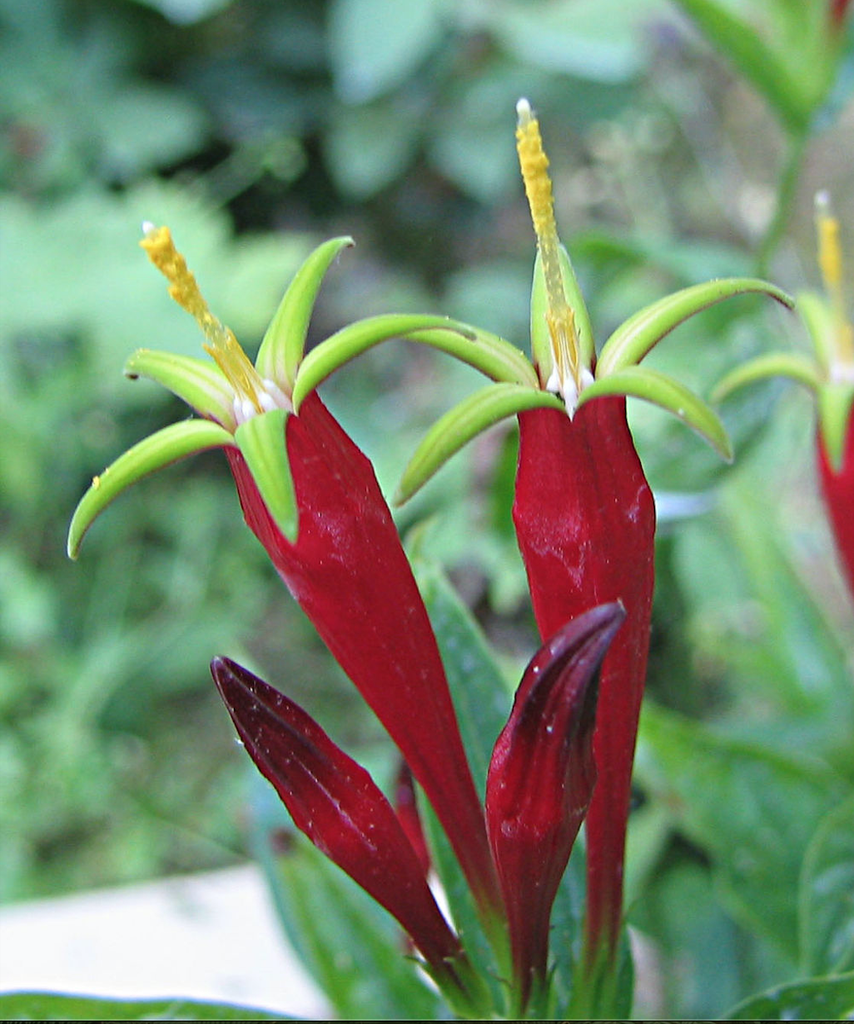
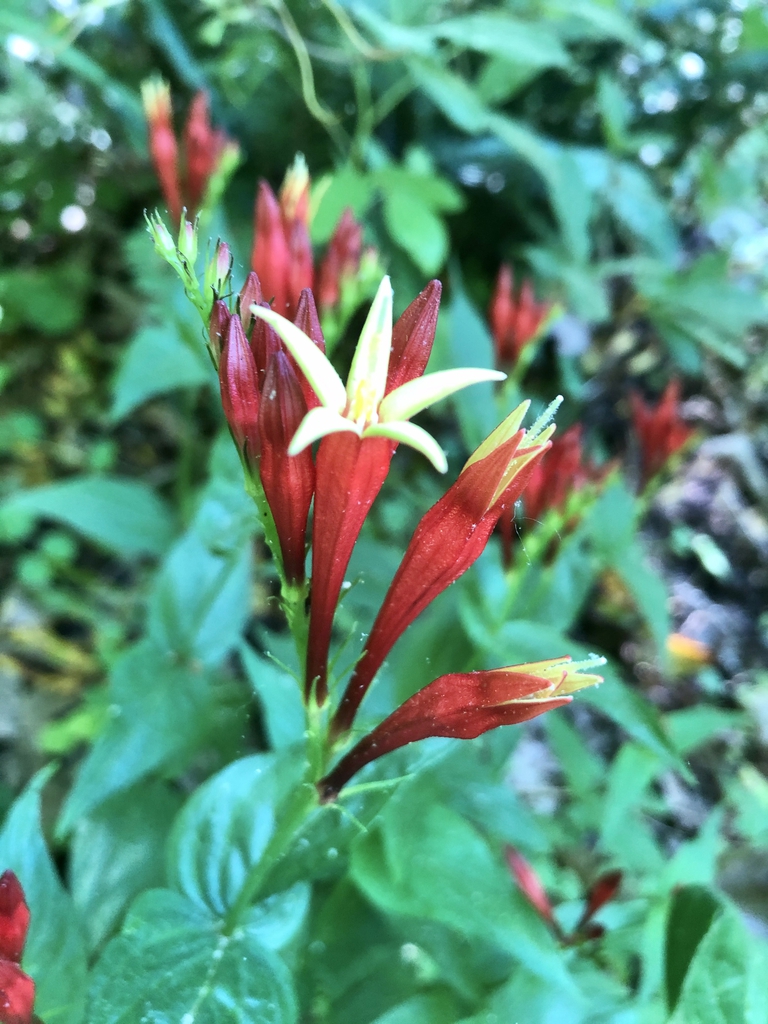
Carolina Pink is an erect, rarely branched, herbaceous perennial wildflower native to the southeastern United States. It will mature to a height of 2 feet with a spread of 18 inches supporting red and yellow blossoms in early summer that are known to attract hummingbirds. This plant is found naturally in forests in circumneutral soils. The genus name honors Adrian van der Spiegel (1578-1625), professor of anatomy at Padua. The species name means of Maryland.
Carolina Pink does best in partial to full shade with medium moist, well-drained, organically rich soil. It will tolerate wet soil and drought. The blossoms open one at a time, and seed formation follows the same sequence. To gather seeds for next season, tie a piece of netting over the green seed capsules to capture seeds as they ripen and fall out. Store the seeds dry.
Carolina Pink makes an excellent cut flower for fresh arrangements.It performs very well in gardens. It blooms from the bottom upward and you can extend the one month flowering season by deadheading the flowers as they wither. This plant is classified as a North Carolina threatened species. Source of strychnine poison.
Clemson University Home and Garden Information Center provides a factsheet on Carolina Pink.
Fire Risk: This plant has a low flammability rating.
Diseases, Insect Pests, and Other Plant Problems: No significant problems
- See this plant in the following landscape :
- Shady Garden in Cabarrus County
- Cultivars / Varieties:
-
- 'Little Redhead'
More compact with dark red flowers with yellow throats.
- 'Little Redhead'
- 'Little Redhead'
- Tags:


- Cultivars / Varieties:
-
- 'Little Redhead'
More compact with dark red flowers with yellow throats.
- 'Little Redhead'
- 'Little Redhead'
- Tags:
-
-
Attributes:
- Genus:
- Spigelia
- Species:
- marilandica
- Family:
- Loganiaceae
- Life Cycle:
- Perennial
- Recommended Propagation Strategy:
- Division
- Seed
- Stem Cutting
- Country Or Region Of Origin:
- East central and southeastern United States
- Distribution:
- Native to Illinois, south to Florida, and west to Texas.
- Fire Risk Rating:
- low flammability
- Wildlife Value:
- Flowers are attractive to hummingbirds.
- Play Value:
- Wildlife Food Source
- Particularly Resistant To (Insects/Diseases/Other Problems):
- fire in the landscape.
- Dimensions:
- Height: 1 ft. 0 in. - 2 ft. 0 in.
- Width: 0 ft. 6 in. - 1 ft. 6 in.
-
-
Whole Plant Traits:
- Plant Type:
- Herbaceous Perennial
- Native Plant
- Poisonous
- Wildflower
- Woody Plant Leaf Characteristics:
- Deciduous
- Habit/Form:
- Clumping
- Erect
- Mounding
- Growth Rate:
- Medium
- Maintenance:
- Low
-
-
Cultural Conditions:
- Light:
- Dappled Sunlight (Shade through upper canopy all day)
- Deep shade (Less than 2 hours to no direct sunlight)
- Partial Shade (Direct sunlight only part of the day, 2-6 hours)
- Soil Texture:
- High Organic Matter
- Soil pH:
- Acid (<6.0)
- Soil Drainage:
- Good Drainage
- Moist
- Occasionally Wet
- Available Space To Plant:
- 12 inches-3 feet
- NC Region:
- Mountains
- USDA Plant Hardiness Zone:
- 5a, 5b, 6a, 6b, 7a, 7b, 8a, 8b, 9a, 9b
-
-
Fruit:
- Display/Harvest Time:
- Summer
- Fruit Type:
- Capsule
- Fruit Description:
- Two-celled seed capsules release their seeds in June and July.
-
-
Flowers:
- Flower Color:
- Gold/Yellow
- Red/Burgundy
- Flower Inflorescence:
- Raceme
- Flower Value To Gardener:
- Showy
- Flower Bloom Time:
- Summer
- Flower Shape:
- Tubular
- Flower Size:
- 1-3 inches
- Flower Description:
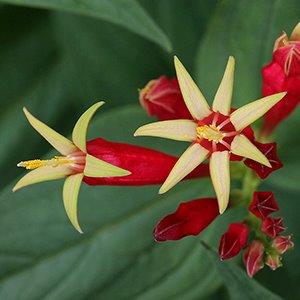
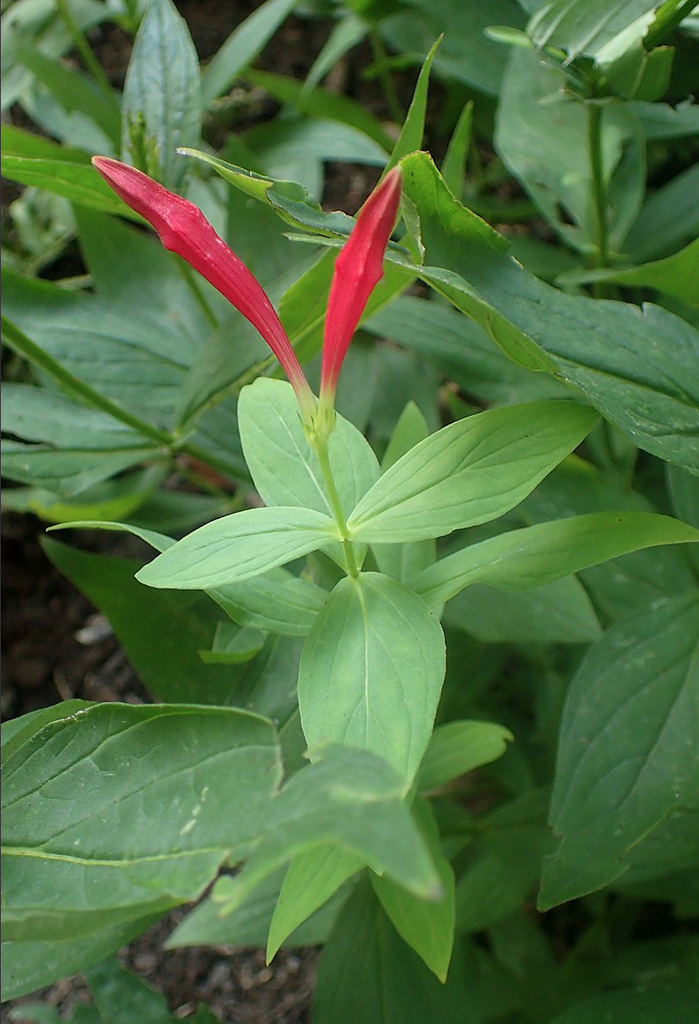
- Spike-like raceme cluster on one side of the stem, 2 to 12 vivid red tubular flowers with yellow interior; tips of the five pointed petals flare slightly backwards; stamens and style project beyond the petals; This plant blooms in May and June. Each flower is yellow inside and flares at the top to form five pointed lobes (a yellow star).
-
-
Leaves:
- Woody Plant Leaf Characteristics:
- Deciduous
- Leaf Color:
- Green
- Leaf Feel:
- Glossy
- Leaf Type:
- Simple
- Leaf Arrangement:
- Opposite
- Leaf Shape:
- Ovate
- Leaf Margin:
- Entire
- Hairs Present:
- No
- Leaf Length:
- 3-6 inches
- Leaf Description:
- Four to seven pairs of sessile, opposite, ovate or entire leaves. Glossy green, ovate to lance-shaped leaves (to 4" long).
-
-
Stem:
- Stem Is Aromatic:
- No
-
-
Landscape:
- Landscape Location:
- Naturalized Area
- Woodland
- Landscape Theme:
- Native Garden
- Shade Garden
- Design Feature:
- Accent
- Attracts:
- Hummingbirds
- Songbirds
- Resistance To Challenges:
- Drought
- Fire
- Problems:
- Poisonous to Humans