


Sarracenia alata
Common Name(s):
Previously known as:
- Sarracenia sledgei
- Phonetic Spelling
- sair-ah-SEEN-ee-ah ah-LAH-tah
- Description
-
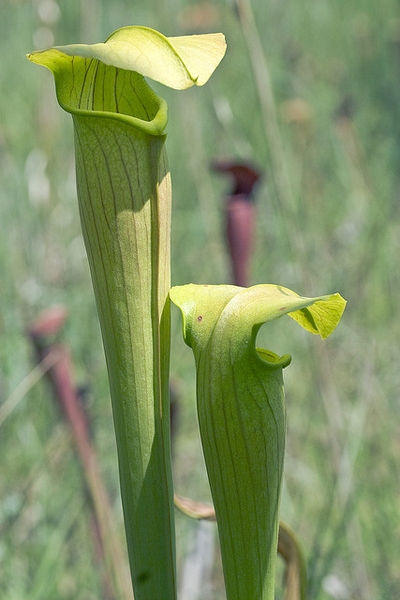
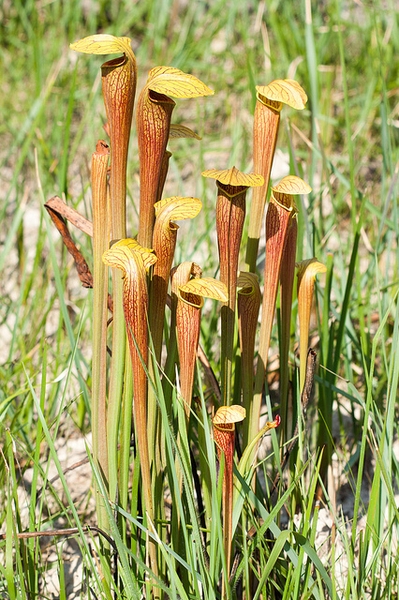
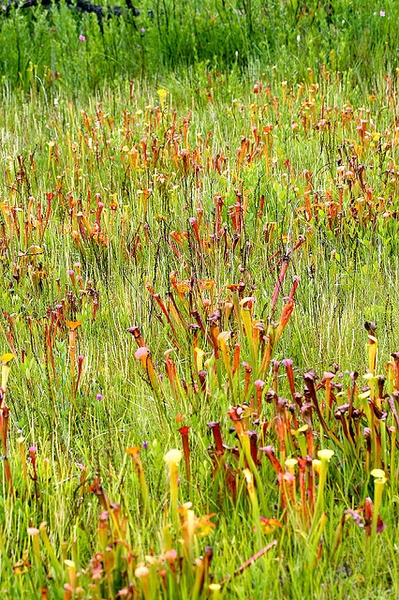
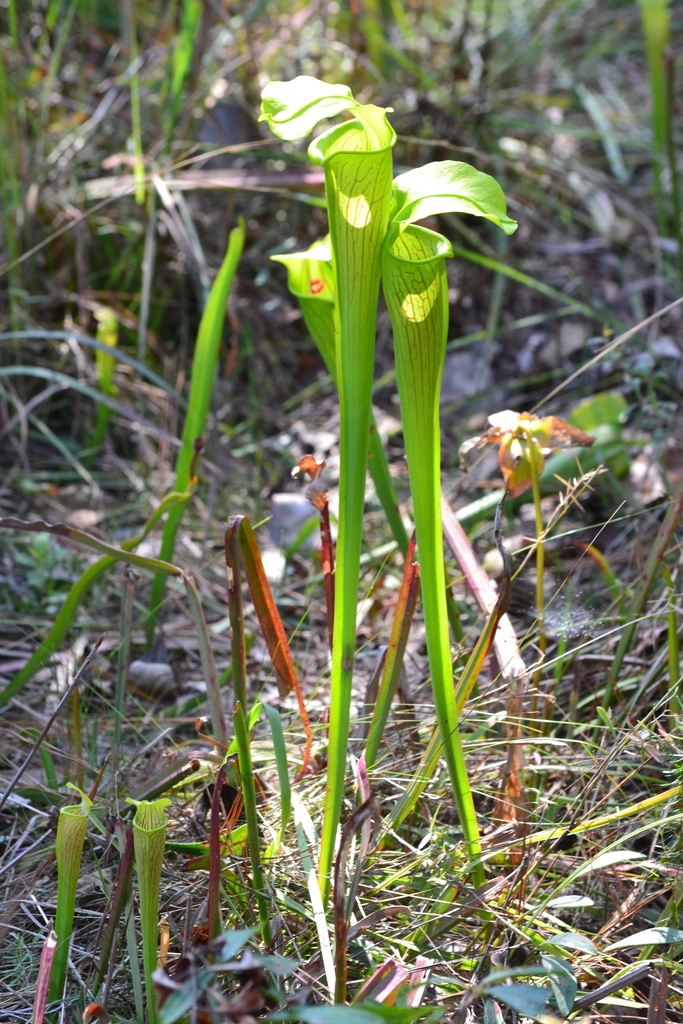
Yellow trumpets is an herbaceous perennial and carnivorous plant in the pitcher plant family (Sarraceniaceae) native to marshes and bogs, pinelands and wet forest floors in the southern states of Alabama, Louisiana, Mississippi and Texas. In pine forests, it can be found in meadow-like openings. The species epithet is Latin for "winged" and refers to the flange or ridge on the ventral side of the pitcher.
Yellow trumpets prefer full sun during the growing season. They require perpetually moist to wet, acidic soils of sand and peat, but mostly sand. Like all pitcher plants, this species does not like fertilizers and is sensitive to dissolved salts in chlorinated water. Rainwater or distilled water may be used in place of tap water. The plants should not be manually fed or given food scraps. The plants go dormant in the fall, and dormancy continues until spring. The leaves will turn brown, but it is best to wait and remove the foliage in the spring just before the flowers emerge. Indoors they require sun for the growing season and then winter dormancy.
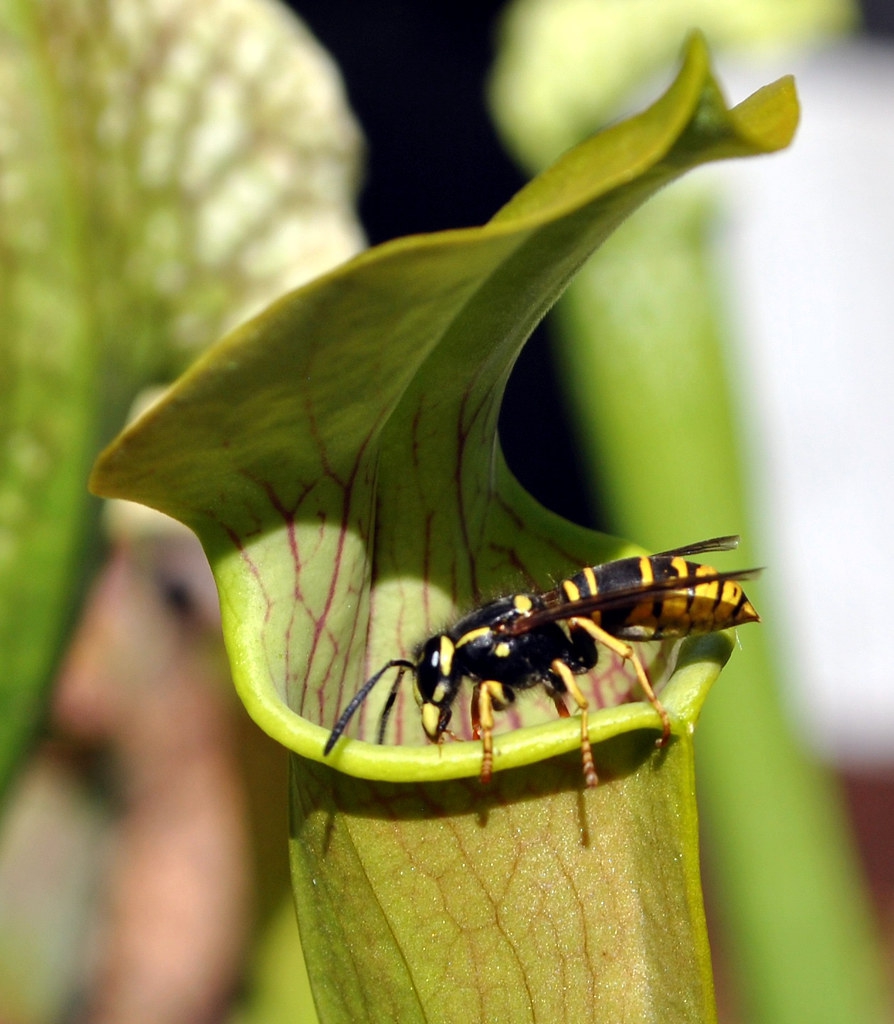
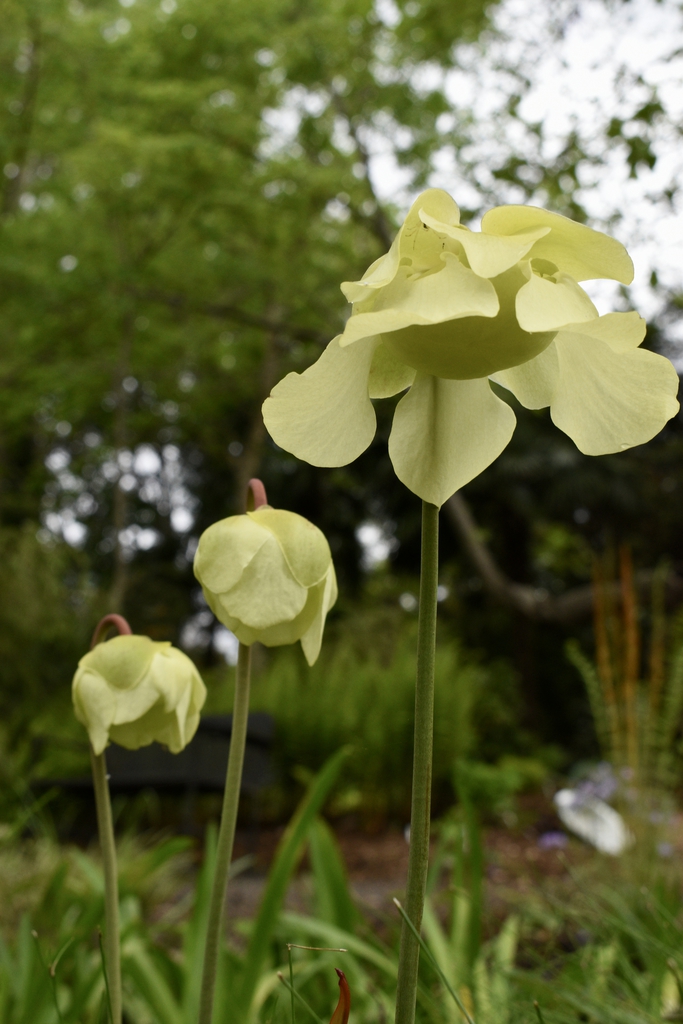
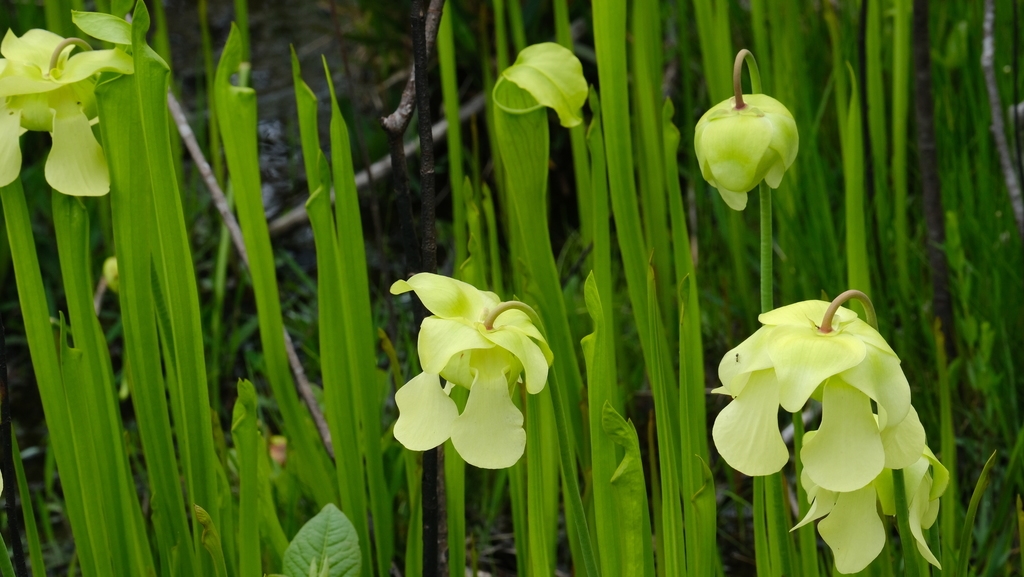
Yellow trumpets capture and digest insects for nutrients. The flowers of this plant hang at the tip of its leafless stems. The flowers are large in comparison to the leaves. Each stalk has one flower. Never harvest these plants from the wild. They are best purchased from a reputable carnivorous plant nursery.
This species is appropriate for children’s gardens, as well as carnivorous, rain, and pollinator gardens.
Insects, Diseases and Other Plant Problems: They must be protected from freezing winds. Monitor for aphids, scale, mealybugs, moth larvae, leaf spots, and root rot.
VIDEO created by Andy Pulte for “Landscape Plant Identification, Taxonomy and Morphology” a plant identification course offered by the Department of Plant Sciences, University of Tennessee.
- Profile Video:
- See this plant in the following landscape :
- Cultivars / Varieties:
-
- Tags:


- Cultivars / Varieties:
-
- Tags:
-
-
Attributes:
- Genus:
- Sarracenia
- Species:
- alata
- Family:
- Sarraceniaceae
- Life Cycle:
- Perennial
- Recommended Propagation Strategy:
- Division
- Seed
- Country Or Region Of Origin:
- Alabama to Texas
- Distribution:
- Alabama, Louisiana, Mississippi, Texas
- Wildlife Value:
- A nectar source for insects.
- Play Value:
- Wildlife Food Source
-
-
Whole Plant Traits:
- Plant Type:
- Carnivorous
- Herbaceous Perennial
- Habit/Form:
- Clumping
- Erect
- Maintenance:
- High
-
-
Cultural Conditions:
- Light:
- Full sun (6 or more hours of direct sunlight a day)
- Partial Shade (Direct sunlight only part of the day, 2-6 hours)
- Soil Texture:
- Clay
- Loam (Silt)
- Sand
- Soil pH:
- Acid (<6.0)
- Soil Drainage:
- Frequent Standing Water
- Moist
- Occasional Flooding
- Occasionally Wet
- NC Region:
- Coastal
- Piedmont
- USDA Plant Hardiness Zone:
- 6a, 6b, 7a, 7b, 8a, 8b
-
-
Fruit:
- Fruit Color:
- Brown/Copper
- Display/Harvest Time:
- Fall
- Fruit Type:
- Capsule
- Fruit Description:
- After the petals drop and if the ovary has been pollinated, it will begin to swell. The seed pod develops at the top of the flower. It takes 5 months for the seed pod to mature. It turns brown and then splits open to scatter the seeds. The dry capsule contains pear-shaped seeds anywhere from 20 to 300 seeds. The seeds are scattered and germinate after a period of cold weather.
-
-
Flowers:
- Flower Color:
- Gold/Yellow
- Flower Inflorescence:
- Solitary
- Flower Value To Gardener:
- Showy
- Flower Bloom Time:
- Spring
- Flower Shape:
- Star
- Flower Petals:
- 4-5 petals/rays
- Bracts
- Colored Sepals
- Flower Description:
- There are 3 bracts, 5 sepals, 5 petals, and many stamens. The style has an extraordinary shape, like an umbrella upside down, with a stigma beneath each of the 5 angles.
-
-
Leaves:
- Leaf Value To Gardener:
- Showy
- Deciduous Leaf Fall Color:
- Brown/Copper
- Leaf Type:
- Simple
- Hairs Present:
- Yes
- Leaf Description:
- Tall, veined, upright yellow pitchers, produced throughout the growing season. Short stiff hairs point downward. Very slippery inside.
-
-
Stem:
- Stem Is Aromatic:
- No
-
-
Landscape:
- Landscape Location:
- Container
- Landscape Theme:
- Water Garden
- Design Feature:
- Specimen
- Attracts:
- Bees
- Pollinators