



Arrowhead Sagittaria latifolia
Other Common Name(s):
Previously known as:
- Sagittaria latifolia var. obtusa
- Sagittaria latifolia var. pubescens
- Sagittaria planipes
- Sagittaria viscosa
- Phonetic Spelling
- saj-ee-TAR-ee-uh lat-ih-FOE-lee-ah
- Description
-
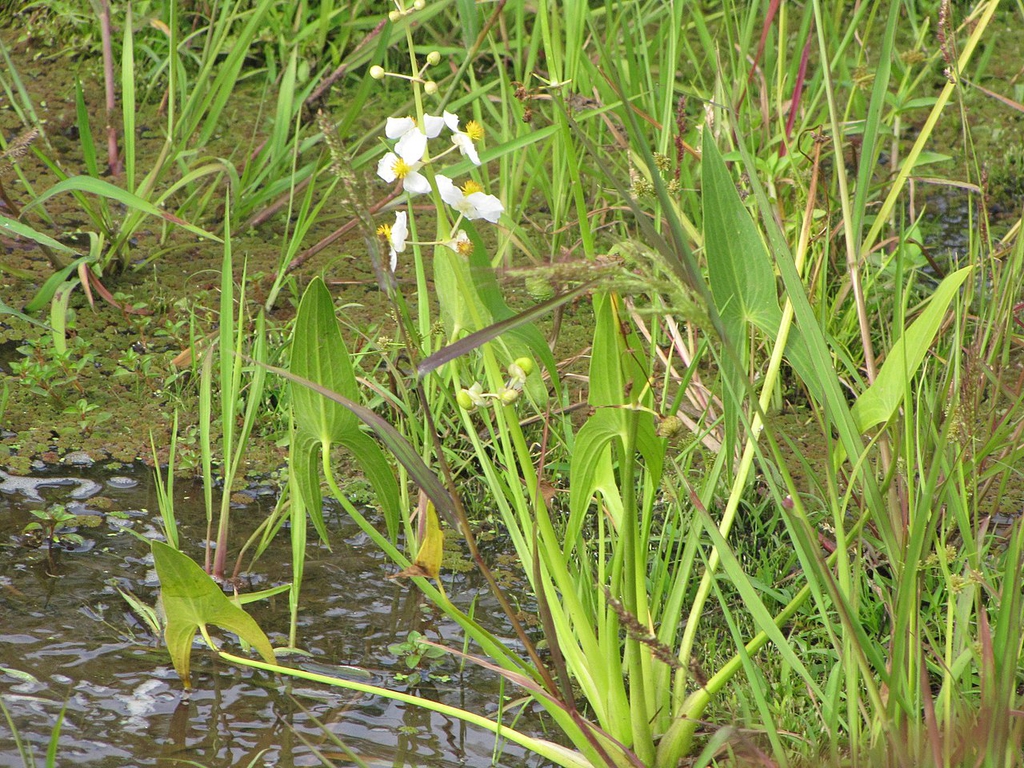
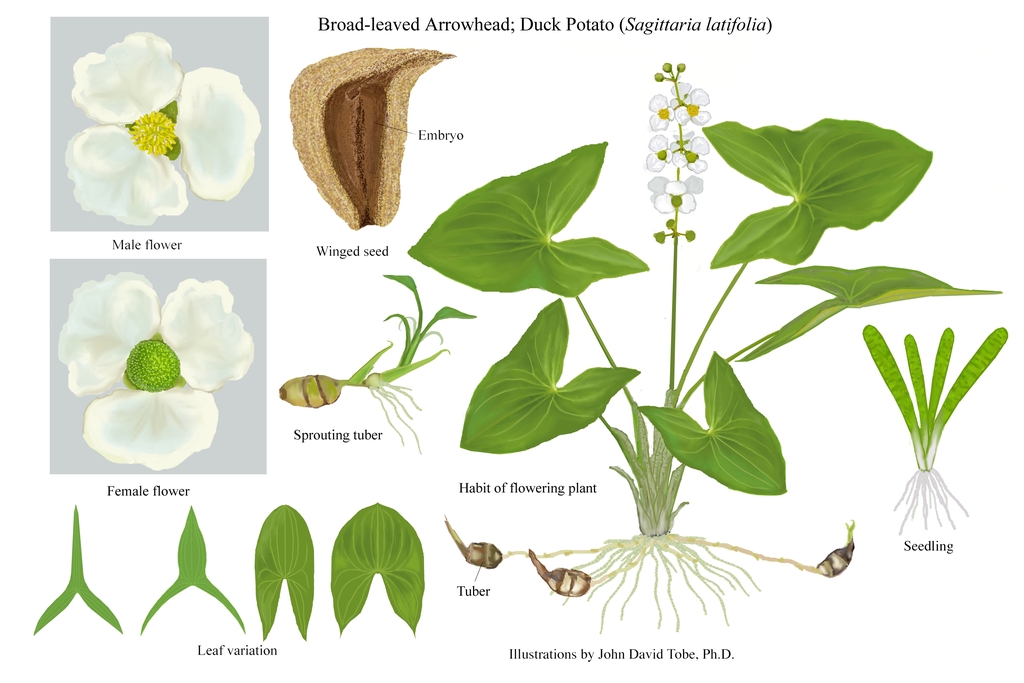
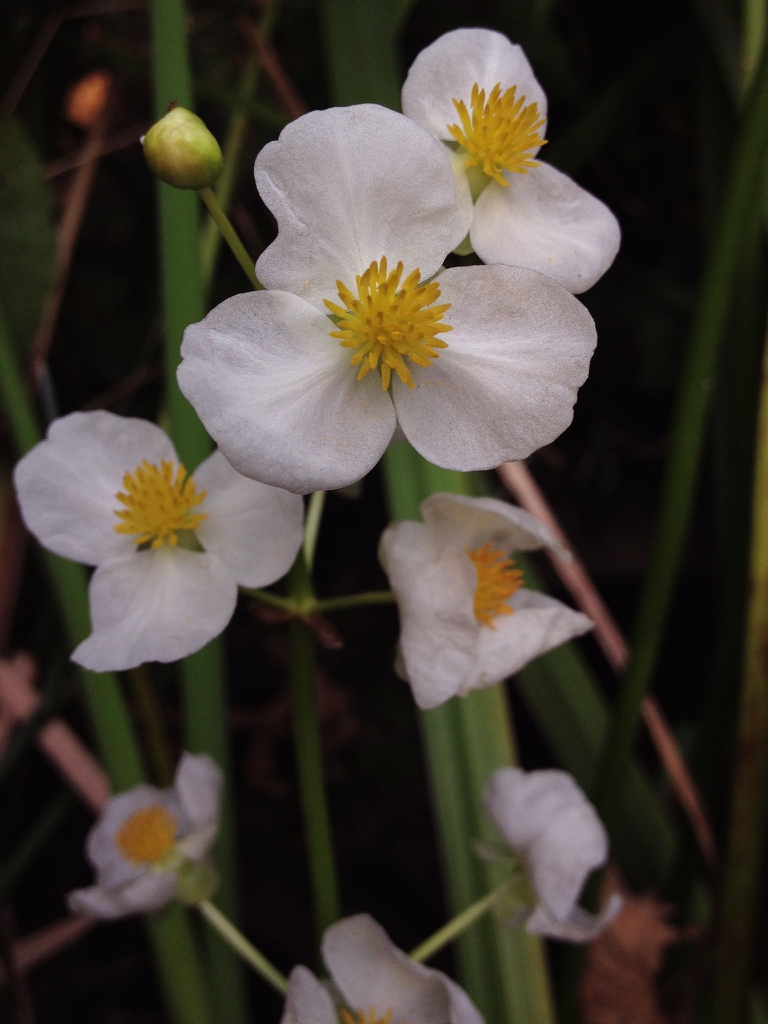
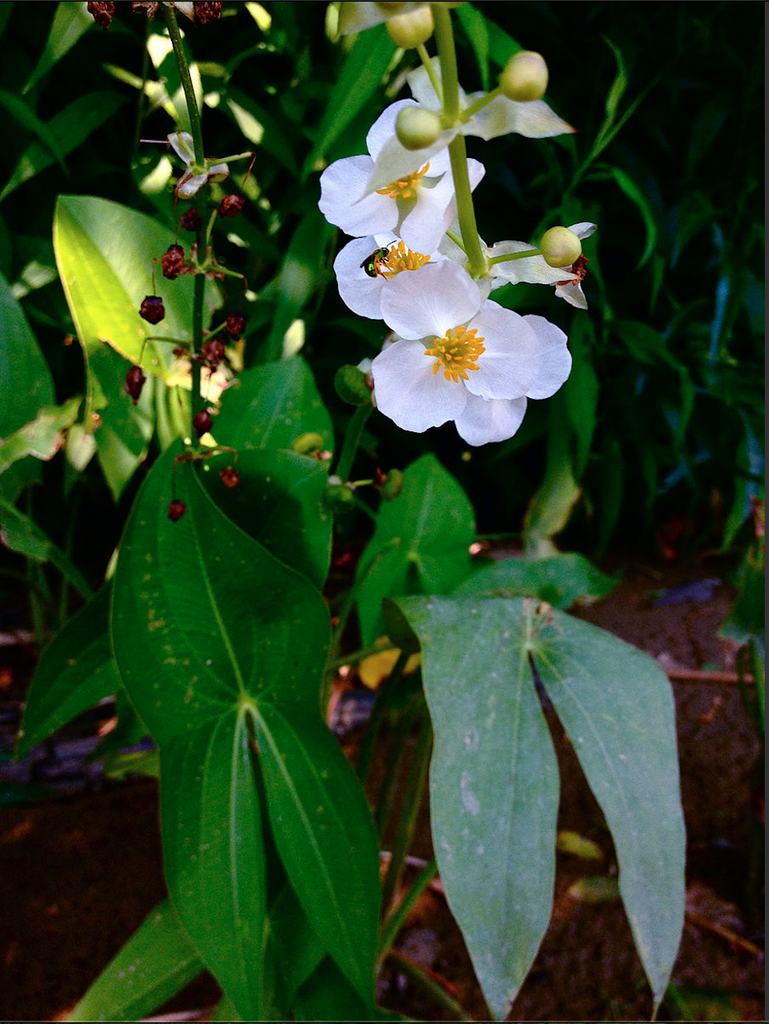
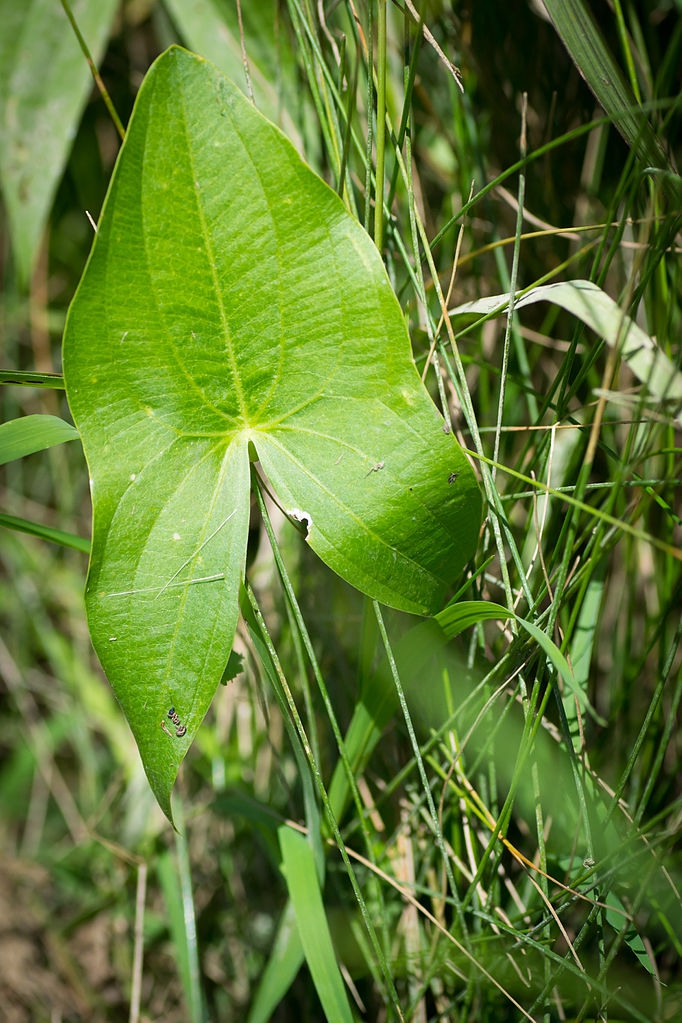
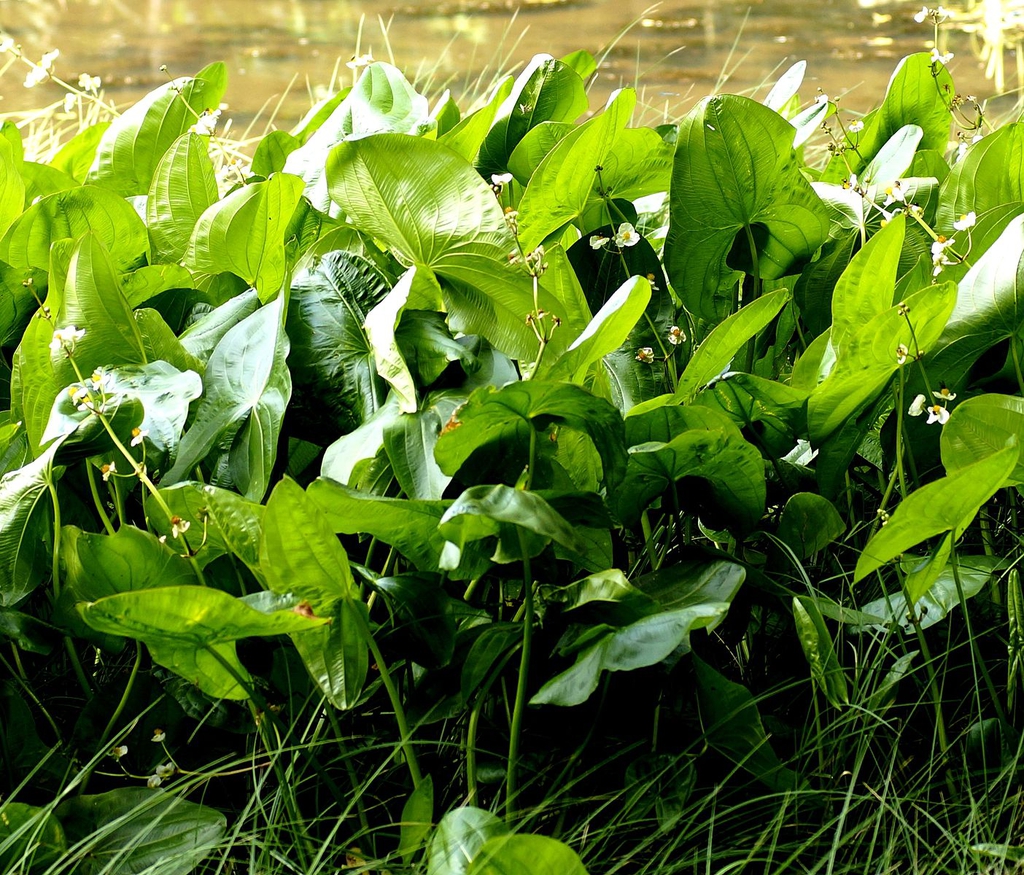
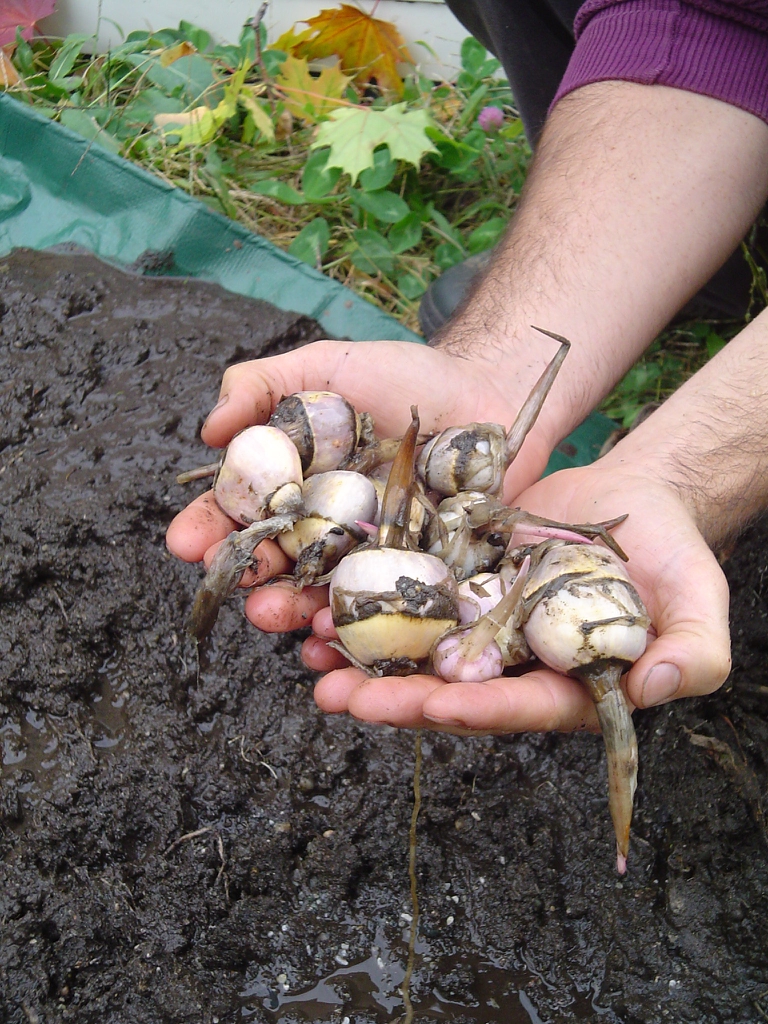
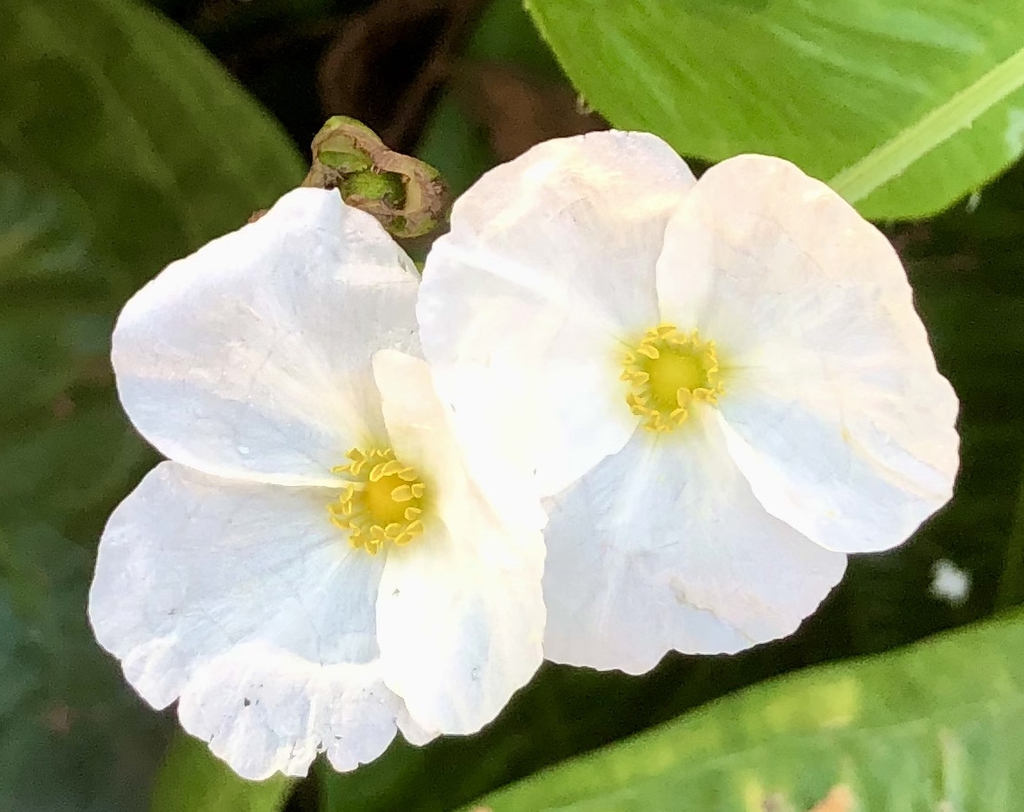
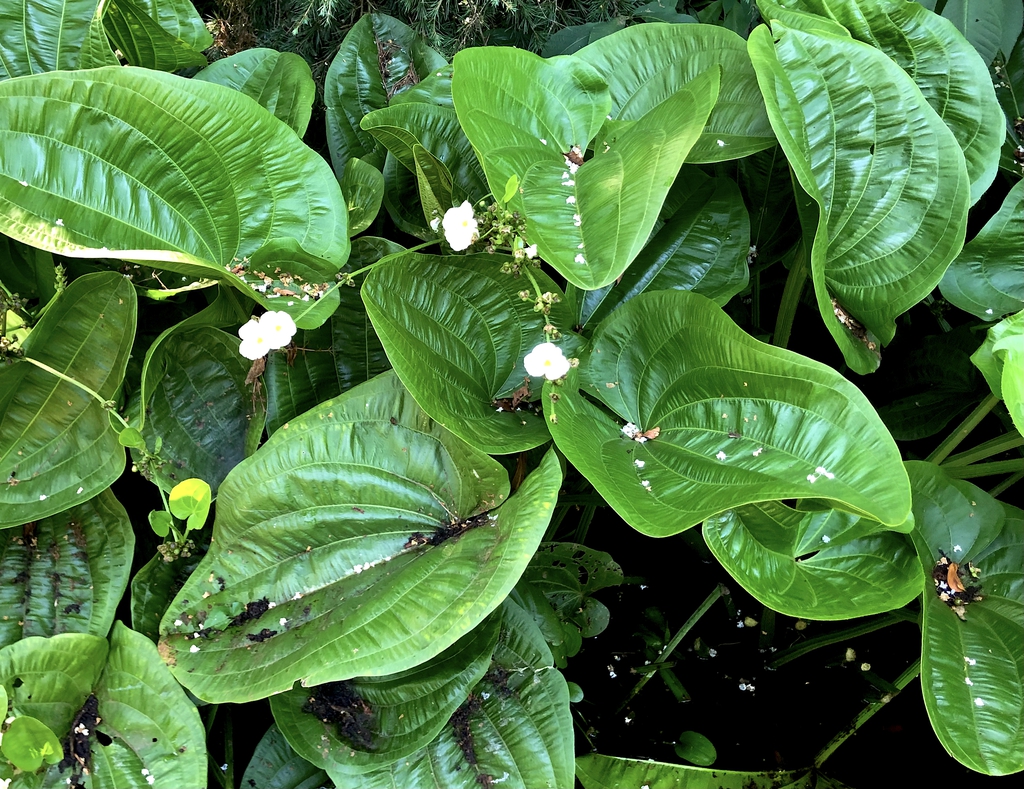
Broad-leaved arrowhead is a clump-forming, aquatic perennial native to Canada, the central and eastern United States, Cuba, and western South America, primarily found in colonies in marshes, swamps, bogs, and farm ponds. It grows 1 to 4 feet tall and 1 to 3 feet wide, with edible corms and one or more flowering stalks. The leaves are basal, medium green, triangular with pointed tips, and variable in length and width. The petiole is 5-sided, and the leaf veins originate at the petiole attachment site. A raceme of white, 3-petaled blooms occurs in whorls of three along the flower stalk, blooming from July to September. The fruits are rounded, fuzzy, green balls that ripen to light brown after flowering, and are arranged in whorls of three. This plant belongs to the water plantain family (Alismataceae). The genus name Sagittaria is derived from the Latin word sagitta, meaning arrow, referring to the leaf shape. The specific epithet latifolia means "broad-leaved.'
Broad-leaved arrowhead prefers full sun to partial shade, shallow water up to 12 inches deep or wet conditions, and sandy, loamy soil with acidic to neutral pH. It is hardy in zones 5 to 10. Deadheading spent flowers will help prevent self-seeding. Broad-leaved arrowhead can be propagated by seed, root stock, or corm transplanting. Do not plant in water deeper than 12 inches; it usually grows in stagnant or slow-moving water.
Consider for use along a pond, on the edges of a lake, or in a water garden. It is also used for pond restorations.
Insects, Diseases, and Other Plant Problems: No significant insect pests or diseases. Monitor for aphids and spider mites. Self-seeding and can take over aquatic areas.
- See this plant in the following landscape :
- Cultivars / Varieties:
-
- Tags:


- Cultivars / Varieties:
-
- Tags:
-
-
Attributes:
- Genus:
- Sagittaria
- Species:
- latifolia
- Family:
- Alismataceae
- Uses (Ethnobotany):
- Native Americans ate the starchy corms. In Jamaica, the corms treat wounds. In Cuba and Haiti, corms treat toothaches. In Panama, the leaves treat insect bites.
- Life Cycle:
- Perennial
- Recommended Propagation Strategy:
- Division
- Seed
- Country Or Region Of Origin:
- Canada, Central and Eastern US, Cuba, CA to West South America
- Distribution:
- Native: Canada--Alberta, British Colombia, Manitoba, New Brunswick, Newfoundland, Nova Scotia, Ontario, Prince Edward Island, Quebec, and Saskatchewan; US: AL, AR, CA, CO, CT, DE, DC, FL, GA, IL, IN, IA, KS, KY, LA, ME, MD, MA, MI, MN, MS, MO, NE, NH, NJ, NM, NY, NC, ND, OH, OK, PA, RI, SC, SD, TN, TX, VT, VA and WV; Bolivia, Colombia, Costa Rica, Cuba, Ecuador, Guatemala, Honduras, Mexico Central, Mexico Gulf, Mexico Northeast, Mexico Southeast, Mexico Southwest, Nicaragua, and Venezuela. Introduced: Assam, Austria, Bulgaria, Central European Russia, Cook Islands, Czechoslovakia, East Himalaya, France, Germany, Great Britain, Hawaii, Italy, Puerto Rico, Romania, Spain, Switzerland, and West Himalaya.
- Wildlife Value:
- The flowers attract honeybees, bumblebees, wasps, flies, skippers, and beetles. Ducks eat the seeds and corms. At least fifteen species of ducks and snapping turtles feed on the tubers. Beavers, porcupines, and muskrats feed on the entire plant.
- Play Value:
- Attractive Flowers
- Attracts Pollinators
- Wildlife Food Source
- Particularly Resistant To (Insects/Diseases/Other Problems):
- Can be invasive
- Edibility:
- The tubers may be cooked or served raw and taste similar to potatoes or chestnuts. The bud and fruits are also edible.
- Dimensions:
- Height: 1 ft. 0 in. - 4 ft. 8 in.
- Width: 1 ft. 0 in. - 3 ft. 8 in.
-
-
Whole Plant Traits:
- Plant Type:
- Herbaceous Perennial
- Native Plant
- Water Plant
- Woody Plant Leaf Characteristics:
- Deciduous
- Habit/Form:
- Erect
- Growth Rate:
- Medium
- Maintenance:
- Low
- Texture:
- Medium
-
-
Cultural Conditions:
- Light:
- Full sun (6 or more hours of direct sunlight a day)
- Partial Shade (Direct sunlight only part of the day, 2-6 hours)
- Soil Texture:
- Loam (Silt)
- Sand
- Soil pH:
- Acid (<6.0)
- Neutral (6.0-8.0)
- Soil Drainage:
- Frequent Standing Water
- Moist
- Occasionally Wet
- Available Space To Plant:
- 3 feet-6 feet
- NC Region:
- Coastal
- Mountains
- Piedmont
- USDA Plant Hardiness Zone:
- 5a, 5b, 6a, 6b, 7a, 7b, 8a, 8b, 9a, 9b, 10a, 10b
-
-
Fruit:
- Fruit Color:
- Brown/Copper
- Green
- Display/Harvest Time:
- Fall
- Summer
- Fruit Type:
- Achene
- Fruit Length:
- < 1 inch
- Fruit Width:
- < 1 inch
- Fruit Description:
- The fruits are achenes. They are round, fuzzy, green balls that ripen to light brown after flowering and are arranged in whorls of three. Each measures less than 0.25 inches long. Fruit displays from August to November.
-
-
Flowers:
- Flower Color:
- White
- Flower Inflorescence:
- Raceme
- Flower Value To Gardener:
- Showy
- Flower Bloom Time:
- Fall
- Summer
- Flower Shape:
- Radial
- Saucer
- Flower Petals:
- 2-3 rays/petals
- Flower Size:
- 1-3 inches
- Flower Description:
- Racemes of three-petaled white flowers with yellow or green centers produced in whorls of 3. Each bloom measures 0.75 to 1.5 inches wide, has 3 round, white petals and 3 dark green sepals. Blooms from July through September. Male and female flowers can occur on the same stem. Male flowers have a center of golden- yellow stamens. Female flowers have a green center and are covered by tiny carpels.
-
-
Leaves:
- Woody Plant Leaf Characteristics:
- Deciduous
- Leaf Color:
- Green
- Leaf Type:
- Simple
- Leaf Arrangement:
- Other/more complex
- Leaf Shape:
- Deltoid
- Leaf Margin:
- Entire
- Hairs Present:
- No
- Leaf Description:
- The leaves are green, simple, triangular or arrow-shaped, with entire margins and a pointed tip. The leaf length varies from 0.5 to 0.75 inches, up to 4 to 20 inches. The leaf width is also variable. The petioles are 5-sided, and the leaf veins originate at the petiole attachment site.
-
-
Stem:
- Stem Color:
- Green
- Stem Is Aromatic:
- No
- Stem Description:
- The green stalks measure up to 2 feet long and are smooth.
-
-
Landscape:
- Landscape Location:
- Coastal
- Pond
- Landscape Theme:
- Native Garden
- Pollinator Garden
- Water Garden
- Attracts:
- Bees
- Pollinators
- Songbirds
- Resistance To Challenges:
- Wet Soil
- Problems:
- Weedy



