


Rhus michauxii
Common Name(s):
- Phonetic Spelling
- RHOOS mih-SHOW-ee-eye
- Description
-
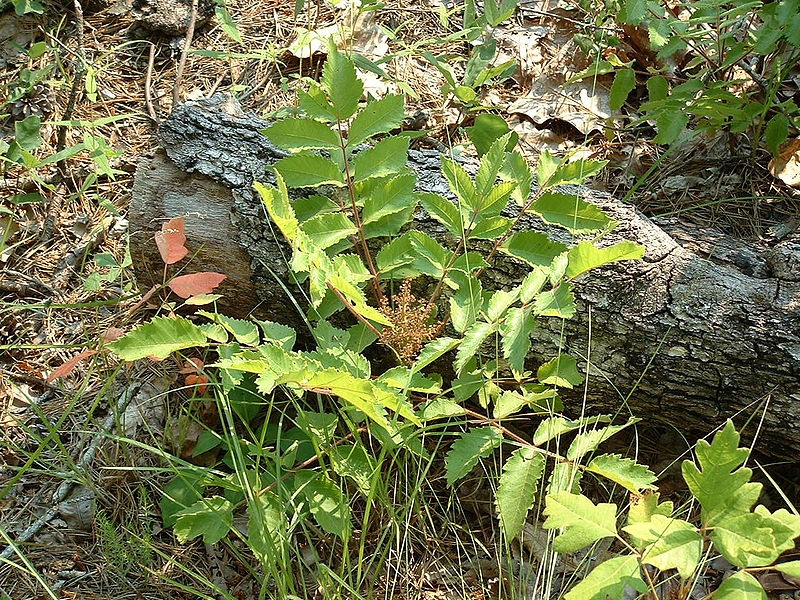
Michaux's Sumac is a deciduous shrub in the Anacardiaceae family and was historically unique to the Inner Coastal Plain and lower Piedmont of North Carolina, South Carolina, and Georgia. Its natural habitat includes dry, open, rocky, or sandy woodlands over bedrock with high levels of calcium, magnesium, or iron. It can be found growing in disturbed locations such as highway rights-of-way, roadsides, sites that have been damaged by fire, or at the edges of artificially maintained clearings.
Michaux's Sumac needs full sun in well-drained sandy or rocky soils. It will spread by suckers to form colonies. These suckers can reach lengths of up to 20'.
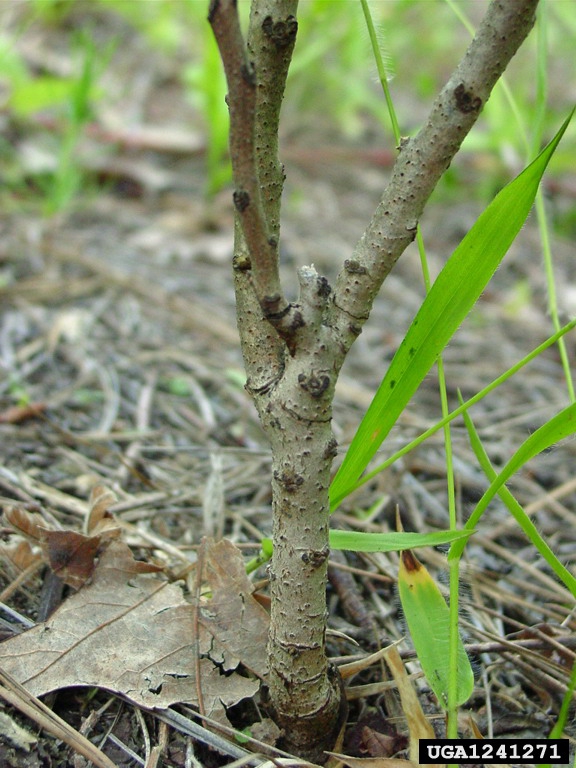
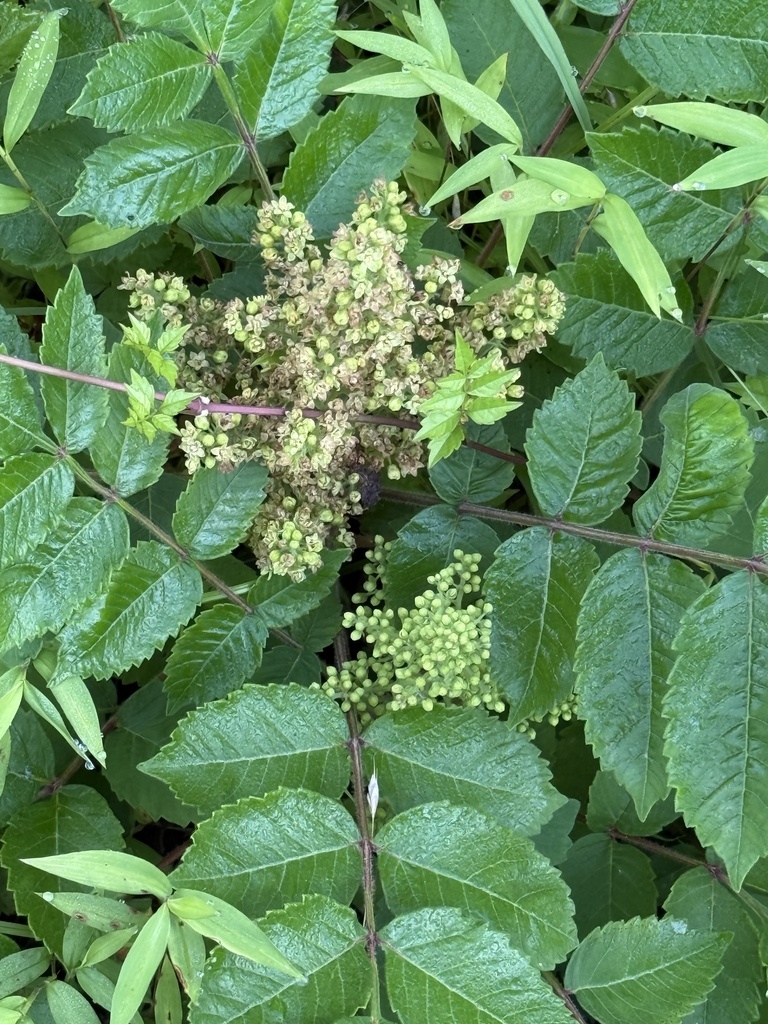
Female flowers and male flowers are on separate plants. Due to fragmented habitats, often the male and female plants are isolated from each other, preventing pollination. All parts of the shrub are densely hairy.
Existing populations of this plant are protected and managed to protect their future. It is listed by both Federal and State as an endangered species.
The plant is not available for home use.
Insects, Diseases, and Other Plant Problems: The main enemies of this plant is habitat loss and fire suppression. Watch for powdery mildew, fungal diseases and leaf borers.
- See this plant in the following landscape :
- Cultivars / Varieties:
-
- Tags:


- Cultivars / Varieties:
-
- Tags:
-
-
Attributes:
- Genus:
- Rhus
- Species:
- michauxii
- Family:
- Anacardiaceae
- Life Cycle:
- Perennial
- Country Or Region Of Origin:
- North Carolina and South Carolina
- Distribution:
- FL, GA, NC, SC, VA
- Wildlife Value:
- Host plant for the Luna moth.
-
-
Whole Plant Traits:
- Plant Type:
- Native Plant
- Perennial
- Shrub
- Woody Plant Leaf Characteristics:
- Deciduous
- Habit/Form:
- Dense
- Erect
- Maintenance:
- Low
- Texture:
- Medium
-
-
Cultural Conditions:
- Light:
- Full sun (6 or more hours of direct sunlight a day)
- Partial Shade (Direct sunlight only part of the day, 2-6 hours)
- Soil Texture:
- Sand
- NC Region:
- Coastal
- Mountains
- Piedmont
- USDA Plant Hardiness Zone:
- 5a, 5b, 6a, 6b, 7a, 7b
-
-
Fruit:
- Fruit Color:
- Red/Burgundy
- Display/Harvest Time:
- Fall
- Summer
- Fruit Type:
- Drupe
- Fruit Description:
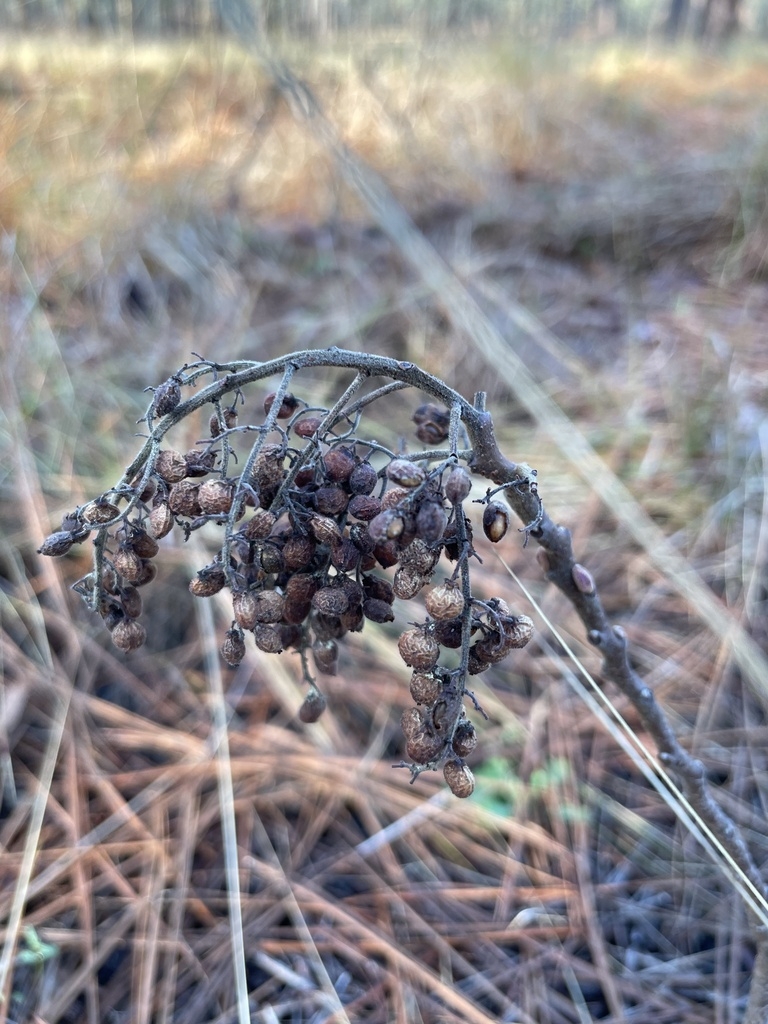
- Female plants have red compressed drupes. The seeds are often sterile.
-
-
Flowers:
- Flower Color:
- Gold/Yellow
- Green
- Flower Bloom Time:
- Summer
- Flower Petals:
- 4-5 petals/rays
- Flower Size:
- < 1 inch
- Flower Description:
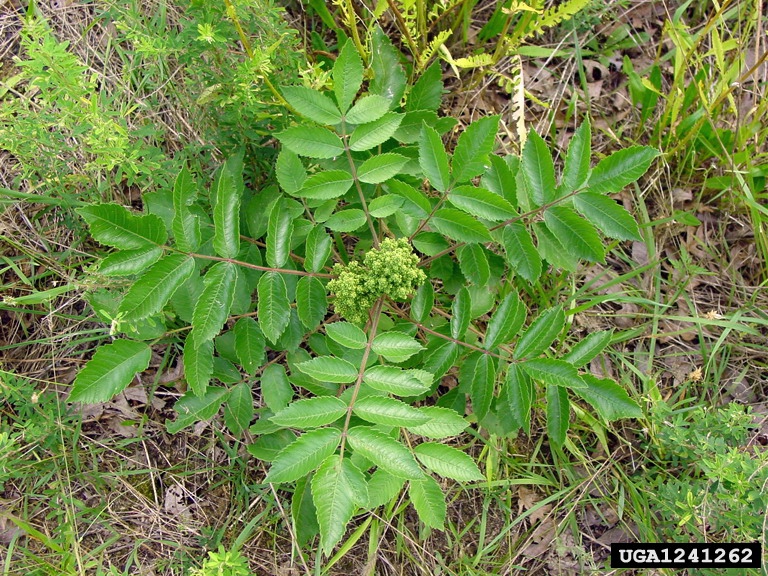
- 6-8 in. panicle of flowers in summer with 4 to 5 tiny, greenish-yellow petals.
-
-
Leaves:
- Woody Plant Leaf Characteristics:
- Deciduous
- Leaf Color:
- Gold/Yellow
- Green
- Orange
- Purple/Lavender
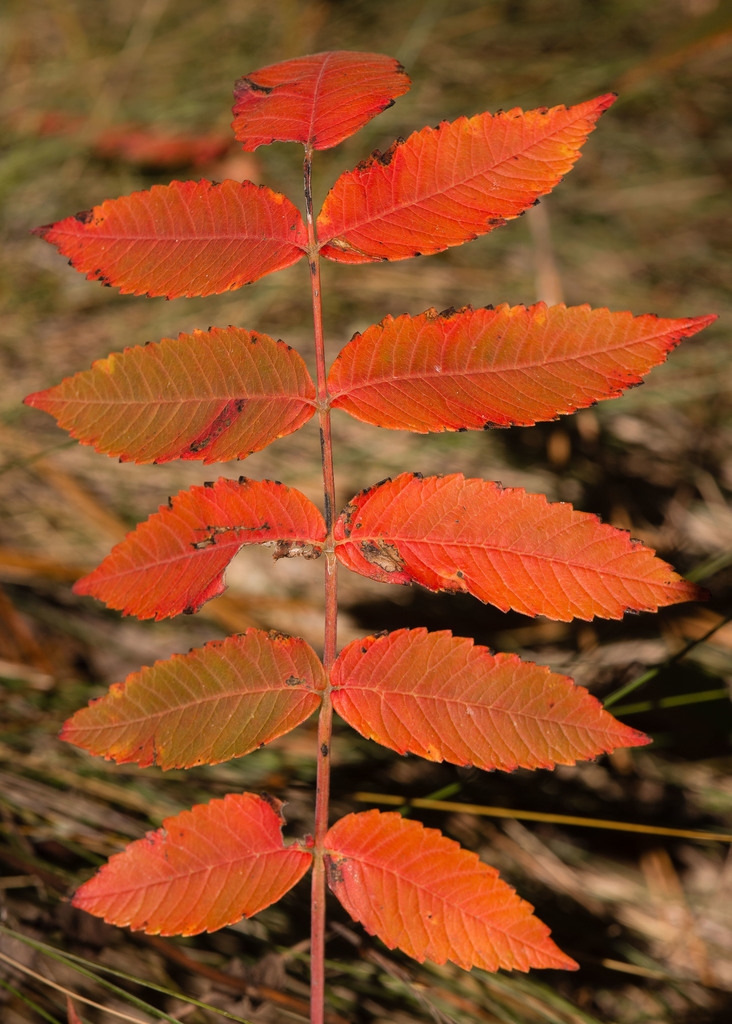
- Deciduous Leaf Fall Color:
- Gold/Yellow
- Orange
- Purple/Lavender
- Leaf Type:
- Compound (Pinnately , Bipinnately, Palmately)
- Leaf Arrangement:
- Alternate
- Leaf Shape:
- Oblong
- Ovate
- Leaf Margin:
- Serrate
- Hairs Present:
- Yes
- Leaf Length:
- 1-3 inches
- Leaf Width:
- < 1 inch
- Leaf Description:
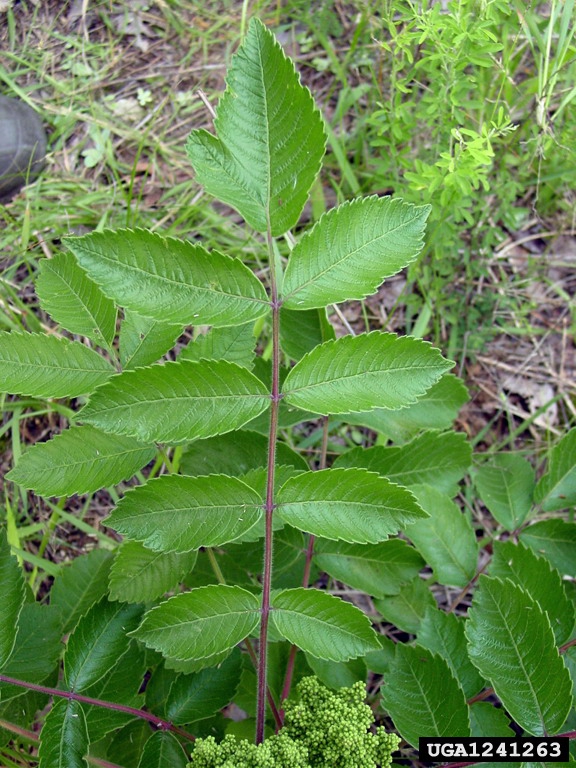
- Alternate, pinnate compound dark green leaves; 9 to 15 leaflets; yellow-orange to purplish red fall color. Leaflets are 1.5 to 3.5 inches long, oval to oblong with toothed margins. Tjey are sessile to short-stalked except for the terminal leaflet, which has a 2-inch-long winged stalk. Leaves and stems have hairs.
-
-
Stem:
- Stem Is Aromatic:
- No
- Stem Description:
- Young shoots have a reddish tinge.
-
-
Landscape:
- Landscape Theme:
- Native Garden
- Nighttime Garden
- Attracts:
- Moths