


Neltuma pallida
Previously known as:
- Prosopis limensis
- Prosopis pallida
- Phonetic Spelling
- nel-TOO-mah PAL-lid-duh
- Description
-
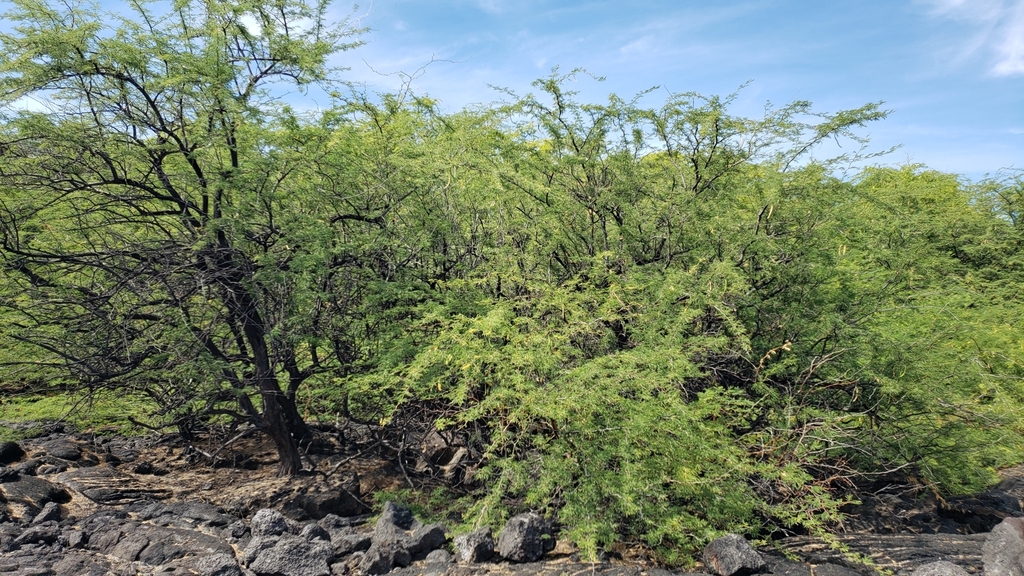
Mesquite is a drought-tolerant, thorny, flowering tree native to northern Peru in the bean family. Plants in this genus are nitrogen fixers that often thrive in arid soil and are drought-resistant. Mesquite is often found in the wild on dry coastlines and arid, saline soils. Their fruits are pods that can contain large amounts of sugar and are a balanced staple carbohydrate. At maturity, a Mesquite tree can reach 39 feet in height with a nearly equal spread.
Mesquite tolerates sandy, loamy, or clay soil as long as it is well-drained. It prefers acidic soils and can grow in saline soils. It is best sited in full sun or partial shade and tolerates strong winds and drought, but not maritime exposure.
The tree produces a great deal of seed and it has escaped from cultivation in many areas, becoming invasive and forming dense thickets. It is a federally listed noxious weed in the United States and is not recommended for gardens.This tree can overshadow other vegetation, and its deep root system can tap into ground water and desiccate an area by using all available water.
Diseases, Insect Pests, and Other Plant Problems:
No known diseases or insect pests.
- See this plant in the following landscape :
- Cultivars / Varieties:
-
- Tags:





- Cultivars / Varieties:
-
- Tags:
-
-
Attributes:
- Genus:
- Neltuma
- Species:
- pallida
- Family:
- Fabaceae
- Uses (Ethnobotany):
- Used as animal feed. The seedpods can be added to soups and corn meal; or made into a sweet syrup.
- Life Cycle:
- Perennial
- Woody
- Country Or Region Of Origin:
- Peru
- Distribution:
- Bolivia, Ecuador, Columbia
- Wildlife Value:
- Known for attracting wildlife.
-
-
Whole Plant Traits:
- Plant Type:
- Perennial
- Shrub
- Tree
- Woody Plant Leaf Characteristics:
- Deciduous
- Habit/Form:
- Broad
- Growth Rate:
- Rapid
- Appendage:
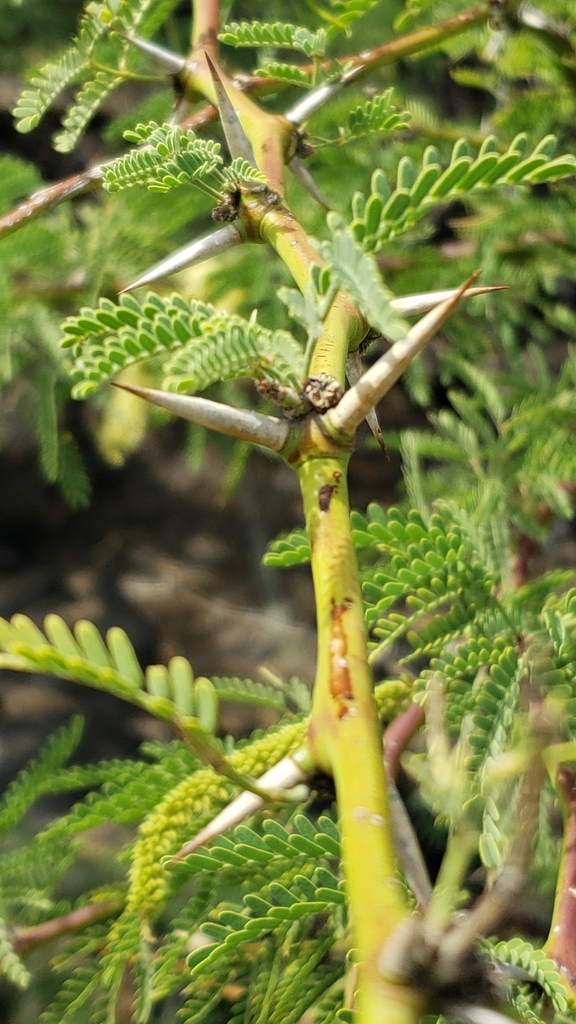
- Thorns
-
-
Cultural Conditions:
- Light:
- Full sun (6 or more hours of direct sunlight a day)
- Partial Shade (Direct sunlight only part of the day, 2-6 hours)
- Soil Texture:
- Clay
- Loam (Silt)
- Sand
- Soil pH:
- Acid (<6.0)
- Neutral (6.0-8.0)
- Soil Drainage:
- Good Drainage
- Moist
- Occasionally Dry
- USDA Plant Hardiness Zone:
- 10a, 10b, 11a, 11b, 12a, 12b
-
-
Fruit:
- Display/Harvest Time:
- Summer
- Fruit Type:
- Legume
- Fruit Length:
- > 3 inches
- Fruit Width:
- 1-3 inches
- Fruit Description:
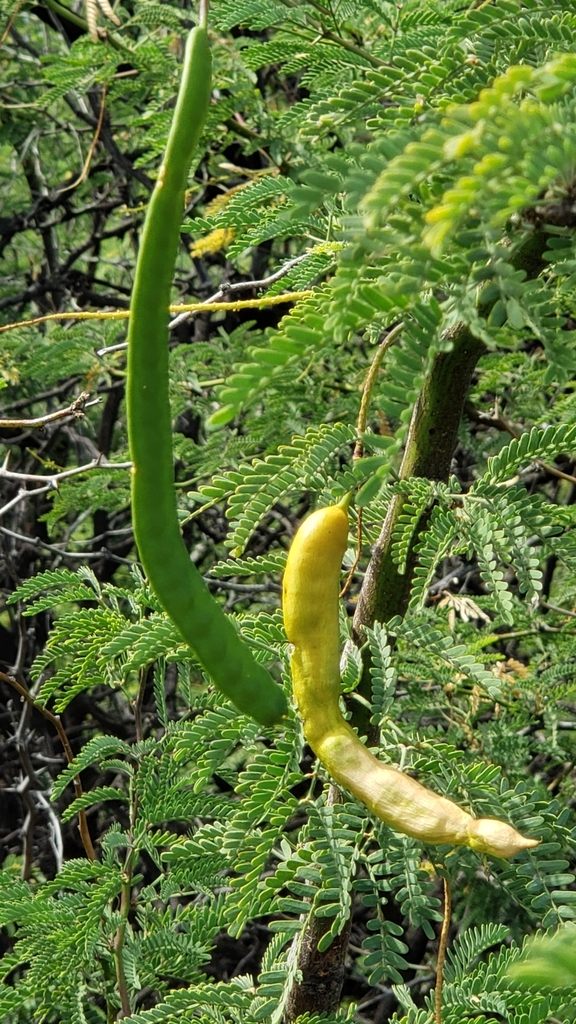
- About 6 months after flowering and pollination, the pods ripen and fall to the ground. The pods are straight or slightly curved yellowish beans 3 to 8 inches long.
-
-
Flowers:
- Flower Color:
- Gold/Yellow
- Green
- Flower Inflorescence:
- Spike
- Flower Bloom Time:
- Fall
- Winter
- Flower Shape:
- Tubular
- Flower Description:
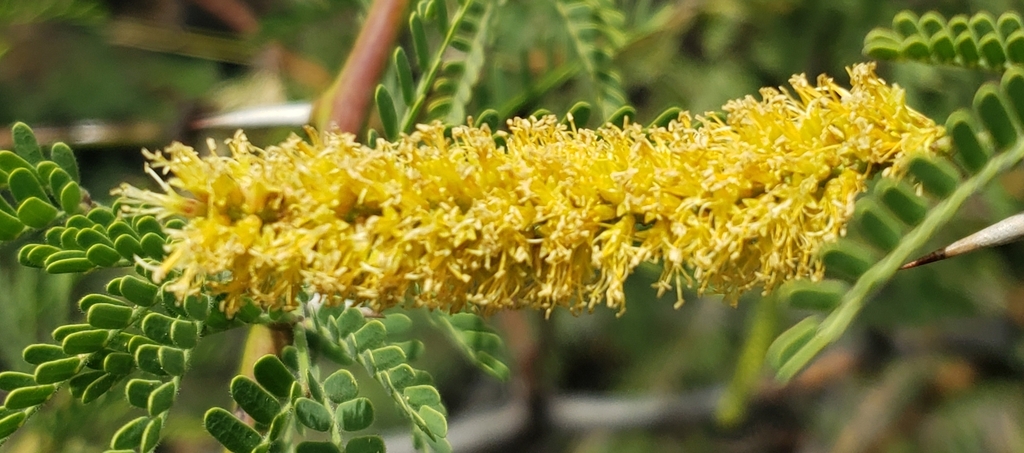
- Greenish yellow flowers in dropping 4 inch spikes. The tree can flower at any time of the year and frequently flowers twice a year. Usually, it flowers from January to March, but in some years with wet summers it also flowers heavily during September and October.
-
-
Leaves:
- Woody Plant Leaf Characteristics:
- Deciduous
- Hairs Present:
- No
-
-
Stem:
- Stem Is Aromatic:
- No
-
-
Landscape:
- Resistance To Challenges:
- Drought
- Dry Soil
- Salt
- Wind