



Populus heterophylla
Common Name(s):
Previously known as:
- Aigiros heterophylos
- Populus balsamifera
- Phonetic Spelling
- POP-yoo-lus het-er-oh-FIL-uh
- Description
-
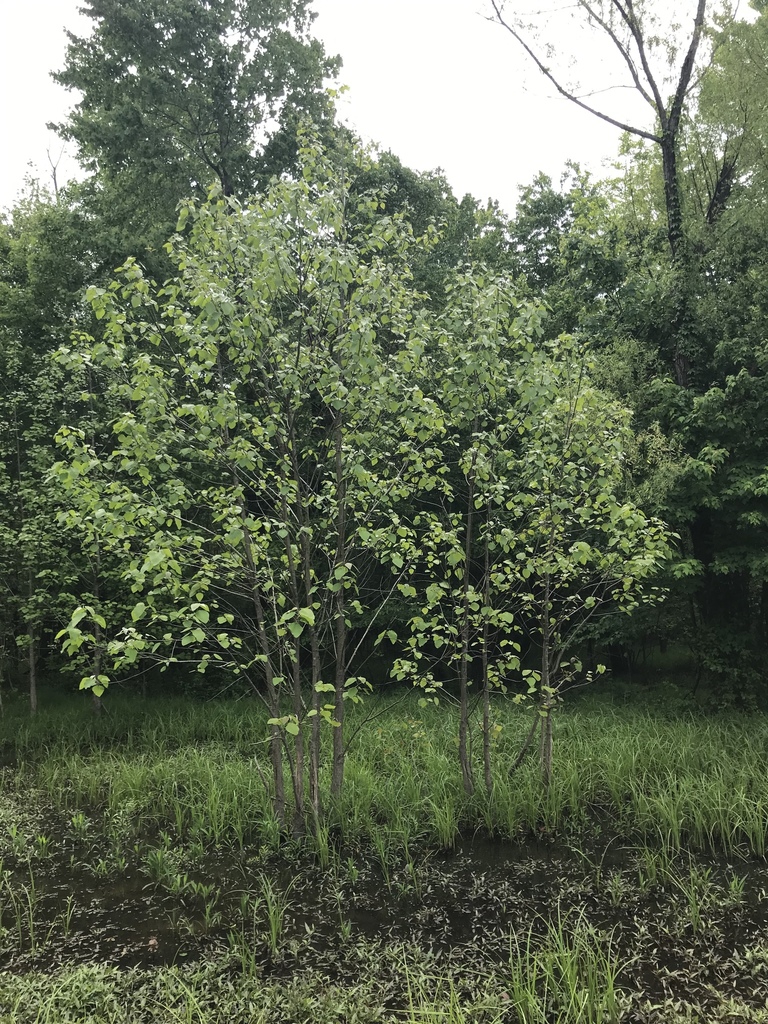
Swamp Cottonwood is a large deciduous tree in the willow family. It is most often found in riparian and low-lying wet bottom lands in the Southeastern United States. While it usually has a poor form, in proper conditions it can grow up to 100 feet tall with a single trunk 3 feet in diameter. It has an ovoid to oblong crown that opens with age, gray furrowed bark, and green deciduous leaves up to 6 inches long. It is dioecious, with male and female catkins on separate trees. The root system is shallow and spreading.
Swamp Cottonwood prefers a site with full or partial sun, wet conditions, and an acidic clay soil.It grows moderately fast, with a maximum age of about 100 years. Seeds require sunlight and moisture for germination and remain viable for only 2 weeks.
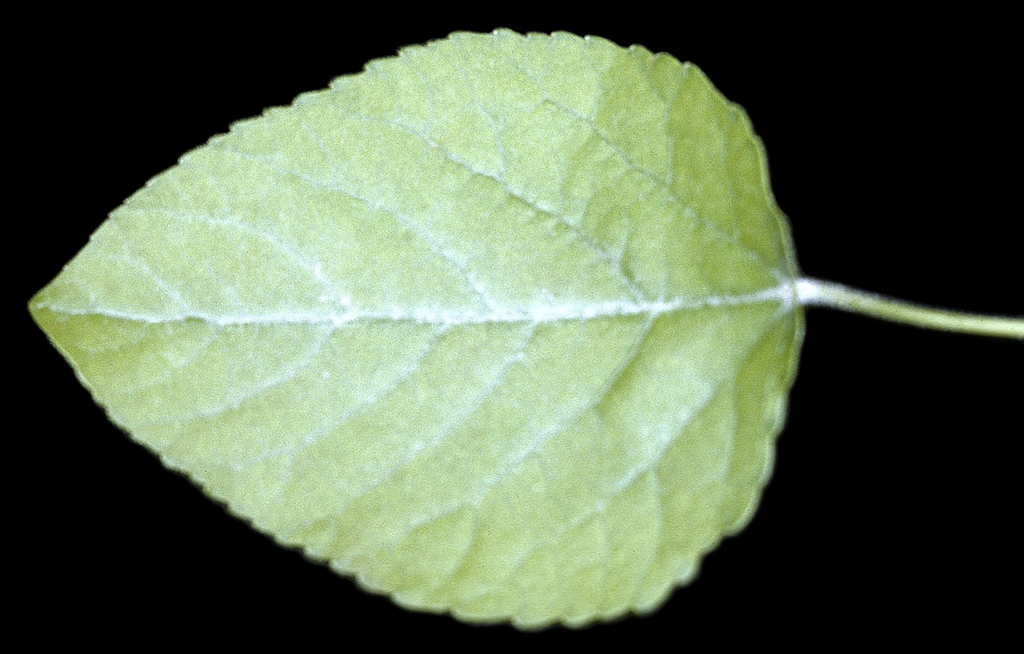
Young branches are initially clothed in a thick felt, much of which falls away by late summer. The leaves, also, are initially covered in a thick whitish down that soon falls away leaving it dark green.
Insects, Diseases, and Other Plant Problems:
No known diseases or insect pests.
- See this plant in the following landscape :
- Cultivars / Varieties:
-
- Tags:



- Cultivars / Varieties:
-
- Tags:
-
-
Attributes:
- Genus:
- Populus
- Species:
- heterophylla
- Family:
- Salicaceae
- Uses (Ethnobotany):
- The soft, light, generally weak wood is used for crates, baskets, cardboard boxes, and high-quality paper pulp.
- Life Cycle:
- Woody
- Recommended Propagation Strategy:
- Seed
- Country Or Region Of Origin:
- Northern Russia, Canada and Eastern and Central United States
- Distribution:
- United States south to North Carolina. Introduced into Ireland, England, and Western Europe.
- Wildlife Value:
- Seedlings and young trees browsed by rabbits, deer, and domestic stock. Host tree for many insects.
- Play Value:
- Wildlife Food Source
- Dimensions:
- Height: 50 ft. 0 in. - 100 ft. 0 in.
- Width: 1 ft. 6 in. - 3 ft. 0 in.
-
-
Whole Plant Traits:
- Plant Type:
- Native Plant
- Perennial
- Tree
- Woody Plant Leaf Characteristics:
- Deciduous
- Habit/Form:
- Erect
- Open
- Growth Rate:
- Medium
- Texture:
- Coarse
-
-
Cultural Conditions:
- Light:
- Full sun (6 or more hours of direct sunlight a day)
- Partial Shade (Direct sunlight only part of the day, 2-6 hours)
- Soil Texture:
- Sand
- Soil pH:
- Acid (<6.0)
- Neutral (6.0-8.0)
- Soil Drainage:
- Frequent Standing Water
- Moist
- Occasionally Wet
- Available Space To Plant:
- more than 60 feet
- NC Region:
- Coastal
- USDA Plant Hardiness Zone:
- 2a, 2b, 3a, 3b, 4a, 4b, 5a, 5b, 6a, 6b, 7a, 7b
-
-
Fruit:
- Fruit Color:
- Brown/Copper
- Green
- Fruit Value To Gardener:
- Edible
- Display/Harvest Time:
- Spring
- Fruit Type:
- Capsule
- Fruit Length:
- < 1 inch
- Fruit Width:
- < 1 inch
- Fruit Description:
- Ovoid, green capsules that grow in clusters and turn brown when ripe. The seeds inside are small and downy. Seeds are hanging in catkins.
-
-
Flowers:
- Flower Color:
- White
- Flower Inflorescence:
- Catkin
- Flower Size:
- < 1 inch
- Flower Description:
- Species is dioecious; males occur in 1 inch long catkins, females occur in a sparse white flowered catkin.
-
-
Leaves:
- Woody Plant Leaf Characteristics:
- Deciduous
- Leaf Color:
- Gold/Yellow
- Green
- Leaf Type:
- Simple
- Leaf Arrangement:
- Alternate
- Leaf Shape:
- Cordate
- Obtuse
- Ovate
- Leaf Margin:
- Crenulate
- Serrate
- Hairs Present:
- No
- Leaf Length:
- > 6 inches
- Leaf Width:
- 3-6 inches
- Leaf Description:
- Broadly ovate, serrated margin, heart-shaped base, 4 to 7 inches long, petiole round, green above and paler below. The leaves are 3 to 4 inches across. Leaf tips are blunt, while leaf bases are rounded to cordate. New leaves are densely short-pubescent on both sides. Mature leaves are medium to dark green and glabrous on their upper surfaces, while their lower surfaces are pale green and glabrous or nearly so.
-
-
Bark:
- Bark Color:
- Dark Brown
- Dark Gray
- Light Brown
- Light Gray
- Surface/Attachment:
- Furrowed
- Ridges
- Bark Description:
- Strongly vertically ridged.
-
-
Stem:
- Stem Color:
- Brown/Copper
- Gray/Silver
- Stem Is Aromatic:
- No
- Stem Bud Scales:
- Enclosed in more than 2 scales
- Stem Form:
- Straight
- Stem Leaf Scar Shape:
- Heart or shield shaped
- Stem Surface:
- Smooth (glabrous)
- Stem Description:
- The bark of branches and twigs is gray and smooth, while young shoots are light green and densely short-pubescent. Terminal buds of winter branches are brown and slightly resinous.
-
-
Landscape:
- Landscape Location:
- Pond
- Riparian
- Landscape Theme:
- Native Garden
- Rain Garden
- Attracts:
- Small Mammals
- Resistance To Challenges:
- Wet Soil
- Problems:
- Short-lived



