


Phlox nivalis
Common Name(s):
Previously known as:
- Phlox subulata f. nivalis
- Phlox subulata subsp. nivalis
- Phonetic Spelling
- FLOCKS nee-VAL-is
- Description
-
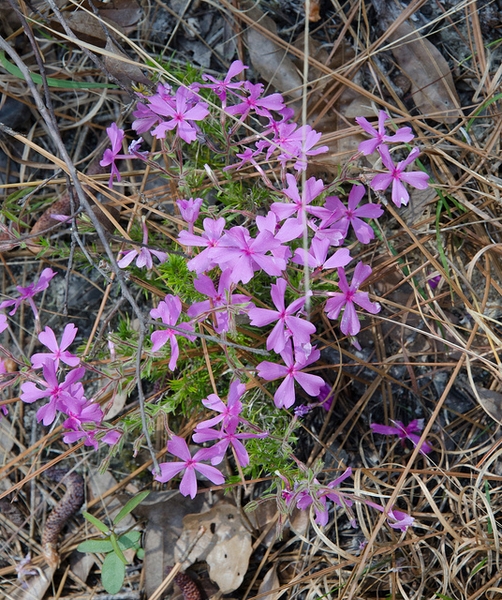
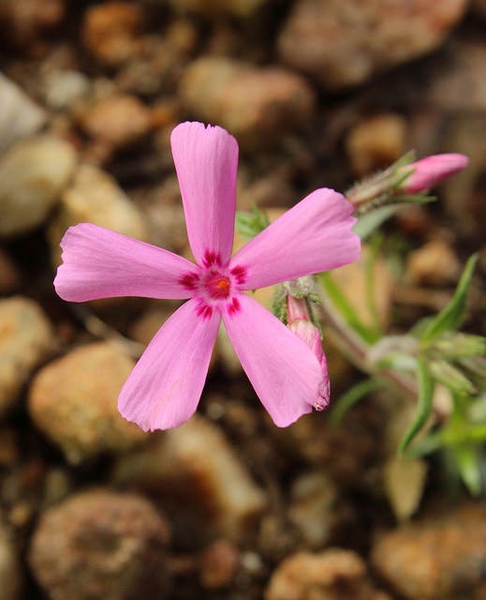
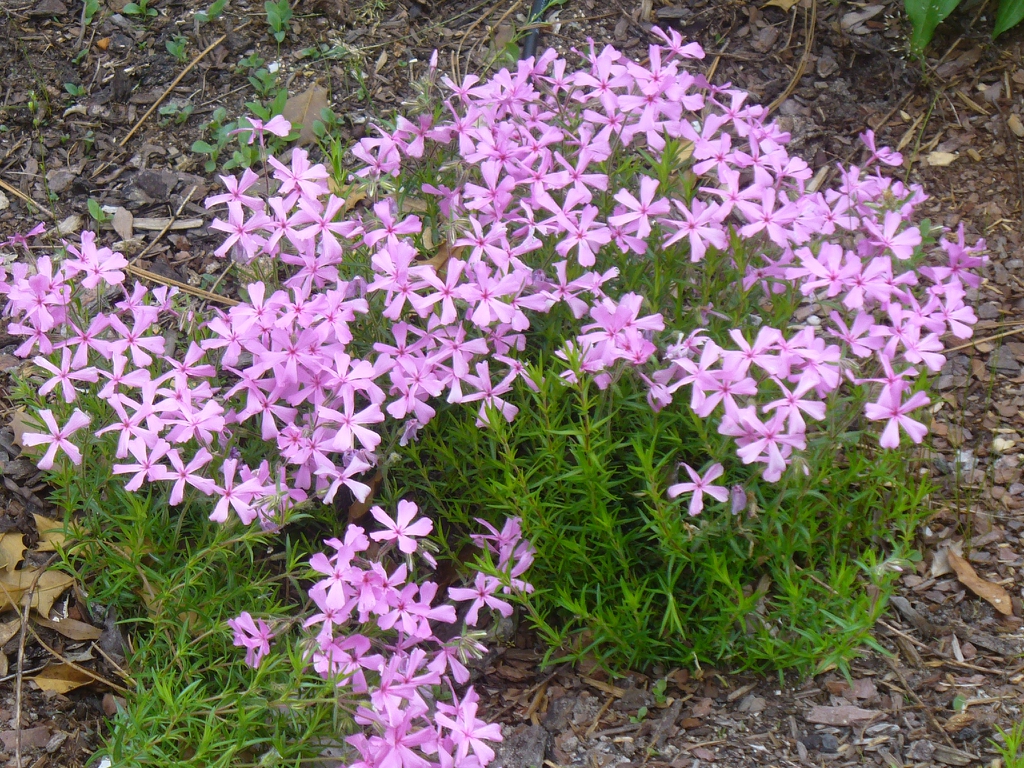
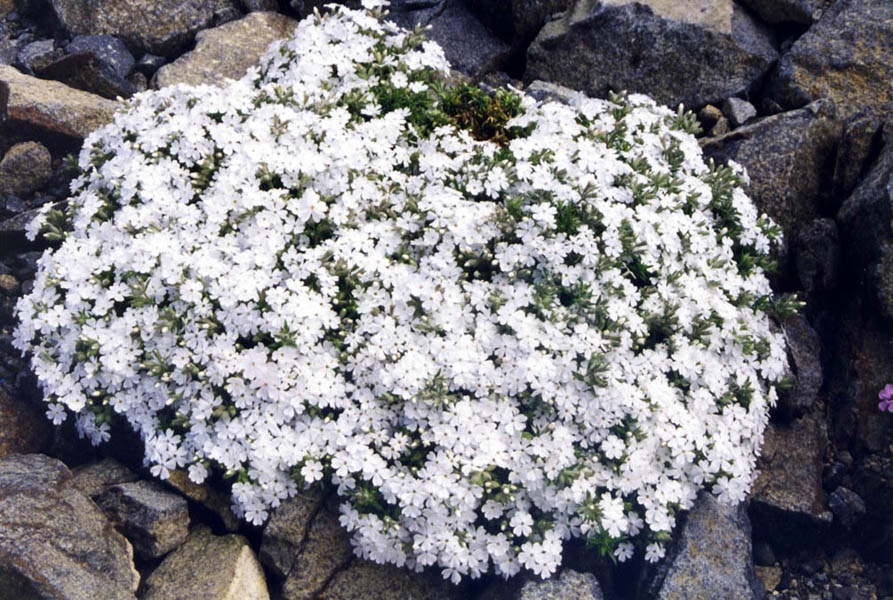
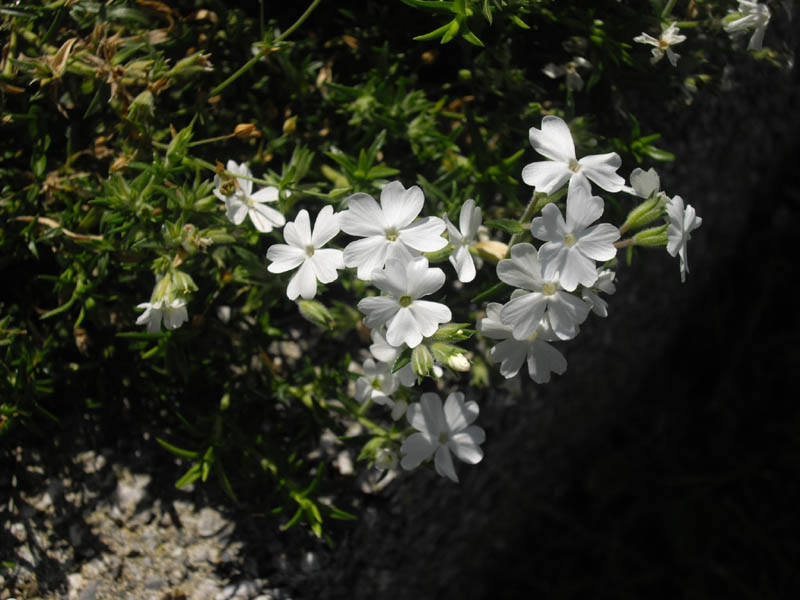
Trailing phlox is a small, mat-forming, native evergreen perennial found in the southeastern and central United States in pinewoods and flats of sandy soil. It does well in North Carolina's mountains, piedmont, and coastal plains. It grows 4 to 8 inches tall and 1.5 to 3 feet wide, with long trailing stems and small, hairy, dense, lance-shaped green leaves. The upright stems bear the flower clusters in the spring. Each bloom is upright, small, 5-petalled, and purplish-pink. This plant belongs to the phlox family (Polemoniaceae). The specific epithet nivalis is Latin, meaning snow-like or snow-covered.
Prefers full sun to partial shade and moist, well-drained, loamy, sandy, or chalky soil with an acidic or neutral pH. No pruning is necessary. Use non-flowering, softwood stem cuttings in the spring for propagation. It flourishes in hot, well-drained sites, especially in the sandhill and dry habitats of central North and South Carolina. It is hardy in zones from 6 to 9.
Trailing phlox is a tough, hardy groundcover that differs from other Phlox species because it is semi-woody and favors more acidic soil. This plant is attractive as a mat-forming groundcover along borders, pathways, or slopes. Consider using trailing phlox as a container plant for a patio or porch. Attractive to bees and butterflies.
Insects, Diseases, and Other Plant Problems: Trailing phlox is generally free of insect pests; however, it may be susceptible to powdery mildew or leaf spot.
- See this plant in the following landscape :
- Cultivars / Varieties:
-
- 'Camia'
Taller and nearly white flowers - 'Eco Flirty Eyes'
Grows up to 6 inches tall and 1-2 ft. wide, with lavender blue flowers - 'Jill Alexander'
Pink flowers - 'Nivea'
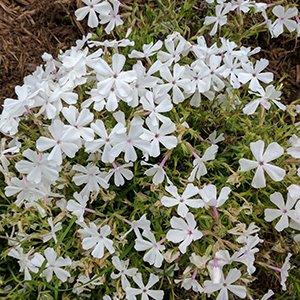
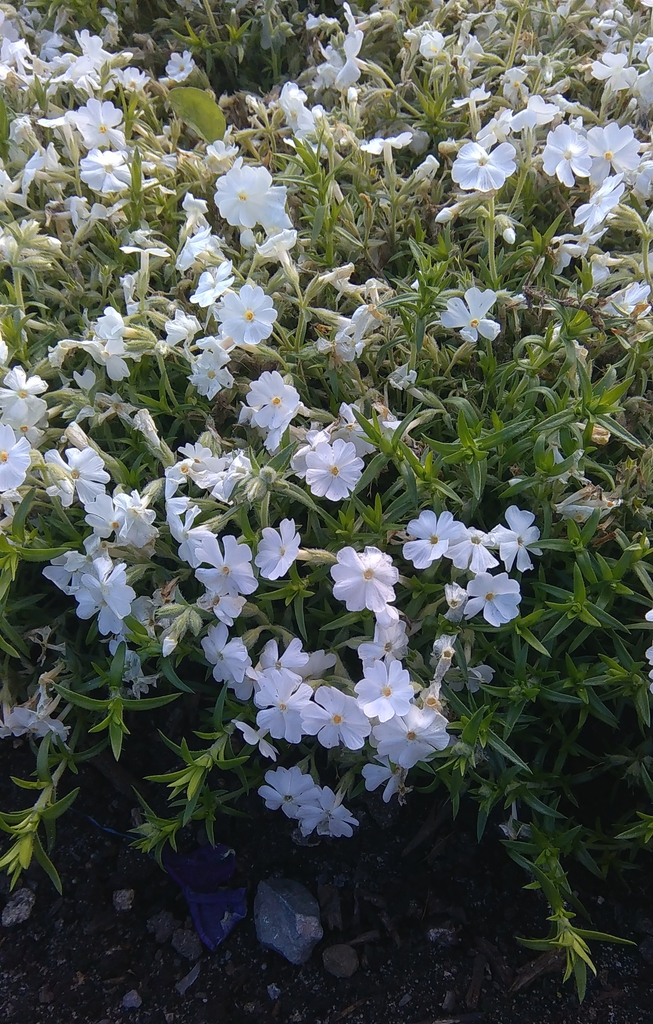
Pure white flowers - Snowdrift
White flowers
- 'Camia'
- 'Camia', 'Eco Flirty Eyes', 'Jill Alexander', 'Nivea', Snowdrift
- Tags:


- Cultivars / Varieties:
-
- 'Camia'
Taller and nearly white flowers - 'Eco Flirty Eyes'
Grows up to 6 inches tall and 1-2 ft. wide, with lavender blue flowers - 'Jill Alexander'
Pink flowers - 'Nivea'
Pure white flowers - Snowdrift
White flowers
- 'Camia'
- 'Camia', 'Eco Flirty Eyes', 'Jill Alexander', 'Nivea', Snowdrift
- Tags:
-
-
Attributes:
- Genus:
- Phlox
- Species:
- nivalis
- Family:
- Polemoniaceae
- Life Cycle:
- Perennial
- Woody
- Recommended Propagation Strategy:
- Division
- Seed
- Stem Cutting
- Country Or Region Of Origin:
- Southeastern United States
- Distribution:
- Native: Alabama, Florida, Georgia, Michigan, North Carolina, South Carolina, Texas, Utah, and Virginia. Introduced: Colorado
- Wildlife Value:
- Attracts hummingbirds, bees, and butterflies
- Play Value:
- Attractive Flowers
- Attracts Pollinators
- Colorful
- Defines Paths
- Textural
- Dimensions:
- Height: 0 ft. 4 in. - 0 ft. 8 in.
- Width: 1 ft. 6 in. - 3 ft. 0 in.
-
-
Whole Plant Traits:
- Plant Type:
- Ground Cover
- Herbaceous Perennial
- Native Plant
- Wildflower
- Woody Plant Leaf Characteristics:
- Broadleaf Evergreen
- Habit/Form:
- Mounding
- Spreading
- Growth Rate:
- Medium
- Maintenance:
- Low
- Texture:
- Fine
-
-
Cultural Conditions:
- Light:
- Full sun (6 or more hours of direct sunlight a day)
- Partial Shade (Direct sunlight only part of the day, 2-6 hours)
- Soil Texture:
- Loam (Silt)
- Sand
- Soil pH:
- Acid (<6.0)
- Neutral (6.0-8.0)
- Soil Drainage:
- Good Drainage
- Moist
- Occasionally Dry
- Available Space To Plant:
- 12 inches-3 feet
- NC Region:
- Coastal
- Mountains
- Piedmont
- USDA Plant Hardiness Zone:
- 6a, 6b, 7a, 7b, 8a, 8b, 9a, 9b
-
-
Fruit:
- Display/Harvest Time:
- Spring
- Summer
- Fruit Type:
- Capsule
- Fruit Length:
- < 1 inch
- Fruit Width:
- < 1 inch
- Fruit Description:
- The fruit is a three-valved, three-chambered, egg-shaped capsule with one to three relatively large (up to 6 mm long), ellipsoid seeds per chamber
-
-
Flowers:
- Flower Color:
- Pink
- Purple/Lavender
- White
- Flower Inflorescence:
- Cyme
- Flower Value To Gardener:
- Showy
- Flower Bloom Time:
- Spring
- Flower Shape:
- Star
- Flower Petals:
- 4-5 petals/rays
- Flower Size:
- < 1 inch
- Flower Description:
- Purple to pink or nearly white flowers, with a darker colored tube and center, radially symmetric, with a slender tube, and abruptly spreading lobes.
-
-
Leaves:
- Woody Plant Leaf Characteristics:
- Broadleaf Evergreen
- Leaf Color:
- Green
- Leaf Feel:
- Glossy
- Leaf Type:
- Simple
- Leaf Arrangement:
- Opposite
- Whorled
- Leaf Shape:
- Lanceolate
- Linear
- Leaf Margin:
- Entire
- Hairs Present:
- No
- Leaf Length:
- 3-6 inches
- Leaf Width:
- < 1 inch
- Leaf Description:
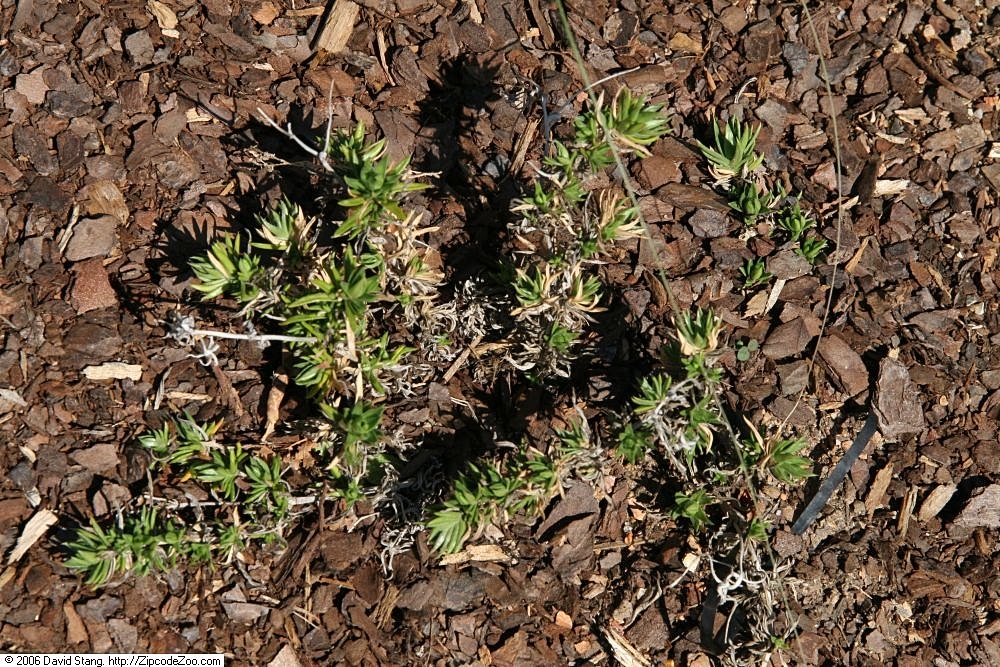
- It has a tight, 6-inch-tall evergreen mat of shiny, green, needle-like foliage.
-
-
Stem:
- Stem Color:
- Green
- Stem Is Aromatic:
- No
- Stem Description:
- The sterile stems are trailing, decumbent, finely glandular-hairy, and somewhat woody, while the flowering shoots are more erect.
-
-
Landscape:
- Landscape Location:
- Container
- Hanging Baskets
- Patio
- Slope/Bank
- Landscape Theme:
- Drought Tolerant Garden
- Native Garden
- Pollinator Garden
- Rock Garden
- Design Feature:
- Border
- Mass Planting
- Small groups
- Attracts:
- Bees
- Butterflies
- Hummingbirds
- Resistance To Challenges:
- Drought
- Dry Soil
- Heat