


Philadelphus inodorus
Common Name(s):
Previously known as:
- Philadelphus gloriosus
- Philadelphus grandiflorus
- Philadelphus inodorus var. grandiflorus
- Syringa inodora
- Phonetic Spelling
- fil-ah-DEL-fuss in-oh-DUR-us
- Description
-
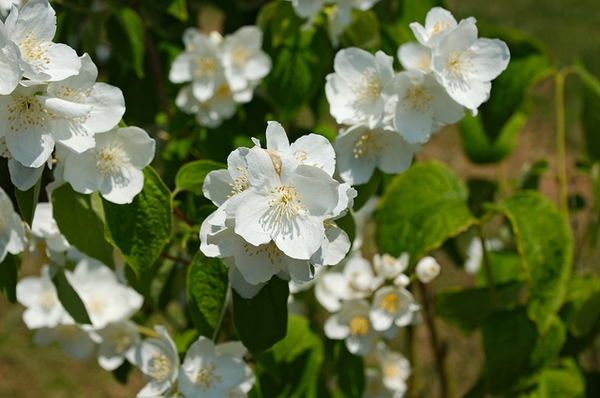
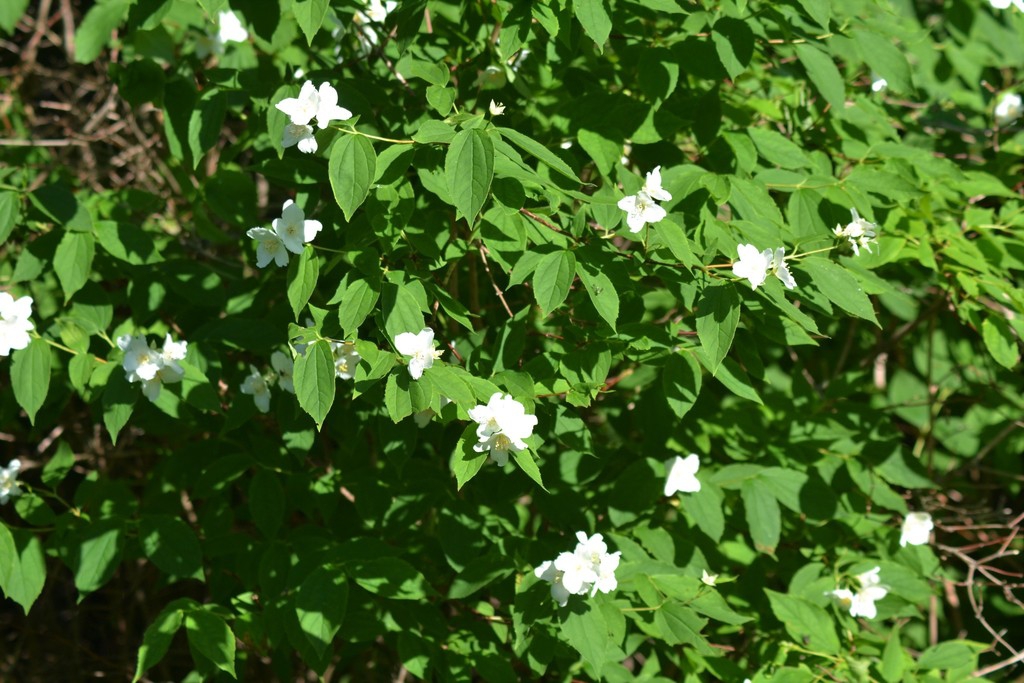
Appalachian mock orange is a deciduous shrub found in moist forests, woodlands, rocky bluffs, and along stream banks. It is native to the southeastern United States. In North Carolina, it is typically found in the mountain and piedmont regions. This shrub grows 6 to 10 feet tall and 6 to 8 feet wide. It has an upright, rounded habit with branches that become more arching as the plant ages. Attractive white flowers bloom in small groups in summer. The leaves are dark green, and its bark is orangish-brown and exfoliating as the shrub ages. This shrub belongs to the hydrangea family (Hydrangeaceae) and is also commonly known as the scentless mock orange. The genus name Philadelphus is Greek, meaning "loving one's brother or sister." The specific epithet inodorus is Latin and means "scentless or odorless."
This shrub prefers full sun to partial shade, is easy to grow, and adapts to a variety of moist, well-drained soil types. This shrub is drought-, heat-, and humidity-tolerant. Best pruned immediately after blooming ends, since it blooms on the previous year's wood. Cutting back one-third of the old growth after flowering will rejuvenate old shrubs. Seeds and wood cuttings are the best means of propagation.
In the landscape, the Appalachian mock orange may be used as a shrub border, hedge, foundation planting, or specimen. It can also help control erosion along banks and slopes.
Insects, Diseases, and Other Plant Problems: No significant insect or disease issues.
- See this plant in the following landscape :
- Cultivars / Varieties:
-
- Tags:


- Cultivars / Varieties:
-
- Tags:
-
-
Attributes:
- Genus:
- Philadelphus
- Species:
- inodorus
- Family:
- Hydrangeaceae
- Life Cycle:
- Perennial
- Woody
- Recommended Propagation Strategy:
- Seed
- Stem Cutting
- Country Or Region Of Origin:
- West Virginia to the Southeastern United States
- Distribution:
- Native: Alabama, Florida, Georgia, Kentucky, Mississippi, North Carolina, South Carolina, Tennessee, Virginia, and West Virginia. Introduced: Argentina Northwest; Ontario; United States-- Arkansas, Connecticut, Illinois, Indiana, Kansas, Louisiana, Maryland, Massachusetts, Missouri, New Jersey, New York, Ohio, Pennsylvania, Rhode Island, and Wisconsin
- Wildlife Value:
- Attracts bees.
- Play Value:
- Attractive Flowers
- Attracts Pollinators
- Easy to Grow
- Wildlife Cover/Habitat
- Wildlife Nesting
- Dimensions:
- Height: 6 ft. 0 in. - 12 ft. 0 in.
- Width: 6 ft. 0 in. - 8 ft. 0 in.
-
-
Whole Plant Traits:
- Plant Type:
- Native Plant
- Shrub
- Woody Plant Leaf Characteristics:
- Deciduous
- Habit/Form:
- Arching
- Dense
- Erect
- Multi-stemmed
- Rounded
- Growth Rate:
- Rapid
- Maintenance:
- Low
- Texture:
- Medium
-
-
Cultural Conditions:
- Light:
- Full sun (6 or more hours of direct sunlight a day)
- Partial Shade (Direct sunlight only part of the day, 2-6 hours)
- Soil Texture:
- Clay
- Loam (Silt)
- Sand
- Soil pH:
- Acid (<6.0)
- Alkaline (>8.0)
- Neutral (6.0-8.0)
- Soil Drainage:
- Good Drainage
- Moist
- Occasionally Dry
- Available Space To Plant:
- 3 feet-6 feet
- 6-feet-12 feet
- NC Region:
- Coastal
- Mountains
- Piedmont
- USDA Plant Hardiness Zone:
- 5a, 5b, 6a, 6b, 7a, 7b, 8a, 8b, 9a, 9b, 10a, 10b
-
-
Fruit:
- Display/Harvest Time:
- Summer
- Fruit Type:
- Capsule
- Fruit Length:
- < 1 inch
- Fruit Width:
- < 1 inch
- Fruit Description:
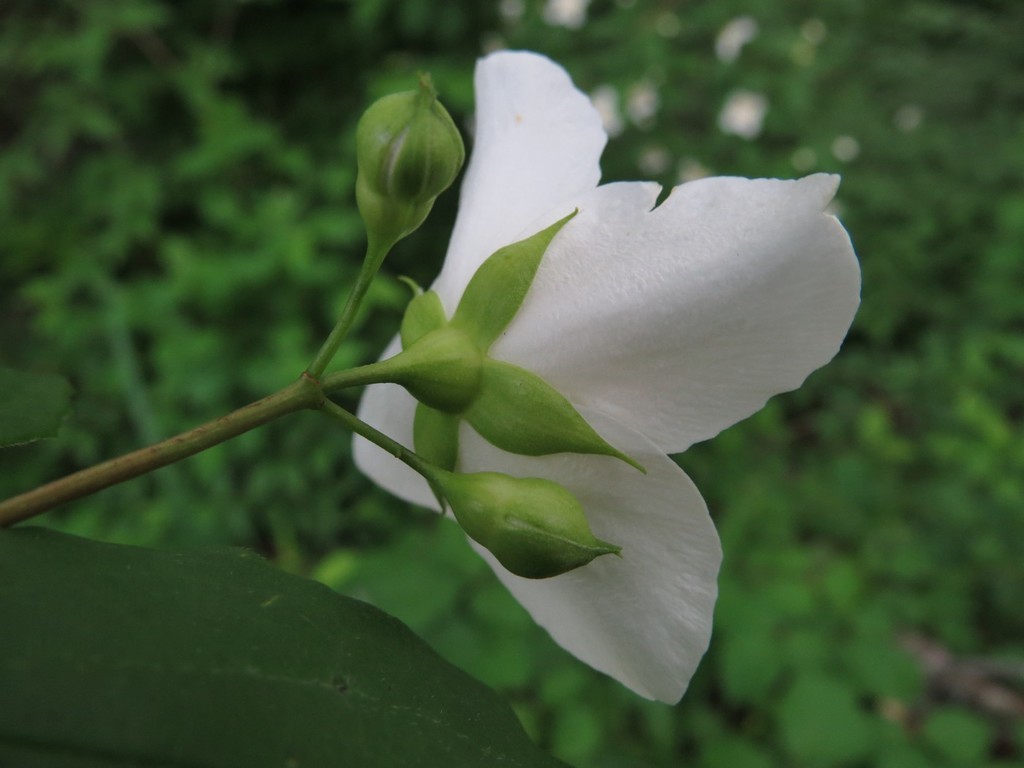
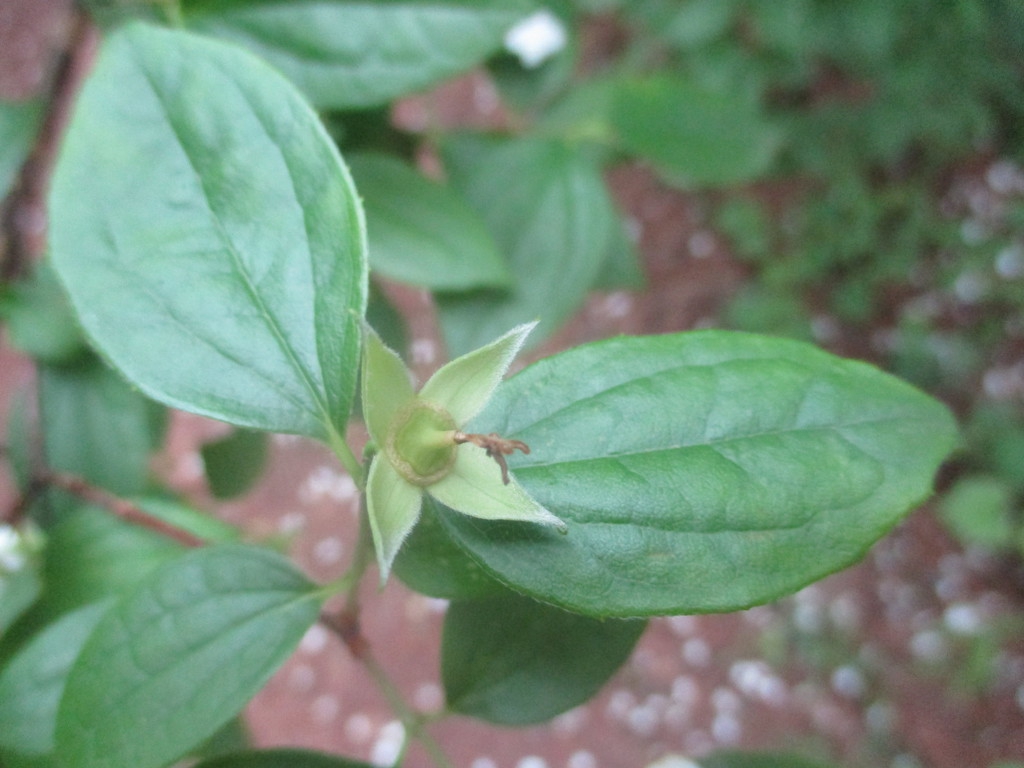
- The fruit is a dry 4-sectioned capsule and splits open when ripe, typically available in June-August.
-
-
Flowers:
- Flower Color:
- White
- Flower Inflorescence:
- Cyme
- Flower Value To Gardener:
- Good Cut
- Showy
- Flower Bloom Time:
- Summer
- Flower Shape:
- Cup
- Flower Petals:
- 4-5 petals/rays
- Flower Size:
- < 1 inch
- Flower Description:
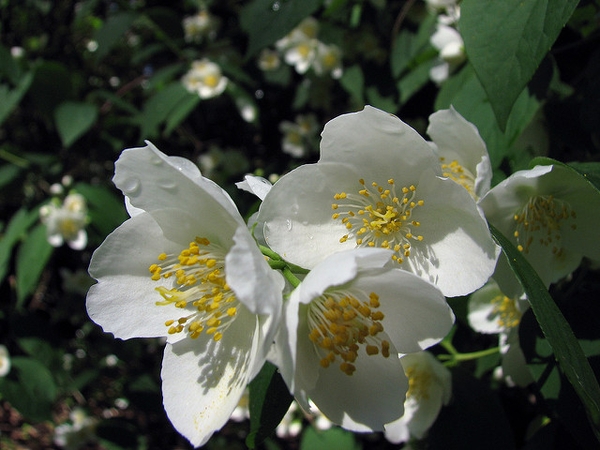
- Showy, white flowers bloom in June. The 4-petaled, cupped-shaped flowers appear solitary or in clusters of 3. Each bloom measures 1 inch in diameter and has 60-90 stamens.
-
-
Leaves:
- Woody Plant Leaf Characteristics:
- Deciduous
- Leaf Color:
- Green
- Leaf Type:
- Simple
- Leaf Arrangement:
- Opposite
- Leaf Shape:
- Oblong
- Ovate
- Leaf Margin:
- Entire
- Serrate
- Hairs Present:
- Yes
- Leaf Length:
- 3-6 inches
- Leaf Width:
- 1-3 inches
- Leaf Description:
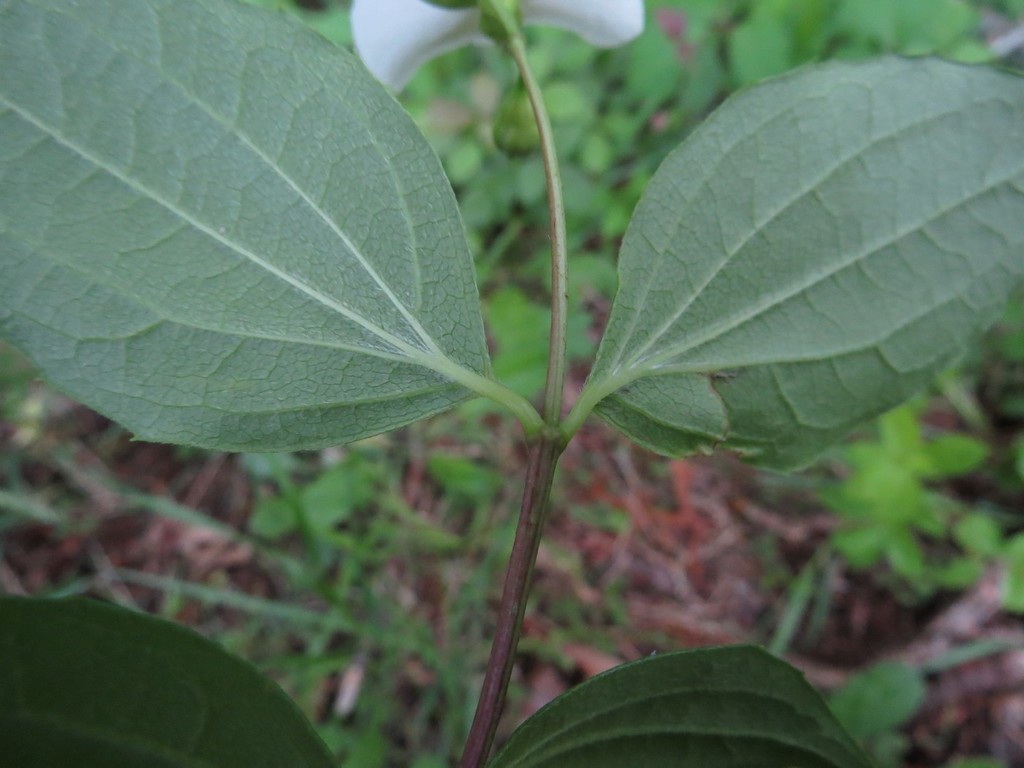
- The leaves are opposite, oblong to ovate, sparsely serrated, 2-4 inches long, darker green on top, lighter green on the underside. Although sparse, hairs can be found on the underside of the leaves.
-
-
Bark:
- Bark Color:
- Light Brown
- Orange
- Surface/Attachment:
- Exfoliating
- Shredding
- Bark Description:
- Light brown, coarsely shredded. Older bark is orange-brown and exfoliating.
-
-
Stem:
- Stem Color:
- Brown/Copper
- Red/Burgundy
- Stem Is Aromatic:
- No
- Stem Bud Scales:
- Enclosed in more than 2 scales
- Stem Cross Section:
- Round
- Stem Description:
- Twigs are slender, light brown to reddish-brown, with raised leaf scars, 3 bundle scars, and a hidden bud. The stem is circular in cross-section.
-
-
Landscape:
- Landscape Location:
- Naturalized Area
- Slope/Bank
- Landscape Theme:
- Cottage Garden
- Native Garden
- Pollinator Garden
- Design Feature:
- Border
- Hedge
- Screen/Privacy
- Attracts:
- Bees
- Small Mammals
- Songbirds
- Resistance To Challenges:
- Drought
- Heat
- Humidity