


Oenothera tetragona
Common Name(s):
Previously known as:
- Oenothera fruticosa L. ssp. tetragona
- Phonetic Spelling
- ee-no-THEE-ruh tet-ra-GON-uh
- Description
-
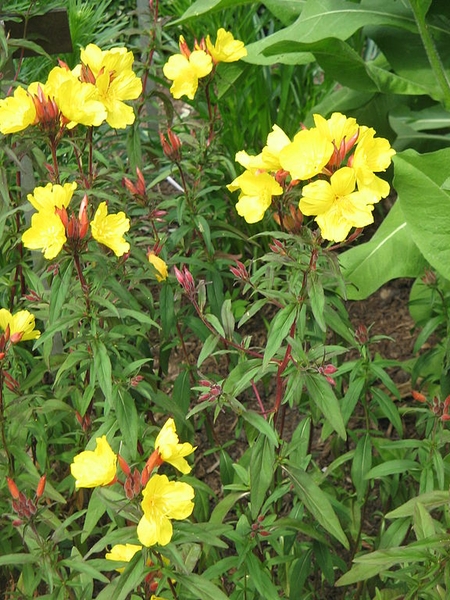
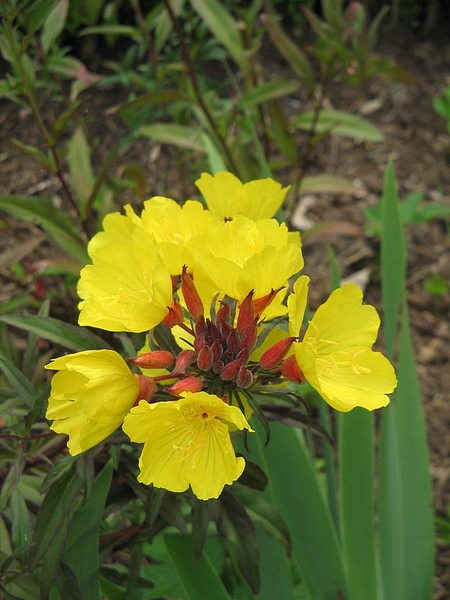
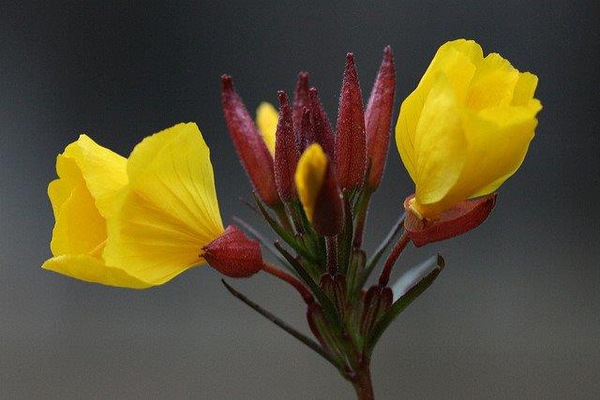
Northern Sundrops is a perennial, herbaceous wildflower in the primrose family, native to Eastern Canada and the United States from New England to Georgia. In nature, it is commonly found in dry moist forests and along roadsides. It is a ground-hugging plant with dense foliage and distinctive red flower buds that blossom into bright yellow flowers. The flowers will bloom in spring and last through the summer. Individual flowers open at dusk and close later the next day, hence the common name of evening primrose.
Northern Sundrops do best sited in full sun to partial shade, in consistently moist average soil with good drainage. It will tolerate periods of dry soil once established. It can spread in the landscape by self-seeding and can be somewhat weedy. The seeds can stay viable in the soil for up to 70 years.
Diseases, Insect Pests, and Other Plant Problems:
No serious insect or disease problems. Leaf spot and powdery mildew may occur.
- See this plant in the following landscape :
- Cultivars / Varieties:
-
- Tags:


- Cultivars / Varieties:
-
- Tags:
-
-
Attributes:
- Genus:
- Oenothera
- Species:
- tetragona
- Family:
- Onagraceae
- Life Cycle:
- Perennial
- Recommended Propagation Strategy:
- Seed
- Country Or Region Of Origin:
- Eastern Canada, Eastern and Central United States
- Distribution:
- Introduced into Czechia-Slovakia and Germany.
- Wildlife Value:
- Attracts pollinators. Supports the following specialized bees: Melissodes (Apomelissodes) fimbriatus and Lasioglossum (Sphecodogastra) oenotherae.
-
-
Whole Plant Traits:
- Plant Type:
- Herbaceous Perennial
- Native Plant
- Wildflower
- Woody Plant Leaf Characteristics:
- Deciduous
- Habit/Form:
- Erect
- Growth Rate:
- Rapid
- Maintenance:
- Low
- Texture:
- Coarse
-
-
Cultural Conditions:
- Light:
- Full sun (6 or more hours of direct sunlight a day)
- Partial Shade (Direct sunlight only part of the day, 2-6 hours)
- Soil Texture:
- Clay
- High Organic Matter
- Loam (Silt)
- Sand
- Soil pH:
- Acid (<6.0)
- Neutral (6.0-8.0)
- Soil Drainage:
- Good Drainage
- Moist
- Occasionally Dry
- Available Space To Plant:
- 12 inches-3 feet
- NC Region:
- Mountains
- Piedmont
- USDA Plant Hardiness Zone:
- 3a, 3b, 4a, 4b, 5a, 5b, 6a, 6b, 7a, 7b, 8a, 8b, 9a, 9b
-
-
Fruit:
- Fruit Color:
- Brown/Copper
- Display/Harvest Time:
- Summer
- Fruit Type:
- Capsule
- Fruit Description:
- Fruits are available June to September. Narrow seed pods to 1 1/2 inches long that split open when ripe to release up to 100 seeds per capsule.
-
-
Flowers:
- Flower Color:
- Gold/Yellow
- Flower Inflorescence:
- Panicle
- Flower Value To Gardener:
- Long Bloom Season
- Showy
- Flower Bloom Time:
- Spring
- Summer
- Flower Shape:
- Cup
- Flower Petals:
- 4-5 petals/rays
- Colored Sepals
- Flower Size:
- 1-3 inches
- Flower Description:
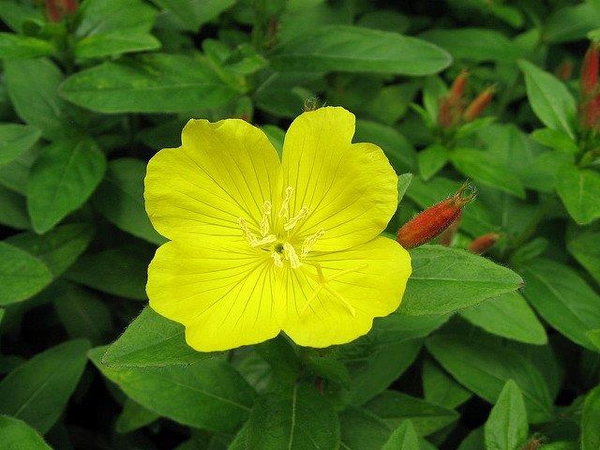
- Yellow flowers bloom from May to August. Flowers are 1 to 2 inches, four-petaled, with 4 sepals, 8 stamens and a prominent style with a cross-shaped stigma. Flowers bloom in a multi-flowered terminal panicle that opens in the evening and remains open through morning, closing in the heat of day.
-
-
Leaves:
- Woody Plant Leaf Characteristics:
- Deciduous
- Leaf Color:
- Green
- Red/Burgundy
- Leaf Type:
- Simple
- Leaf Arrangement:
- Alternate
- Leaf Shape:
- Elliptical
- Lanceolate
- Leaf Margin:
- Entire
- Lobed
- Hairs Present:
- No
- Leaf Length:
- > 6 inches
- Leaf Width:
- 1-3 inches
- Leaf Description:
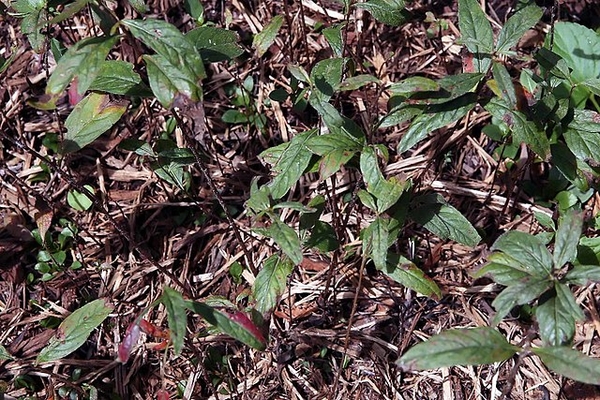
- Leaves can be lobed or unlobed but not separated into leaflets. Leaves are elliptic to lance-shaped, stalkless, and wavy-toothed.
-
-
Stem:
- Stem Color:
- Green
- Red/Burgundy
- Stem Is Aromatic:
- No
- Stem Form:
- Straight
- Stem Surface:
- Hairy (pubescent)
- Stem Description:
- In the second year of growth an upright, hairy, reddish-green flower stem (or stems) with spirally arranged leaves rises from the center of the rosette. The stem is topped by a showy bloom.
-
-
Landscape:
- Landscape Location:
- Lawn
- Naturalized Area
- Landscape Theme:
- Pollinator Garden
- Design Feature:
- Accent
- Border
- Mass Planting
- Attracts:
- Hummingbirds
- Pollinators
- Songbirds
- Specialized Bees
- Resistance To Challenges:
- Dry Soil