


Nabalus altissimus
Common Name(s):
Previously known as:
- Preanthes altissima var. cinnamomea
- Prenanthes altissima
- Prenanthes altissima var. hispidula
- Phonetic Spelling
- na-buh-lus al-TISS-ih-mus
- Description
-
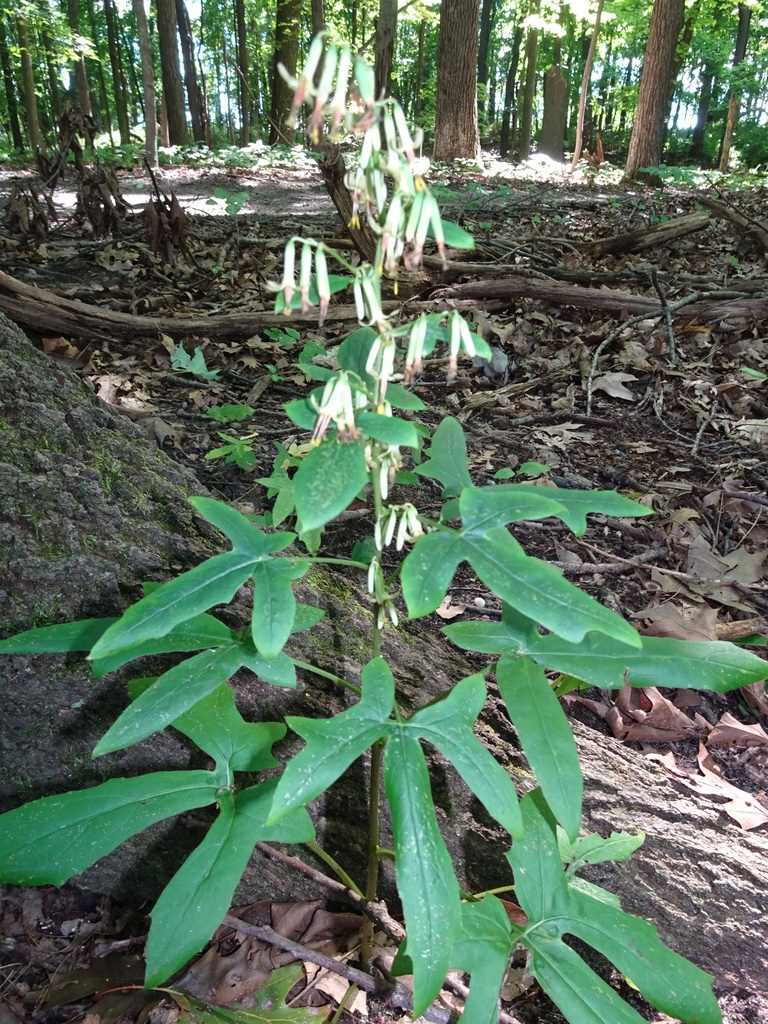
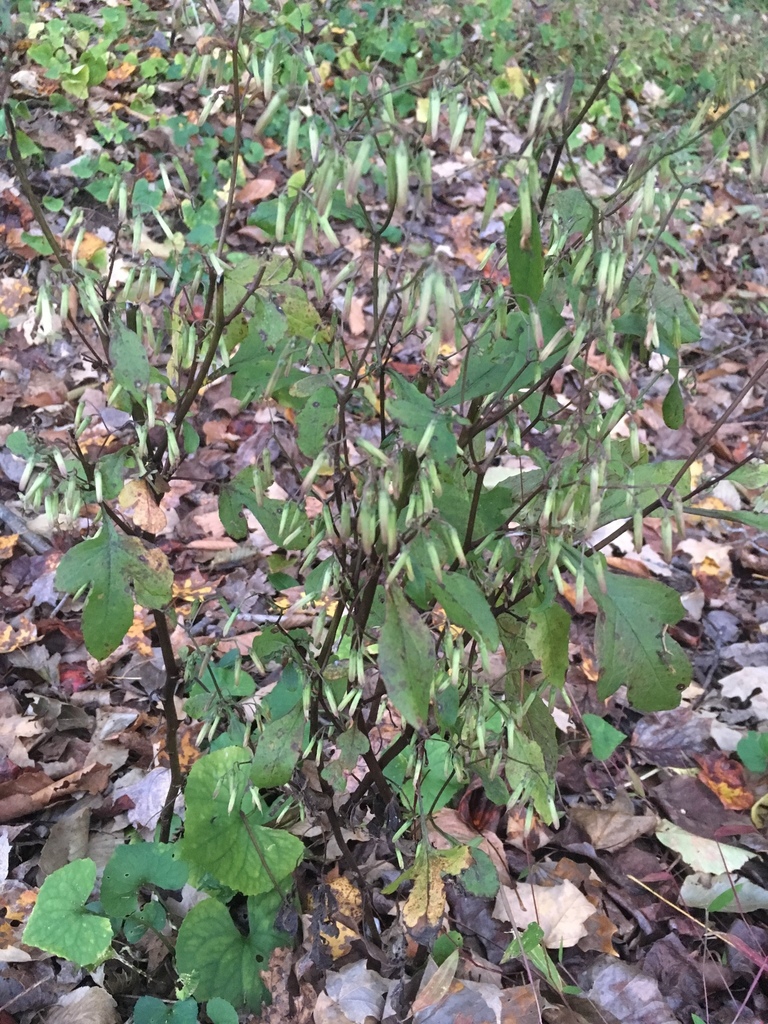
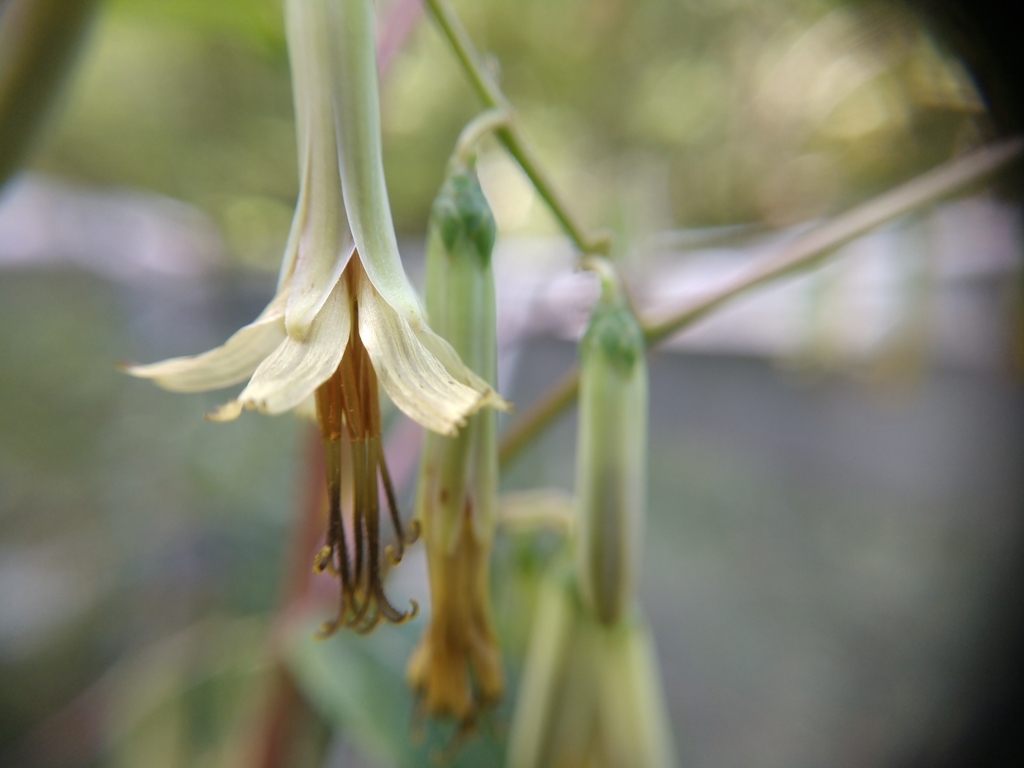
Tall white lettuce, or tall rattlesnakeroot, is a herbaceous perennial wildflower native to eastern Canada and the eastern and central United States and belongs to the daisy family (Asteraceae). It is commonly found in the understory, forests, swamps, and along streambanks, and prefers rich, shady sites. This plant grows 2 to 8 feet tall and 2 to 3 feet wide, and has an erect, slender or stout, smooth, light green to purplish central stem with white, milky latex, and a thick taproot. The leaves are medium to dark green, measuring up to 8 inches long and 6 inches wide, with various shapes and undulate, dentate, or entire margins. A panicle of flower heads arises from the central stem. Each flower head is narrow or spreading with 5 to 6 pale green phyllaries and 5 to 6 outer ray florets in greenish-white, greenish-yellow, or cream. The specific epithet altissimus is Latin and means "most high' or "highest."
This plant thrives in full shade to dappled shade and consistently moist, rich, loamy, slightly acidic to neutral soil. It may also tolerate sandy and rocky soils. Propagated by seeds. Bumblebees pollinate the flowers, and deer browse its foliage.
Consider tall white lettuce for a native garden, in a naturalized setting, woodland setting, shade garden, or as a border planting.
Insects, Diseases, and Other Plant Problems: No serious insect or disease problems. May be susceptible to rust or leaf spot.
- See this plant in the following landscape :
- Cultivars / Varieties:
-
- Tags:


- Cultivars / Varieties:
-
- Tags:
-
-
Attributes:
- Genus:
- Nabalus
- Species:
- altissimus
- Family:
- Asteraceae
- Life Cycle:
- Perennial
- Recommended Propagation Strategy:
- Seed
- Country Or Region Of Origin:
- Eastern Canada to the United States
- Distribution:
- Native: Canada--New Brunswick, Nova Scotia, Ontario, Prince Edward Island, Quebec; United States--AL, AR, CT, DE, GA, IL, IN, KY, LA, ME, MD, MA, MI, MO, NH, NJ, NY, NC, OH, OK, PA, RI, SC, TN, TX, VT, VA, and WV.
- Wildlife Value:
- Bumblebees feed on the nectar from the flower heads and cross-pollinate them. Halictid bees, beetles, and other insects feed on the pollen but do not pollinate. Deer brows the plant.
- Play Value:
- Attracts Pollinators
- Shade
- Textural
- Dimensions:
- Height: 2 ft. 0 in. - 8 ft. 0 in.
- Width: 2 ft. 0 in. - 3 ft. 0 in.
-
-
Whole Plant Traits:
- Plant Type:
- Herbaceous Perennial
- Native Plant
- Wildflower
- Woody Plant Leaf Characteristics:
- Deciduous
- Habit/Form:
- Erect
- Growth Rate:
- Medium
- Maintenance:
- Low
- Texture:
- Medium
-
-
Cultural Conditions:
- Light:
- Dappled Sunlight (Shade through upper canopy all day)
- Deep shade (Less than 2 hours to no direct sunlight)
- Soil Texture:
- Loam (Silt)
- Sand
- Shallow Rocky
- Soil pH:
- Acid (<6.0)
- Neutral (6.0-8.0)
- Soil Drainage:
- Good Drainage
- Moist
- Available Space To Plant:
- 3 feet-6 feet
- NC Region:
- Coastal
- Mountains
- Piedmont
- USDA Plant Hardiness Zone:
- 3a, 3b, 4a, 4b, 5a, 5b, 6a, 6b, 7a, 7b, 8a, 8b
-
-
Fruit:
- Fruit Color:
- Brown/Copper
- Fruit Type:
- Achene
- Fruit Length:
- < 1 inch
- Fruit Width:
- < 1 inch
- Fruit Description:
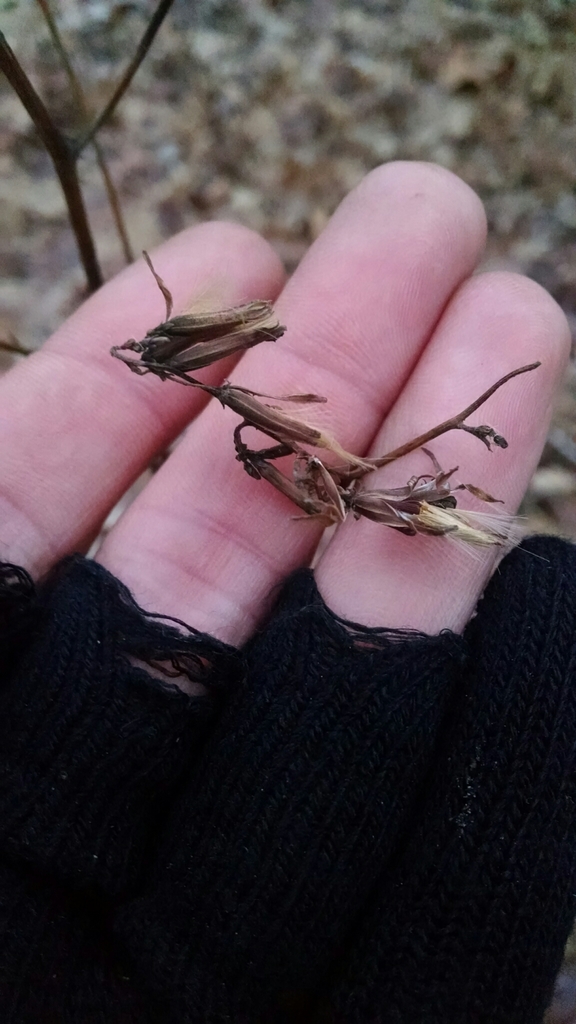
- The fruit is a cypsela, but is sometimes called an achene. It measures 0.25 inches long, is light brown to yellowish-brown, and has tufts of tan to orangish-brown hair. Distributed by the wind.
-
-
Flowers:
- Flower Color:
- Gold/Yellow
- Green
- Flower Inflorescence:
- Head
- Panicle
- Flower Bloom Time:
- Fall
- Summer
- Flower Shape:
- Trumpet
- Flower Petals:
- 4-5 petals/rays
- 6 petals/rays
- Flower Size:
- < 1 inch
- Flower Description:
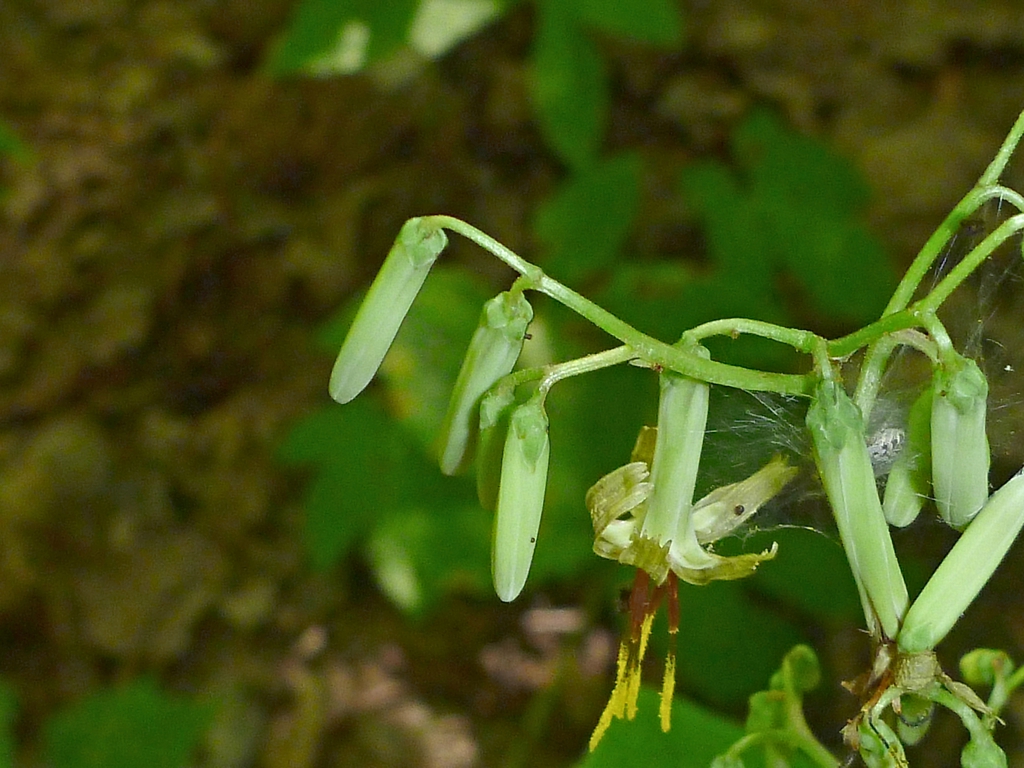
- A panicle of flower heads develops at the axils of the upper leaves and has a cluster of 4 to 6 nodding, trumpet-like florets. Each flower head is up to 0.75 inches long and 0.5 inches wide. Each flower has 5 to 6 greenish-white, greenish-yellow, or cream outer ray florets and 5 light green, smooth bracts. A series of short, smooth bracts tops a series of longer bracts. Blooms from August to November; duration: 1 month.
-
-
Leaves:
- Woody Plant Leaf Characteristics:
- Deciduous
- Leaf Color:
- Green
- Leaf Feel:
- Smooth
- Leaf Type:
- Simple
- Leaf Arrangement:
- Alternate
- Leaf Shape:
- Deltoid
- Ovate
- Leaf Margin:
- Dentate
- Entire
- Hairs Present:
- No
- Leaf Length:
- > 6 inches
- Leaf Width:
- > 6 inches
- Leaf Description:
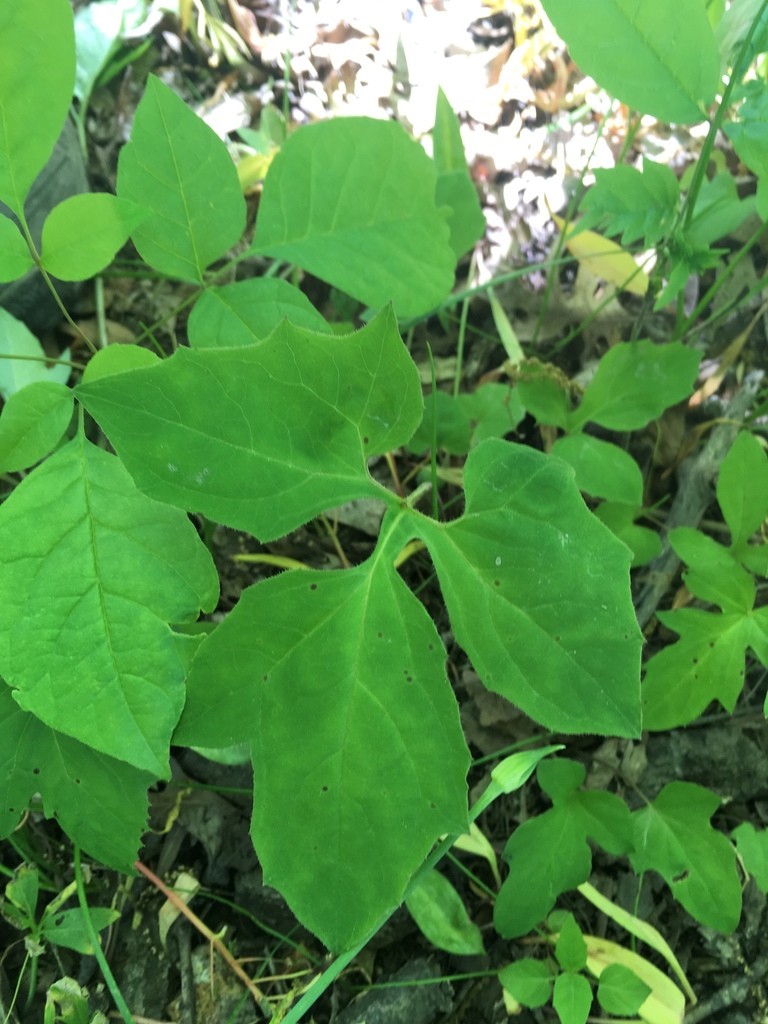
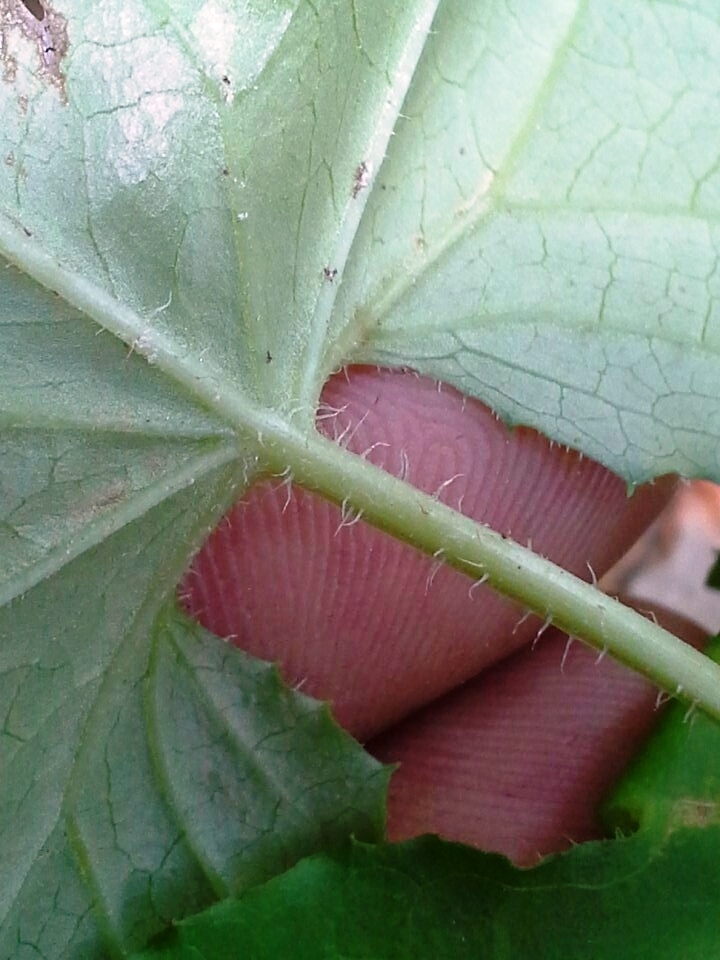
- The leaves are alternate, smooth, dark green on the upper surfaces, and pale on the undersides. They measure up to 8 inches long and 6 inches wide. The basal and lower leaves may be ovate, triangular, or palmately lobed with long petioles. The middle and upper leaves are smaller and have shorter petioles. The margins may be entire, dentate, or undulate. The leaves become yellowish-green with age and have milky sap.
-
-
Stem:
- Stem Color:
- Green
- Purple/Lavender
- Stem Is Aromatic:
- No
- Stem Form:
- Straight
- Stem Surface:
- Smooth (glabrous)
- Stem Description:
- The central stem is light greenish-purple to glaucous, erect, slender to stout, often smooth, measuring up to 8 feet tall, with milky sap. It terminates in a panicle of flower heads.
-
-
Landscape:
- Landscape Location:
- Naturalized Area
- Slope/Bank
- Woodland
- Landscape Theme:
- Native Garden
- Pollinator Garden
- Shade Garden
- Design Feature:
- Border
- Mass Planting
- Attracts:
- Bees