


Spring Forget-me-not Myosotis macrosperma
Other Common Name(s):
Previously known as:
- Myosotis verna var. macrosperma
- Myosotis virginica var. macrosperma
- Phonetic Spelling
- my-oh-SO-tis mak-roh-SPERM-uh
- Description
-
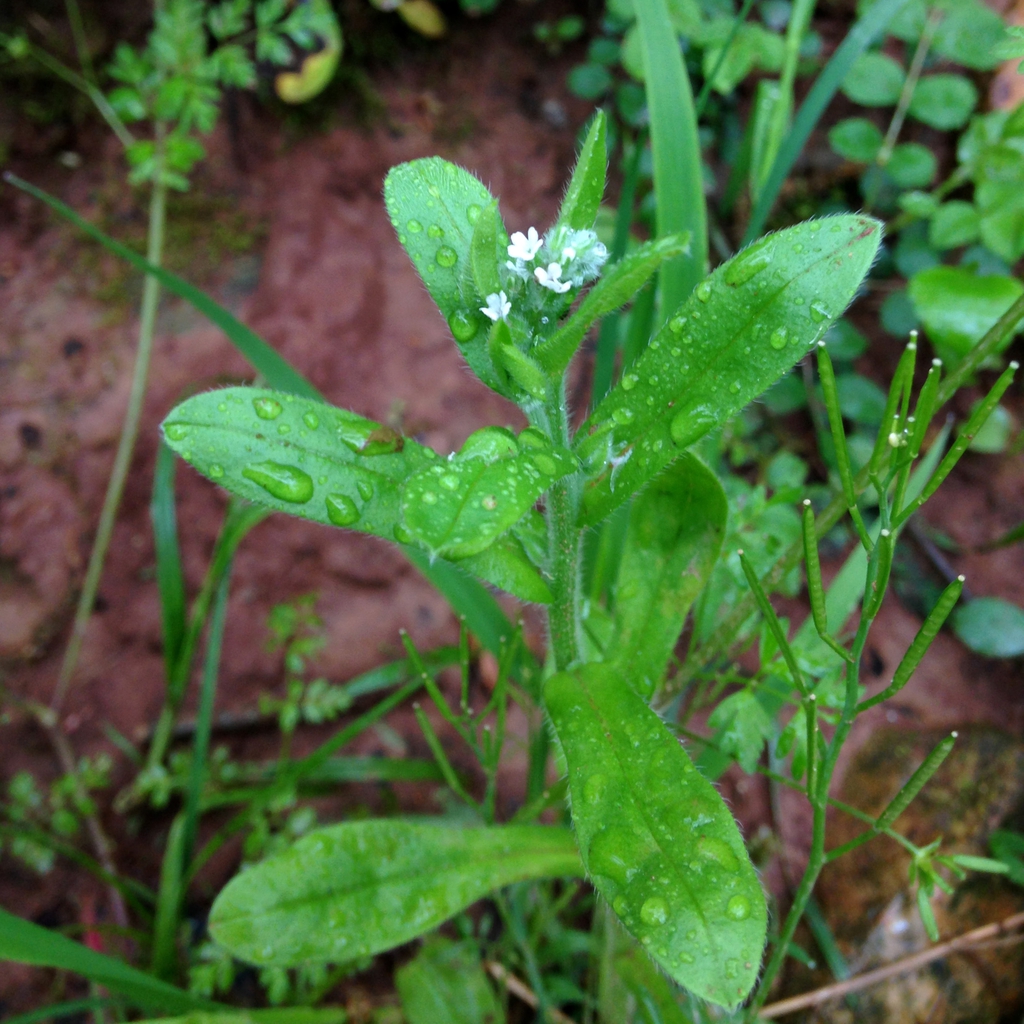
Largeseed Forget-me-not is a native, winter annual, wildflower in the borage (Boraginaceae) family. It has tiny white flowers on a hairy stalk that appear in the spring. It can be found in disturbed sites, bottomland forests and fields; in North Carolina, it is common in the Piedmont, but less so in the Coastal Plains or Mountains.
Largeseed Forget-me-not does best in moist to dry, organically rich soils in full sun to part shade. It will tolerate poorer soil containing sand, gravel, or clay and will grow in full shade.
Myosotis macrosperma is very similar to Myosotis verna; sometimes they are considered different varieties of the same species.
Diseases, Insect Pests, and Other Plant Problems:
No known diseases or insect pests.
- See this plant in the following landscape :
- Cultivars / Varieties:
-
- Tags:


- Cultivars / Varieties:
-
- Tags:
-
-
Attributes:
- Genus:
- Myosotis
- Species:
- macrosperma
- Family:
- Boraginaceae
- Life Cycle:
- Annual
- Biennial
- Recommended Propagation Strategy:
- Division
- Stem Cutting
- Country Or Region Of Origin:
- Southeastern Canada, central and eastern United States.
- Distribution:
- Eastern Canada, Pennsylvania south to Florida, west to Texas
-
-
Whole Plant Traits:
- Plant Type:
- Annual
- Herb
- Native Plant
- Weed
- Wildflower
- Habit/Form:
- Creeping
- Spreading
- Growth Rate:
- Rapid
- Maintenance:
- Low
-
-
Cultural Conditions:
- Light:
- Deep shade (Less than 2 hours to no direct sunlight)
- Full sun (6 or more hours of direct sunlight a day)
- Partial Shade (Direct sunlight only part of the day, 2-6 hours)
- Soil Texture:
- Clay
- High Organic Matter
- Loam (Silt)
- Sand
- Shallow Rocky
- Soil Drainage:
- Moist
- Occasionally Dry
- NC Region:
- Coastal
- Mountains
- Piedmont
- USDA Plant Hardiness Zone:
- 3a, 3b, 4a, 4b, 5a, 5b, 6a, 6b, 7a, 7b, 8a, 8b
-
-
Fruit:
- Fruit Color:
- Brown/Copper
- Green
- Display/Harvest Time:
- Summer
- Fruit Type:
- Caryopsis
- Schizocarp
- Fruit Description:
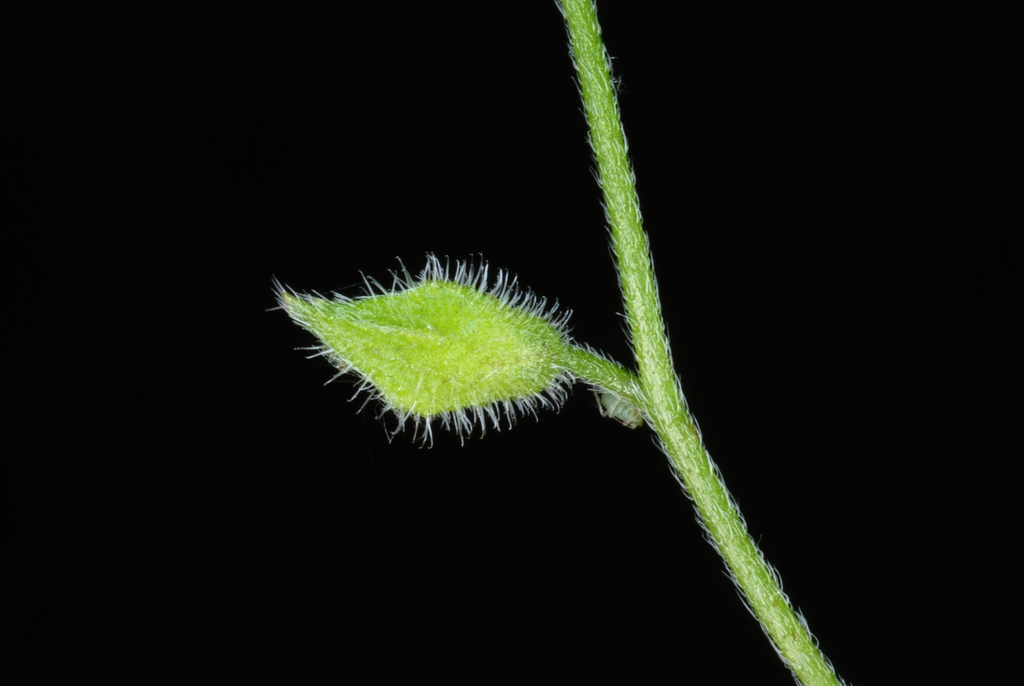
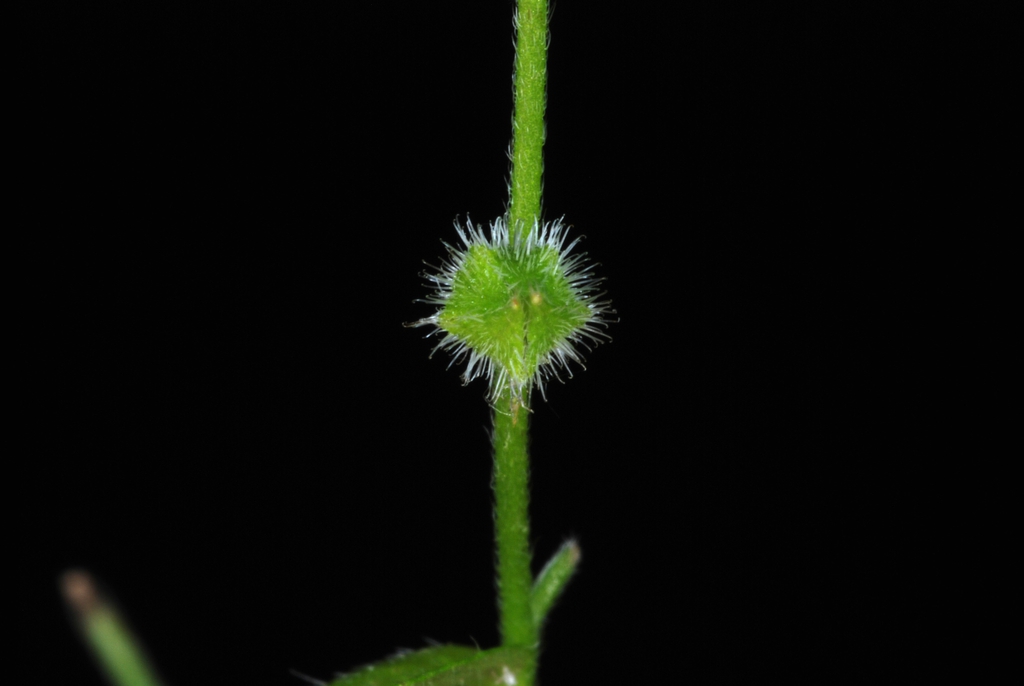
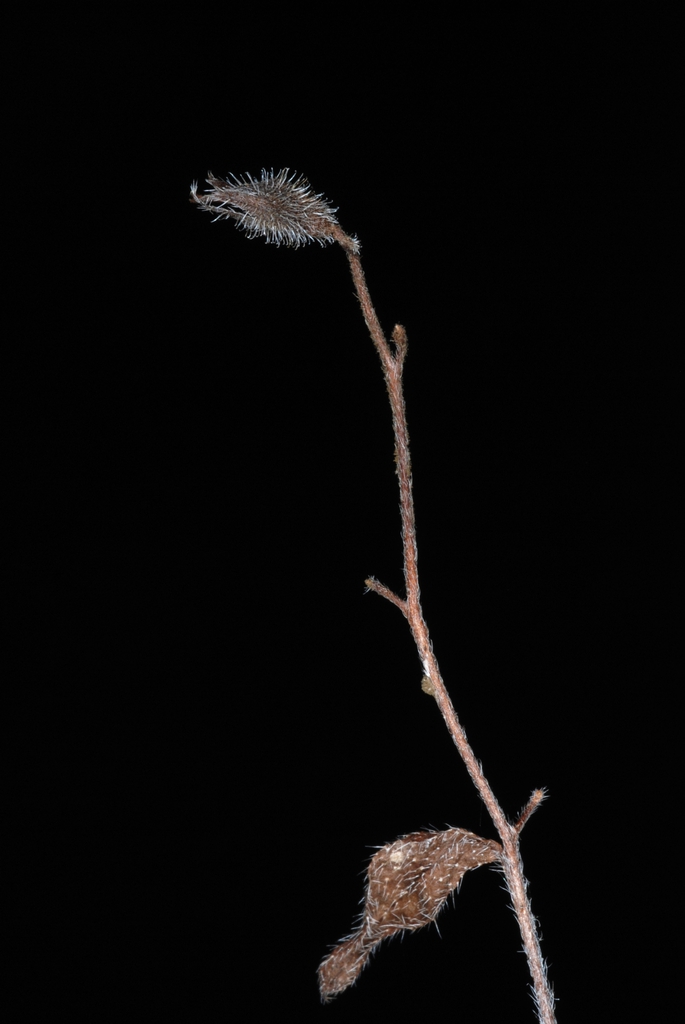
- Greenish brown to brown nutlets are burr-like and will lodge in fur or clothing. Each fruit contains 4 seeds.
-
-
Flowers:
- Flower Color:
- White
- Flower Inflorescence:
- Cyme
- Raceme
- Flower Bloom Time:
- Spring
- Summer
- Flower Petals:
- 4-5 petals/rays
- Flower Size:
- < 1 inch
- Flower Description:
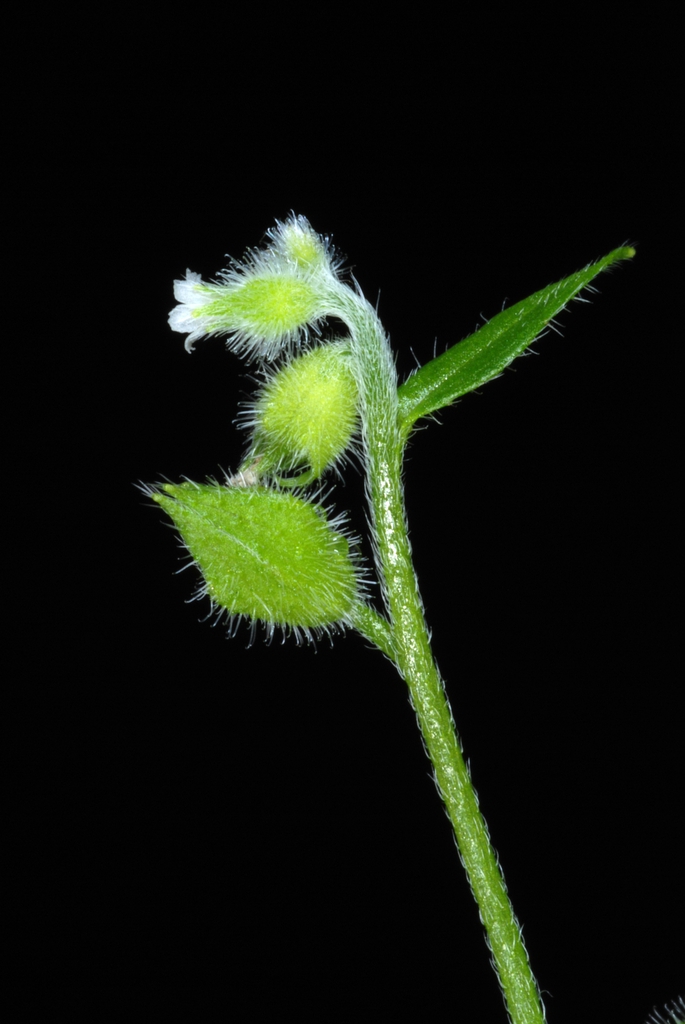
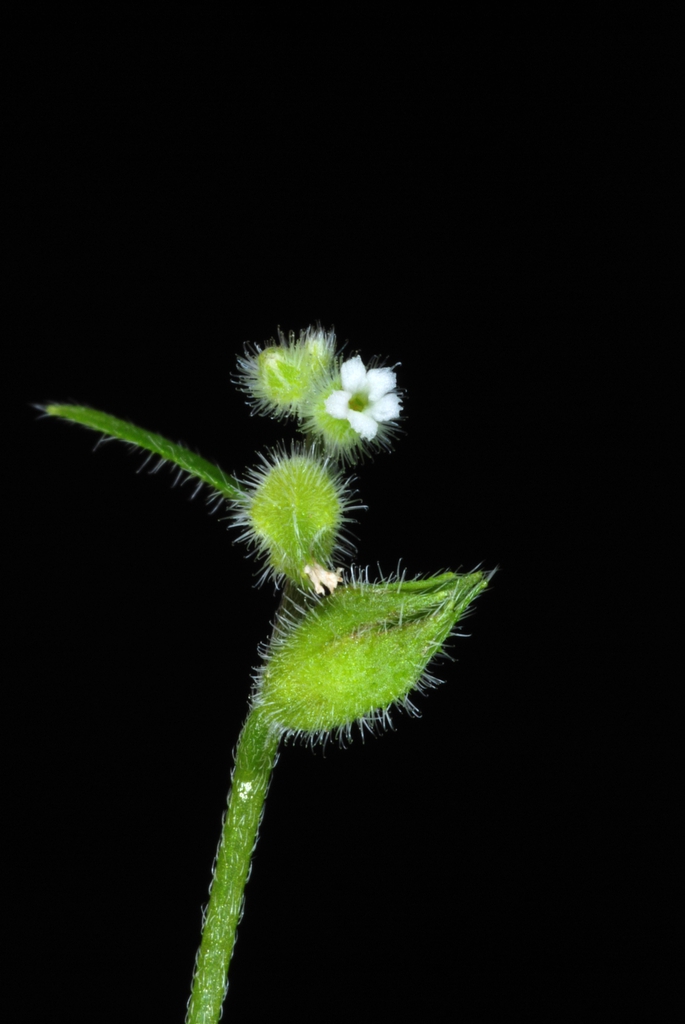
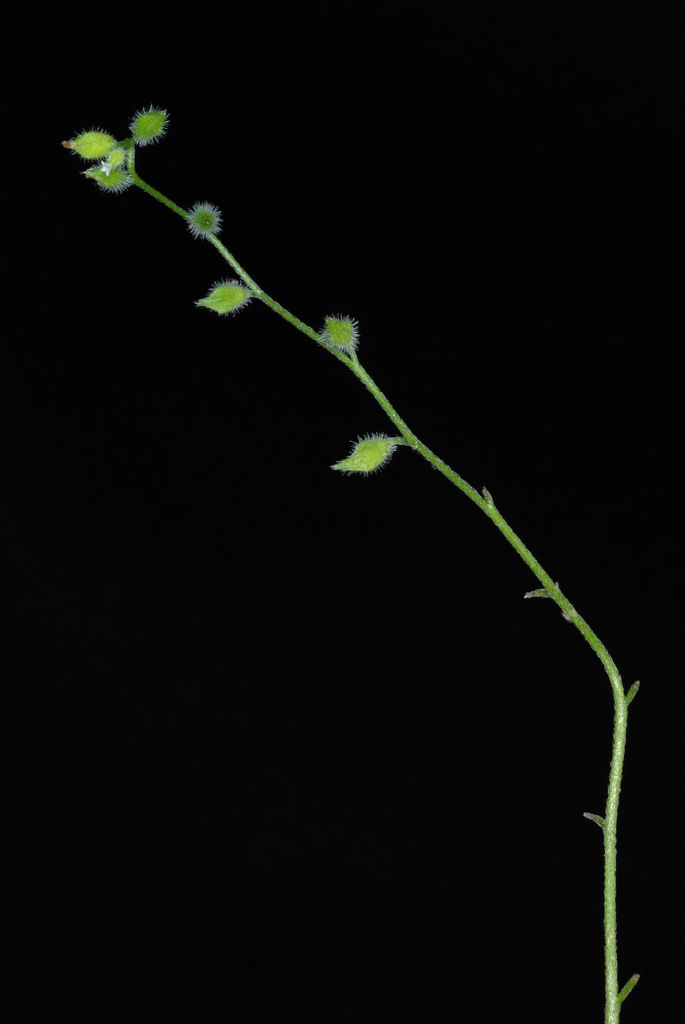
- Tiny, five-petaled white flowers appear in cymes in the spring with green linear bracts. The flowers appear on elongated racemes about 2 to 8 inches long. Each raceme has about 8-24 flowers. Each flower is 1/8 of an inch across, consisting of a white corolla with 5 rounded lobes, a hairy calyx with 5 lanceolate sepals, 5 stamens (inconspicuous), and a pistil. The blooming period occurs from mid-spring to early summer and lasts about 2 months.
-
-
Leaves:
- Leaf Color:
- Green
- Leaf Feel:
- Smooth
- Leaf Type:
- Simple
- Leaf Arrangement:
- Alternate
- Leaf Shape:
- Lanceolate
- Leaf Margin:
- Entire
- Hairs Present:
- Yes
- Leaf Length:
- 1-3 inches
- Leaf Width:
- < 1 inch
- Leaf Description:
- Green lanceolate leaves with hairs and a single distinct midrib are alternate and usually basilar. The leaves are ½ to 2 inches long and about one-third as wide; they are light green, smooth and usually hairy on both the upper and lower surfaces.
-
-
Stem:
- Stem Color:
- Green
- Stem Is Aromatic:
- No
- Stem Cross Section:
- Angular
- Stem Surface:
- Hairy (pubescent)
- Stem Description:
- Ascending to erect angled green stems with long white hairs.
-
-
Landscape:
- Landscape Location:
- Container
- Hanging Baskets
- Meadow
- Walkways
- Landscape Theme:
- Native Garden
- Design Feature:
- Border
- Small groups
- Problems:
- Weedy