


Balm Leaf Melissa officinalis
Other Common Name(s):
Previously known as:
- Faucibarba officinalis
- Mutelia officinalis
- Thymus melissa
- Phonetic Spelling
- mel-ISS-ah oh-fiss-ih-NAH-liss
- Description
-
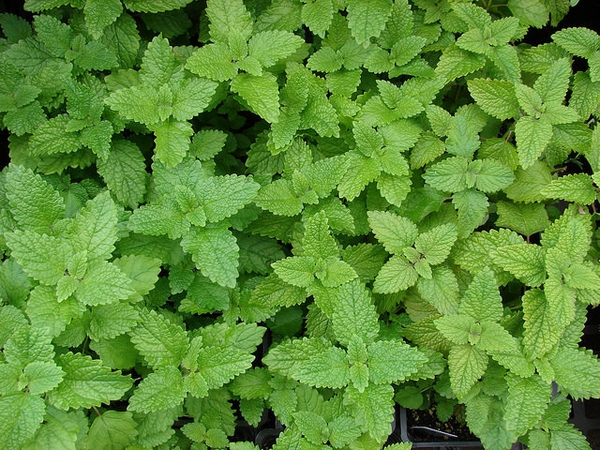
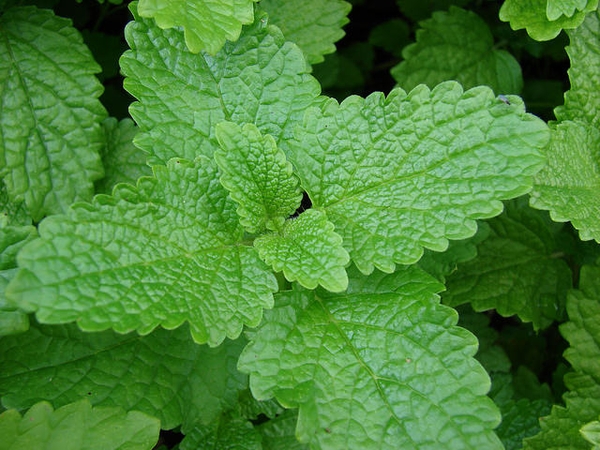
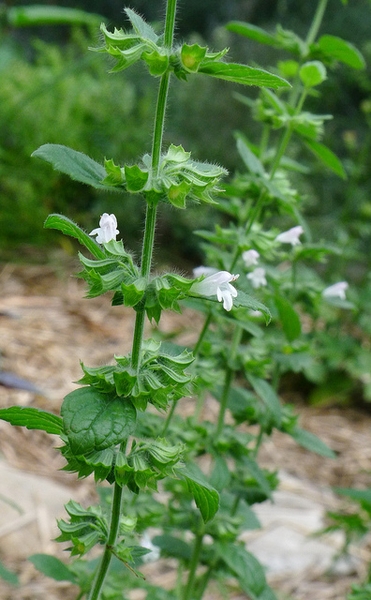
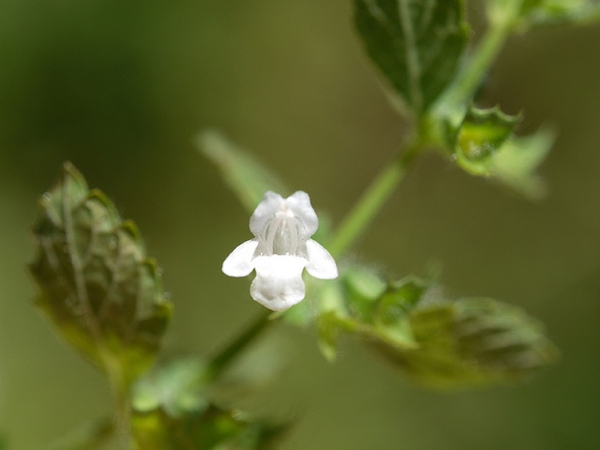
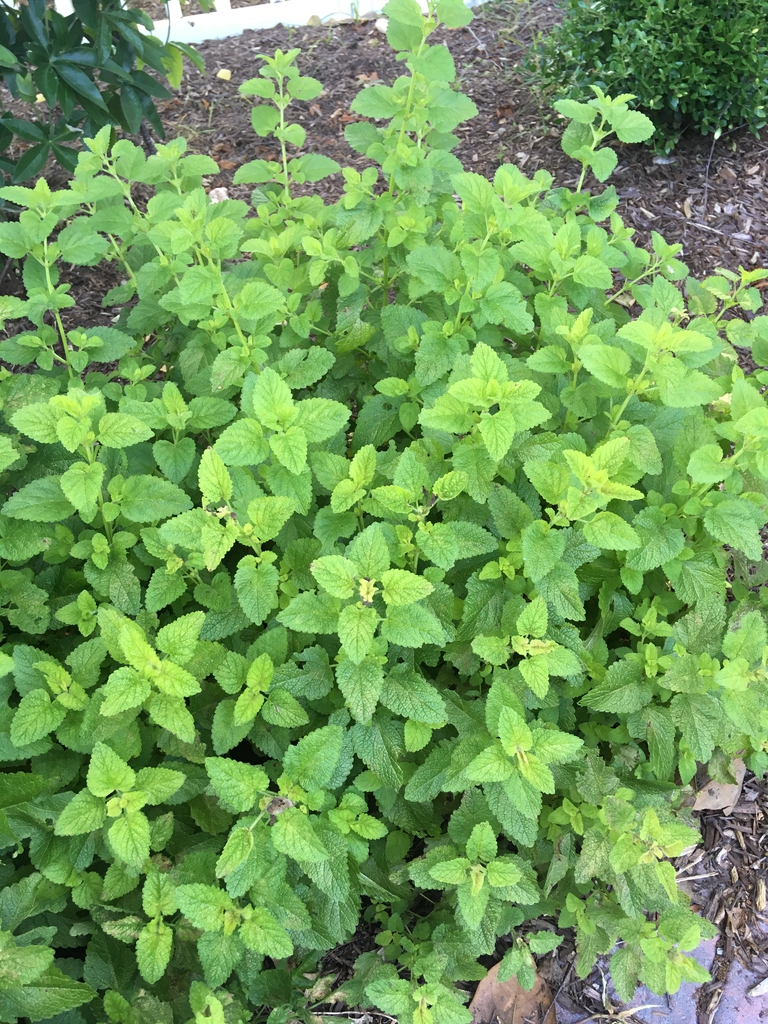
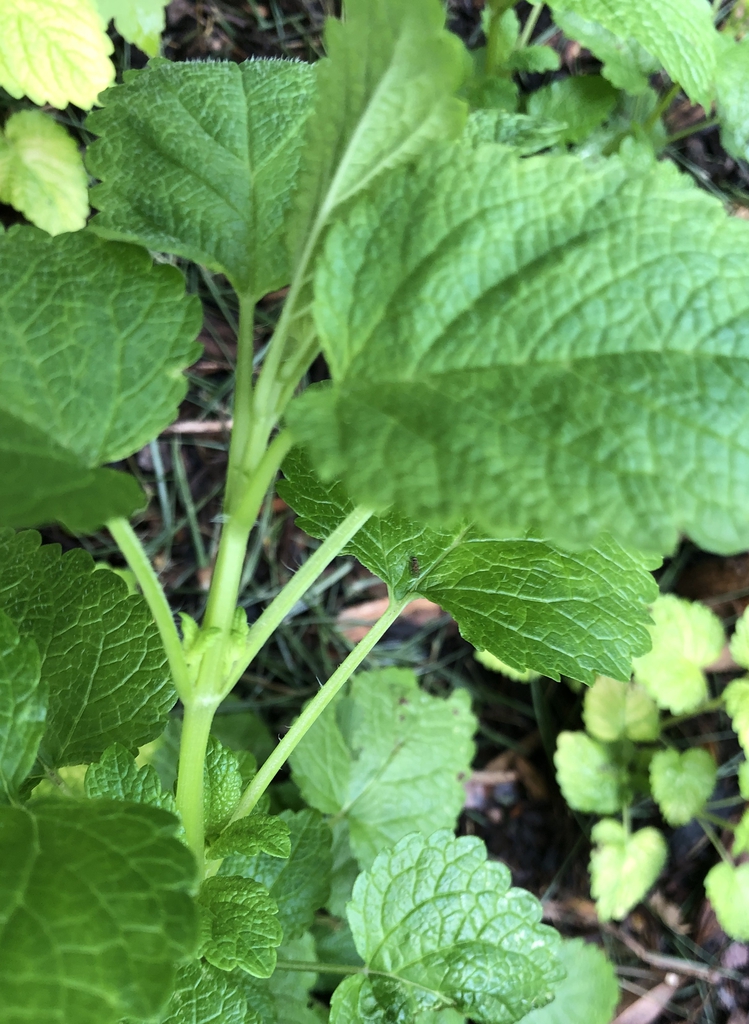
Lemon balm is a bushy, lemon-scented, rhizomatous, herbaceous perennial native to Southern Central Europe to Central Asia, found along roadsides and in disturbed areas, and belongs to the mint family (Lamiaceae). The genus name Melissa is Greek, meaning "a honeybee." Reportedly, Melissa, a Cretan princess, discovered how to obtain honey. The specific epithet officinalis means "found in shops" and is applied to plants with medicinal qualities. This bushy plant grows upright, 1.5 to 2 feet tall, with branching stems, bright green, aromatic, crinkled, oval or heart-shaped leaves, and clusters of tiny creamy-white flowers that bloom in summer. Honeybees and other pollinators are attracted to the nectar-rich blooms. The leaves emit a lemon scent when crushed or bruised, are edible, and are used to flavor tea or added to soups and salads. This herb is also used medicinally for anxiety, colds, or insect bites.
Prefers full sun to partial shade, moist to dry, well-drained soils, and is poor-soil- and drought-tolerant once established. This plant self-seeds and spreads aggressively by rhizomes, so it is best to grow in a container on a patio or deck where it is unlikely to escape into the landscape. Prune to remove spent flower stalks and encourage new growth for a better-looking plant. Unpruned plants tend to get weedy.
Lemon balm has escaped gardens and naturalized in parts of the United States. Suitable for an herb garden, border planting, or container. May also be used as a groundcover. Lemon balm is a pollinator magnet, and it will also deter mosquitoes.
Insects, Diseases, and Other Plant Problems: No significant insect pests or diseases. Monitor for aphids and spider mites. May be susceptible to powdery mildew, leaf spot, leaf blight, and gray mold.
- See this plant in the following landscape :
- Herb & Flower Cottage Garden
- Cultivars / Varieties:
-
- 'All Gold' or 'Gold Leaf'
Yellow leaves - 'Aurea'
Variegated dark green leaves with a splash of yellow along the margins - 'Compacta'
Compact habit - 'Lemona'
Propagated for essential oils - 'Lime'
Lime-scented - 'Mandarina'
Mandarin orange-scented
- 'All Gold' or 'Gold Leaf'
- 'All Gold' or 'Gold Leaf', 'Aurea', 'Compacta', 'Lemona', 'Lime', 'Mandarina'
- Tags:


- Cultivars / Varieties:
-
- 'All Gold' or 'Gold Leaf'
Yellow leaves - 'Aurea'
Variegated dark green leaves with a splash of yellow along the margins - 'Compacta'
Compact habit - 'Lemona'
Propagated for essential oils - 'Lime'
Lime-scented - 'Mandarina'
Mandarin orange-scented
- 'All Gold' or 'Gold Leaf'
- 'All Gold' or 'Gold Leaf', 'Aurea', 'Compacta', 'Lemona', 'Lime', 'Mandarina'
- Tags:
-
-
Attributes:
- Genus:
- Melissa
- Species:
- officinalis
- Family:
- Lamiaceae
- Uses (Ethnobotany):
- The herb has been used medicinally to promote relaxation, improve memory, and treat digestive problems. Dried leaves can be used in sachets and potpourri.
- Life Cycle:
- Perennial
- Recommended Propagation Strategy:
- Division
- Root Cutting
- Seed
- Country Or Region Of Origin:
- Mediterranean to Central Asia
- Distribution:
- Native: Albania, Algeria, Bulgaria, Corsica, Cyprus, East Aegean Islands, France, Greece, Iran, Iraq, Italy, Kyrgyzstan, Kriti, Lebanon-Syria, Morocco, North Caucasus, NW. Balkan Peninsula, Palestine, Portugal, Sardinia, Sicily, Spain, Tadzhikistan, Transcaucasus, Tunisia, Turkmenistan, Turkey, and Uzbekistan. Introduced: United States-- AL, AR, CA, CT, DE, DC, GA, ID, IL, IN, KS, LA, ME, MD, MA, MI, MO, MT, NJ, NY, NC, OH, OK, OR, PA, RI, SC, TN, VT, VA, WA, and WV; Argentina, Austria, Belgium, British Columbia, Chile, Czechoslovakia, Denmark, Germany, Great Britain, Hungary, Ireland, Manitoba, Netherlands, New Zealand, Ontario, Poland, Quebec, Romania, South European Russia, Sweden, Switzerland, Tasmania, Ukraine, Uruguay, and West Siberia.
- Wildlife Value:
- Nectar-rich flowers attract bees, butterflies, and other pollinating insects.
- Play Value:
- Attracts Pollinators
- Easy to Grow
- Fragrance
- Edibility:
- Leaves and flowers can be used as tea or flavoring soups or stews. New leaves are more flavorful than mature ones.
- Dimensions:
- Height: 1 ft. 6 in. - 2 ft. 0 in.
- Width: 1 ft. 6 in. - 3 ft. 0 in.
-
-
Whole Plant Traits:
- Plant Type:
- Herb
- Herbaceous Perennial
- Woody Plant Leaf Characteristics:
- Deciduous
- Habit/Form:
- Erect
- Mounding
- Multi-stemmed
- Open
- Growth Rate:
- Rapid
- Maintenance:
- Low
- Texture:
- Medium
-
-
Cultural Conditions:
- Light:
- Full sun (6 or more hours of direct sunlight a day)
- Partial Shade (Direct sunlight only part of the day, 2-6 hours)
- Soil Texture:
- Clay
- Loam (Silt)
- Sand
- Shallow Rocky
- Soil pH:
- Acid (<6.0)
- Neutral (6.0-8.0)
- Soil Drainage:
- Good Drainage
- Occasionally Dry
- Available Space To Plant:
- 12 inches-3 feet
- NC Region:
- Coastal
- Mountains
- Piedmont
- USDA Plant Hardiness Zone:
- 3a, 3b, 4a, 4b, 5a, 5b, 6a, 6b, 7a, 7b
-
-
Fruit:
- Fruit Type:
- Capsule
- Fruit Description:
- The fruit is a small nutlet. Each flower produces 4 nutlets.
-
-
Flowers:
- Flower Color:
- Cream/Tan
- Gold/Yellow
- Flower Value To Gardener:
- Edible
- Long-lasting
- Flower Bloom Time:
- Fall
- Summer
- Flower Shape:
- Trumpet
- Tubular
- Flower Petals:
- 2-3 rays/petals
- Flower Size:
- < 1 inch
- Flower Description:
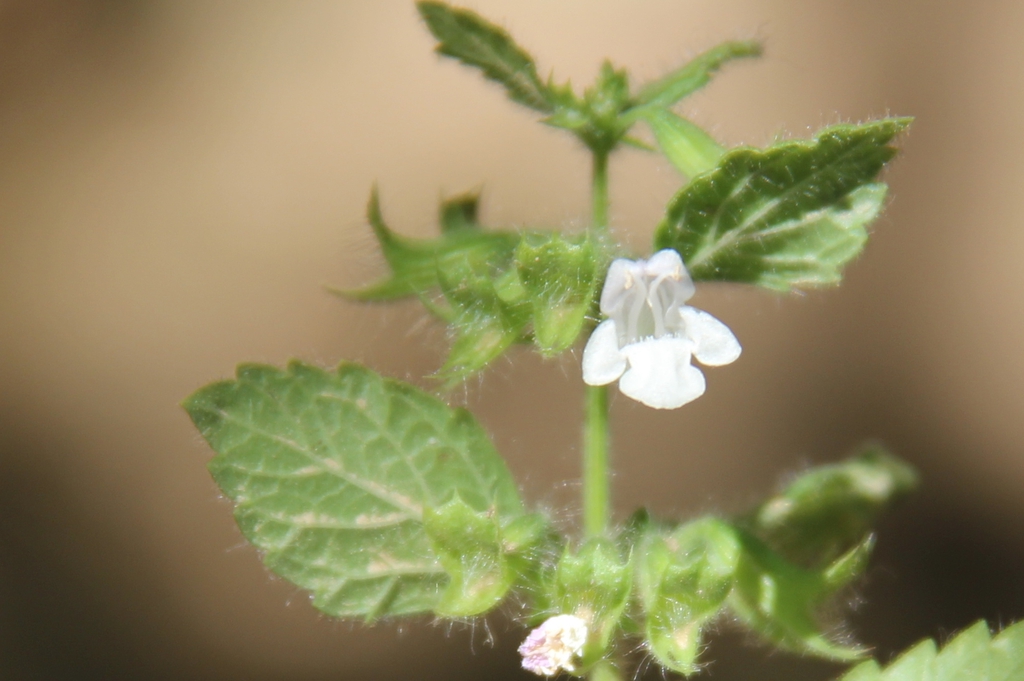
- Clusters of 2 to 10 creamy-white flowers borne in whorls in the axils of terminal leaves. They are tiny, two-lipped, and inconspicuous and appear throughout the summer. Bees love them. Blooming occurs from June to August.
-
-
Leaves:
- Woody Plant Leaf Characteristics:
- Deciduous
- Leaf Color:
- Green
- Leaf Feel:
- Rough
- Leaf Value To Gardener:
- Edible
- Fragrant
- Leaf Type:
- Simple
- Leaf Arrangement:
- Opposite
- Leaf Shape:
- Cordate
- Ovate
- Leaf Margin:
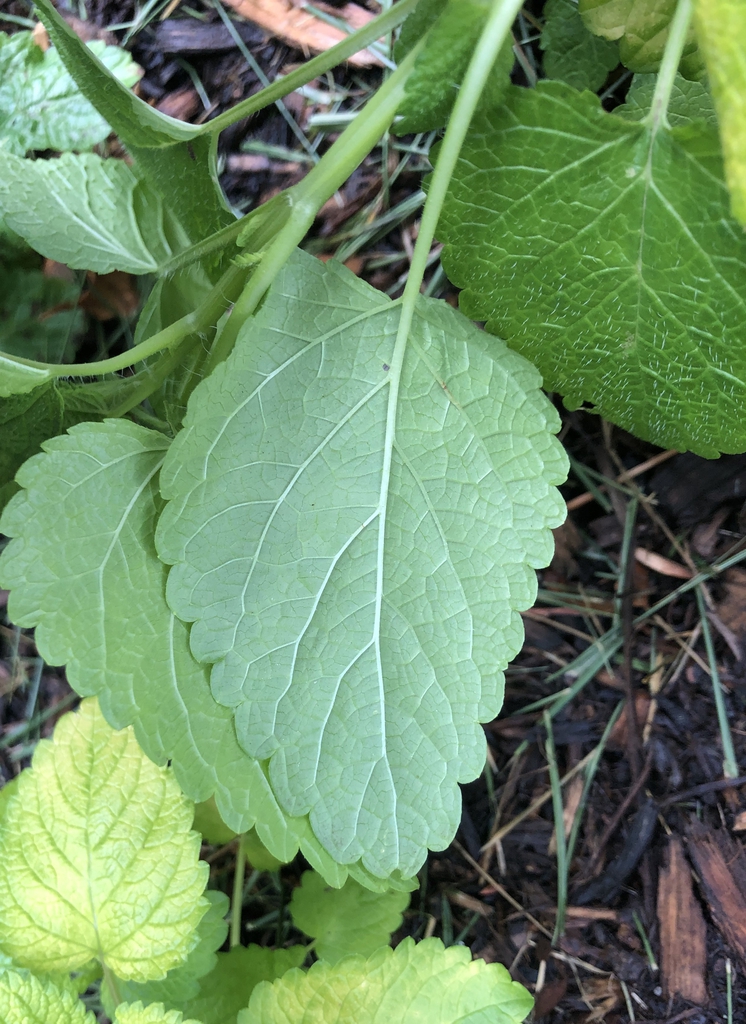
- Crenate
- Serrate
- Hairs Present:
- Yes
- Leaf Length:
- 1-3 inches
- Leaf Width:
- 1-3 inches
- Leaf Description:
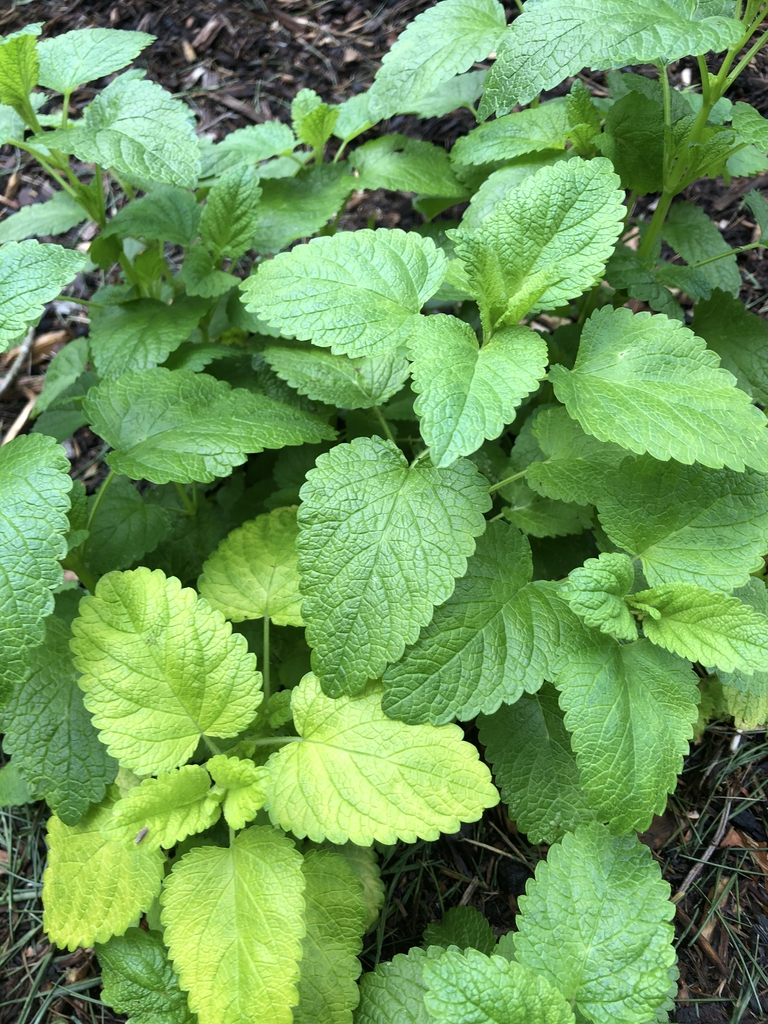
- The leaves are aromatic, medium green, opposite, coarse, hairy, wrinkled, oval to cordate, and 1.5 to 3.5 inches long and 1 to 2 inches wide, occurring in pairs. They are petiolate, and margins are scalloped, crenate, or serrate. The foliage has a lemony scent.
-
-
Stem:
- Stem Color:
- Brown/Copper
- Green
- Stem Is Aromatic:
- No
- Stem Cross Section:
- Square
- Stem Form:
- Straight
- Stem Surface:
- Hairy (pubescent)
- Stem Description:
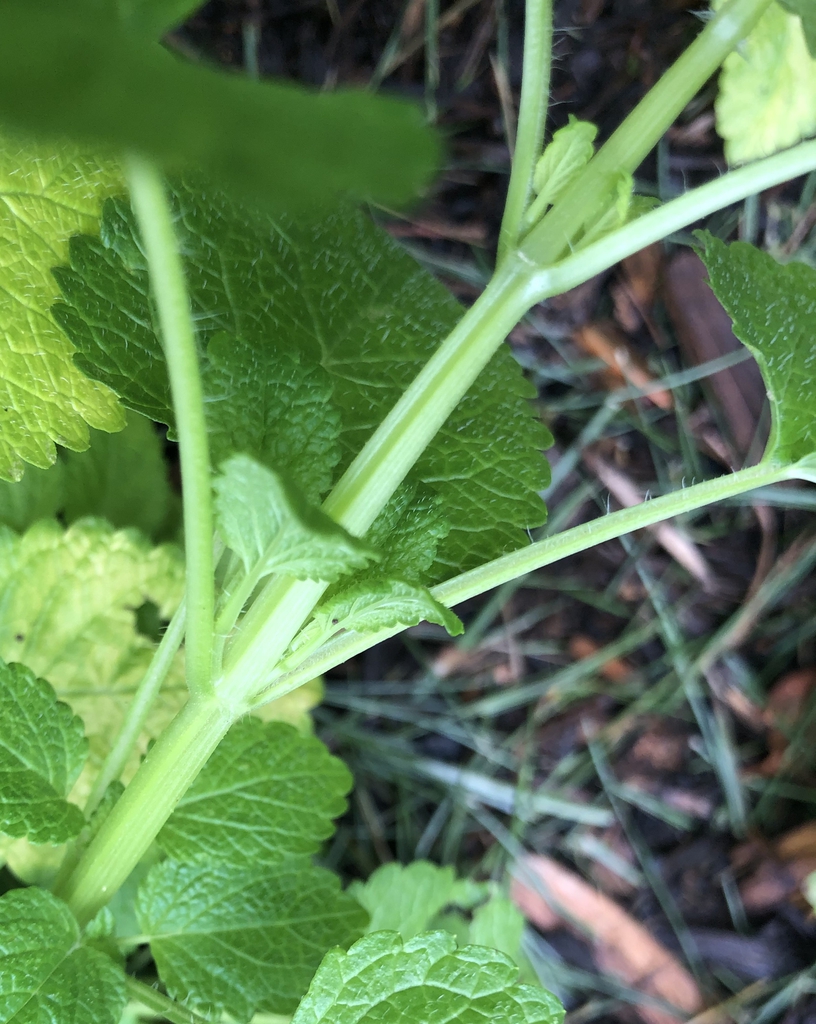
- The light green, ascending to erect, 4-angled stems are commonly branched and may be smooth or have fine gray hairs, with some long hairs. The stems can become somewhat woody with age.
-
-
Landscape:
- Landscape Location:
- Container
- Naturalized Area
- Patio
- Small Space
- Landscape Theme:
- Butterfly Garden
- Cottage Garden
- Edible Garden
- Garden for the Blind
- Pollinator Garden
- Design Feature:
- Border
- Attracts:
- Bees
- Butterflies
- Pollinators
- Resistance To Challenges:
- Deer
- Drought
- Dry Soil
- Heat
- Humidity
- Insect Pests
- Poor Soil
- Rabbits
- Problems:
- Weedy