


Ludwigia alternifolia
Common Name(s):
Previously known as:
- Isnardia alternifolia
- Ludwigia alternifolia var. linearifolia
- Ludwigia alternifolia var. pubescens
- Ludwigia alternifolia var. typica
- Phonetic Spelling
- lud-WIG-ee-uh al-ter-nih-FOH-lee-ah
- Description
-
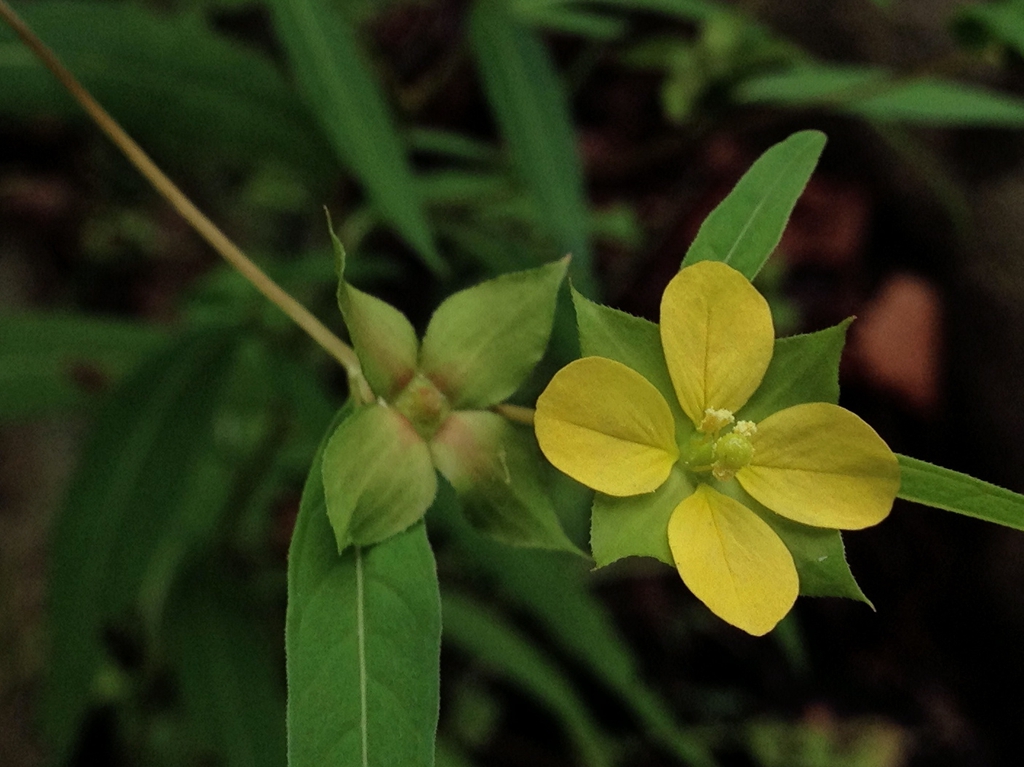
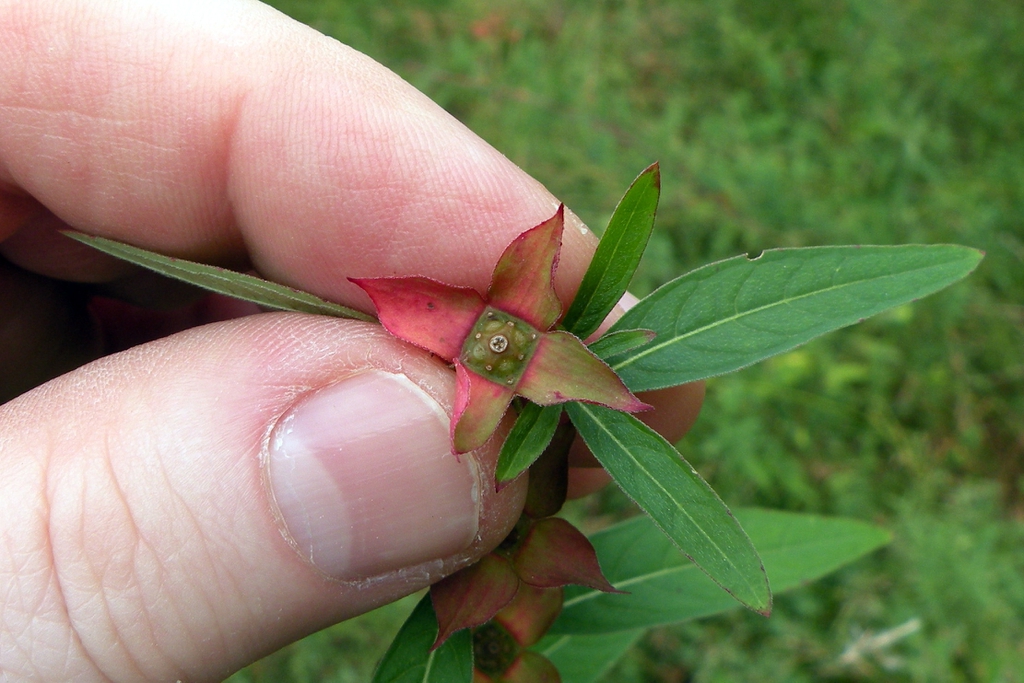
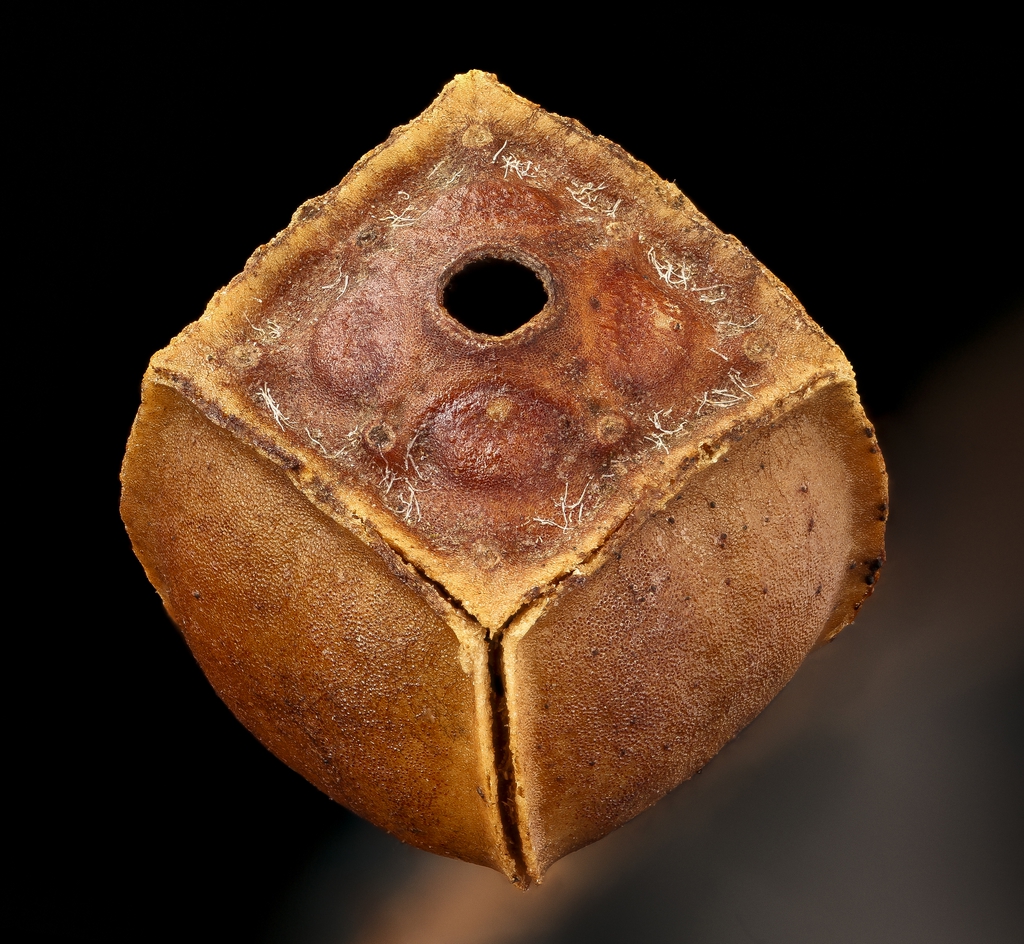
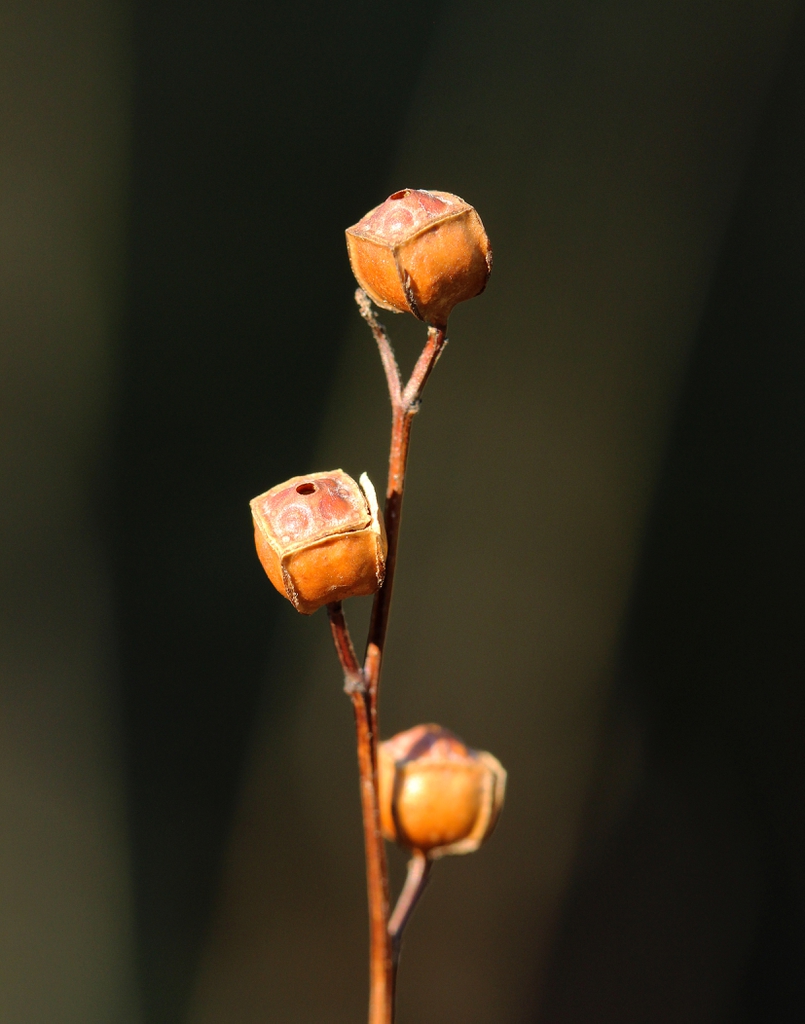
Alternate-leaf seedbox or rattlebox is a North American perennial wildflower found in wet areas such as swamps, stream banks, freshwater tidal marshes, ditches, and pond edges. This species is a member of the primrose family (Onagraceae) and is native to Eastern Canada to the Central and Eastern United States. In North Carolina, it is present statewide except in a few northern mountain areas. This is one of the more common erect species of the genus Ludwigia. Alternate-leaf seedbox is unbranched to multi-branched and grows upright, 1.5-3.5 feet tall, and 1-1.5 feet wide. Its green leaves are narrowly lanceolate, alternate, and about 4 inches long, with reddish petioles and reddish-tinged stems. Its flowers are singular, 4-petaled, yellow blooms that are short-lived. The petals quickly drop, and the 4 green sepals remain. Blooming occurs from May to October. The flowers are followed by squarish seed capsules that rattle when shaken, explaining its common names. The specific epithet alternifolia is Latin, meaning "alternate leaves."
This perennial is easy to grow and prefers full sun to partial shade and moist to wet, sandy, acidic soils, but tolerates other soil types. It is hardy in zones 4-9 and propagated by seeds. Bees are the primary pollinators, and the larvae of the Pearly Wood Nymph Moth (Eudryas unio) feed on this host plant.
Alternate-leaf seedbox has the showiest flowers of the genus Ludwigia, paired with a unique small box-like fruit capsule. Best planted in rain or water gardens, along ponds, or at stream and lake edges.
Insects, Diseases, and Other Plant Problems: No significant insect pests or diseases.
- See this plant in the following landscape :
- Cultivars / Varieties:
-
- Tags:


- Cultivars / Varieties:
-
- Tags:
-
-
Attributes:
- Genus:
- Ludwigia
- Species:
- alternifolia
- Family:
- Onagraceae
- Life Cycle:
- Perennial
- Recommended Propagation Strategy:
- Seed
- Country Or Region Of Origin:
- Eastern Canada to Central and Eastern United States
- Distribution:
- Native: United States--Alabama, Arkansas, Connecticut, Delaware, District of Columbia, Florida, Georgia, Illinois, Indiana, Iowa, Kansas, Kentucky, Louisiana, Maryland, Massachusetts, Michigan, Mississippi, Missouri, Nebraska, New Hampshire, New Jersey, New York, North Carolina, Ohio, Oklahoma, Pennsylvania, Rhode Island, South Carolina, Tennessee, Texas, Vermont, Virginia, West Virginia, and Wisconsin; Canada-- Ontario and Québec,
- Wildlife Value:
- Mostly attracts bees, but wasps, butterflies, beetles, and other insects may also occasionally visit. The Pearly Wood Nymph larvae feed on the leaves. Deer browse the foliage.
- Play Value:
- Attracts Pollinators
- Wildlife Larval Host
- Dimensions:
- Height: 1 ft. 6 in. - 3 ft. 6 in.
- Width: 1 ft. 0 in. - 1 ft. 6 in.
-
-
Whole Plant Traits:
- Plant Type:
- Herbaceous Perennial
- Native Plant
- Perennial
- Wildflower
- Woody Plant Leaf Characteristics:
- Deciduous
- Habit/Form:
- Ascending
- Erect
- Maintenance:
- Medium
- Texture:
- Medium
-
-
Cultural Conditions:
- Light:
- Full sun (6 or more hours of direct sunlight a day)
- Partial Shade (Direct sunlight only part of the day, 2-6 hours)
- Soil Texture:
- Clay
- Loam (Silt)
- Sand
- Soil pH:
- Acid (<6.0)
- Soil Drainage:
- Moist
- Occasionally Wet
- Available Space To Plant:
- 12 inches-3 feet
- NC Region:
- Coastal
- Mountains
- Piedmont
- USDA Plant Hardiness Zone:
- 4a, 4b, 5a, 5b, 6a, 6b, 7a, 7b, 8a, 8b
-
-
Fruit:
- Fruit Color:
- Brown/Copper
- Cream/Tan
- Red/Burgundy
- Fruit Value To Gardener:
- Showy
- Display/Harvest Time:
- Fall
- Winter
- Fruit Type:
- Capsule
- Fruit Length:
- < 1 inch
- Fruit Width:
- < 1 inch
- Fruit Description:
- A box-shaped fruit capsule follows the flowers. It is a 0.25-inch-long, square seed pod that contains many seeds. The capsule is brown when it ripens. The seeds are 0.5- 1.0 mm long. Fruits appear soon after blooming occurs and are present from fall into winter.
-
-
Flowers:
- Flower Color:
- Gold/Yellow
- Flower Inflorescence:
- Head
- Flower Value To Gardener:
- Showy
- Flower Bloom Time:
- Fall
- Summer
- Flower Shape:
- Cup
- Saucer
- Flower Petals:
- 4-5 petals/rays
- Flower Size:
- < 1 inch
- Flower Description:
- The flower measures 0.5 to 0.75 inches in diameter and has 4 showy, bright yellow petals, 4 green sepals, 4 short stamens, and a pistil with a short light green style. The petals are oval to obovate. The petals last only 1 day and quickly drop off after opening, leaving 4 green sepals. The flowers are borne on short stalks in the leaf axis, and bloom from May through October.
-
-
Leaves:
- Woody Plant Leaf Characteristics:
- Deciduous
- Leaf Color:
- Green
- Leaf Type:
- Simple
- Leaf Arrangement:
- Alternate
- Leaf Shape:
- Elliptical
- Lanceolate
- Leaf Margin:
- Entire
- Hairs Present:
- No
- Leaf Length:
- 1-3 inches
- Leaf Width:
- < 1 inch
- Leaf Description:
- The leaves are light to medium green, alternate and scattered along the stem, narrowly lanceolate or elliptical, smooth, and 1.25-4 inches long and 0.25-0.75 inches wide. The margins are entire, and are either sessile or have very short petioles.
-
-
Stem:
- Stem Color:
- Brown/Copper
- Green
- Red/Burgundy
- Stem Is Aromatic:
- No
- Stem Cross Section:
- Angular
- Stem Form:
- Straight
- Stem Surface:
- Smooth (glabrous)
- Stem Description:
- The stems are ascending to erect, unbranched to multi-branched, smooth or with short hairs, and angled. They are light greenish-red to brown, slightly winged, and may be a single stem or in multiples.
-
-
Landscape:
- Landscape Location:
- Naturalized Area
- Pond
- Landscape Theme:
- Native Garden
- Rain Garden
- Water Garden
- Attracts:
- Bees
- Butterflies
- Moths
- Pollinators
- Small Mammals
- Resistance To Challenges:
- Heat
- Wet Soil