

Liquidambar formosana
Common Name(s):
Previously known as:
- Liquidambar acerifolia
- Liquidambar formosana var. monticola
- Liquidambar maximowiczii
- Liquidambar tonkinensis
- Phonetic Spelling
- lih-kwid-AM-bar for-moe-SAY-nuh
- Description
-
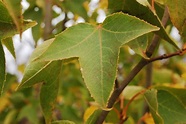
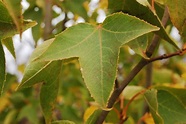
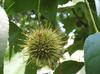
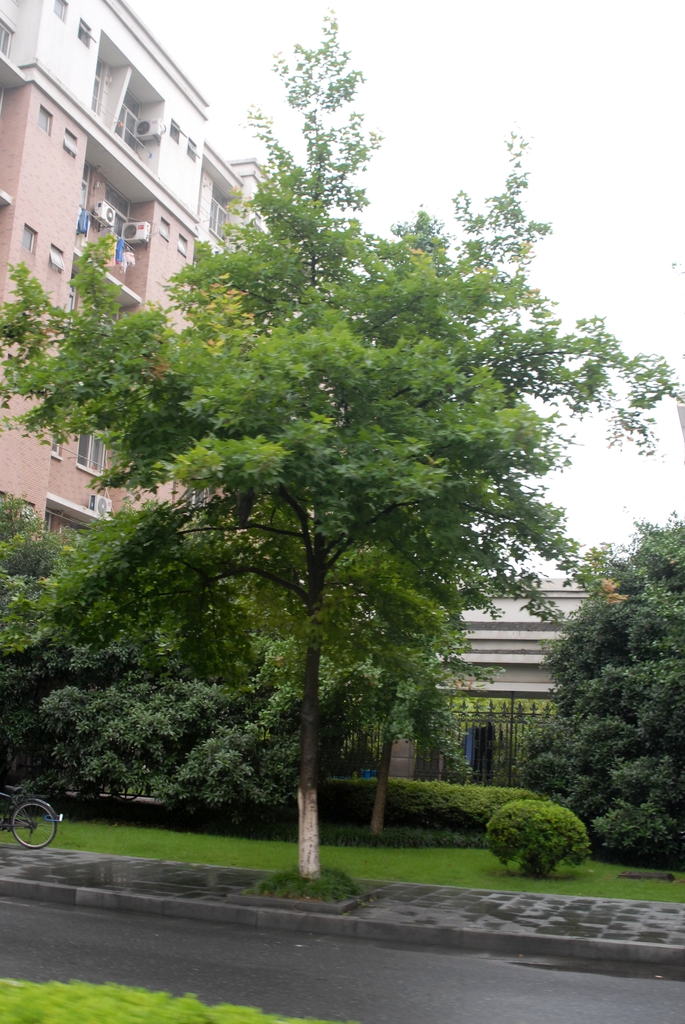
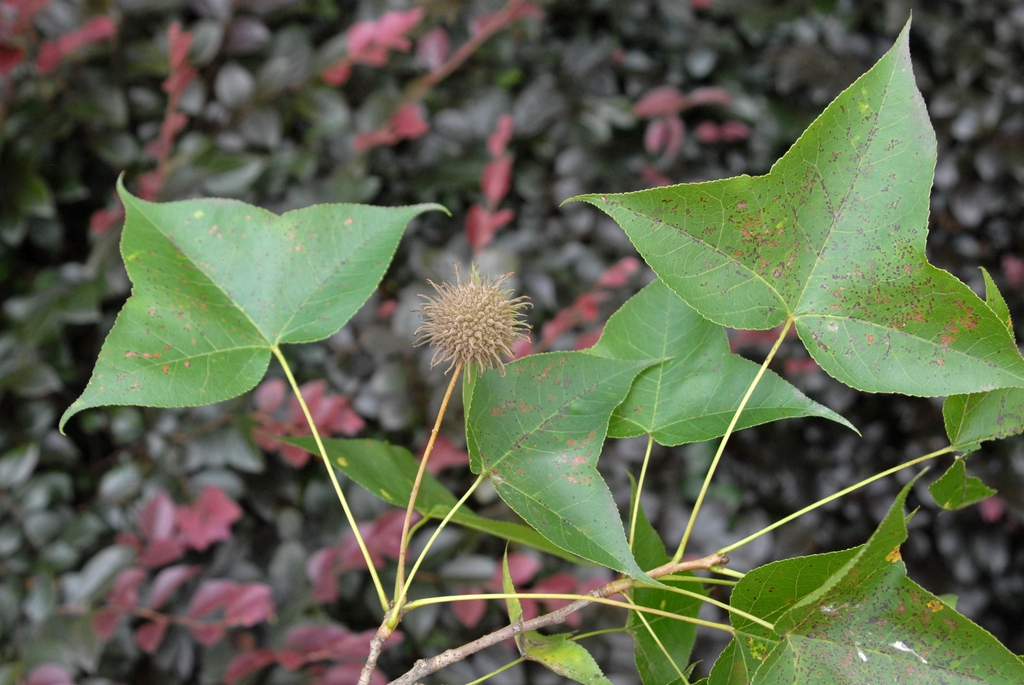
Formosa sweet gum is a medium-sized, branching, deciduous shade tree native to South Korea, Central and Southern China, Taiwan, and Vietnam. It grows 40 to 60 feet tall and 25 to 30 feet wide, initially has a pyramidal shape, but later develops a more rounded or oval crown. Its leaves are glossy, deep green, palmately lobed, with 3 to 5 lobes, and the central lobe is the largest and more triangular. Its fall color ranges from reds to yellows. Yellowish-green male and female flowers are produced. The male flowers are catkins, while the females are spherical, non-showy flower clusters appearing from April to May. They produce round, spiky, brown fruits known as "gum balls." Fortunately, these gum balls are softer than those produced by our native sweet gum tree L.styraciflua. Formosa sweet gum is a member of the sweetgum family (Altingiaceae). The specific epithet formosana means "of Formosa' or what is now known as Taiwan.
This tree prefers full sun and a variety of moist, well-drained, non-alkaline soils. It is hardy in zones 7 to 9 and intolerant of shade and alkaline soil. Pruning may be required to develop a strong central leader. Pruning is best done in the late winter or early spring. Remove dead or damaged branches and thin crowded branches to improve air circulation. Propagate through seeds or semi-hardwood cuttings.
This sweet gum gets its common name from the sap that oozes from any wounds on the tree. It is commonly used as a shade tree along streets without sidewalks or in a lawn area more than 6 ft wide. It is also used in bonsai. This tree is also known for its hardiness, durability, and resistance to termites. The wood is used for construction and making furniture. Its leaves are used to feed giant silkworms.
Best planted as an ornamental tree in large landscapes, such as parks or sizable lawns. Provides excellent shade.
Insects, Diseases, and Other Plant Problems: Monitor for aphids, spider mites, bagworms, fall webworms, leaf miners, tent caterpillars, borers, and cottony cushion scale. May be susceptible to leaf spots, wood rot, and canker. Iron chlorosis can occur in alkaline soil.
The fruit may be a litter nuisance to some in the fall and through winter, but this is usually only noticeable on hard surfaces, such as roads, patios, and sidewalks.
- See this plant in the following landscape :
- Cultivars / Varieties:
-
- 'Afterglow'
Fall colors of rosy red and orange - 'Ellen'
New growth is red. - 'Evergreen'
New purple foliage in the spring and bright red fall foliage - 'Formosan Gold'
Yellow or chartreuse foliage during the growing season. - 'Jinque'
Golden twigs and yellow leaves
- 'Afterglow'
- 'Afterglow', 'Ellen', 'Evergreen', 'Formosan Gold', 'Jinque'
- Tags:


- Cultivars / Varieties:
-
- 'Afterglow'
Fall colors of rosy red and orange - 'Ellen'
New growth is red. - 'Evergreen'
New purple foliage in the spring and bright red fall foliage - 'Formosan Gold'
Yellow or chartreuse foliage during the growing season. - 'Jinque'
Golden twigs and yellow leaves
- 'Afterglow'
- 'Afterglow', 'Ellen', 'Evergreen', 'Formosan Gold', 'Jinque'
- Tags:
-
-
Attributes:
- Genus:
- Liquidambar
- Species:
- formosana
- Family:
- Altingiaceae
- Uses (Ethnobotany):
- The wood is used to make furniture and other home interior finishes such as flooring.
- Life Cycle:
- Woody
- Recommended Propagation Strategy:
- Seed
- Stem Cutting
- Country Or Region Of Origin:
- South Korea, Taiwan, Central & Southern China to North Vietnam
- Distribution:
- Native: China North-Central, China South-Central, China Southeast, Hainan, Korea, Laos, Taiwan, and Vietnam. Introduced: Assam, East Himalaya, and India. Naturalizing: Orange County, North Carolina, and Harrison County, Mississippi
- Wildlife Value:
- Fruit attracts birds.
- Dimensions:
- Height: 40 ft. 0 in. - 60 ft. 0 in.
- Width: 25 ft. 0 in. - 30 ft. 0 in.
-
-
Whole Plant Traits:
- Plant Type:
- Tree
- Woody Plant Leaf Characteristics:
- Deciduous
- Habit/Form:
- Oval
- Pyramidal
- Rounded
- Growth Rate:
- Medium
- Maintenance:
- Low
- Texture:
- Coarse
-
-
Cultural Conditions:
- Light:
- Full sun (6 or more hours of direct sunlight a day)
- Soil Texture:
- Clay
- Loam (Silt)
- Sand
- Soil pH:
- Acid (<6.0)
- Neutral (6.0-8.0)
- Soil Drainage:
- Good Drainage
- Moist
- Occasionally Wet
- Available Space To Plant:
- 24-60 feet
- NC Region:
- Coastal
- Mountains
- Piedmont
- USDA Plant Hardiness Zone:
- 7a, 7b, 8a, 8b, 9a, 9b
-
-
Fruit:
- Fruit Color:
- Brown/Copper
- Fruit Value To Gardener:
- Showy
- Display/Harvest Time:
- Fall
- Winter
- Fruit Length:
- 1-3 inches
- Fruit Width:
- 1-3 inches
- Fruit Description:
- The fruit is a dark brown, spherical, burr-like cluster, measuring 1.5 inches in diameter. They appear in late summer and can persist into winter. Fruit is less woody and softer than our native L. styraciflua.
-
-
Flowers:
- Flower Color:
- Gold/Yellow
- Green
- Insignificant
- Flower Inflorescence:
- Catkin
- Insignificant
- Flower Bloom Time:
- Spring
- Flower Description:
- The male flower is a catkin. The female inflorescence is a non-showy, dense, rounded cluster of flowers. Blooms in April-May.
-
-
Leaves:
- Woody Plant Leaf Characteristics:
- Deciduous
- Leaf Color:
- Green
- Leaf Feel:
- Glossy
- Deciduous Leaf Fall Color:
- Gold/Yellow
- Red/Burgundy
- Leaf Type:
- Simple
- Leaf Arrangement:
- Alternate
- Leaf Shape:
- Palmatifid
- Leaf Margin:
- Lobed
- Serrate
- Hairs Present:
- Yes
- Leaf Length:
- 3-6 inches
- Leaf Width:
- 3-6 inches
- Leaf Description:
- The leaves are dark green and smooth on the upper surface, and the underside is pale green and sometimes hairy. The leaves are alternate, simple, star-shaped with 3 lobes (instead of the 5-7 lobes of other Liquidambar spp.), palmate, with acuminate tips and cordate to truncate bases. The central lobe is the largest. The leaf measures from 3 to 5 inches long and 3 to 6 wide. The margins are glandular and serrated. The petiole is usually 3 to 4.5 inches long. Their fall color is yellow to red, but the quality varies.
-
-
Bark:
- Bark Color:
- Dark Brown
- Light Gray
- Surface/Attachment:
- Ridges
- Smooth
- Bark Description:
- The bark is smooth and gray. As the tree matures, the bark develops cracks and becomes more brown. If the bark is damaged, amber sap oozes from the trunk.
-
-
Stem:
- Stem Color:
- Brown/Copper
- Gray/Silver
- Stem Is Aromatic:
- Yes
- Stem Buds:
- Hairy
- Stem Bud Scales:
- Enclosed in more than 2 scales
- Stem Surface:
- Corky Ridges
- Stem Description:
- Young branches are covered with corky projections. Young shoots are hairy, and the buds are pointed, hairy, and have many scales. The stipules are red. Twigs are breakage-resistant but can cause litter problems. The stems when bruised have a sweet spicy scent.
-
-
Landscape:
- Landscape Location:
- Lawn
- Landscape Theme:
- Asian Garden
- Design Feature:
- Shade Tree
- Street Tree
- Attracts:
- Songbirds
- Resistance To Challenges:
- Deer
- Drought
- Problems:
- Messy