


Soft Rush Juncus effusus
Other Common Name(s):
Other plants called Soft Rush:
- Phonetic Spelling
- JUN-kus eff-YOO-sus
- Description
-
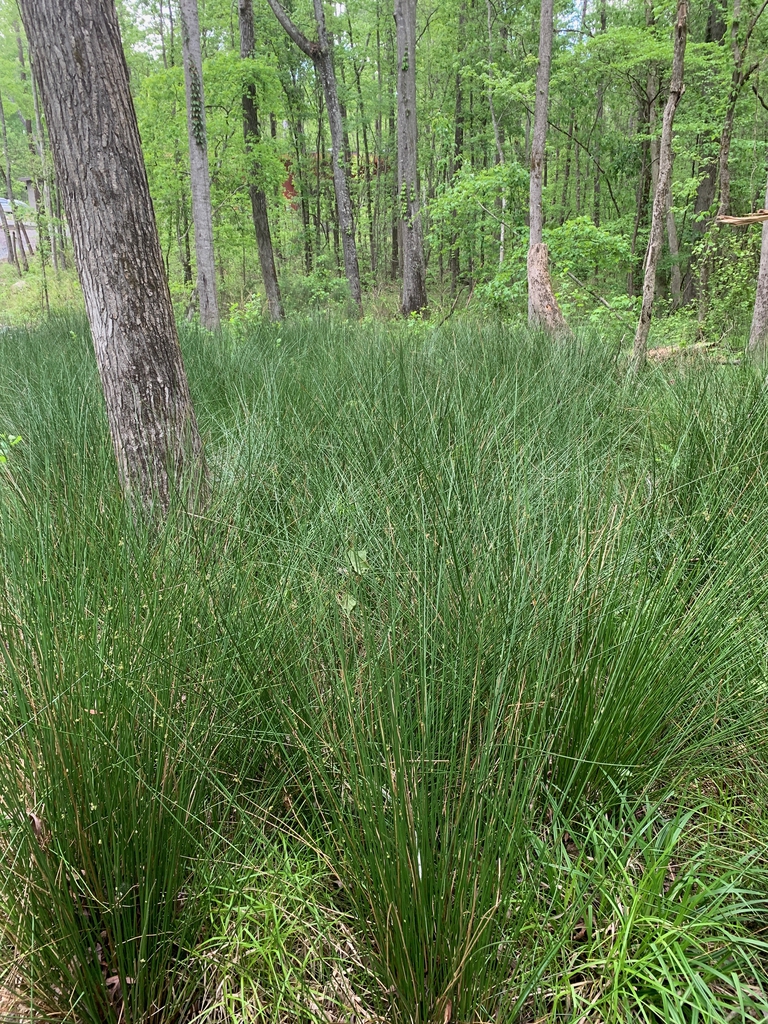
Common rush is a native, grass-like wetland perennial in the family Juncaceae, found in bogs, marshes, and swamps. It is native to Eurasia, North America, Australia, New Zealand. Varieties can be found throughout the United States except for South Dakota, Wyoming, and Utah. The variety in NC is Juncus effusus subsp. solutus
Common rush does well in sandy, loamy, or clay soils, including heavy clay. It grows in full sun but tolerates partial shade and prefers moist or consistently wet conditions. Best flowering is in full sun. In cooler climates, outdoor clumps will die back to the ground in winter and old foliage can be cut back in early spring to rejuvenate the plant.
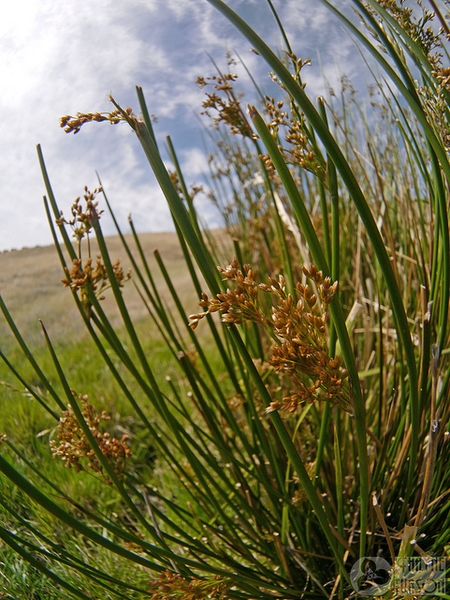
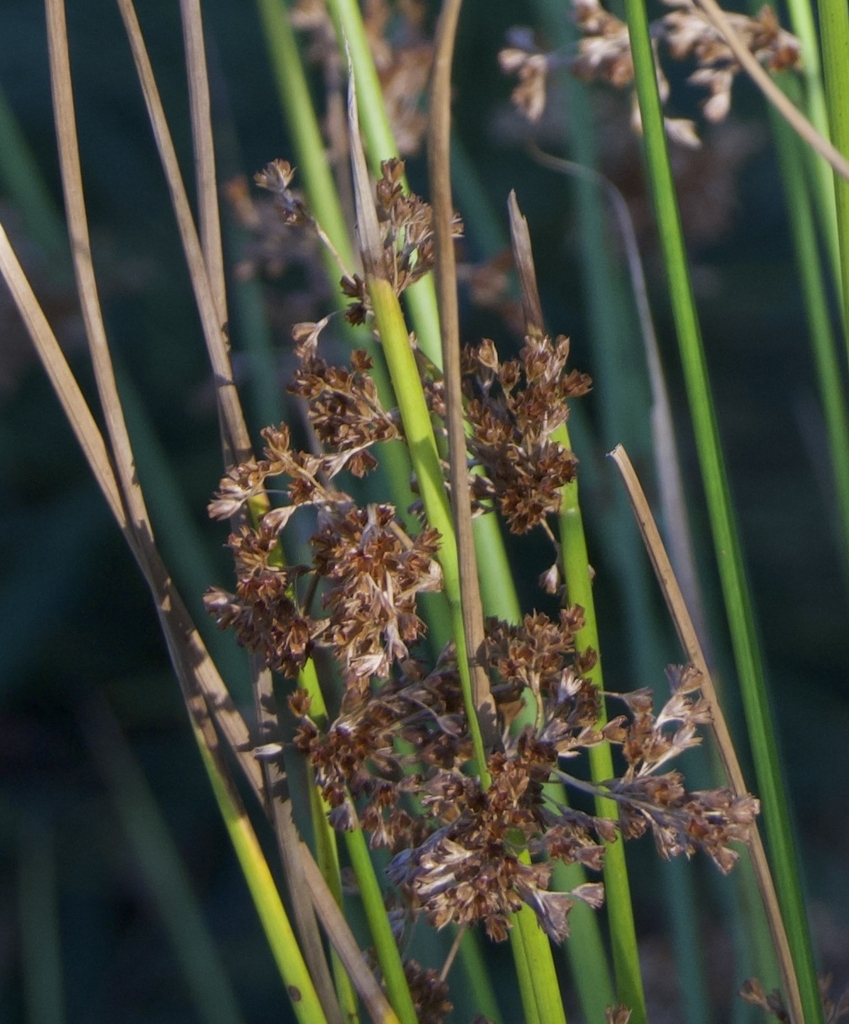
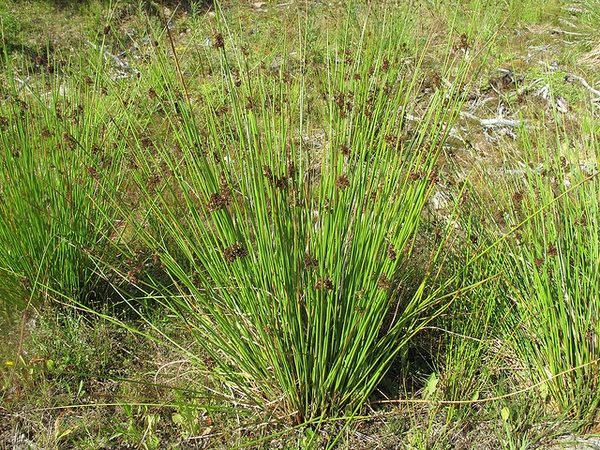
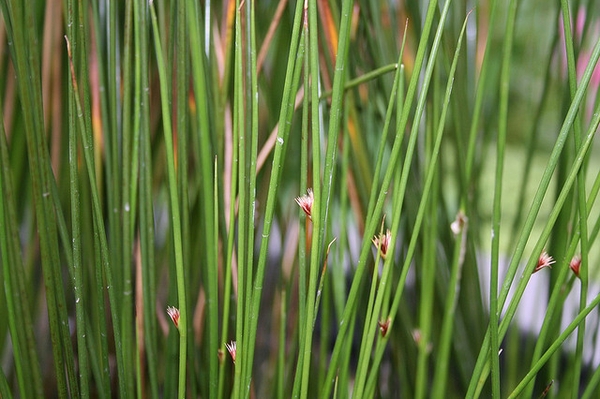
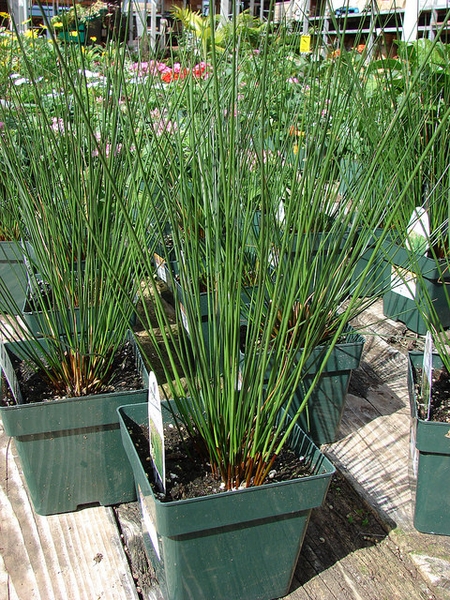
Common rush has no leaves, but bladeless sheathes; the stems are attractive, upright, cylindrical, green, and smooth from 12 - 36 inches in height and spreading in clumps. The late summer-blooming flowers are yellowish-green to brown in many-flowered cymes with an obovoid capsule following.
This plant can be used along ponds, streams, and bogs and in a water garden as an accent. It can also be used in a container.
Diseases, Insect Pests and Other Plant Problems: No significant insect or disease problems, but rust, leaf spot and stem rots can occur.
- See this plant in the following landscape :
- Floricyle
- Cultivars / Varieties:
- Juncus effusus subsp. solutus, 'Spiralis'
- Tags:




- Cultivars / Varieties:
- Juncus effusus subsp. solutus, 'Spiralis'
- Tags:
-
-
Attributes:
- Genus:
- Juncus
- Species:
- effusus
- Family:
- Juncaceae
- Uses (Ethnobotany):
- bogs, wetlands
- Life Cycle:
- Perennial
- Recommended Propagation Strategy:
- Division
- Country Or Region Of Origin:
- North America, W. South America, Eurasia,
- Dimensions:
- Height: 1 ft. 0 in. - 3 ft. 0 in.
- Width: 1 ft. 0 in. - 2 ft. 0 in.
-
-
Whole Plant Traits:
- Plant Type:
- Herbaceous Perennial
- Native Plant
- Habit/Form:
- Clumping
- Erect
- Spreading
- Growth Rate:
- Medium
- Maintenance:
- Low
- Texture:
- Fine
-
-
Cultural Conditions:
- Light:
- Full sun (6 or more hours of direct sunlight a day)
- Soil Texture:
- Clay
- Loam (Silt)
- Sand
- Soil pH:
- Neutral (6.0-8.0)
- Soil Drainage:
- Moist
- Occasionally Wet
- NC Region:
- Coastal
- Mountains
- Piedmont
- USDA Plant Hardiness Zone:
- 4a, 4b, 5a, 5b, 6a, 6b, 7a, 7b, 8a, 8b, 9a, 9b
-
-
Fruit:
- Fruit Type:
- Capsule
- Fruit Description:
- Brown, round to triangular fruit displays from July to October.
-
-
Flowers:
- Flower Color:
- Brown/Copper
- Gold/Yellow
- Flower Inflorescence:
- Cyme
- Flower Bloom Time:
- Summer
- Flower Shape:
- Irregular
- Flower Size:
- < 1 inch
- Flower Description:
- spikey irregular yellowish-green to brown many-flowered cyme Small scaly flowers from July to September.
-
-
Leaves:
- Leaf Color:
- Green
- Leaf Feel:
- Soft
- Leaf Type:
- Sheath
- Hairs Present:
- No
- Leaf Description:
- bladeless green basal sheaths surrounding stems
-
-
Stem:
- Stem Color:
- Green
- Stem Is Aromatic:
- No
- Stem Form:
- Straight
- Stem Surface:
- Smooth (glabrous)
- Stem Description:
- Upright, cylindrical stems are soft to the touch
-
-
Landscape:
- Landscape Location:
- Container
- Naturalized Area
- Slope/Bank
- Landscape Theme:
- Native Garden
- Rain Garden
- Water Garden
- Design Feature:
- Accent
- Resistance To Challenges:
- Wet Soil