


Hepatica americana var. acuta
Common Name(s):
Previously known as:
- Anemone acutiloba
- Hepatica acuta
- Hepatica acutiloba
- Hepatica nobilis var. acuta
- Hepatica triloba var. acuta
- Phonetic Spelling
- he-PAT-ih-kuh a-mer-ih-KAY-nah ah-KYOO-tah
- Description
-
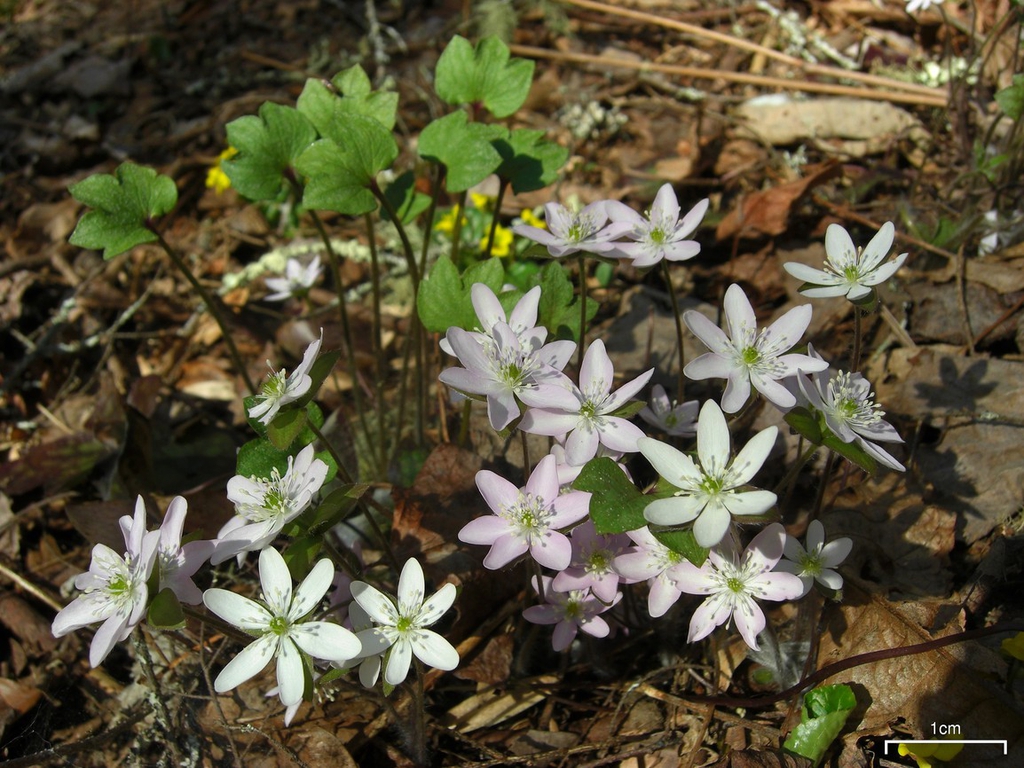
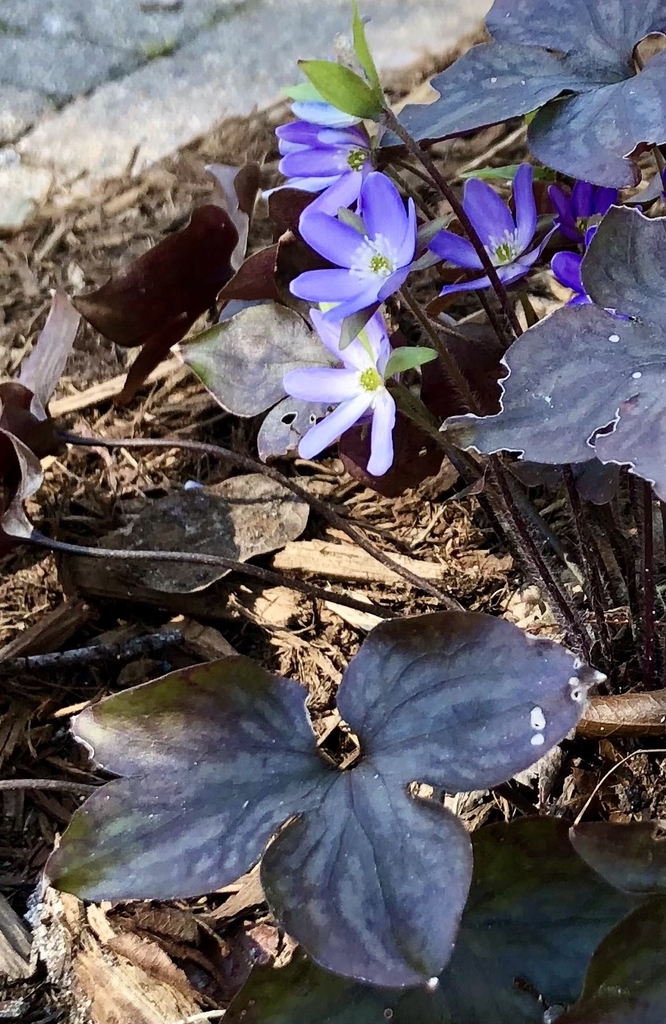
Sharp-lobed liverleaf is a variety of the round-lobed liverleaf (Hepatica americana). The main difference between these two plants is the shape of the leaf lobe tips and bracts. Sharp-lobe liverleaf is a rhizomatous, spring-blooming, woodland, herbaceous perennial wildflower native to Eastern Canada and the North Central and Eastern United States. This plant is often found in deciduous woodlands or on bluff slopes. It grows erect, 4 to 6 inches tall and 6 to 8 inches wide, and welcomes spring with a burst of delicate white, pink, or purple flowers that attract small bees. The flowers have 5 to 12 petal-like sepals and three green bracts beneath with pointed tips. It has tufts of basal leaves that are leathery, three-lobed, with acutely pointed tips. New mottled green leaves emerge after the plant begins to bloom. During the fall and winter, the leaves turn reddish-brown; surviving through the winter months, they will wither and die when the flowers emerge the next spring. This plant is a member of the buttercup family (Ranunculaceae)
Prefers partial shade to dappled shade and moist, well-drained, humus-rich soil with a slightly alkaline pH. It is winter hardy in zones 3 to 7. Carpenter bees frequent the flowers to collect pollen, and chipmunks enjoy the dry fruit. Propagated by seeds and division.
In North Carolina, the sharp-lobed liverleaf is found throughout the mountains, but rarely in the western Piedmont. Flowers appear in March and April, and the fruits soon follow. It is one of the first native wildflowers to bloom.
Consider planting in a shaded cottage, rock, and woodland garden. Most appealing when planted in mass.
Quick ID Hints:
- Three-lobed, hairy leaves with pointed tips
- Hairy flower stalks
- Solitary flower with 5 to 12 petal-like sepals and 3 green bracts with pointed tips
Insects, Diseases, and Other Plant Problems: No known serious insect pests or diseases. Monitor for slugs and snails. Does not like its roots disturbed.
- See this plant in the following landscape :
- Cultivars / Varieties:
-
- Tags:


- Cultivars / Varieties:
-
- Tags:
-
-
Attributes:
- Genus:
- Hepatica
- Species:
- americana
- Family:
- Ranunculaceae
- Uses (Ethnobotany):
- Native Americans used the roots to trap mammals. They also used the plant for treating shortness of breath.
- Life Cycle:
- Perennial
- Recommended Propagation Strategy:
- Division
- Seed
- Country Or Region Of Origin:
- Eastern Canada and the North Central and Eastern United States
- Distribution:
- Native: Canada--Ontario and Quebec; United States--AL, AR, CT, GA, IL, IN, IA, KY, ME, MD, MA, MI, MN, MO, NH, NY, NC, OH, PA, SC, TN, VT, VA, WV, and WI.
- Wildlife Value:
- Honeybees and small Carpenter bees collect pollen. Syrphid flies and other flies eat the pollen. Chipmunks eat the fruit.
- Play Value:
- Attractive Flowers
- Attracts Pollinators
- Wildlife Food Source
- Dimensions:
- Height: 0 ft. 4 in. - 0 ft. 6 in.
- Width: 0 ft. 6 in. - 0 ft. 8 in.
-
-
Whole Plant Traits:
- Plant Type:
- Herbaceous Perennial
- Native Plant
- Wildflower
- Habit/Form:
- Clumping
- Erect
- Growth Rate:
- Slow
- Maintenance:
- Low
-
-
Cultural Conditions:
- Light:
- Dappled Sunlight (Shade through upper canopy all day)
- Partial Shade (Direct sunlight only part of the day, 2-6 hours)
- Soil Texture:
- Loam (Silt)
- Sand
- Soil pH:
- Neutral (6.0-8.0)
- Soil Drainage:
- Good Drainage
- Moist
- Available Space To Plant:
- Less than 12 inches
- NC Region:
- Mountains
- Piedmont
- USDA Plant Hardiness Zone:
- 3a, 3b, 4a, 4b, 5a, 5b, 6a, 6b, 7a, 7b
-
-
Fruit:
- Display/Harvest Time:
- Spring
- Fruit Type:
- Achene
- Fruit Length:
- < 1 inch
- Fruit Width:
- < 1 inch
- Fruit Description:
- The fruit is an oval-shaped, hairy, dry achene, measuring 0.14 to 0.18 inches long and 0.05 to 0.07 inches wide. The fruit does not split open when ripe and contains only one seed. May be present from March to May.
-
-
Flowers:
- Flower Color:
- Green
- Pink
- Purple/Lavender
- White
- Flower Inflorescence:
- Solitary
- Flower Value To Gardener:
- Long-lasting
- Showy
- Flower Bloom Time:
- Spring
- Flower Shape:
- Star
- Flower Petals:
- 7 - 20 petals/rays
- Flower Size:
- < 1 inch
- Flower Description:
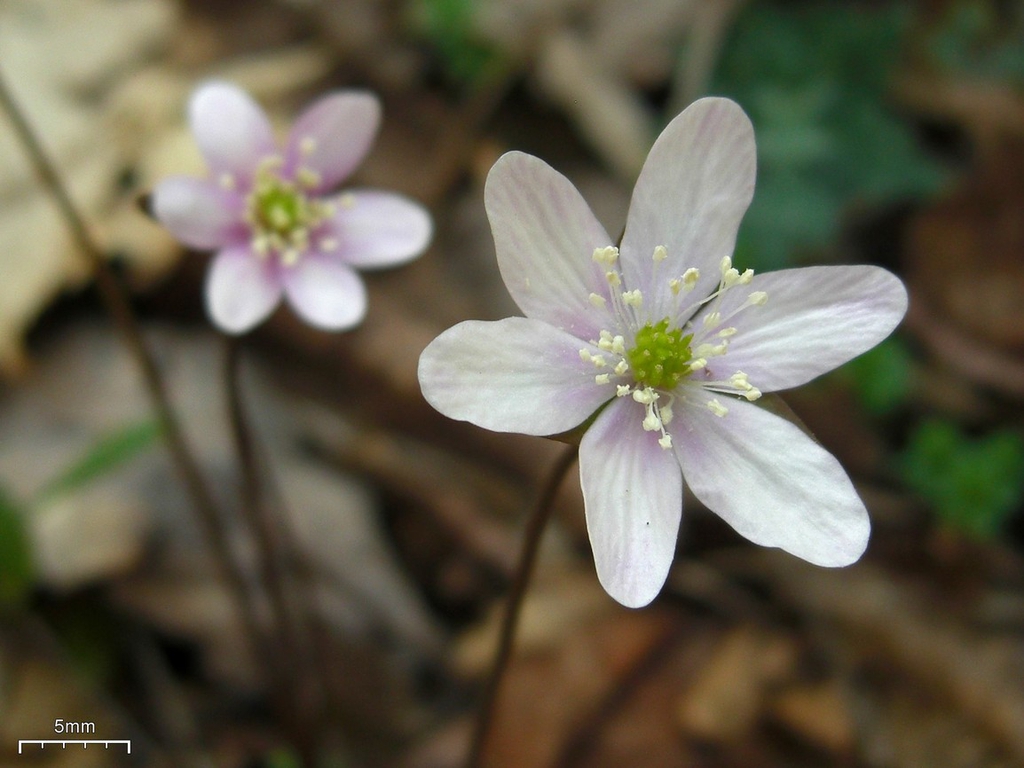
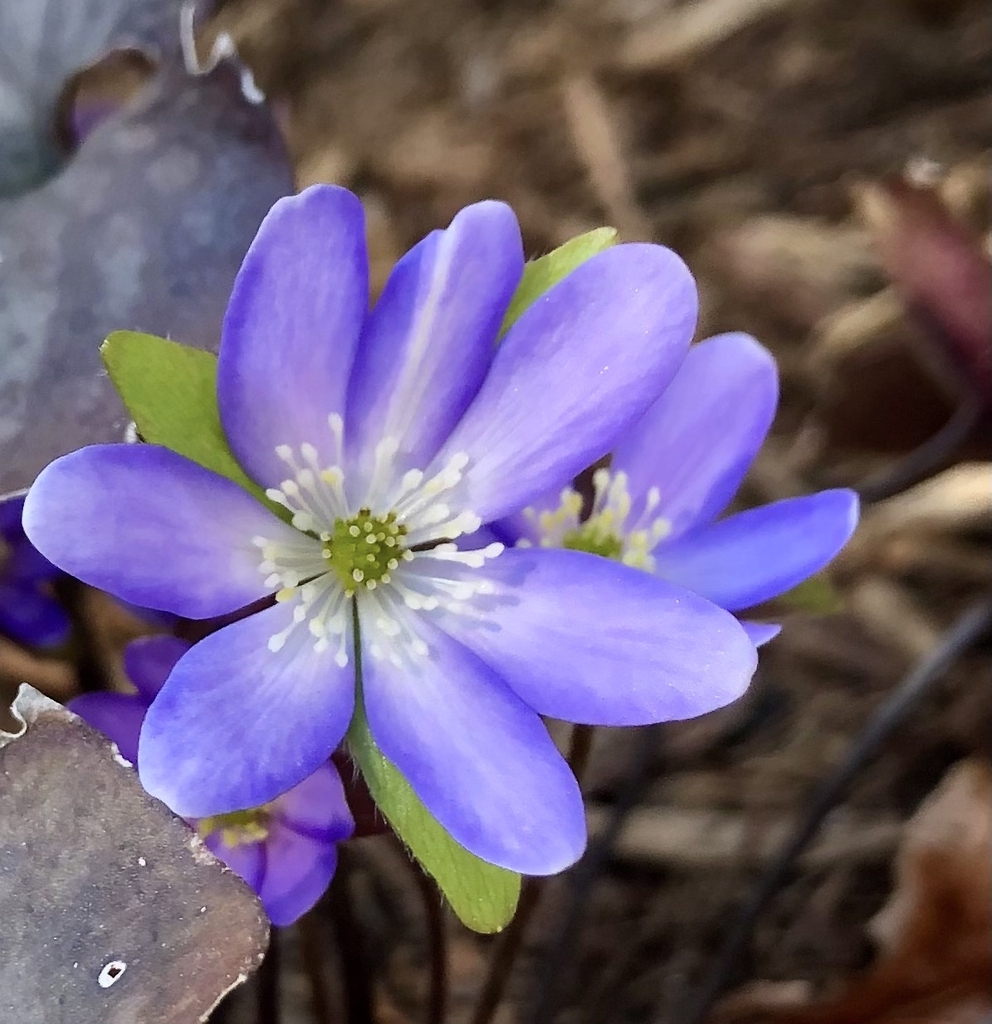
- The flowers are solitary and borne on a leafless stalk. Each bloom measures 0.5 to 1 inch in diameter, and each has 5 to 12 petal-like colored sepals in shades of lavender, white, or pink. The center of the flower is green and has multiple white stamens. Beneath the flower are 3 large hairy bracts. Blooming occurs from March through May.
-
-
Leaves:
- Leaf Color:
- Green
- Variegated
- Leaf Feel:
- Leathery
- Deciduous Leaf Fall Color:
- Red/Burgundy
- Leaf Type:
- Simple
- Leaf Shape:
- Cordate
- Leaf Margin:
- Entire
- Lobed
- Hairs Present:
- Yes
- Leaf Length:
- 1-3 inches
- Leaf Width:
- 1-3 inches
- Leaf Description:
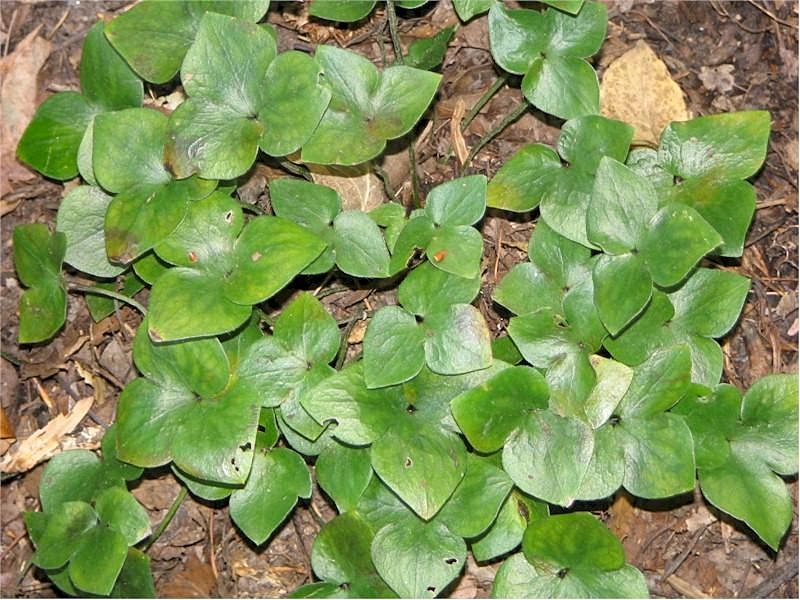
- The leaves are up to 3 inches long and up to 4 inches wide, heart-shaped, green and mottled, thick, hairy, leathery, basal, and three-lobed. Each lobe is oval and has a pointed tip. The new leaves emerge after the flowers begin to bloom. During the spring and summer, the leaves are a mottled green. In the fall and winter, the leaves become red to brownish. They survive through the winter and wither away as the plant begins to bloom in the spring.
-
-
Stem:
- Stem Color:
- Gray/Silver
- Green
- Stem Is Aromatic:
- No
- Stem Cross Section:
- Round
- Stem Form:
- Straight
- Stem Surface:
- Hairy (pubescent)
- Stem Description:
- The stalks are greenish-gray, hairy, leafless, erect or angled outwards, circular, measuring 2 to 7.5 inches tall.
-
-
Landscape:
- Landscape Location:
- Slope/Bank
- Small Space
- Woodland
- Landscape Theme:
- Native Garden
- Rock Garden
- Shade Garden
- Design Feature:
- Border
- Small groups
- Attracts:
- Bees
- Small Mammals
- Resistance To Challenges:
- Deer
- Rabbits