



Mexican Firecracker Hamelia patens
Other Common Name(s):
- Phonetic Spelling
- ham-EE-lee-uh PAT-ens
- Description
-
Scarlett bush is a semi-evergreen to evergreen perennial shrub or small tree in the coffee family (Rubiaceae) native to tropical and sub-tropical America. It can be found in Florida and as far south as Argentina. The genus name honors Henri Louis du Hamel du Monceau of the 1700's, a celebrated French writer on trees and shrubs. Specific epithet means spreading.
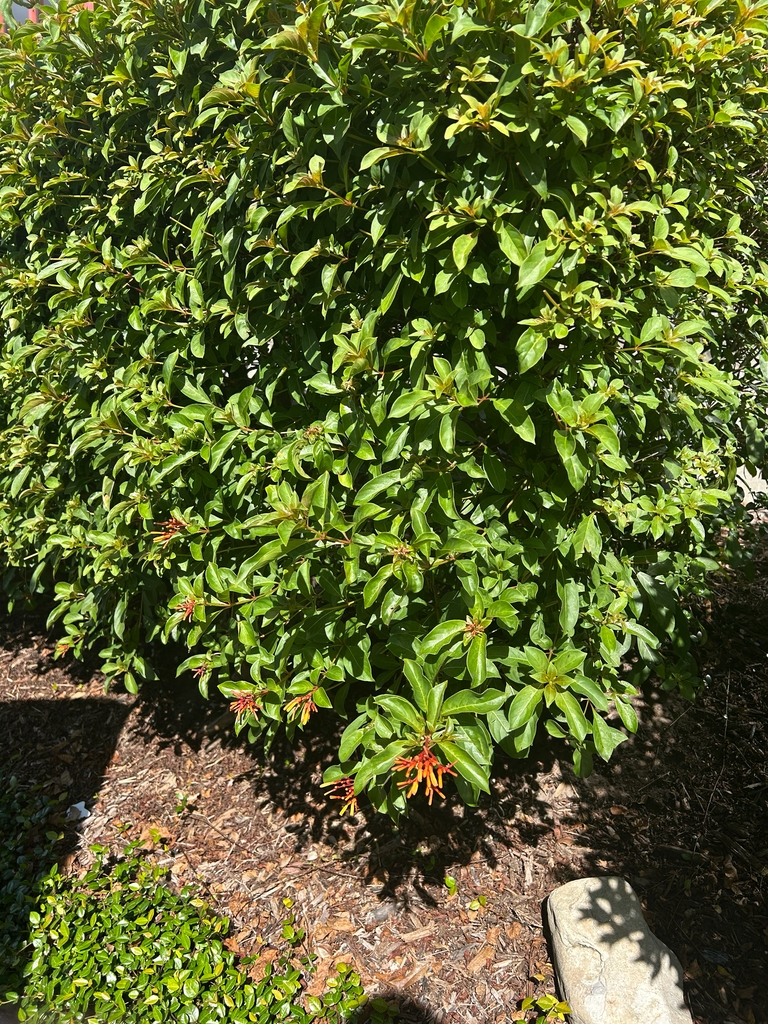
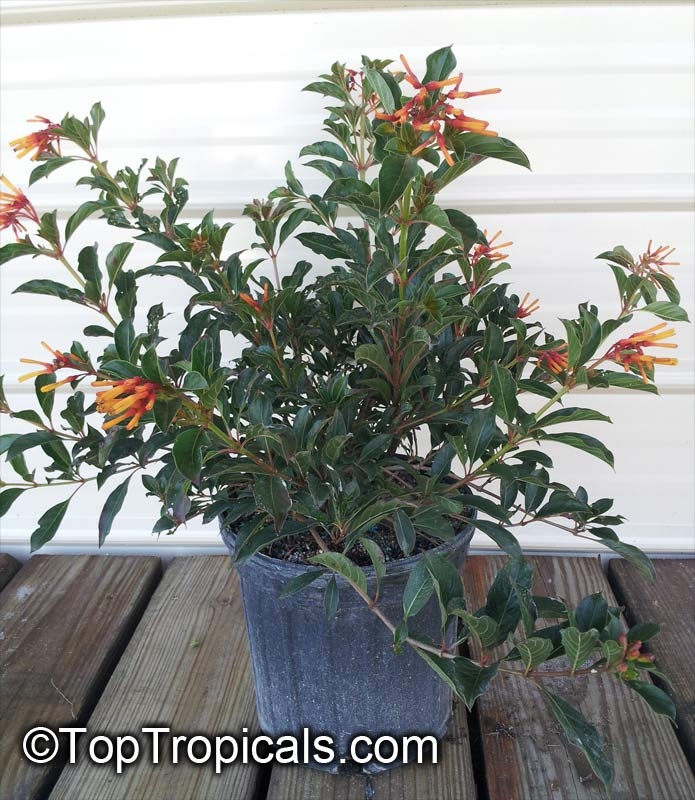
In its native habitat, it will grow 10 to 15 feet tall, but as an annual, it grows 2 to 3 feet tall in a season and 1 to 2 feet wide. Grow in full sun to partial shade in average well-drained soils. If grown in a container, it will require additional water. It is heat and humidity tolerant.
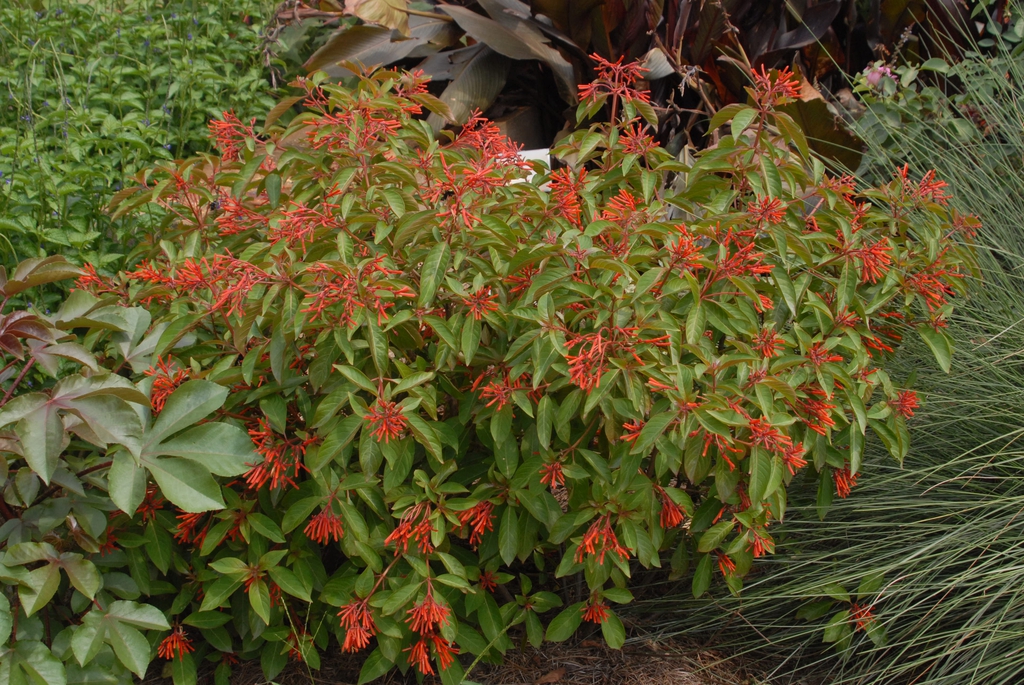
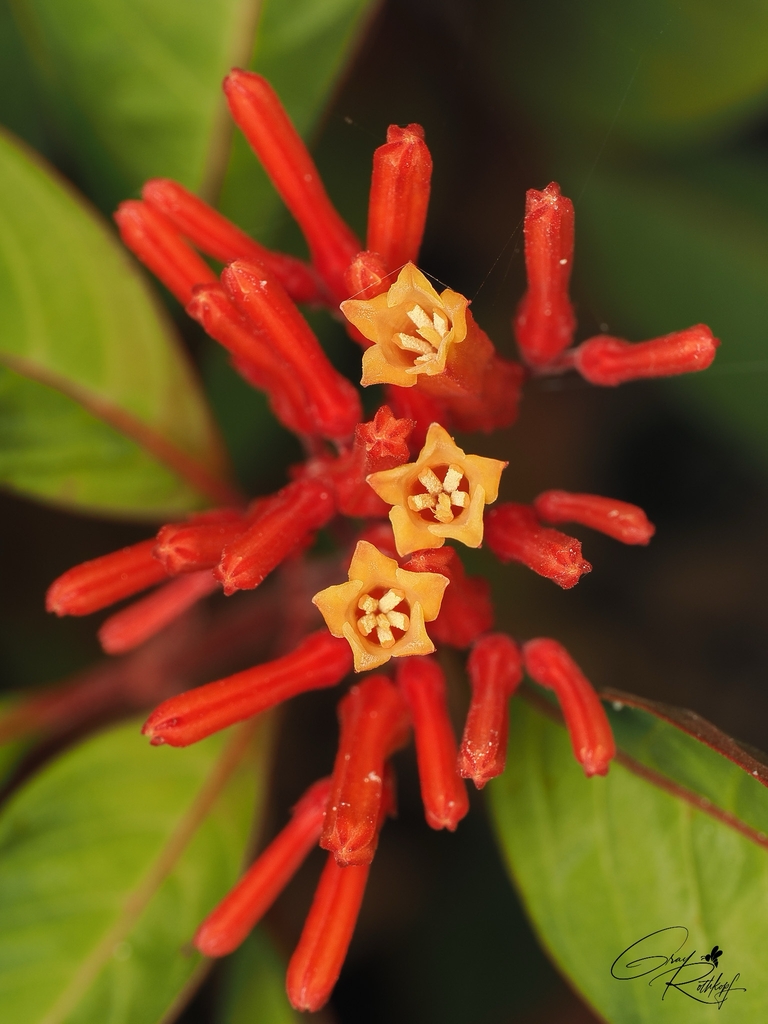
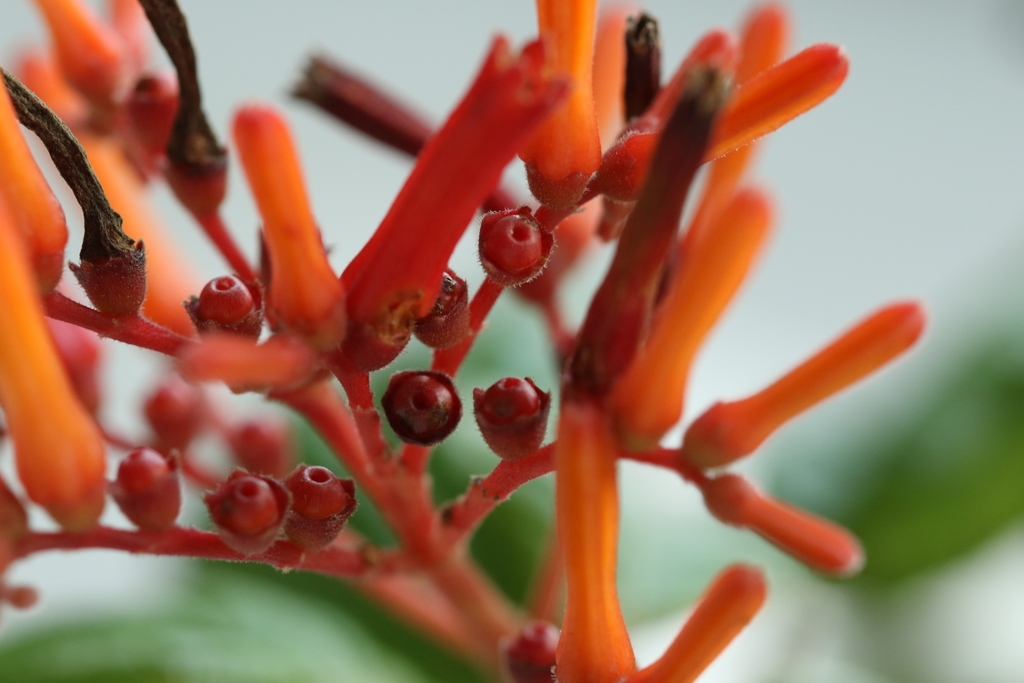
Scarlett bush blooms year-round in its tropical habitat, but as an annual, it blooms from summer to fall. The red clusters of tubular flowers resemble a firecracker, hence one of the common names. Butterflies and hummingbirds visit the flowers. The small berries that follow are enjoyed by the birds. Their gray-green leaves have pinkish veins and turn dark red in the fall.
In temperate climates, use this plant in a container and bring indoors in winter if desired or plant in the ground in borders of a pollinator or cottage garden for a tropical feel.
Insects, Diseases, and Other Plant Problems: No significant problems.
- See this plant in the following landscape :
- Cultivars / Varieties:
-
- Tags:


- Cultivars / Varieties:
-
- Tags:
-
-
Attributes:
- Genus:
- Hamelia
- Species:
- patens
- Family:
- Rubiaceae
- Life Cycle:
- Perennial
- Recommended Propagation Strategy:
- Stem Cutting
- Country Or Region Of Origin:
- Florida, West Indies, Mexico, Central and South America
- Distribution:
- Florida to Argentina
- Wildlife Value:
- Birds eat the berries. Adult food source for Pluto Sphinx moth. Butterflies and humminbirds visit the flowers.
- Edibility:
- Berries are edible but not often used due to the aftertaste. In Mexico and the West Indies, they are sometimes used to make a fermented drink, syrup, or medicinal remedies.
- Dimensions:
- Height: 1 ft. 0 in. - 3 ft. 0 in.
- Width: 1 ft. 0 in. - 2 ft. 0 in.
-
-
Whole Plant Traits:
- Plant Type:
- Annual
- Houseplant
- Perennial
- Habit/Form:
- Erect
- Spreading
- Growth Rate:
- Medium
- Maintenance:
- Medium
- Texture:
- Medium
-
-
Cultural Conditions:
- Light:
- Full sun (6 or more hours of direct sunlight a day)
- Partial Shade (Direct sunlight only part of the day, 2-6 hours)
- Soil Texture:
- High Organic Matter
- Sand
- Soil Drainage:
- Good Drainage
- Moist
- Available Space To Plant:
- 12 inches-3 feet
- USDA Plant Hardiness Zone:
- 9a, 9b, 10a, 10b
-
-
Fruit:
- Fruit Color:
- Black
- Red/Burgundy
- Fruit Value To Gardener:
- Edible
- Fruit Type:
- Berry
- Fruit Length:
- < 1 inch
- Fruit Width:
- < 1 inch
- Fruit Description:
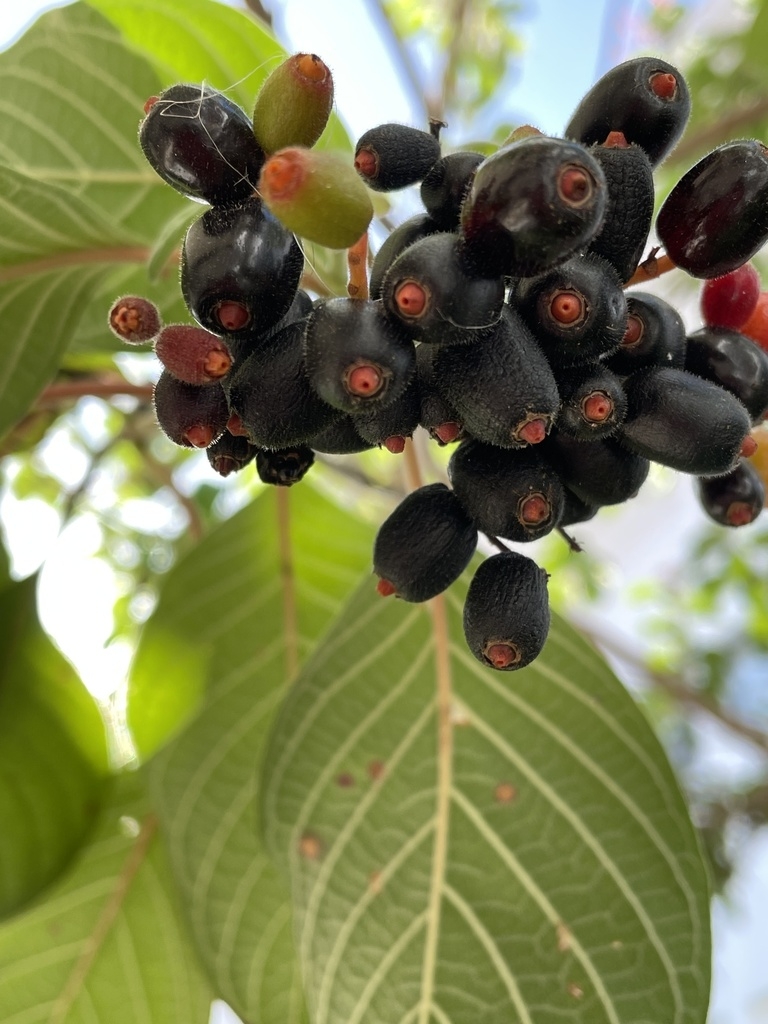
- Small dark red juicy berry turning black at maturity
-
-
Flowers:
- Flower Color:
- Gold/Yellow
- Orange
- Red/Burgundy
- Flower Inflorescence:
- Cyme
- Flower Value To Gardener:
- Showy
- Flower Bloom Time:
- Fall
- Summer
- Flower Shape:
- Tubular
- Flower Petals:
- 4-5 petals/rays
- Flower Description:
- Showy tubular orange-red to red flowers appear in terminal clusters from summer to fall.
-
-
Leaves:
- Leaf Color:
- Green
- Deciduous Leaf Fall Color:
- Red/Burgundy
- Leaf Arrangement:
- Opposite
- Whorled
- Leaf Shape:
- Ovate
- Leaf Margin:
- Entire
- Hairs Present:
- No
- Leaf Length:
- 3-6 inches
- Leaf Width:
- 1-3 inches
- Leaf Description:
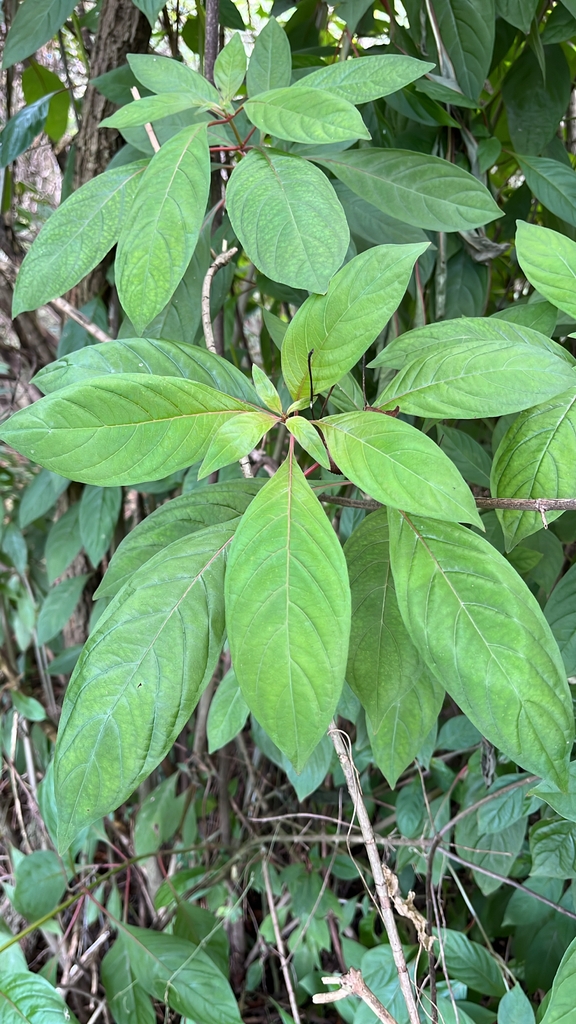
- Oval gray-green leaves have pinkish veins and turn red-burgundy in the fall. They are 4 to 8 inches long and occur in whorls of 3 to 7 but are sometimes opposite. They are glossy green with paler undersides.
-
-
Stem:
- Stem Color:
- Green
- Red/Burgundy
- Stem Is Aromatic:
- No
- Stem Cross Section:
- Angular
- Stem Description:
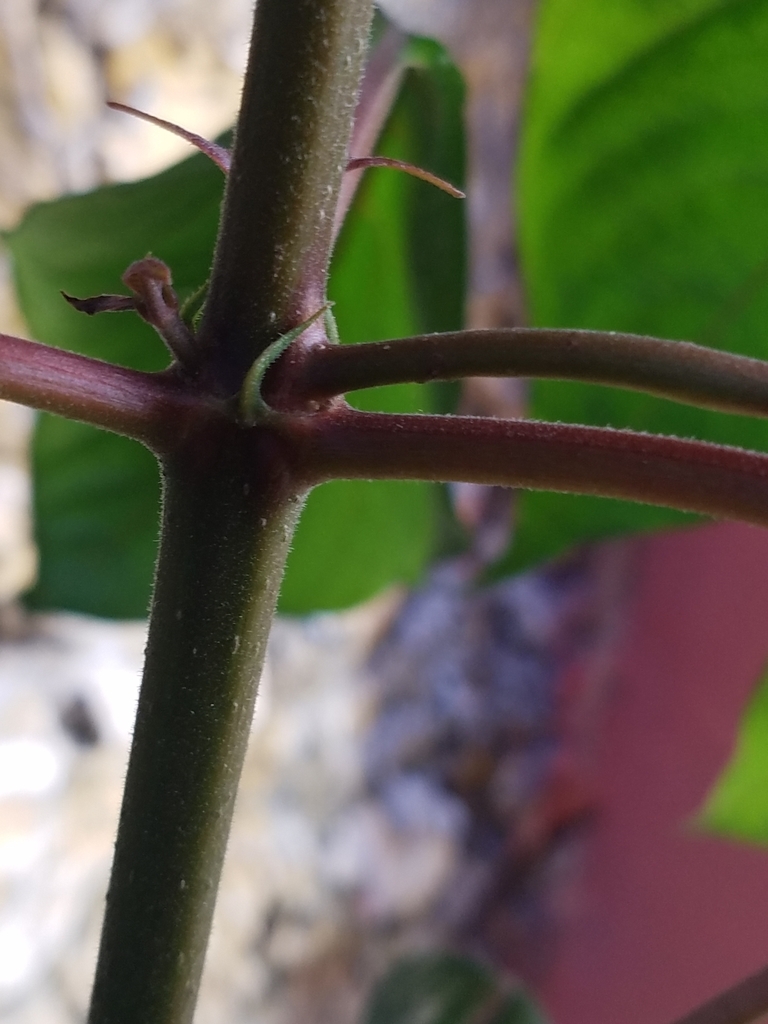
- Reddish triangular stems
-
-
Landscape:
- Landscape Location:
- Container
- Patio
- Landscape Theme:
- Butterfly Garden
- Cottage Garden
- Pollinator Garden
- Design Feature:
- Border
- Attracts:
- Butterflies
- Hummingbirds
- Songbirds
- Resistance To Challenges:
- Heat
- Humidity
- Salt



