



Gentiana catesbaei
Common Name(s):
Previously known as:
- Dasystephana parvifolia
- Gentiana catesbaei var. nummularifolia
- Gentiana elliottii
- Phonetic Spelling
- jen-shee-AN-uh KAYTS-bee-eye
- Description
-
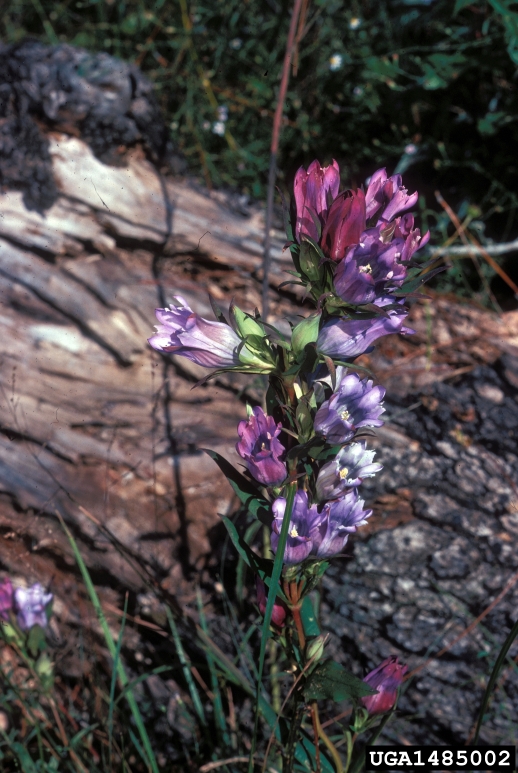
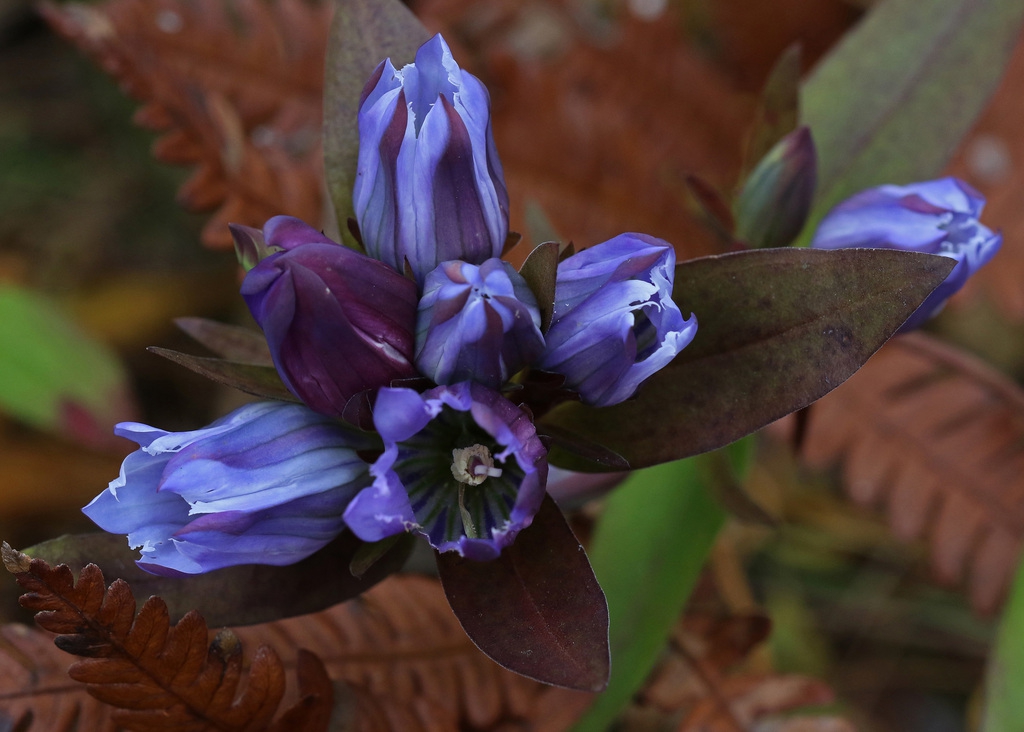
Coastal plain gentian is a native herbaceous perennial wildflower found in swampy areas from Delaware to Florida. In North Carolina, it is found mostly in the Coastal Plains in wetlands, swamp edges, pocosins, ditches, and the wet edges of savannas. It is not found in open pinelands and is uncommon to frequent in the Sandhills of North Carolina. This plant grows up to 1.5 feet tall and has a sprawling habit. The leaves are opposite, thick, ovate to lanceolate, and dark green, and the blooms appear in clusters of funnel-shaped, deep blue flowers at the top of the stem in October through November. It is a member of the gentian family (Gentianaceae). The genus name, Gentiana, is in honor of King Gentius of Illyria, who is thought to have discovered the medicinal value of gentian root. The specific epithet, catesbaei, honors Mark Catesby, an English naturalist and plant collector in North America during the 18th century.
This plant prefers a constantly moist, acidic, organic-rich soil and full sun with afternoon shade to partial shade. It will grow along bogs and ponds and attracts hummingbirds. Propagated by seeds and division.
Coastal plan gentian's status in North Carolina is listed as vulnerable; however, it is no longer found in New Jersey and Pennsylvania.
Insects, Diseases, and Other Plant Problems: Monitor for spider mites. May be susceptible to powdery mildew, leaf spots, and rust. Hot direct sunlight can cause leaf scorch.
- See this plant in the following landscape :
- Cultivars / Varieties:
-
- Tags:


- Cultivars / Varieties:
-
- Tags:
-
-
Attributes:
- Genus:
- Gentiana
- Species:
- catesbaei
- Family:
- Gentianaceae
- Uses (Ethnobotany):
- Used medicinally by Native Americans
- Life Cycle:
- Perennial
- Recommended Propagation Strategy:
- Division
- Seed
- Country Or Region Of Origin:
- Pennsylvania to the Southeastern United States
- Distribution:
- Native: Delaware, Florida, Georgia, Maryland, North Carolina, South Carolina, and Virginia. Extinct in New Jersey and Pennsylvania
- Wildlife Value:
- This plant attracts hummingbirds, bees, and other pollinators.
- Play Value:
- Attractive Flowers
- Attracts Pollinators
- Dimensions:
- Height: 1 ft. 0 in. - 1 ft. 6 in.
- Width: 0 ft. 6 in. - 1 ft. 0 in.
-
-
Whole Plant Traits:
- Plant Type:
- Herbaceous Perennial
- Native Plant
- Wildflower
- Habit/Form:
- Erect
- Prostrate
- Maintenance:
- Medium
-
-
Cultural Conditions:
- Light:
- Full sun (6 or more hours of direct sunlight a day)
- Partial Shade (Direct sunlight only part of the day, 2-6 hours)
- Soil Texture:
- High Organic Matter
- Soil pH:
- Acid (<6.0)
- Neutral (6.0-8.0)
- Soil Drainage:
- Good Drainage
- Moist
- Occasionally Wet
- Available Space To Plant:
- 12 inches-3 feet
- NC Region:
- Coastal
- USDA Plant Hardiness Zone:
- 6a, 7a, 7b, 8a, 8b, 9a, 9b
-
-
Fruit:
- Display/Harvest Time:
- Fall
- Fruit Type:
- Capsule
- Fruit Description:
- The fruit capsule displays from October to December. The seeds are winged.
-
-
Flowers:
- Flower Color:
- Blue
- Flower Inflorescence:
- Cyme
- Flower Value To Gardener:
- Showy
- Flower Bloom Time:
- Fall
- Flower Shape:
- Funnel
- Flower Description:
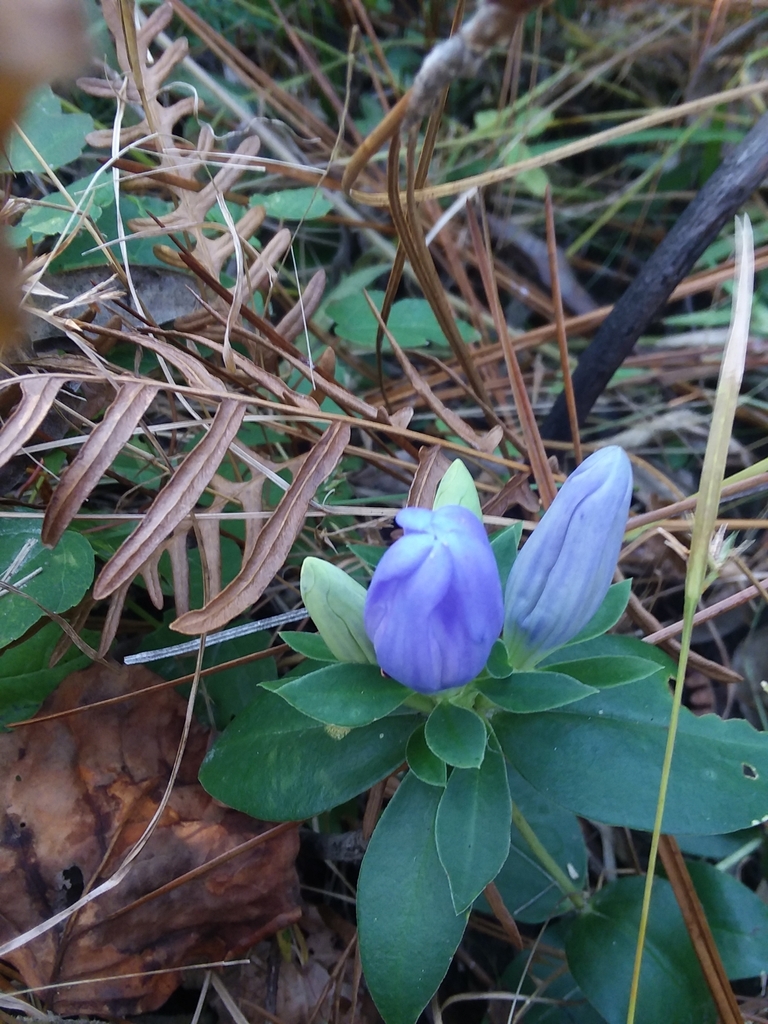
- Flowers are stemless in clusters of 1 to 10 flowers. The calyx is green, and the lobes are longer than the tube. The corolla is funnel-shaped and dark to light blue. Some flowers are almost white. The corolla lobes part only slightly to moderately at the apex. Blooms from September to November. The weight of the flowers causes the stems to topple over
-
-
Leaves:
- Leaf Color:
- Green
- Leaf Type:
- Simple
- Leaf Arrangement:
- Opposite
- Leaf Shape:
- Lanceolate
- Ovate
- Leaf Margin:
- Entire
- Hairs Present:
- No
- Leaf Length:
- 1-3 inches
- Leaf Description:
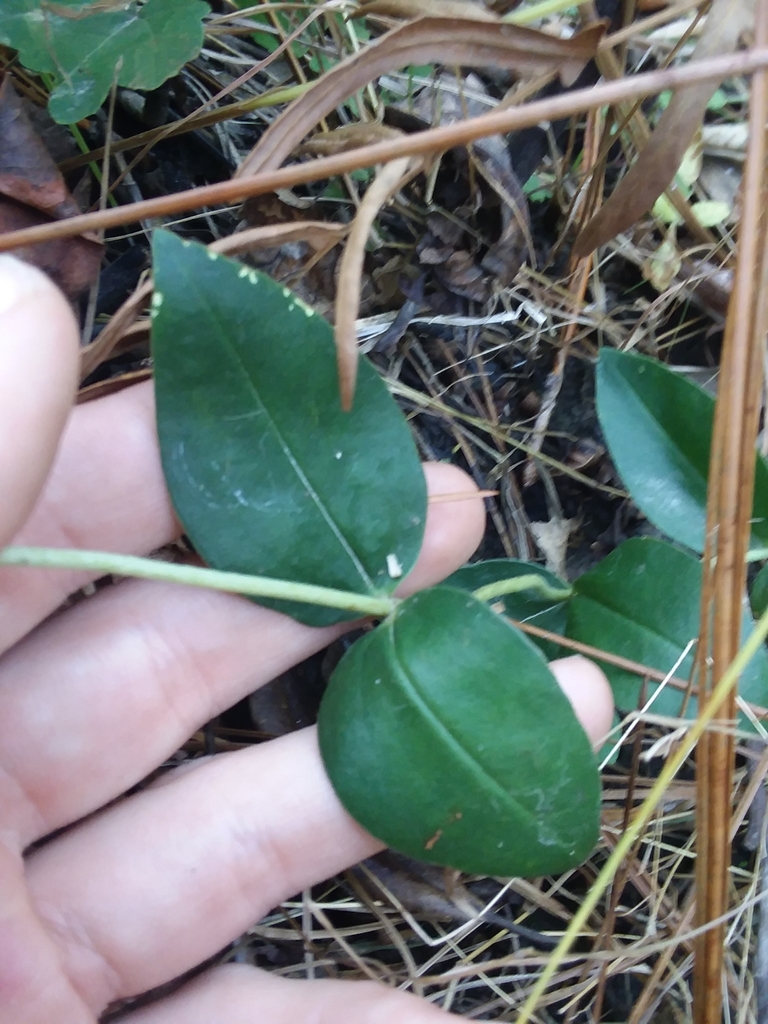
- Dark green, cauline leaves are opposite, sessile or short stems, ovate to lanceolate, margins entire to finely toothed, and 1 to 3 inches long.
-
-
Stem:
- Stem Color:
- Green
- Stem Is Aromatic:
- No
- Stem Surface:
- Hairy (pubescent)
- Stem Description:
- Stems are from 6-12 inches long, unbranched, hairy, often declining.
-
-
Landscape:
- Landscape Location:
- Pond
- Landscape Theme:
- Native Garden
- Pollinator Garden
- Rain Garden
- Water Garden
- Attracts:
- Bees
- Hummingbirds
- Pollinators
- Resistance To Challenges:
- Wet Soil



