



Episcia 'Pink Brocade'
Common Name(s):
- Phonetic Spelling
- eh-PEE-see-ah
- Description
-
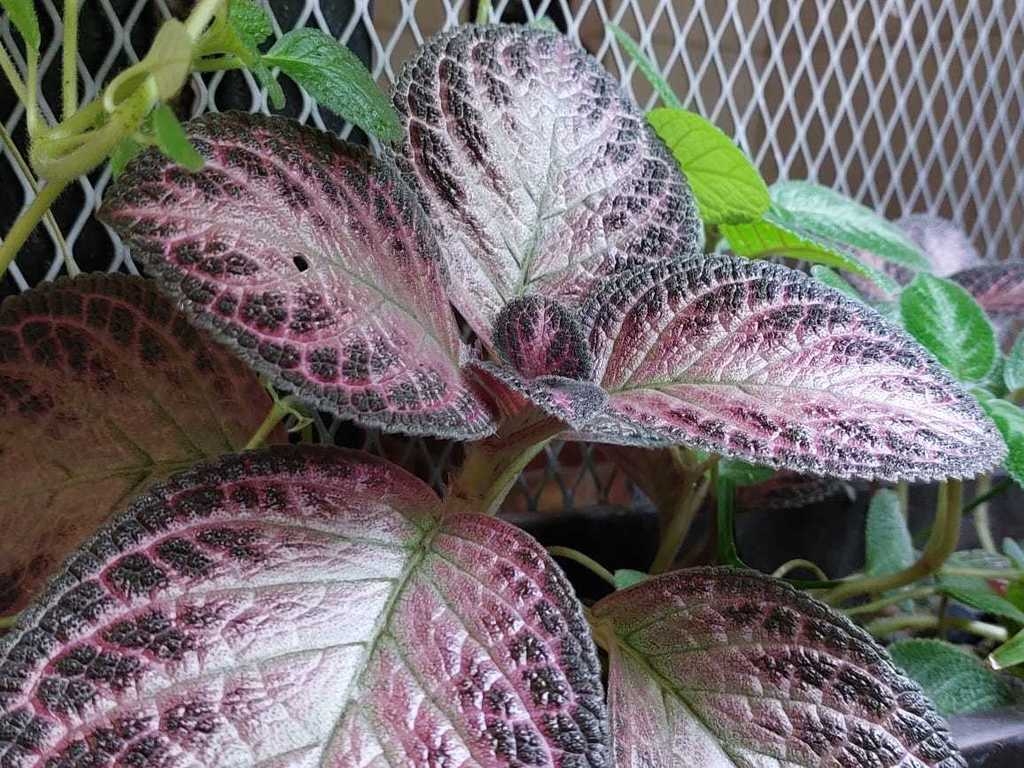
Episcia 'Pink Brocade' is a herbaceous perennial cultivar and a member of the gloxinia family (Gesneriaceae). It is a slow-growing, tropical houseplant with velvety, dark green leaves variegated with pink and creamy white. It grows 6 to 8 inches tall and has a trailing and cascading habit with stoloniferous stems. Its flowers are trumpet-shaped and bright orange-red. It is also known as the flame violet and flame African violet. The genus is native to the tropical forests of Southern Mexico and South America. The genus name Episcia is derived from the Greek word episkios, meaning shaded.
Prefers bright, indirect light and needs moist, well-drained, fertile soil, warm temperatures between 65 and 80 degrees Fahrenheit, and high humidity between 60 to 80%. Avoid drafts and keep the plant consistently moist. It is hardy in zones 11 to 12. Avoid overwatering, as root rot can occur. To maintain high humidity, a humidifier is recommended, or place the plant container on a bed of wet pebbles. Best propagated by stem cuttings. To maintain the plant's shape, pinch back leggy stems.
'Pink Brocade' can be a challenge to grow, but once you find a good spot that keeps it happy, don't move it around. It will grow in terrarium-type conditions and is ideal for a hanging basket.
Insects, Diseases, and Other Plant Problems: Insect pests include aphids and mealybugs. Fungal leafspots, stem blights, and root rots occasionally occur. Leaves scorch in full direct sun, and dieback occurs if too much water or too little air circulation. The leaf margins may turn brown due to low humidity and dry conditions. Temperatures below 50 degrees Fahrenheit can also damage the leaves.
The Clemson Cooperative Extension Home and Garden Information Center has a factsheet on common African violet diseases and insect pests.
- See this plant in the following landscape :
- Cultivars / Varieties:
-
- Tags:

- Cultivars / Varieties:
-
- Tags:
-
-
Attributes:
- Genus:
- Episcia
- Family:
- Gesneriaceae
- Life Cycle:
- Perennial
- Recommended Propagation Strategy:
- Stem Cutting
- Play Value:
- Attractive Flowers
- Colorful
- Dimensions:
- Height: 0 ft. 6 in. - 0 ft. 8 in.
- Width: 0 ft. 3 in. - 0 ft. 4 in.
-
-
Whole Plant Traits:
- Plant Type:
- Herbaceous Perennial
- Houseplant
- Habit/Form:
- Cascading
- Creeping
- Growth Rate:
- Slow
- Maintenance:
- High
- Texture:
- Medium
-
-
Cultural Conditions:
- Light:
- Partial Shade (Direct sunlight only part of the day, 2-6 hours)
- Soil Texture:
- High Organic Matter
- Loam (Silt)
- Soil Drainage:
- Good Drainage
- Moist
- Available Space To Plant:
- Less than 12 inches
- USDA Plant Hardiness Zone:
- 10a, 10b, 11a, 11b
-
-
Flowers:
- Flower Color:
- Orange
- Red/Burgundy
- Flower Inflorescence:
- Solitary
- Flower Bloom Time:
- Fall
- Spring
- Summer
- Flower Shape:
- Trumpet
- Flower Petals:
- 4-5 petals/rays
- Flower Description:
- The flowers are 5-petaled, trumpet-shaped, and bright red to deep orange, lasting 2-3 days.
-
-
Leaves:
- Leaf Color:
- Cream/Tan
- Green
- Pink
- Variegated
- White
- Leaf Feel:
- Velvety
- Leaf Value To Gardener:
- Showy
- Leaf Type:
- Simple
- Leaf Arrangement:
- Opposite
- Leaf Shape:
- Cordate
- Ovate
- Leaf Margin:
- Entire
- Hairs Present:
- Yes
- Leaf Description:
- The leaves are simple, ovate, velvety, dark green with variegations of pink and creamy white. The leaves are soft and fuzzy, much like an African violet.
-
-
Stem:
- Stem Color:
- Green
- Stem Is Aromatic:
- No
- Stem Surface:
- Hairy (pubescent)
- Stem Description:
- Stoloniferous green stems
-
-
Landscape:
- Landscape Location:
- Container
- Hanging Baskets
- Houseplants
- Resistance To Challenges:
- Humidity

