


Drosera rotundifolia
Common Name(s):
- Phonetic Spelling
- DROSS-er-uh ro-tun-dih-FOH-lee-ah
- Description
-
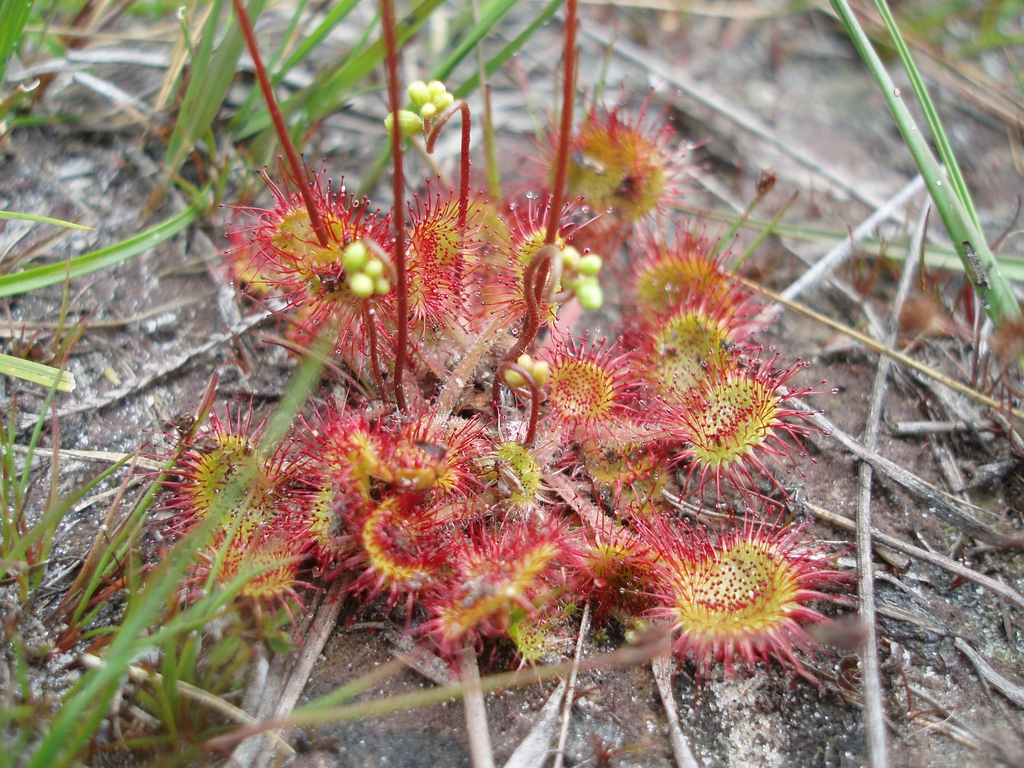
Roundleaf sundew is a carnivorous plant in the sundew family (Droseraceae). It is native to boggy sites across a broad swath of Asia, Europe and North America. The species epithet is a Latin compound meaning “round leaf” and refers to the leaf shape.
The roundleaf sundew is hardy and trouble-free. It thrives in full sun but will tolerate partial shade. Like all carnivorous plants, it grows best in a nutrient-free medium that is kept moist with distilled water or rainwater. Do not fertilize the plant; it will get all the nutrients it needs from the insects it traps.
This was the species of sundew studied extensively by Charles Darwin and reported in his book Insectivorous Plants (1875).
This sundew can be grown outside in bog gardens, troughs or containers. Grow it in a native garden, rain garden or children’s garden. This species can also be grown indoors. Place the plant in a small pot and set the pot in a tray of distilled or rainwater, but allow the plant to go dormant in winter.
Insects, Diseases, and Other Plant Problems: No significant problems.
- See this plant in the following landscape :
- Cultivars / Varieties:
-
- Tags:


- Cultivars / Varieties:
-
- Tags:
-
-
Attributes:
- Genus:
- Drosera
- Species:
- rotundifolia
- Family:
- Droseraceae
- Life Cycle:
- Perennial
- Country Or Region Of Origin:
- Northern Hemisphere
- Distribution:
- AK , AL , CA , CO , CT , DC , DE , GA , IA , ID , IL , IN , KY , MA , MD , ME , MI , MN , MS , MT , NC , ND , NH , NJ , NY , OH , OR , PA , RI , SC , TN , VA , VT , WA , WI , WV Canada: BC
- Dimensions:
- Height: 0 ft. 2 in. - 0 ft. 10 in.
- Width: 0 ft. 4 in. - 0 ft. 6 in.
-
-
Whole Plant Traits:
- Plant Type:
- Carnivorous
- Herbaceous Perennial
- Native Plant
- Wildflower
- Habit/Form:
- Prostrate
- Growth Rate:
- Slow
- Maintenance:
- Low
-
-
Cultural Conditions:
- Light:
- Full sun (6 or more hours of direct sunlight a day)
- Partial Shade (Direct sunlight only part of the day, 2-6 hours)
- Soil pH:
- Acid (<6.0)
- Soil Drainage:
- Moist
- Occasionally Wet
- NC Region:
- Coastal
- Mountains
- Piedmont
- USDA Plant Hardiness Zone:
- 3a, 3b, 4a, 4b, 5a, 5b, 6a, 6b, 7a, 7b, 8a, 8b
-
-
Fruit:
- Display/Harvest Time:
- Fall
- Summer
- Fruit Type:
- Capsule
- Fruit Description:
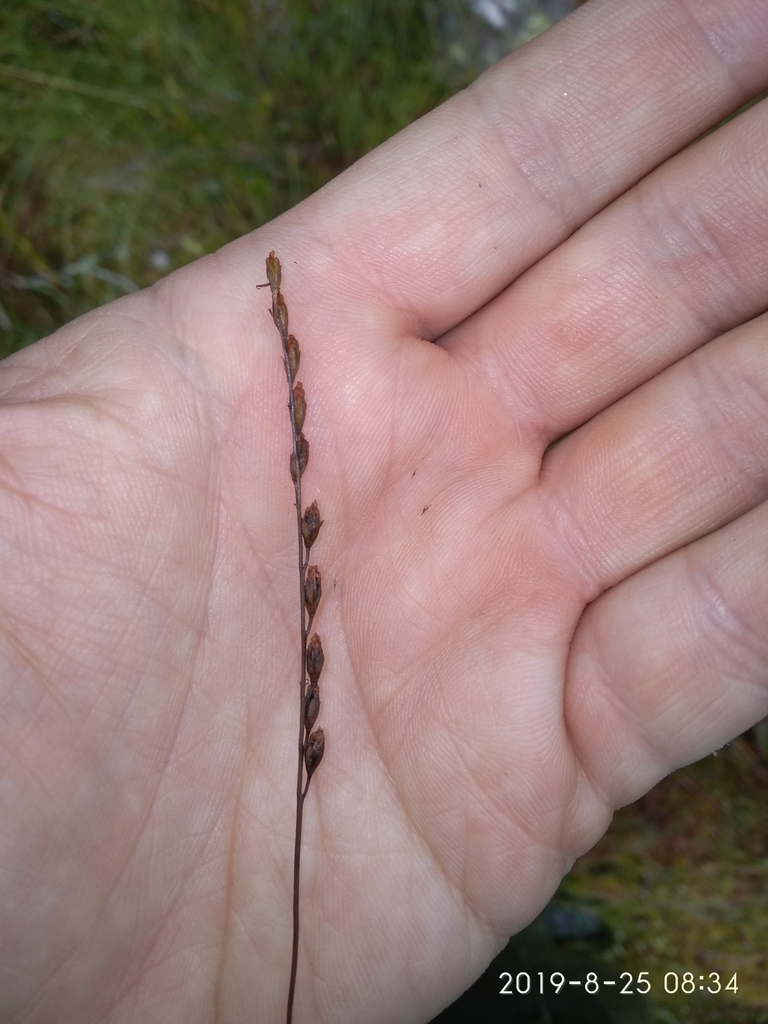
- Fruit is a capsule with many small, light brown seeds. Displays from July to October
-
-
Flowers:
- Flower Color:
- Pink
- White
- Flower Bloom Time:
- Summer
- Flower Shape:
- Cup
- Flower Petals:
- 4-5 petals/rays
- Flower Size:
- < 1 inch
- Flower Description:
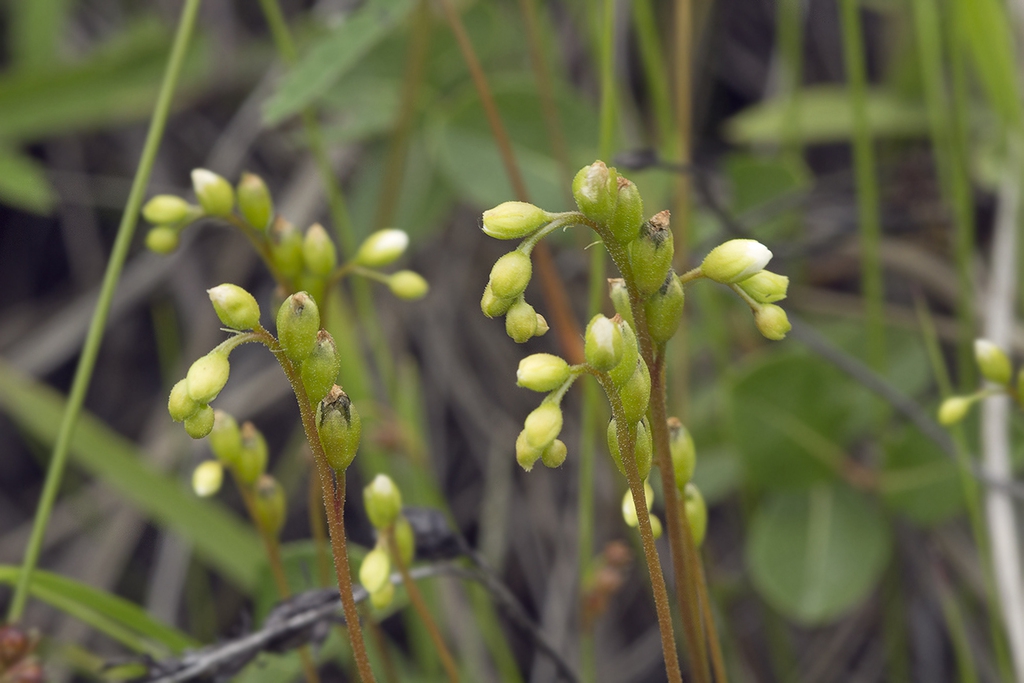
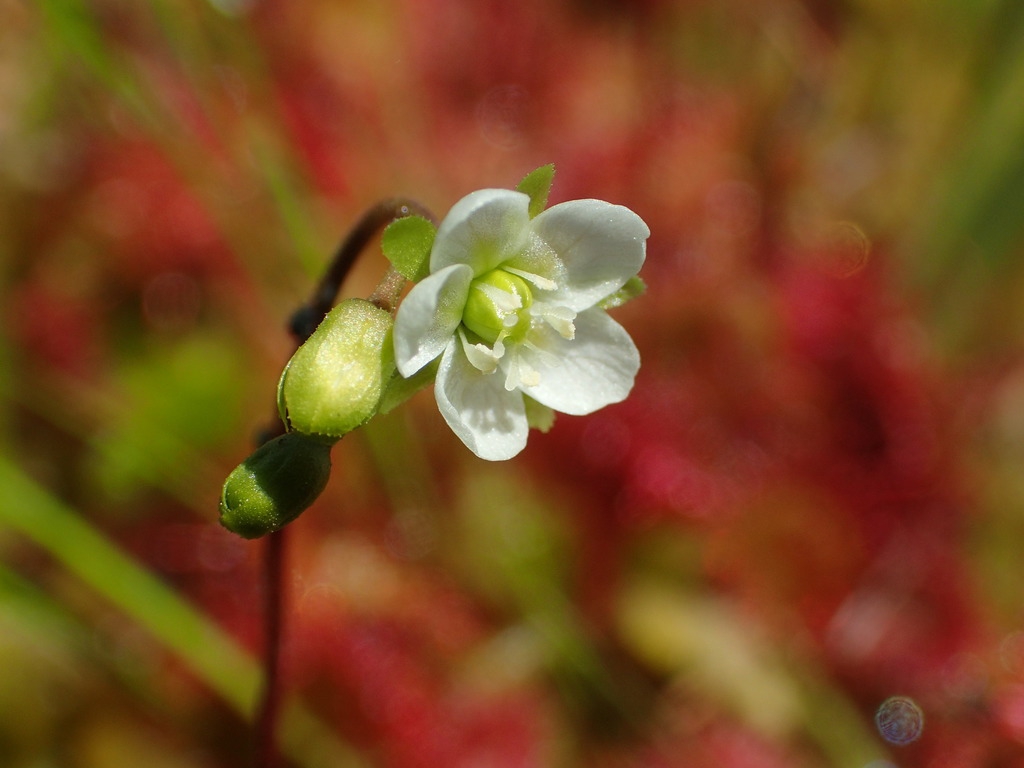
- Small white to pinkish flowers occur at the end of a long, leafless stem rising above the leaf rosette. The flowers are about ¼ inch wide, with five petals and five tiny sepals. The flowers are borne in a one-sided scorpioid cyme. Blooms from June to September.
-
-
Leaves:
- Leaf Color:
- Green
- Red/Burgundy
- Leaf Type:
- Simple
- Leaf Shape:
- Orbicular
- Hairs Present:
- Yes
- Leaf Length:
- < 1 inch
- Leaf Width:
- < 1 inch
- Leaf Description:
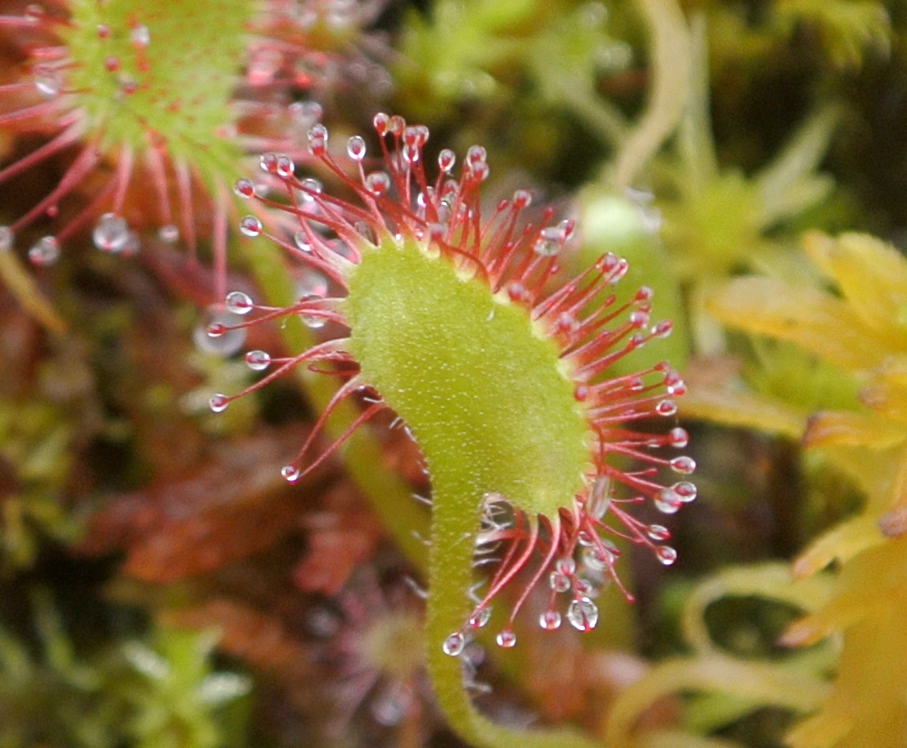
- Small basal rosette of reddish, sticky round leaves ¾ inch across. The upper surfaces are covered with reddish, glandular hairs, each tipped with a clear, sticky secretion.
-
-
Stem:
- Stem Color:
- Green
- Red/Burgundy
- Stem Is Aromatic:
- No
- Stem Surface:
- Hairy (pubescent)
- Stem Description:
- Leaf stalks are green or red and flat, ½ to 2 inches long, and covered with fine hairs. The flowering stem is tightly curled and unfurls as the flowers bloom.
-
-
Landscape:
- Landscape Location:
- Pond
- Landscape Theme:
- Native Garden
- Water Garden
- Resistance To Challenges:
- Wet Soil