



Drosera capillaris
Common Name(s):
- Phonetic Spelling
- DROSS-er-uh kap-ill-AIR-iss
- Description
-
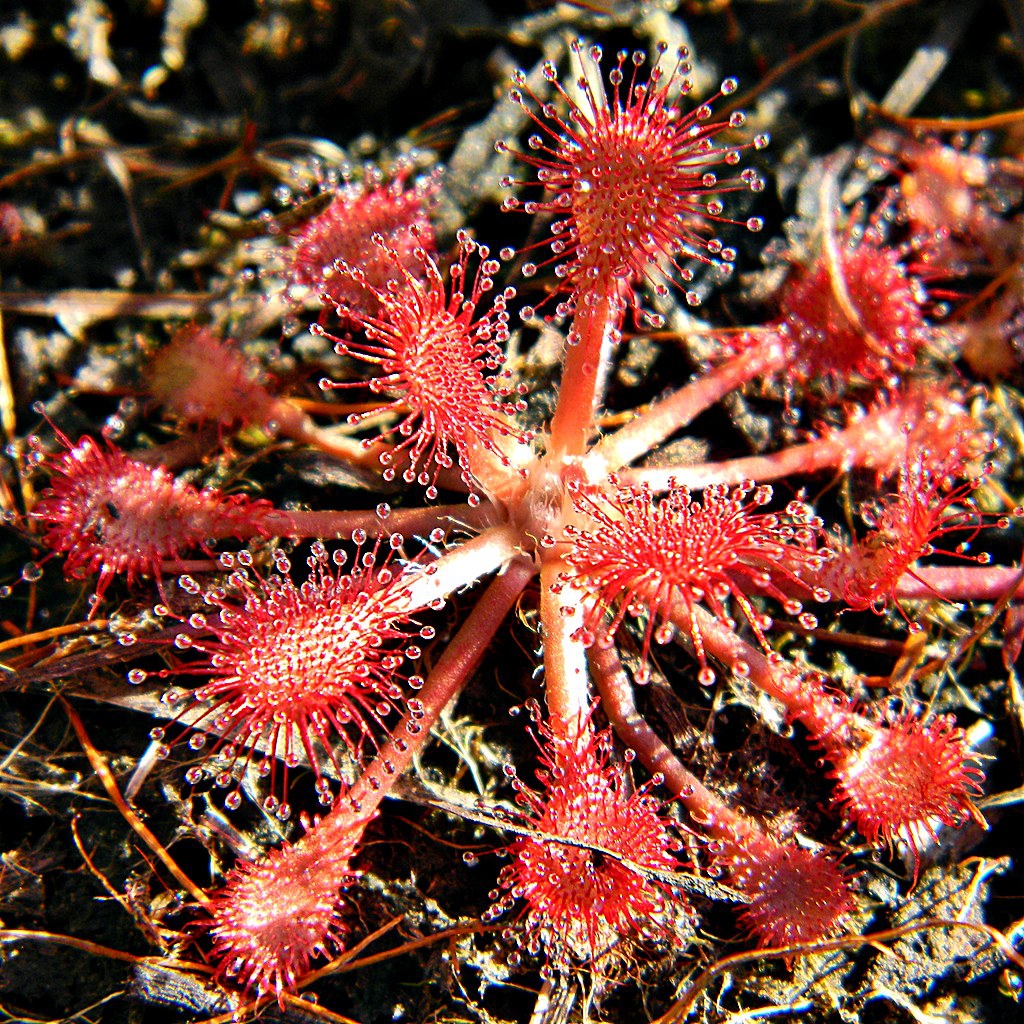
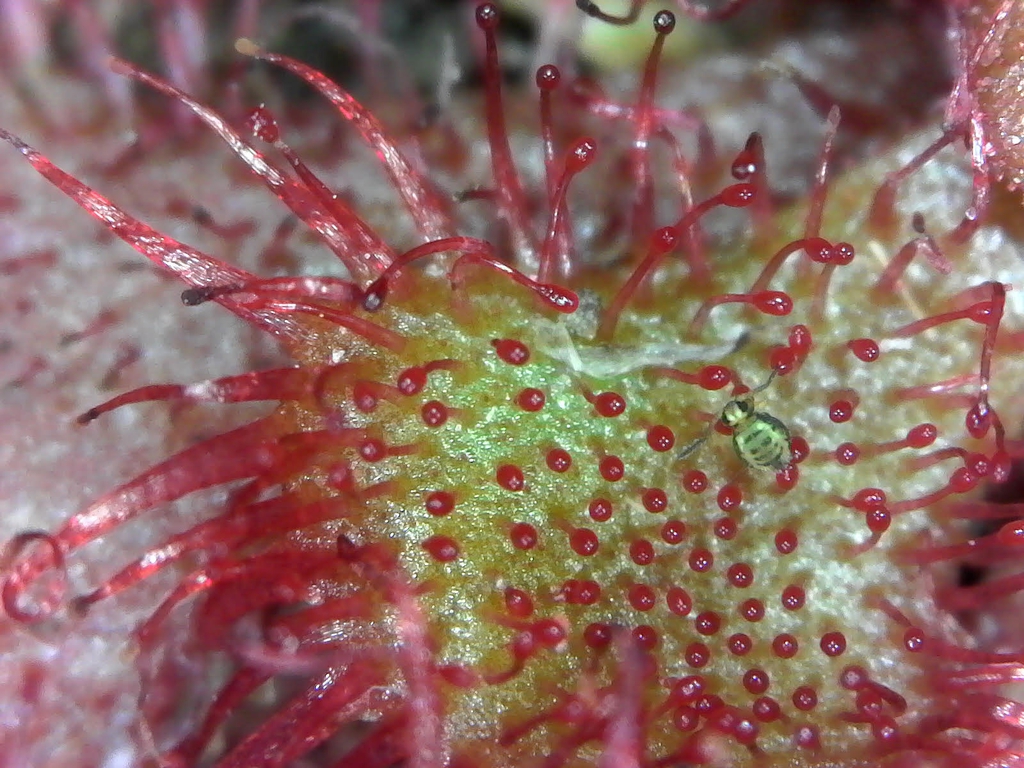
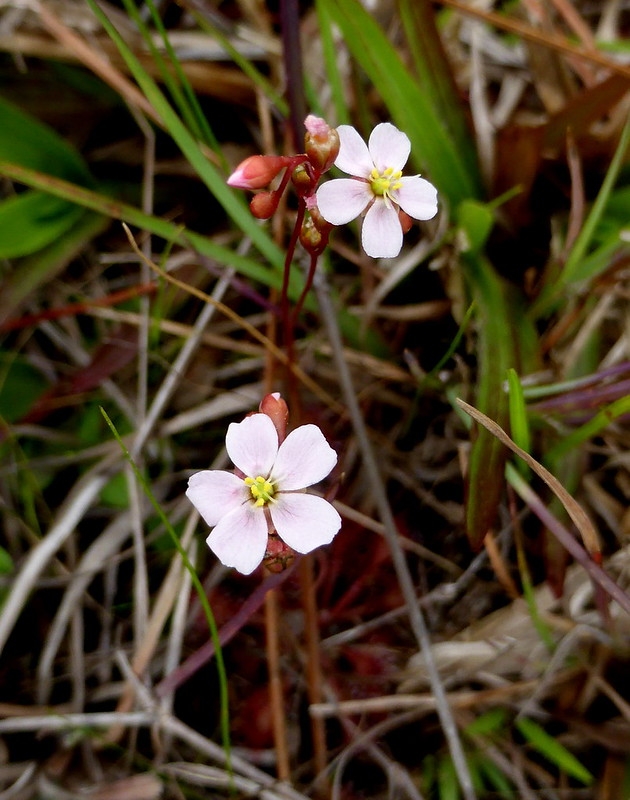
Pink sundew is a native annual or short-lived herbaceous perennial found in wet, peaty, pine savannas. It is native to a wide area from the Southeast (including North Carolina) through Mexico and the Antilles to Central and South America. It is a member of the sundew family (Droseraceae). The species epithet is Latin for “having hairs” and refers to the glandular hairs on the leaves.
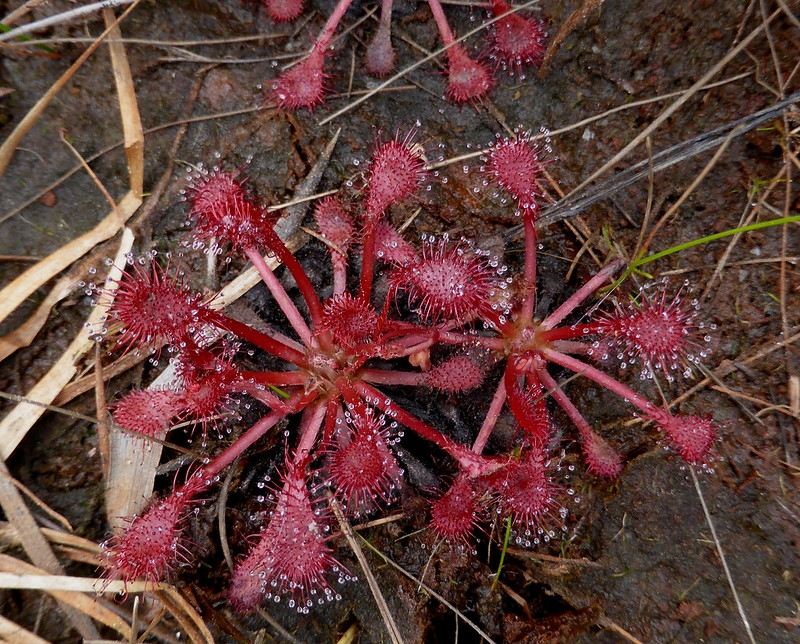
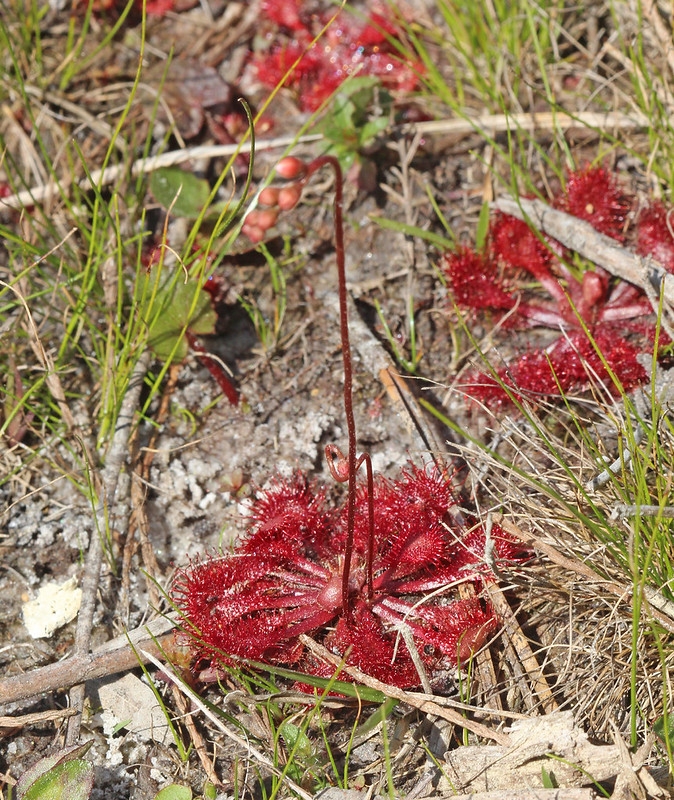
Although considered an annual, it can continue to grow through the winter if kept in a warm and bright location such as a greenhouse or indoors. They are not frost-tender, but cannot handle a hard, prolonged freeze. If placed in full sun, the entire plant will appear red in color. In an area with less sunlight, the leaves will be a greenish color with red tenacles (the gland-tipped trapping hairs). Like all carnivorous plants, it grows best in a nutrient-free medium that is kept moist with distilled water or rainwater. Do not fertilize the plant; it will get all the nutrients it needs from the insects it traps.
It is a small, low-lying plant with rounded traps and sticky tentacles. Although the plants are small in size, they can form large and robust rosettes. After flowering, the plant can decline. When this happens, it is a good idea to save seeds and start new plants.
It makes an ideal plant for a pot, either inside or outside. Place the plant in a small pot and set the pot in a tray of distilled water. It makes an ideal plant for a terrarium. Outside, grow it in a native garden, rain garden or children’s garden.
Insects, Diseases, and Other Plant Problems: No significant problems.
- See this plant in the following landscape :
- Cultivars / Varieties:
-
- 'Emerald's Envy'
White flower
- 'Emerald's Envy'
- 'Emerald's Envy'
- Tags:


- Cultivars / Varieties:
-
- 'Emerald's Envy'
White flower
- 'Emerald's Envy'
- 'Emerald's Envy'
- Tags:
-
-
Attributes:
- Genus:
- Drosera
- Species:
- capillaris
- Family:
- Droseraceae
- Life Cycle:
- Annual
- Perennial
- Recommended Propagation Strategy:
- Seed
- Country Or Region Of Origin:
- Tropical and Subtropical Americas
- Distribution:
- AL, AR, DE, FL, GA, LA, MD, MS, NC, SC, TN, TX, VA
- Dimensions:
- Height: 0 ft. 1 in. - 0 ft. 1 in.
- Width: 0 ft. 1 in. - 0 ft. 3 in.
-
-
Whole Plant Traits:
- Plant Type:
- Annual
- Herbaceous Perennial
- Native Plant
- Wildflower
- Habit/Form:
- Erect
- Prostrate
-
-
Cultural Conditions:
- Light:
- Full sun (6 or more hours of direct sunlight a day)
- Soil Texture:
- High Organic Matter
- Sand
- Soil pH:
- Acid (<6.0)
- Soil Drainage:
- Moist
- Occasionally Wet
- NC Region:
- Coastal
- Piedmont
- USDA Plant Hardiness Zone:
- 8a, 8b, 9a, 9b, 10a, 10b
-
-
Fruit:
- Display/Harvest Time:
- Fall
- Summer
- Fruit Type:
- Capsule
- Fruit Description:
- Displays from July to October
-
-
Flowers:
- Flower Color:
- Pink
- Flower Value To Gardener:
- Showy
- Flower Bloom Time:
- Spring
- Summer
- Flower Description:
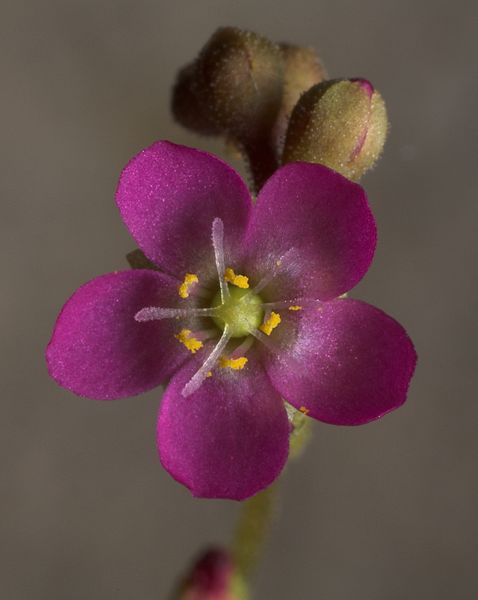
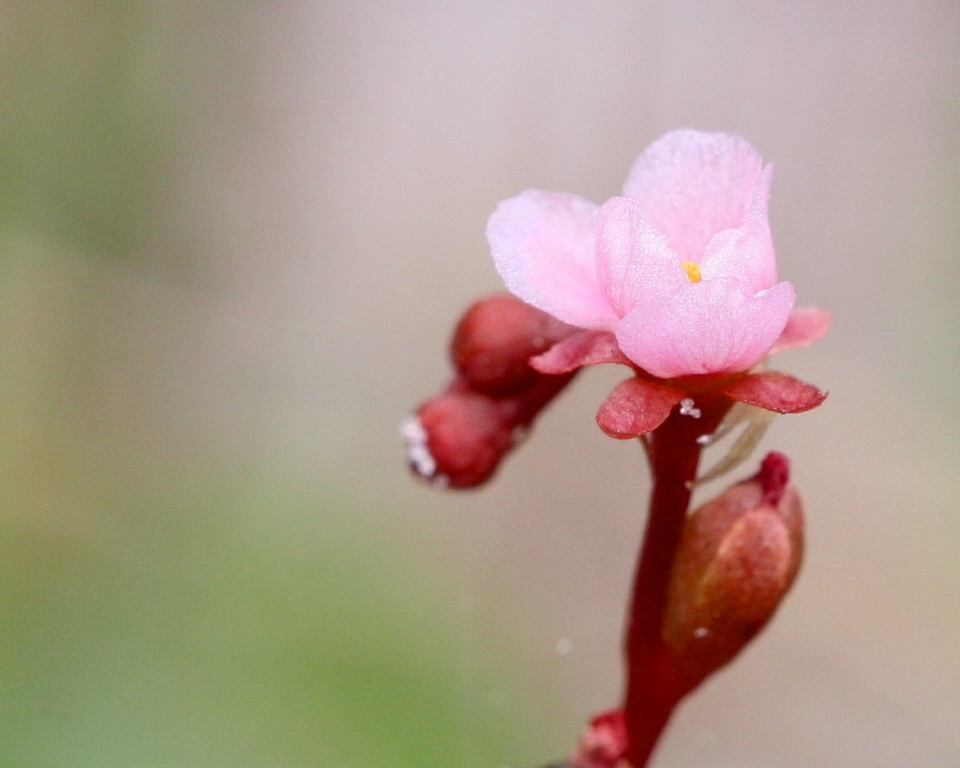
- Pink flowers bloom from May to August
-
-
Leaves:
- Leaf Color:
- Gold/Yellow
- Green
- Red/Burgundy
- Leaf Type:
- Simple
- Leaf Shape:
- Orbicular
- Hairs Present:
- Yes
- Leaf Description:
- The leaves are prostrate, spreading horizontally along the ground.
-
-
Stem:
- Stem Is Aromatic:
- No
-
-
Landscape:
- Landscape Location:
- Coastal
- Container
- Houseplants
- Naturalized Area
- Pond
- Riparian
- Landscape Theme:
- Children's Garden
- Native Garden
- Rain Garden
- Design Feature:
- Accent
- Specimen
- Resistance To Challenges:
- Poor Soil
- Wet Soil
- Problems:
- Short-lived



