


Marsh Pennywort Centella asiatica
Other Common Name(s):
Other plants called Marsh Pennywort:
- Phonetic Spelling
- sen-TEL-uh aye-ze-AH-tic-ka
- Description
-
False pennywort is a rhizomatous perennial plant in the carrot family (Apiaceae) that is native to Asia, India, Africa and Australia. It is found in tropical to subtropical areas in moist to wet areas along swamps, ponds and rivers. It is considered a highly invasive plant in several Pacific islands to which it has been introduced
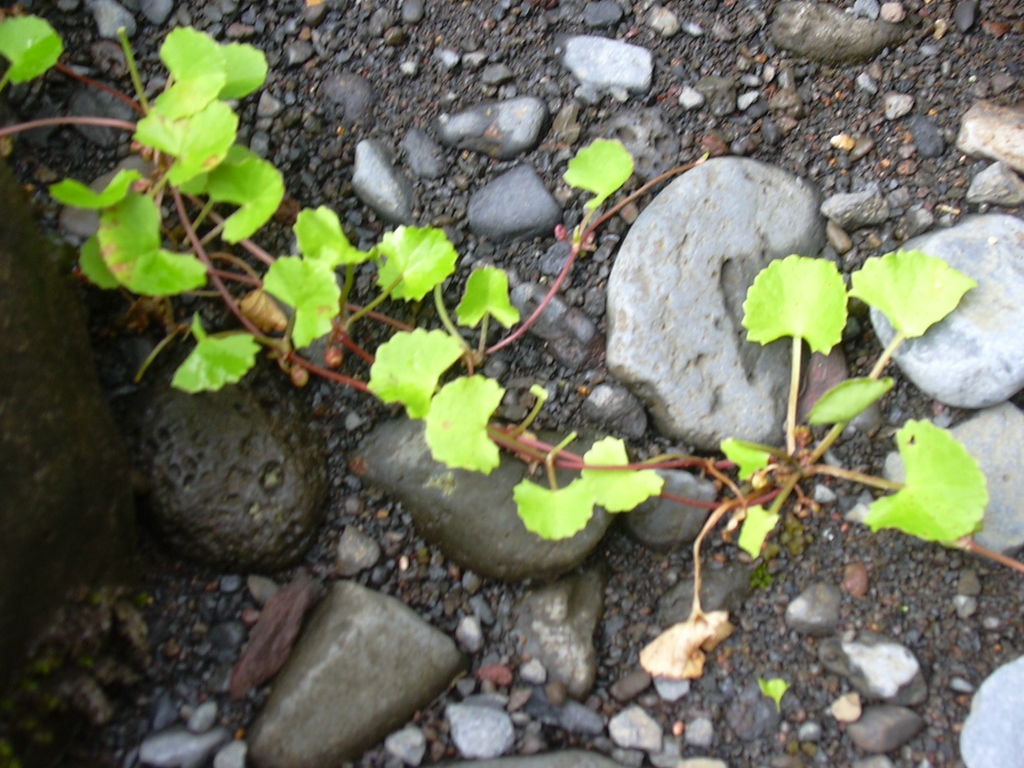
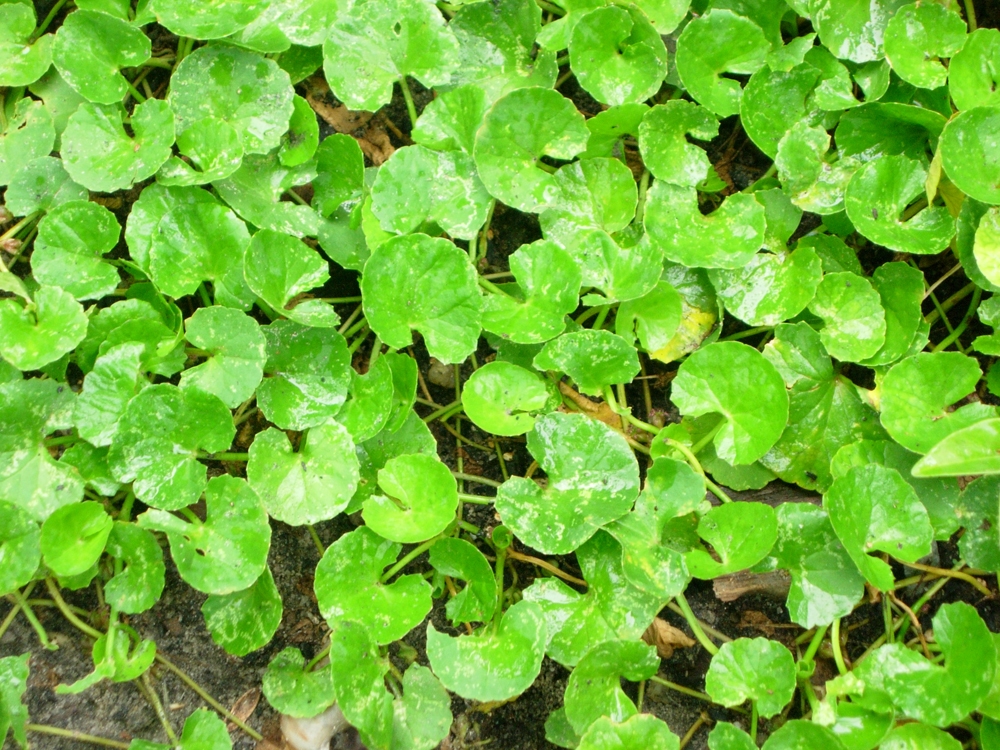
It grows low to the ground and can spread quickly into a dense ground cover. It needs partial shade to full sun in moist to wet but well-drained soils.
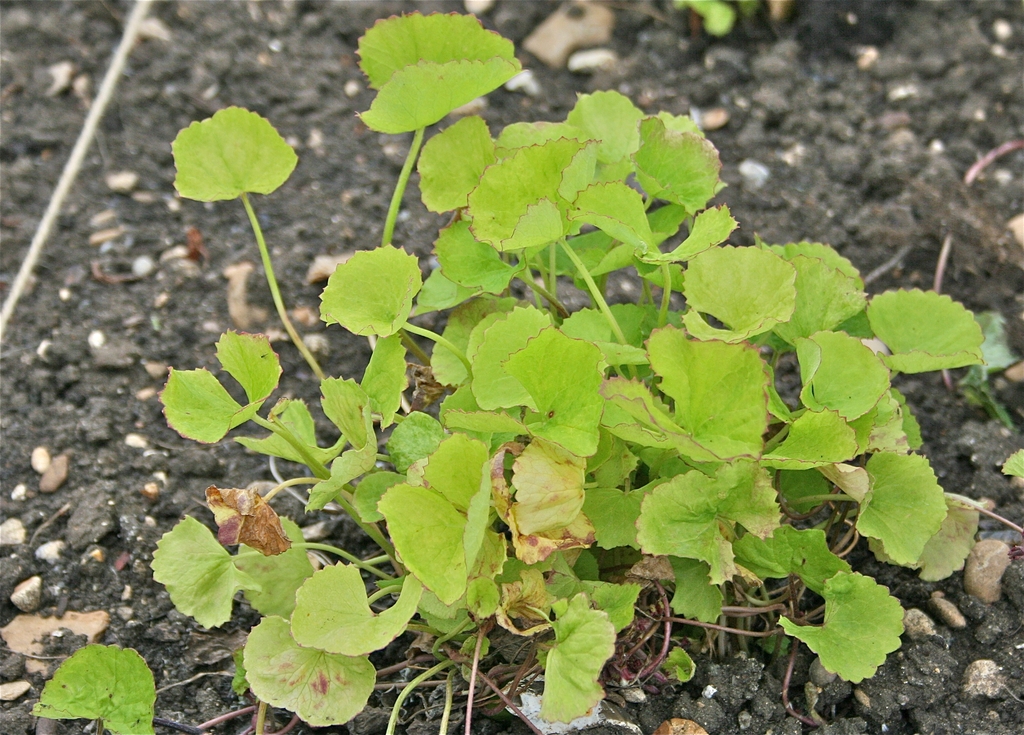
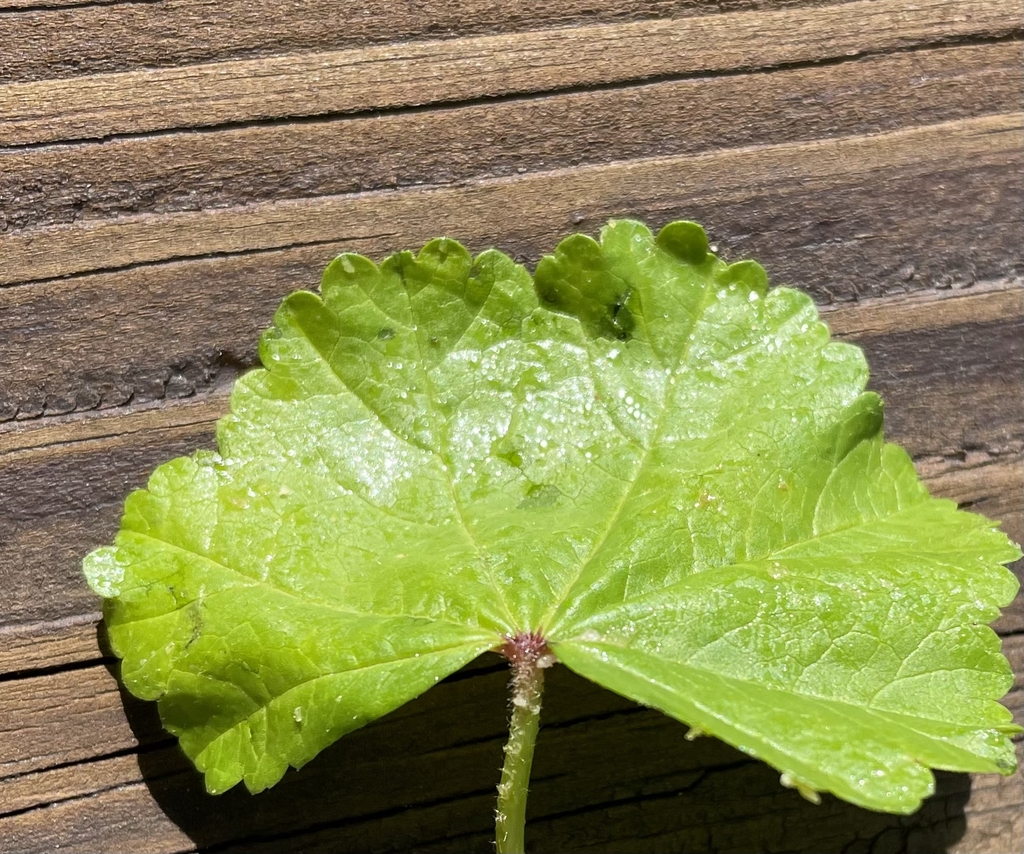
False pennywort grows with small, fan-shaped green leaves and small white or pinkish flowers. The leaves are edible and the plant is widely used medicinally as an herb called gutu kola. It has been used in soils contaminated with heavy metals as it has the ability to take up the contaminants.
The plant can be used as an annual ground cover in cooler regions or in a container.
Insects, Diseases, and Other Plant Problems: Weedy. Root rot can occur in poorly drained soils.
- See this plant in the following landscape :
- Cultivars / Varieties:
-
- Tags:


- Cultivars / Varieties:
-
- Tags:
-
-
Attributes:
- Genus:
- Centella
- Species:
- asiatica
- Family:
- Apiaceae
- Uses (Ethnobotany):
- Used in herbal medicine..
- Life Cycle:
- Perennial
- Recommended Propagation Strategy:
- Root Cutting
- Seed
- Country Or Region Of Origin:
- Asia, India, Africa and Australia
- Edibility:
- The leaves are edible and used in salads or rice and lentil dishes.
-
-
Whole Plant Traits:
- Plant Type:
- Ground Cover
- Herb
- Herbaceous Perennial
- Poisonous
- Habit/Form:
- Creeping
- Prostrate
- Spreading
- Growth Rate:
- Medium
- Maintenance:
- High
- Medium
-
-
Cultural Conditions:
- Light:
- Full sun (6 or more hours of direct sunlight a day)
- Partial Shade (Direct sunlight only part of the day, 2-6 hours)
- Soil Drainage:
- Good Drainage
- Moist
- Occasionally Wet
- USDA Plant Hardiness Zone:
- 10a, 10b, 11a, 11b
-
-
Fruit:
- Fruit Type:
- Berry
- Schizocarp
- Fruit Length:
- < 1 inch
- Fruit Description:
- Small, dry, and flattened schizocarps, measuring about 3–3.5 mm in diameter. They have a net-like pattern and a curved shape with prominent ribs.
-
-
Flowers:
- Flower Color:
- Green
- Pink
- Flower Inflorescence:
- Insignificant
- Umbel
- Flower Bloom Time:
- Fall
- Spring
- Summer
- Flower Shape:
- Star
- Flower Size:
- < 1 inch
- Flower Description:
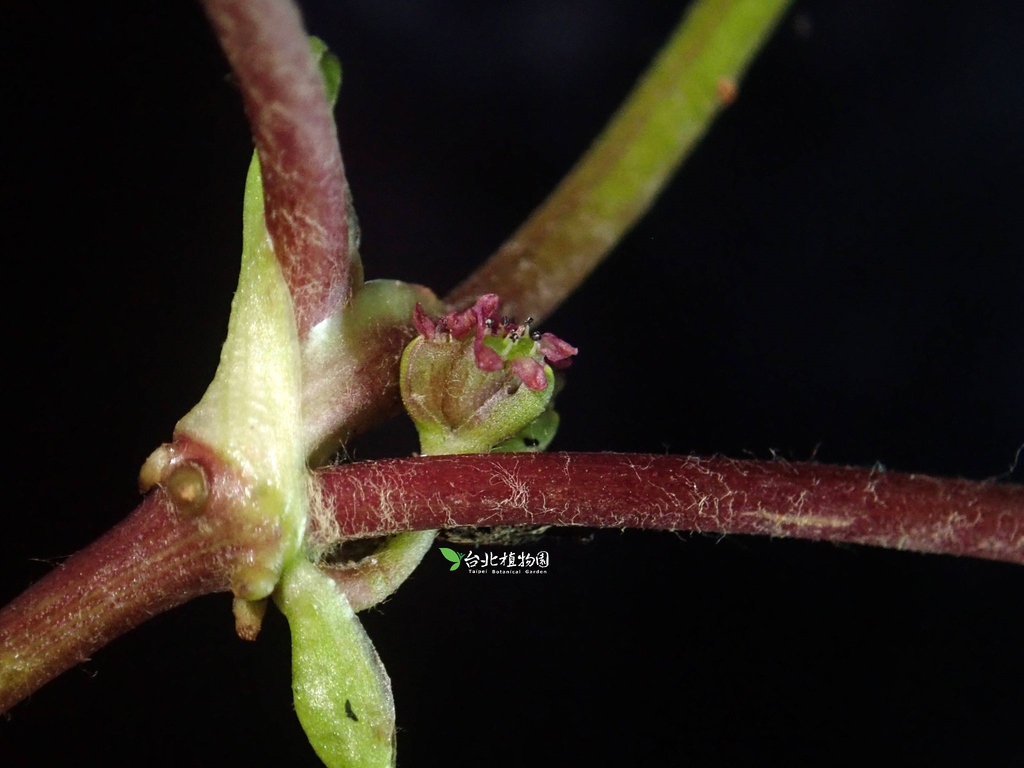
- Flowers are small white or pink and insignificant. They appear in small clusters just above the soil and each flower is partly enclosed in two green bracts
-
-
Leaves:
- Leaf Color:
- Green
- Leaf Feel:
- Smooth
- Leaf Type:
- Simple
- Leaf Arrangement:
- Alternate
- Leaf Shape:
- Orbicular
- Ovate
- Leaf Margin:
- Dentate
- Hairs Present:
- No
- Leaf Length:
- 1-3 inches
- Leaf Width:
- 1-3 inches
- Leaf Description:
- The somewhat fleshy green leaves are on petioles that are often longer than the leaves. They are broadly ovate to orbicular with a shallow cordate base and dentate margins. They are 3/4 to 2 inches long and wide.
-
-
Stem:
- Stem Color:
- Green
- Red/Burgundy
- Stem Is Aromatic:
- No
- Stem Description:
- The green/reddish green, slender stems are creeping stolons.
-
-
Landscape:
- Landscape Location:
- Container
- Hanging Baskets
- Slope/Bank
- Design Feature:
- Mass Planting
- Resistance To Challenges:
- Diseases
- Erosion
- Heat
- Humidity
- Wet Soil
- Problems:
- Weedy