



Callisia graminea
Common Name(s):
Previously known as:
- Cuthbertia graminea
- Tradescantia rosea var. graminea
- Phonetic Spelling
- kah-LEE-see-uh gram-IN-ee-a
- Description
-
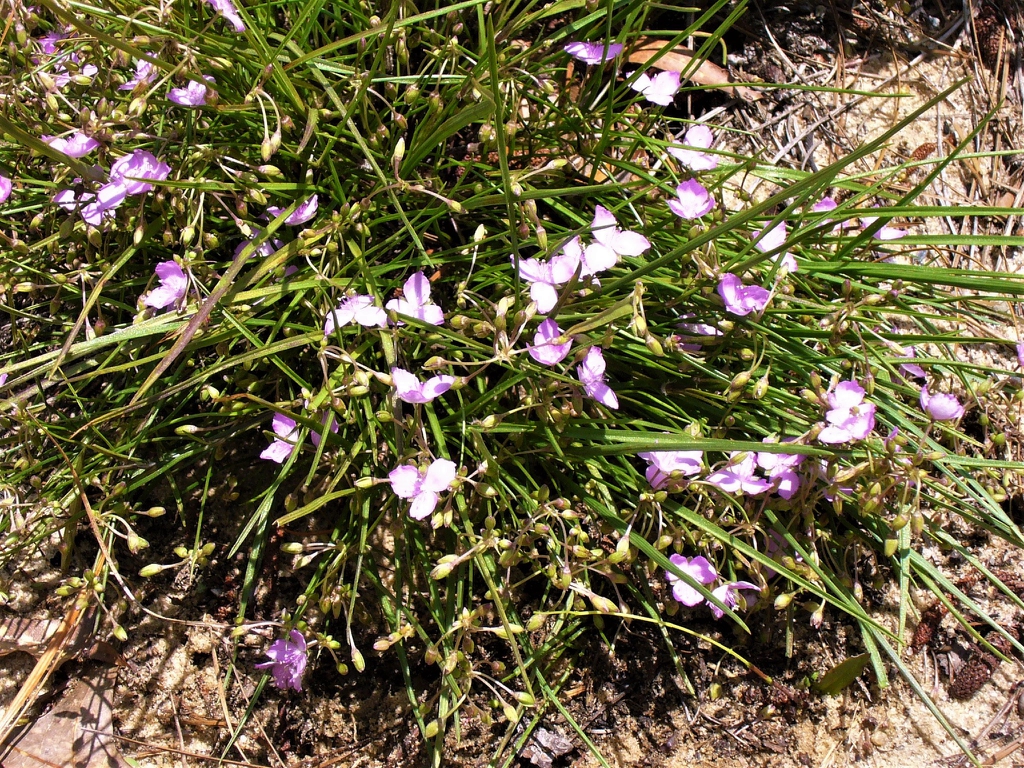
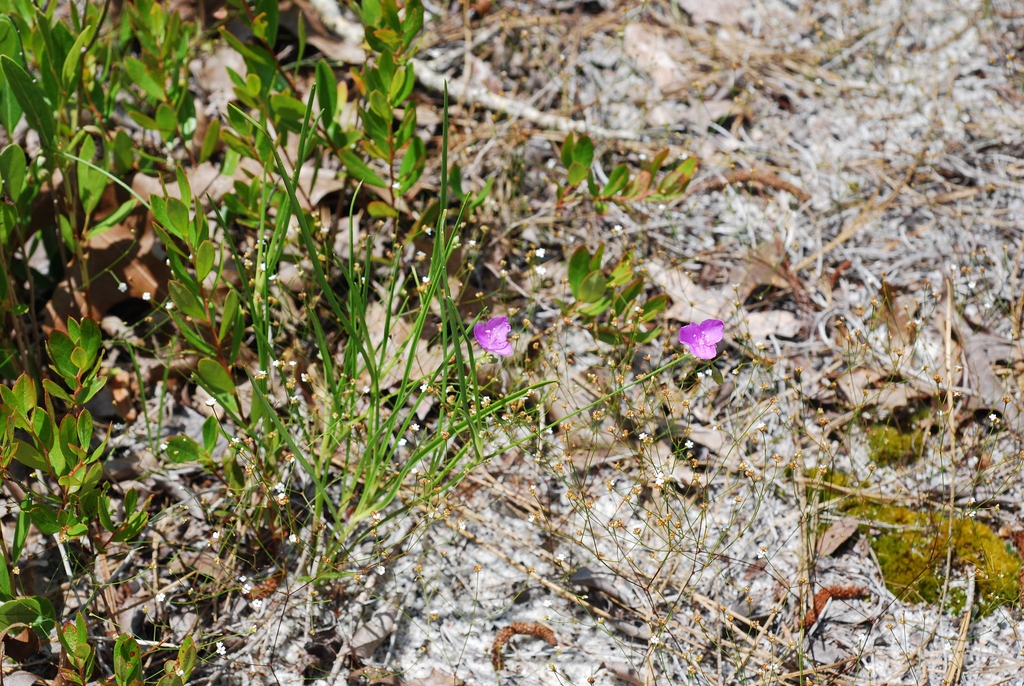
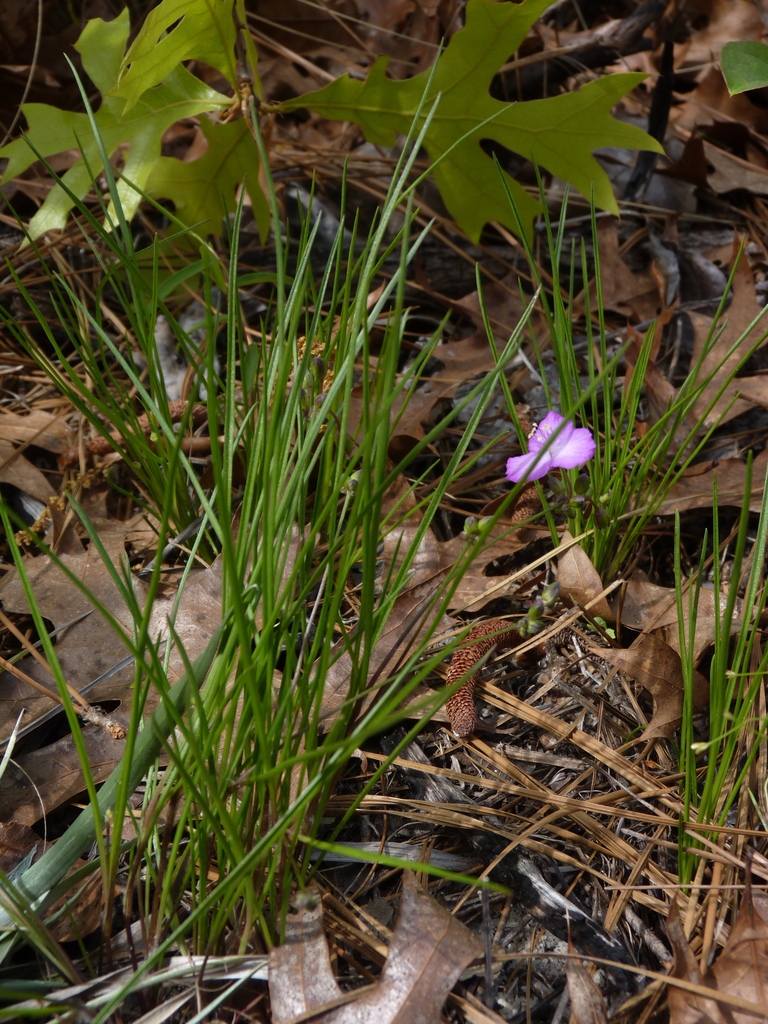
Grassleaf roseling is a perennial NC native wildflower in the spiderwort family (Comnellinaceae). It is often found in the sandhills and coastal plains on sandy soil in thickets, pine barrens, disturbed sites and can be found from VA to FL. The specific epithet is Latin for "grassy" and refers to the plant's appearance.
It is an erect to trailing plant that grows best in sandy soils in full sun to partial shade in well-drained soils. Grassleaf roseling grow 6 inchs to 1 foot tall
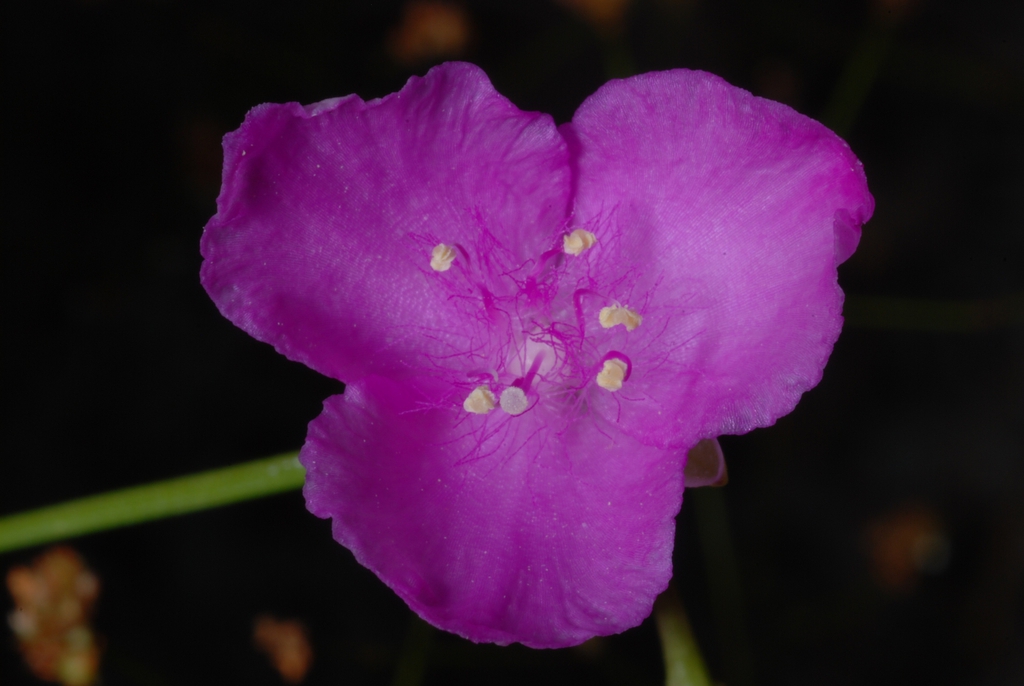
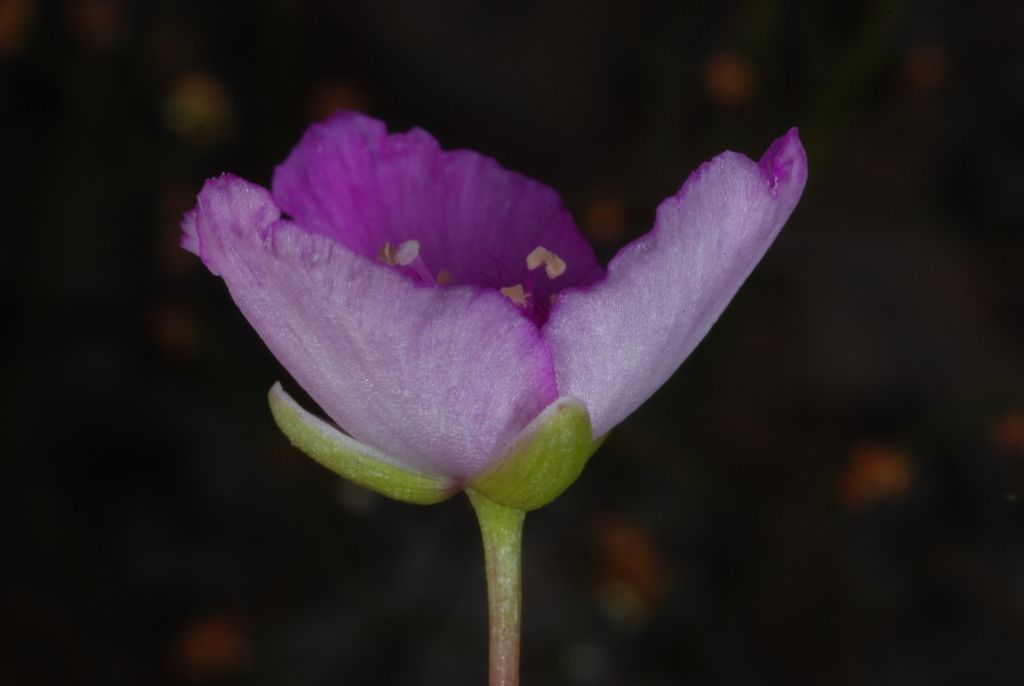
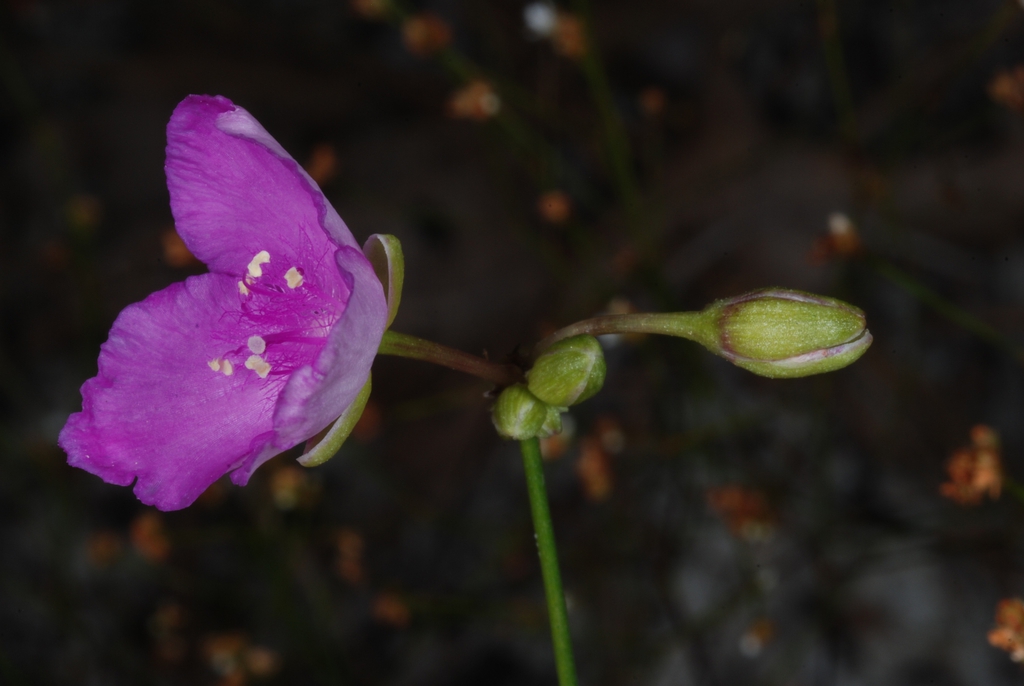
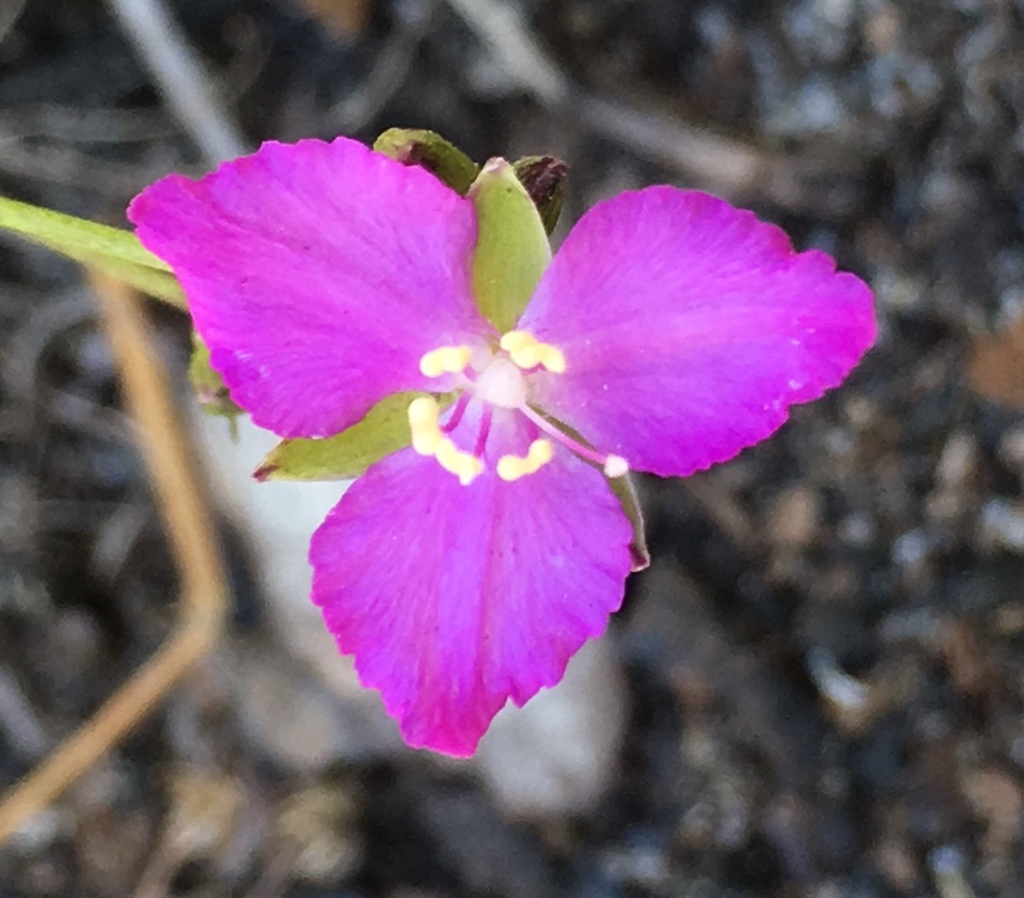
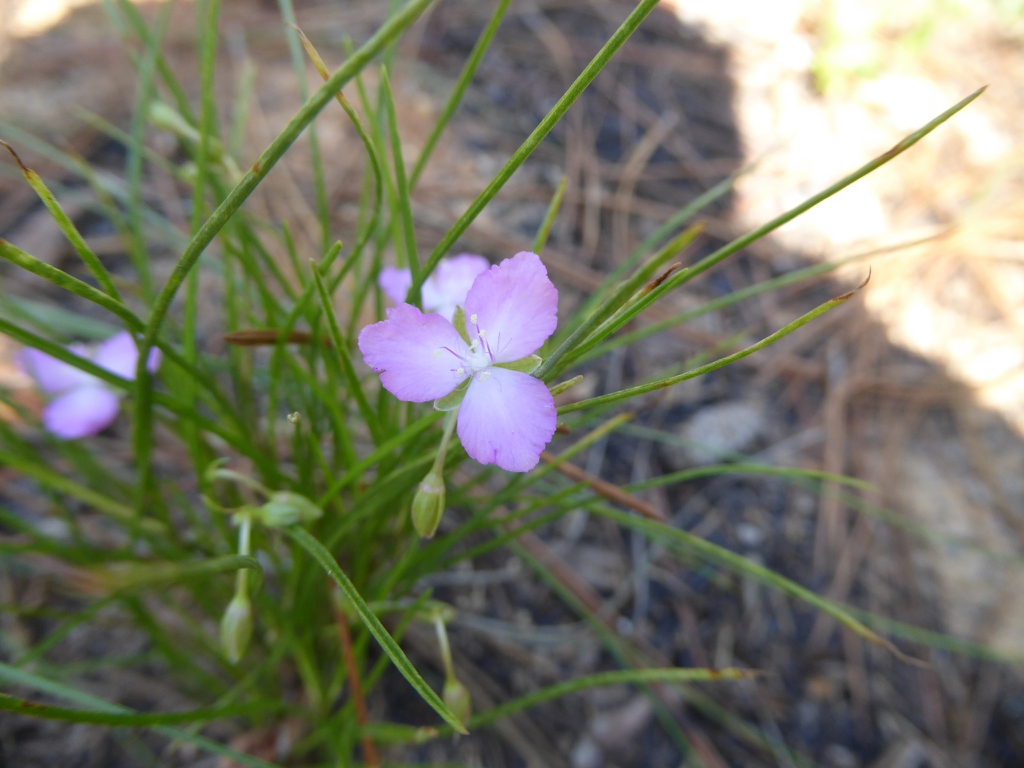
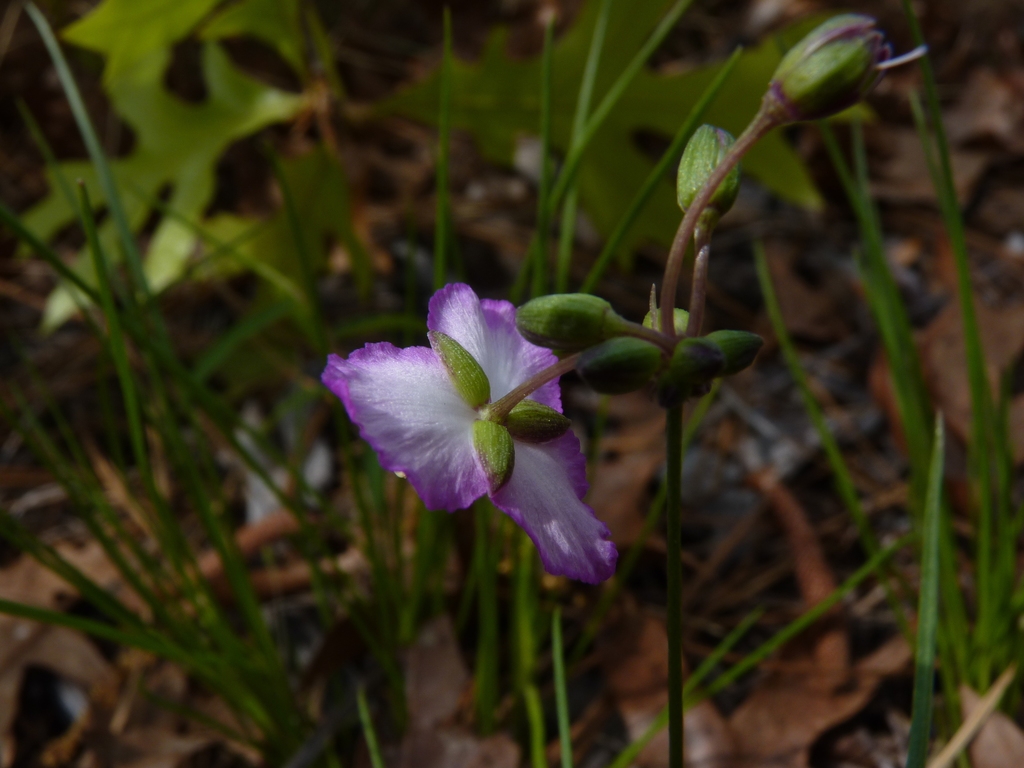
The three-petalled rose-colored flowers appear in May to July and sometimes again in the fall and are showy despite their small size. The leaves are small and linear.
Use this plant as a ground cover, in a rock garden or drought-tolerant garden.
Insects, Diseases, and Other Plant Problems: Overwatering can cause root rot. Monitor for spider mites, aphids, and mealy bugs.
- See this plant in the following landscape :
- Cultivars / Varieties:
-
- Tags:


- Cultivars / Varieties:
-
- Tags:
-
-
Attributes:
- Genus:
- Callisia
- Species:
- graminea
- Family:
- Commelinaceae
- Life Cycle:
- Perennial
- Country Or Region Of Origin:
- SE. U.S.A. Maryland to FL
- Dimensions:
- Height: 0 ft. 6 in. - 1 ft. 0 in.
- Width: 0 ft. 4 in. - 0 ft. 8 in.
-
-
Whole Plant Traits:
- Plant Type:
- Herbaceous Perennial
- Native Plant
- Wildflower
- Habit/Form:
- Ascending
- Erect
- Growth Rate:
- Medium
- Maintenance:
- Low
-
-
Cultural Conditions:
- Light:
- Full sun (6 or more hours of direct sunlight a day)
- Partial Shade (Direct sunlight only part of the day, 2-6 hours)
- Soil Texture:
- Loam (Silt)
- Sand
- Shallow Rocky
- Soil pH:
- Neutral (6.0-8.0)
- Soil Drainage:
- Good Drainage
- Moist
- Occasionally Dry
- NC Region:
- Coastal
- USDA Plant Hardiness Zone:
- 6a, 6b, 7a, 7b, 8a, 8b, 9a, 9b
-
-
Fruit:
- Display/Harvest Time:
- Summer
- Fruit Type:
- Capsule
- Fruit Description:
- Displays from June to August
-
-
Flowers:
- Flower Color:
- Pink
- Purple/Lavender
- Red/Burgundy
- Flower Inflorescence:
- Cyme
- Flower Value To Gardener:
- Showy
- Flower Bloom Time:
- Summer
- Flower Shape:
- Star
- Flower Petals:
- 2-3 rays/petals
- Flower Size:
- < 1 inch
- Flower Description:
- Rose or pink three-petaled blooms from May-July and sometimes again in fall with flowers that are showy despite their diminutive size.
-
-
Leaves:
- Leaf Color:
- Green
- Leaf Type:
- Simple
- Leaf Arrangement:
- Alternate
- Leaf Shape:
- Linear
- Leaf Margin:
- Entire
- Hairs Present:
- No
- Leaf Length:
- < 1 inch
- Leaf Width:
- < 1 inch
- Leaf Description:
- Leaves are .5- to.7 inches long, linear and sessile with entire margins and parallel venation.
-
-
Stem:
- Stem Color:
- Green
- Stem Is Aromatic:
- No
- Stem Description:
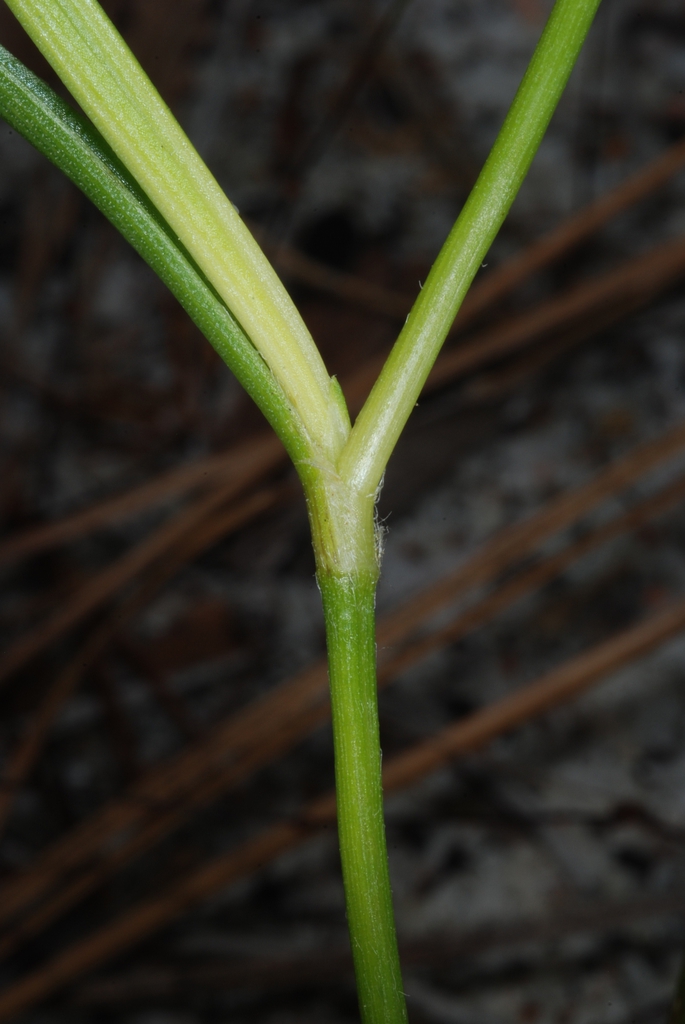
- Stems have a basal sheath wrapping around them
-
-
Landscape:
- Landscape Location:
- Coastal
- Woodland
- Landscape Theme:
- Drought Tolerant Garden
- Native Garden
- Rock Garden
- Attracts:
- Bees
- Resistance To Challenges:
- Drought
- Dry Soil


