


Bowlesia incana
Common Name(s):
Previously known as:
- Bowlesia septentrionalis
- Phonetic Spelling
- bow-lee-see-uh in-KAY-nah
- Description
-
Hoary Bowlesia (or Hairy Bowlesia) is a native weed in the carrot family (Apiaceae), native to South America and the southeastern and southwestern United States. It is often found in disturbed, shady areas.
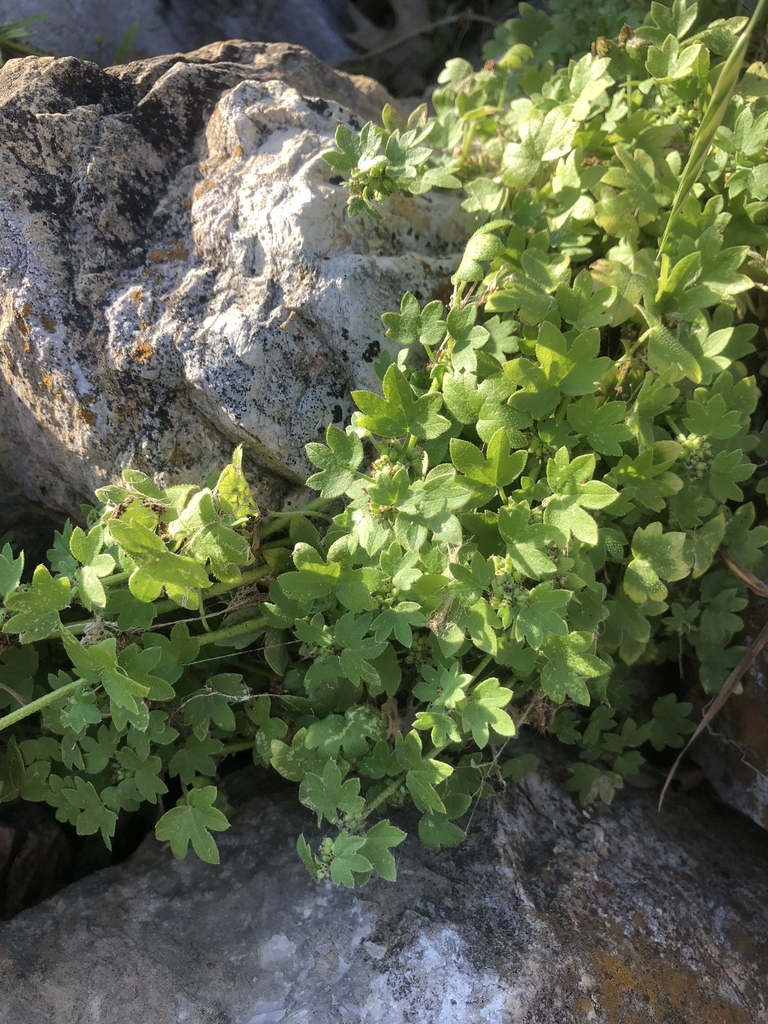
The plant grows along the ground with flowering shoots that reach up to 10 inches tall. It grows in rocky to loamy, well-drained soils in partial to full shade, often under shrubs or along stream banks. It can become a nuisance in lawns but also benefits by providing early spring forage for small herbivores and bees and the greens are edible.
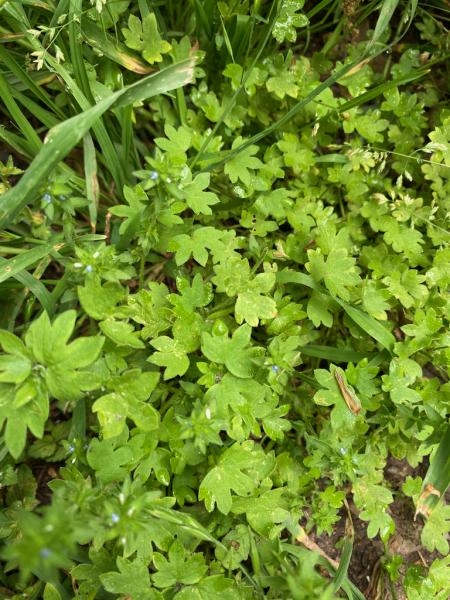
This plant is a low-growing, winter annual that produces pale green clumps or mats in the spring with young plants strongly resembling hairy buttercup with palmately lobed leaves. In late winter to early spring, small inconspicuous flowers appear in the leaf axils
Hand pulling and mowing will control self-seeding in lawns. Pre and post-emergent herbicides may be helpful. Alternatively, the plant can be grown in an edible garden or as a winter ground cover.
Insects, Diseases, and Other Plant Problems: No significant problems.
- See this plant in the following landscape :
- Cultivars / Varieties:
-
- Tags:


- Cultivars / Varieties:
-
- Tags:
-
-
Attributes:
- Genus:
- Bowlesia
- Species:
- incana
- Family:
- Apiaceae
- Uses (Ethnobotany):
- Medicinal properties
- Life Cycle:
- Annual
- Country Or Region Of Origin:
- SW., S. Central U.S.A. to N. Mexico, S. Brazil, S. South America
- Distribution:
- AL , AZ , CA , FL , LA , MS , NM , NV , OK , OR, TX
- Wildlife Value:
- Attracts small mammals and bees
- Edibility:
- The folliage has a mild taste and can be used in salads or cooked.
-
-
Whole Plant Traits:
- Plant Type:
- Annual
- Weed
- Habit/Form:
- Horizontal
- Growth Rate:
- Medium
- Maintenance:
- High
- Texture:
- Medium
-
-
Cultural Conditions:
- Light:
- Deep shade (Less than 2 hours to no direct sunlight)
- Partial Shade (Direct sunlight only part of the day, 2-6 hours)
- Soil Texture:
- Loam (Silt)
- Sand
- Shallow Rocky
- Soil pH:
- Neutral (6.0-8.0)
- Soil Drainage:
- Good Drainage
- Moist
- Occasionally Dry
-
-
Fruit:
- Fruit Type:
- Schizocarp
- Fruit Width:
- < 1 inch
- Fruit Description:
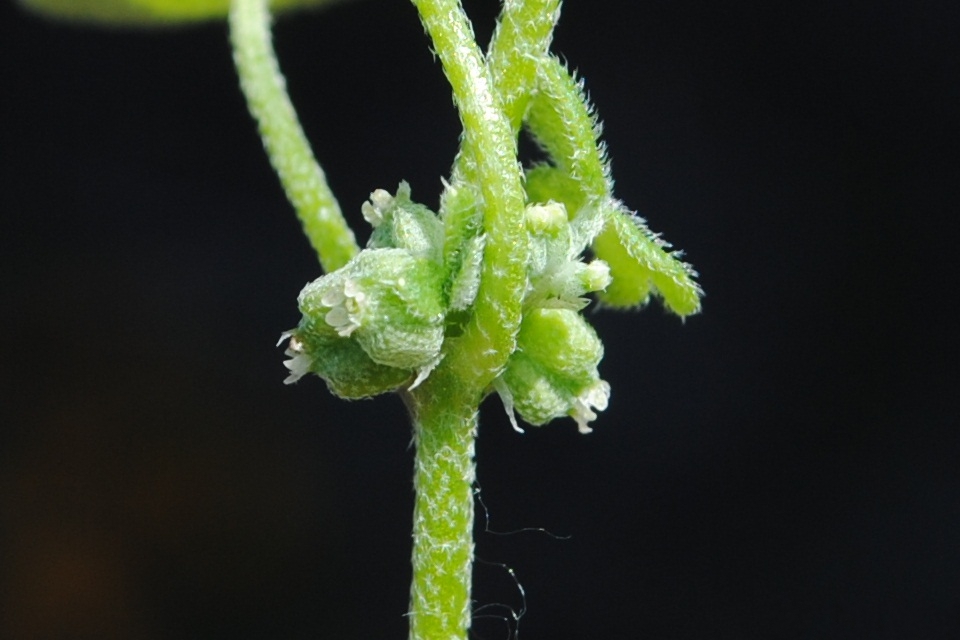
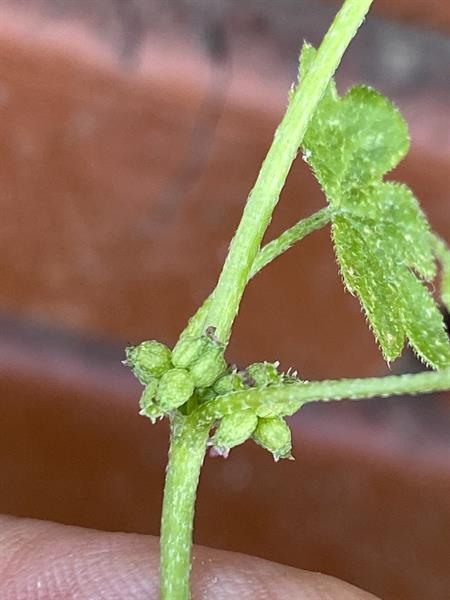
- Seed pods are small and in the axils of the leaves.
-
-
Flowers:
- Flower Color:
- Gold/Yellow
- Green
- Purple/Lavender
- White
- Flower Inflorescence:
- Insignificant
- Umbel
- Flower Bloom Time:
- Spring
- Winter
- Flower Petals:
- 4-5 petals/rays
- Flower Size:
- < 1 inch
- Flower Description:
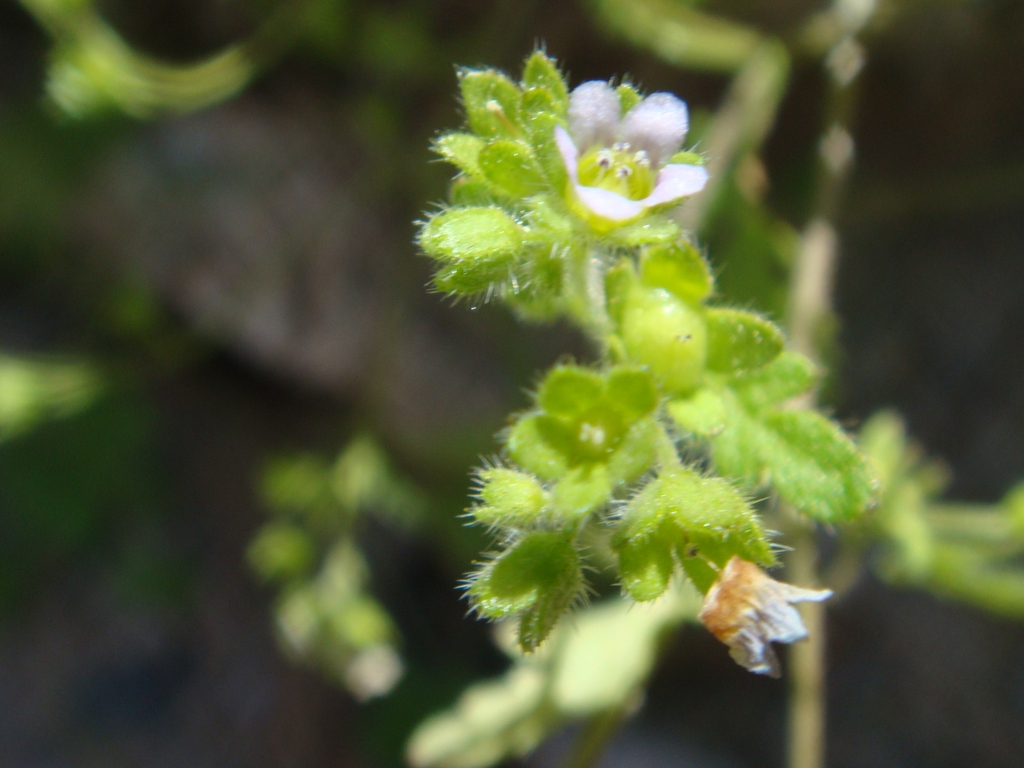
- The flowers are tiny/ inconspicuous, have 5 petals, and are borne in the leaf axils.
-
-
Leaves:
- Leaf Color:
- Green
- Leaf Type:
- Simple
- Leaf Arrangement:
- Opposite
- Leaf Shape:
- Lanceolate
- Obtuse
- Leaf Margin:
- Lobed
- Hairs Present:
- Yes
- Leaf Length:
- < 1 inch
- Leaf Width:
- < 1 inch
- Leaf Description:
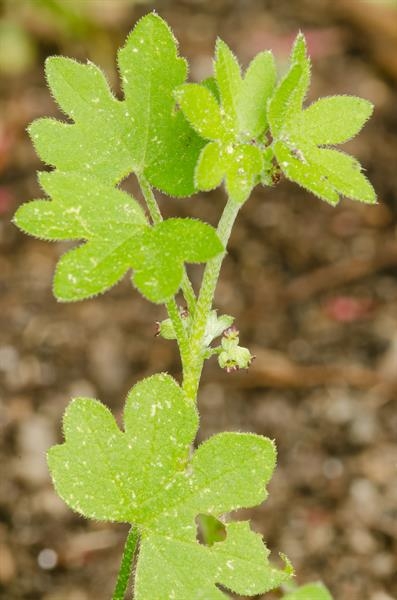
- The leaves are bright green, opposite, covered in stellate hairs, broader than they are long, rounded to kidney-shaped, and palmately lobed with 3 to 9 main lobes (usually 5). They are on a long stem. Leaves are small, less than an inch long and wide.
-
-
Stem:
- Stem Color:
- Green
- Stem Is Aromatic:
- No
- Stem Cross Section:
- Angular
- Stem Surface:
- Hairy (pubescent)
- Stem Description:
- The stems are hairy, weak, slender, 5-sided and trailing.
-
-
Landscape:
- Landscape Location:
- Container
- Slope/Bank
- Landscape Theme:
- Edible Garden
- Design Feature:
- Mass Planting
- Attracts:
- Bees
- Resistance To Challenges:
- Drought
- Problems:
- Weedy