



Vernonia
Common Name(s):
- Phonetic Spelling
- ver-NOH-nee-ah
- Description
-
Vernonia is a genus of about 350 forbs and shrubs in the daisy family (Asteraceae) and are native to North and South America, Africa and Asia. The genus name honors William Vernon (1666/67 – c. 1711), who was an English plant collector and entomologist who collected plants in Maryland, USA in 1698.
The genus is very diverse, with plants growing from 3 inches high to 115 feet tall and leaves can be quite small to over 3 feet long. The North American species are called ironweeds and are found in prairies, moist meadows, seeps and roadside ditches.
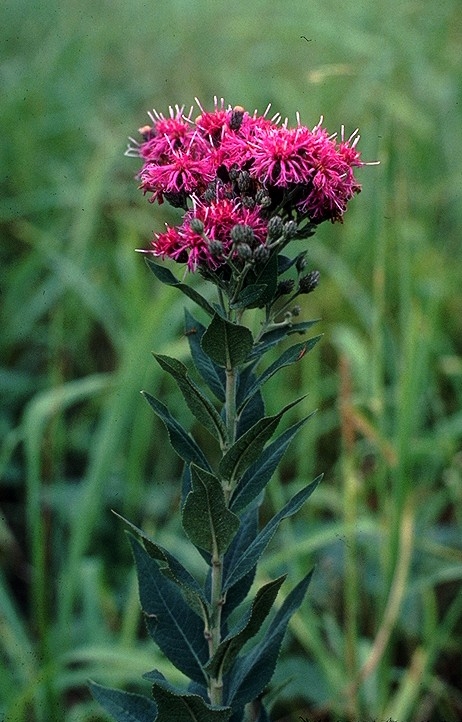
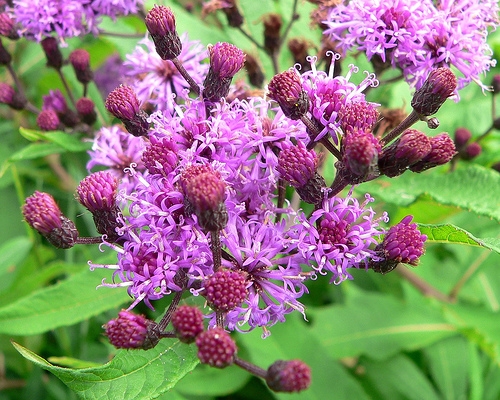
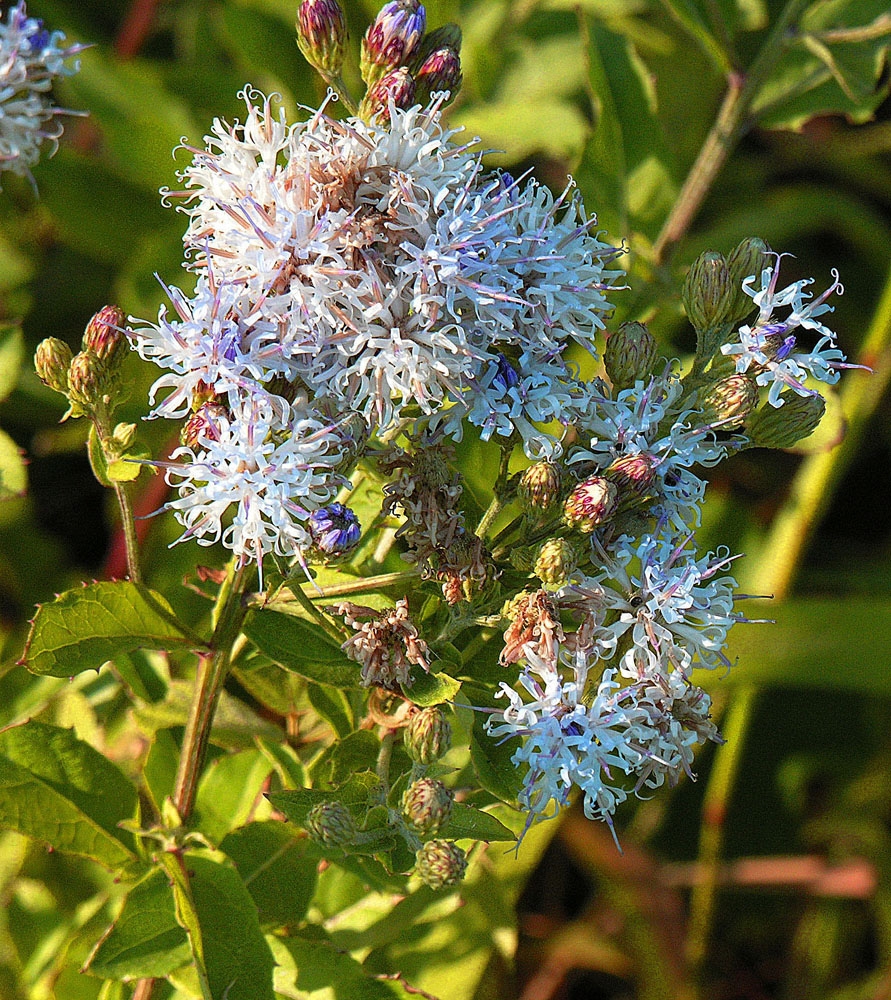
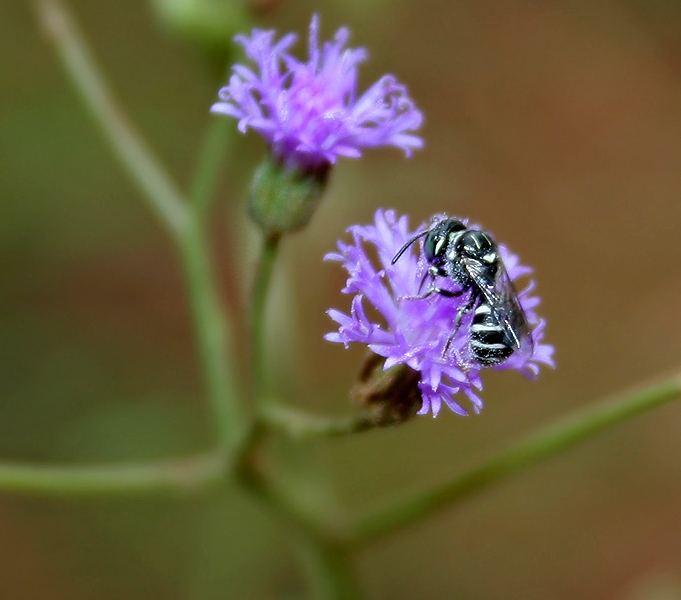
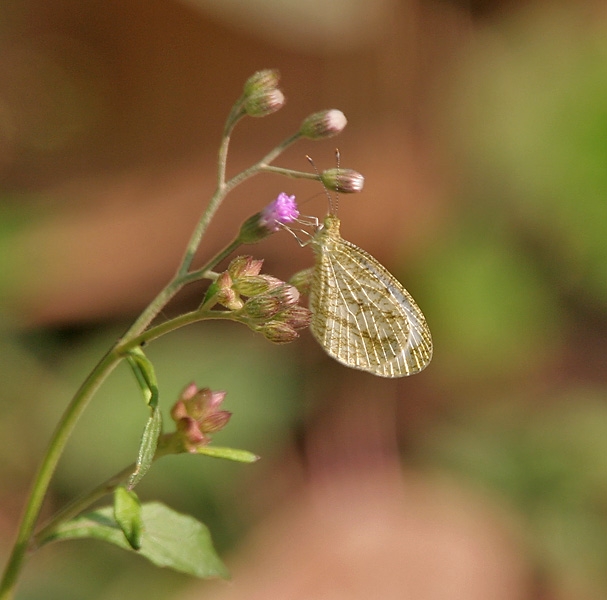
The ironweeds produce purple, pink and white flowers in summer and fall, are very attractive to pollinators and are host plants to moths and butterflies.
There are several species used as ornamentals in the garden, plus some cultivars that have been developed.
Insects, Diseases, and Other Problems: No significant problems
- See this plant in the following landscape :
- Cultivars / Varieties:
- V. acaulis, V. angustifolia, V. gigantea, V. glauca, V. lettermannii, V. noveboracensis
- Tags:




- Cultivars / Varieties:
- V. acaulis, V. angustifolia, V. gigantea, V. glauca, V. lettermannii, V. noveboracensis
- Tags:
-
-
Attributes:
- Genus:
- Vernonia
- Family:
- Asteraceae
- Life Cycle:
- Perennial
- Country Or Region Of Origin:
- North and South America, Africa, Asia
- Wildlife Value:
- Flowers are attractive to butterflies and bees. Members of the genus Veronia support the following specialized bee: Melissodes (Eumelissodes) denticulatus and are used by the larvae of some Lepidoptera species, including Coleophora vernoniaeella (which feeds exclusively on the genus) and Schinia regia (which feeds exclusively on V. texana). Dead stems are used by stem-nesting bees of some species.
- Edibility:
- Leaves of some African species are eaten raw or cooked.
-
-
Whole Plant Traits:
- Plant Type:
- Native Plant
- Perennial
- Shrub
- Habit/Form:
- Erect
-
-
Cultural Conditions:
- Light:
- Full sun (6 or more hours of direct sunlight a day)
- Partial Shade (Direct sunlight only part of the day, 2-6 hours)
-
-
Fruit:
- Fruit Type:
- Achene
-
-
Flowers:
- Flower Color:
- Blue
- Pink
- Purple/Lavender
- White
- Flower Inflorescence:
- Corymb
- Head
- Panicle
- Flower Value To Gardener:
- Showy
- Flower Bloom Time:
- Fall
- Summer
- Flower Description:
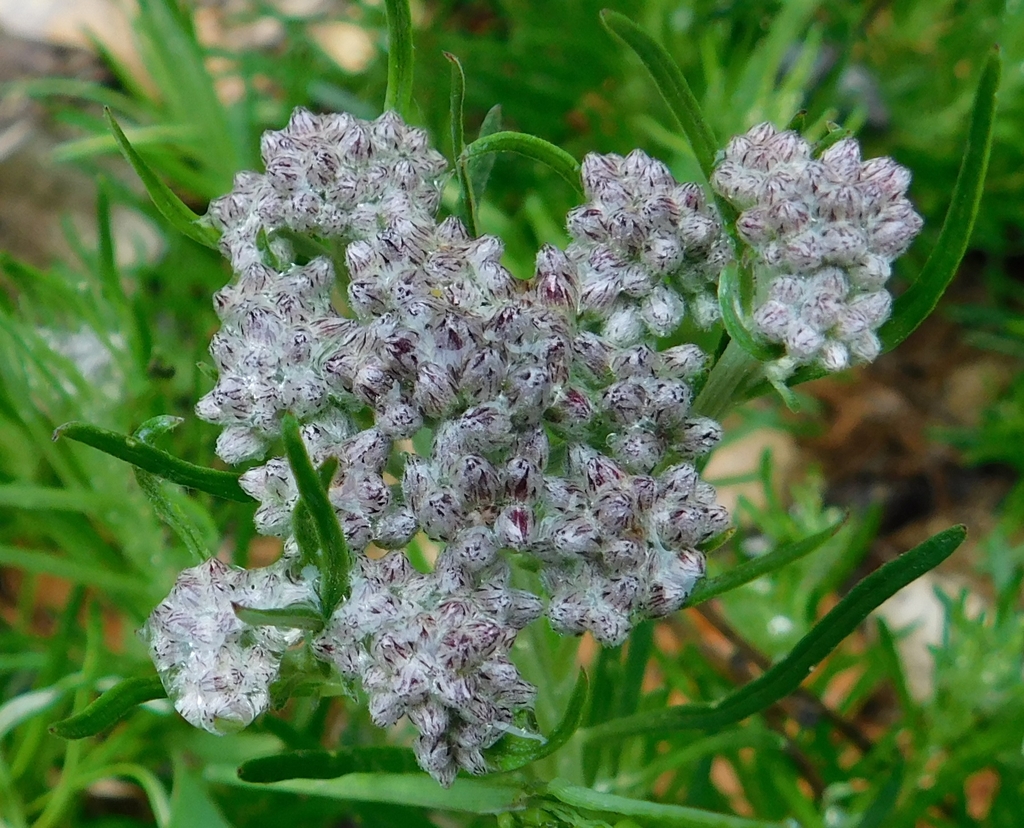
- Flowers vary per species but are often disc flowers with no petals in purple, blue, white or pink.
-
-
Leaves:
- Leaf Color:
- Green
- Leaf Type:
- Simple
- Hairs Present:
- No
- Leaf Description:
- Leaves vary greatly per species in size and shape.
-
-
Stem:
- Stem Is Aromatic:
- No
- Stem Description:
- Strong stems
-
-
Landscape:
- Landscape Location:
- Meadow
- Naturalized Area
- Pond
- Landscape Theme:
- Butterfly Garden
- Cottage Garden
- Native Garden
- Pollinator Garden
- Design Feature:
- Border
- Attracts:
- Bees
- Butterflies
- Moths
- Specialized Bees



