


Ranunculus flammula
Common Name(s):
- Phonetic Spelling
- ra-NUN-ku-lus FLA-muh-luh
- This plant has medium severity poison characteristics.
- See below
- Description
-
Creeping spearwort is a herbaceous perennial in the buttercup family (Ranunculaceae) native to Eurasia and North America. It does not occur naturally in North Carolina. The specific epithet is Latin for “little flame,” and likely refers to the appearance of the bright yellow flowers.
This plant can need moist or wet conditions; it can even grow as an emergent or floating aquatic plant. It grows in full sun or partial shade, and is fully winter-hardy.
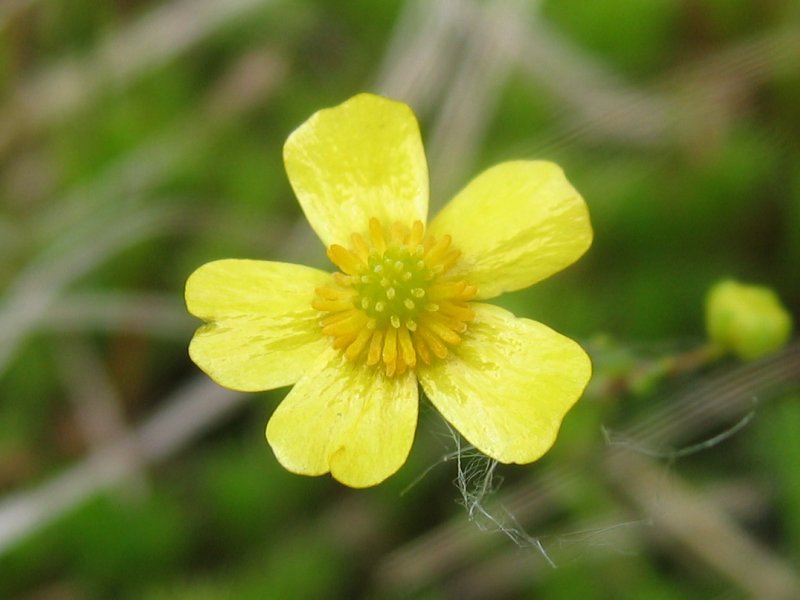
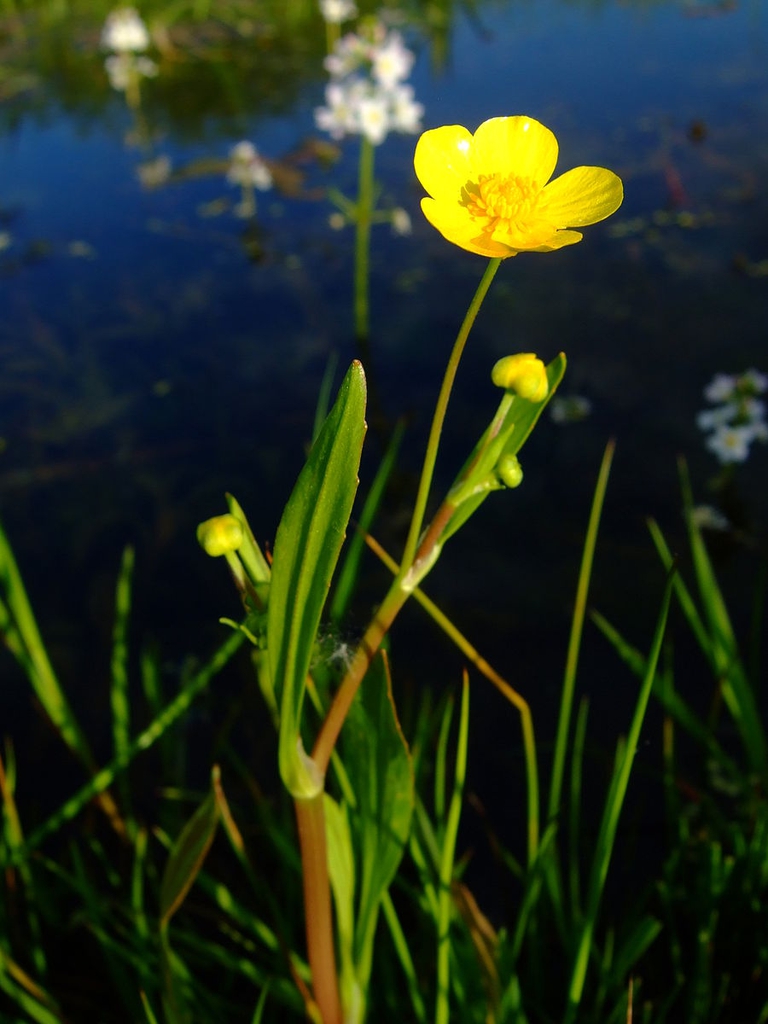
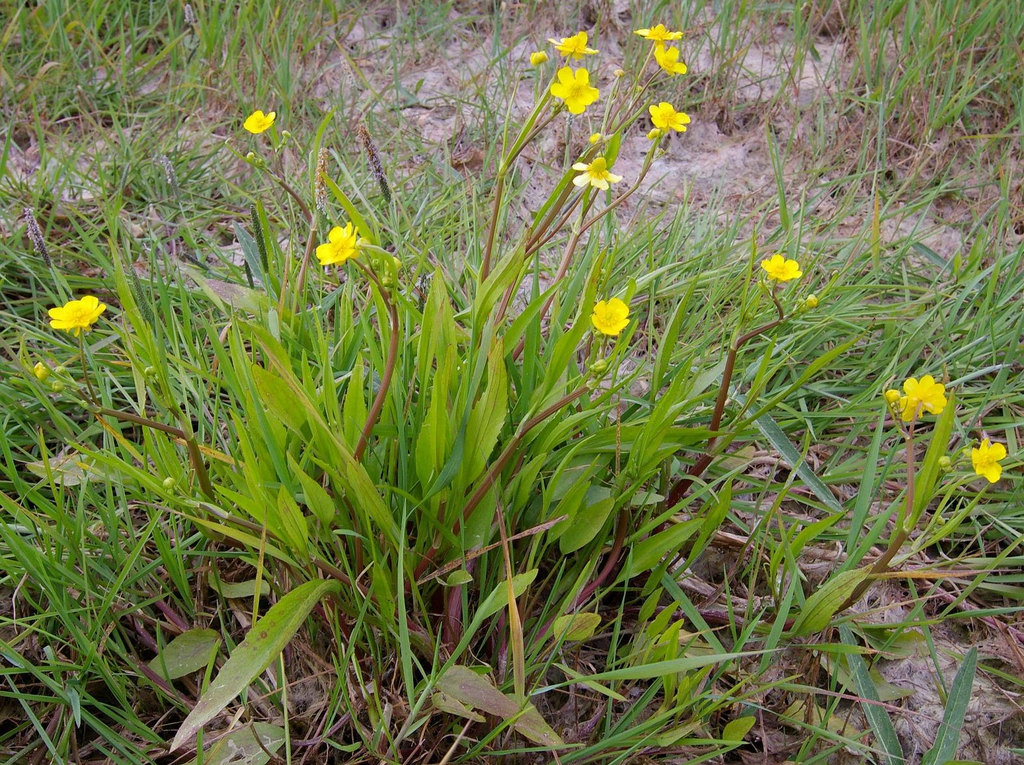
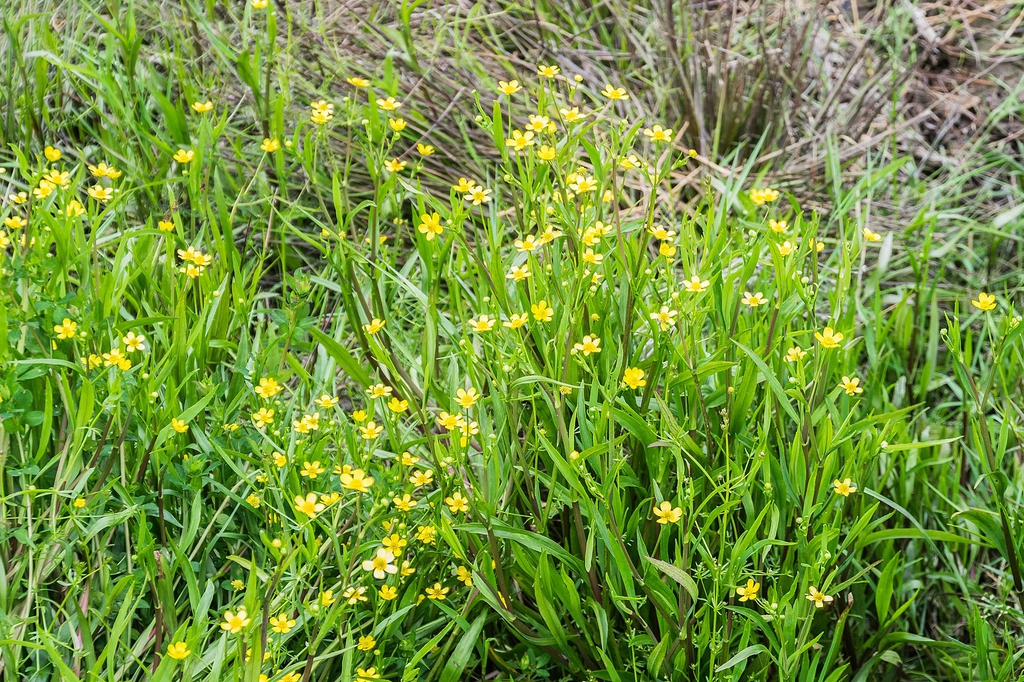
Creeping spearwort is found along lakeshores, pond margins, and other shallow water. When growing in the water, it spreads along or just beneath the surface. Stems creep along the ground and root at the nodes, a habit that creates a dense, tangled mat of stems and leaves. The tiny flowers grow on short, erect stalks. Each flower typically has 5 egg-shaped petals but may have as few as four or as many as 11. The center of the flower has numerous yellow stamens surrounding green styles. Spreading sepals are found just below the petals, and they are sometimes slightly pubescent. The flowers attract pollinators.
Creeping spearwort is a good choice for a riparian or rain garden or a wet site in a pollinator garden. It should be grown as a ground cover and allowed to spread.
Insects, Diseases, and Other Plant Problems: No significant problems.
- See this plant in the following landscape :
- Cultivars / Varieties:
-
- Tags:


- Cultivars / Varieties:
-
- Tags:
-
-
Attributes:
- Genus:
- Ranunculus
- Species:
- flammula
- Family:
- Ranunculaceae
- Life Cycle:
- Perennial
- Recommended Propagation Strategy:
- Division
- Seed
- Country Or Region Of Origin:
- USA and Canada & Eurasia
- Distribution:
- AK, AX, CA, CO, CT, ID, MA, ME, MN, MT, ND, NH, NM, NV, NY, OR, PA, RI, UT, VT, WA, WI
- Fire Risk Rating:
- low flammability
- Wildlife Value:
- Flies and bees are attracted to the plant.
- Play Value:
- Attracts Pollinators
- Dimensions:
- Height: 0 ft. 6 in. - 1 ft. 0 in.
- Width: 1 ft. 0 in. - 3 ft. 0 in.
-
-
Whole Plant Traits:
- Plant Type:
- Ground Cover
- Herbaceous Perennial
- Water Plant
- Habit/Form:
- Creeping
- Growth Rate:
- Medium
- Texture:
- Medium
-
-
Cultural Conditions:
- Light:
- Full sun (6 or more hours of direct sunlight a day)
- Partial Shade (Direct sunlight only part of the day, 2-6 hours)
- Soil Texture:
- Loam (Silt)
- Sand
- Soil pH:
- Acid (<6.0)
- Alkaline (>8.0)
- Neutral (6.0-8.0)
- Soil Drainage:
- Frequent Standing Water
- Moist
- Occasional Flooding
- Occasionally Wet
- Available Space To Plant:
- 12 inches-3 feet
- NC Region:
- Coastal
- Mountains
- Piedmont
- USDA Plant Hardiness Zone:
- 4a, 4b, 5a, 5b, 6a, 6b, 7a, 7b, 8a, 8b
-
-
Fruit:
- Fruit Color:
- Brown/Copper
- Display/Harvest Time:
- Summer
-
-
Flowers:
- Flower Color:
- Gold/Yellow
- Flower Value To Gardener:
- Showy
- Flower Bloom Time:
- Summer
- Flower Petals:
- 4-5 petals/rays
- 7 - 20 petals/rays
- Flower Size:
- < 1 inch
- Flower Description:
- Small bright yellow flowers, up to ⅓ inch in diameter. Solitary flower on a slender 2- to 3-inch stalk. Each flower will have 5 egg-shaped petals, although some may have as few as 4 or as many as 11 petals. There are many yellow stamens gathered around green styles in the middle.
-
-
Leaves:
- Leaf Color:
- Green
- Leaf Feel:
- Smooth
- Leaf Type:
- Simple
- Leaf Shape:
- Lanceolate
- Linear
- Ovate
- Spatulate
- Leaf Margin:
- Entire
- Lobed
- Serrate
- Hairs Present:
- Yes
- Leaf Length:
- 1-3 inches
- Leaf Width:
- < 1 inch
- Leaf Description:
- Its dark green oval leaves are semi-prostrate. the surface is smooth or may have fine hairs (pubescent).
-
-
Stem:
- Stem Color:
- Red/Burgundy
- Stem Is Aromatic:
- No
- Stem Description:
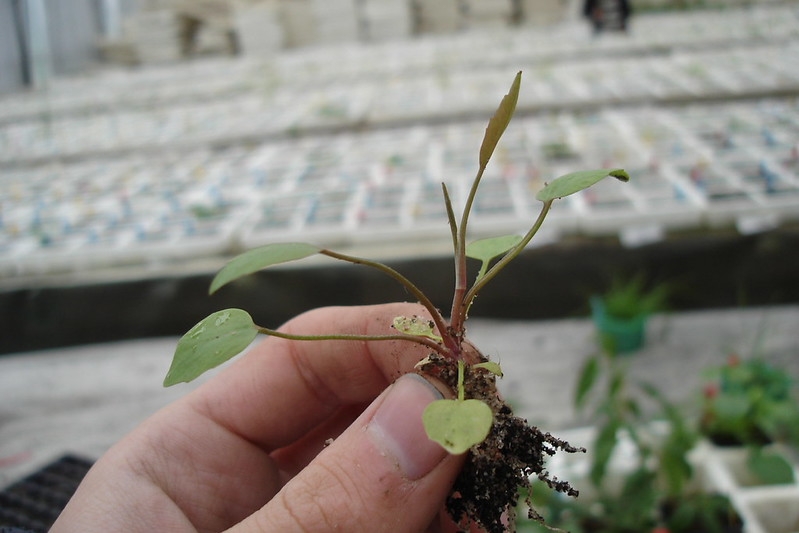
- Reddish stems up to 16" in length creep along the ground.
-
-
Landscape:
- Landscape Location:
- Riparian
- Slope/Bank
- Attracts:
- Pollinators
- Resistance To Challenges:
- Wet Soil
- Problems:
- Problem for Cats
- Problem for Dogs
- Problem for Horses
-
-
Poisonous to Humans:
- Poison Severity:
- Medium
- Poison Symptoms:
- Ingestion causes burning of the mouth, abdominal pain, vomiting, depression, anorexia, hypersalivation, wobbly gait, and bloody diarrhea. Skin redness, burning sensation, and blisters following contact with cell sap. All parts are poisonous when fresh. Heat or drying will destroy the toxins.
- Poison Toxic Principle:
- Protoanemonin (an irritant)
- Causes Contact Dermatitis:
- Yes
- Poison Part:
- Flowers
- Fruits
- Leaves
- Roots
- Sap/Juice
- Seeds
- Stems