


Redbark Cherry Prunus serrula
Other Common Name(s):
Previously known as:
- Prunus odontocalyx
- Phonetic Spelling
- PROO-nus ser-oo-LAH
- Description
-
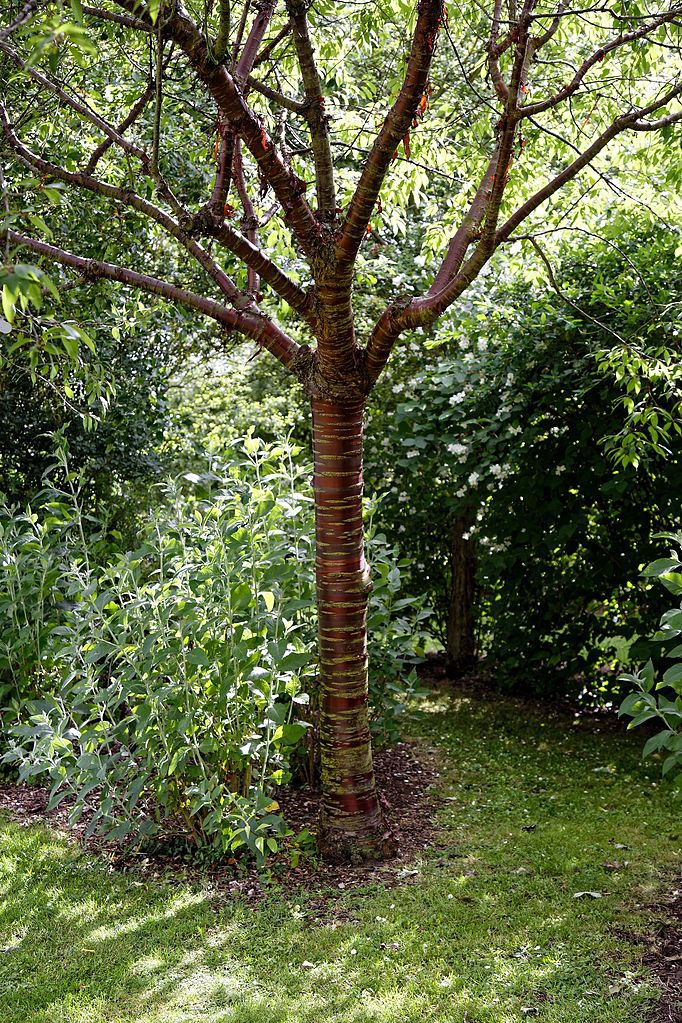
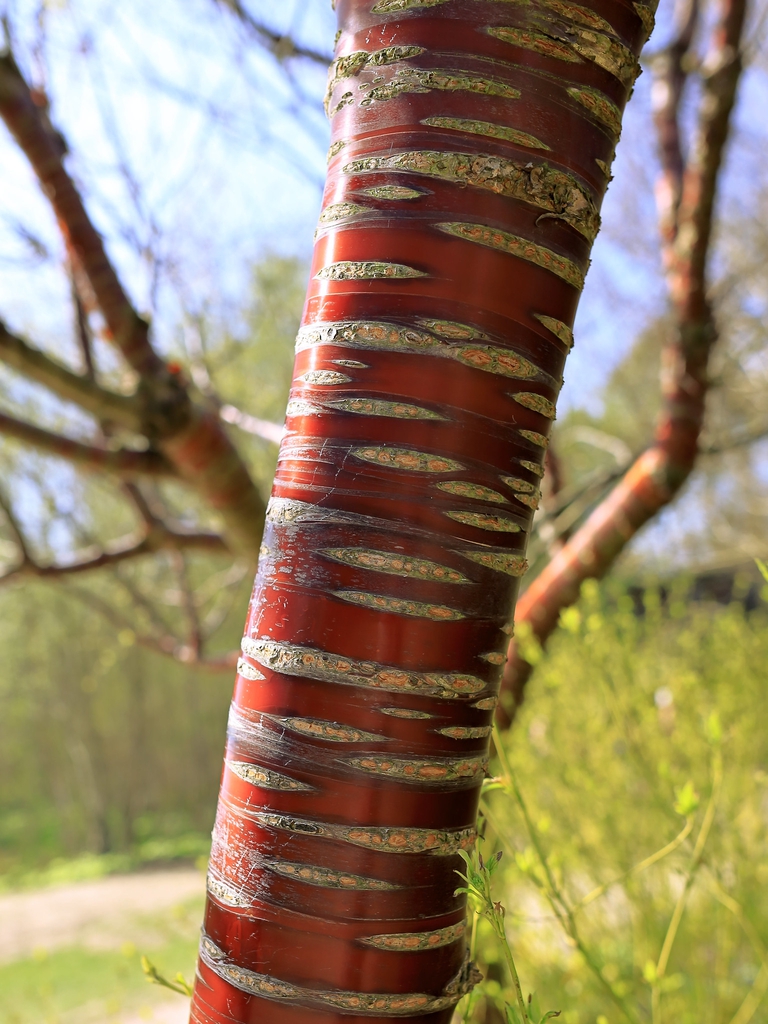
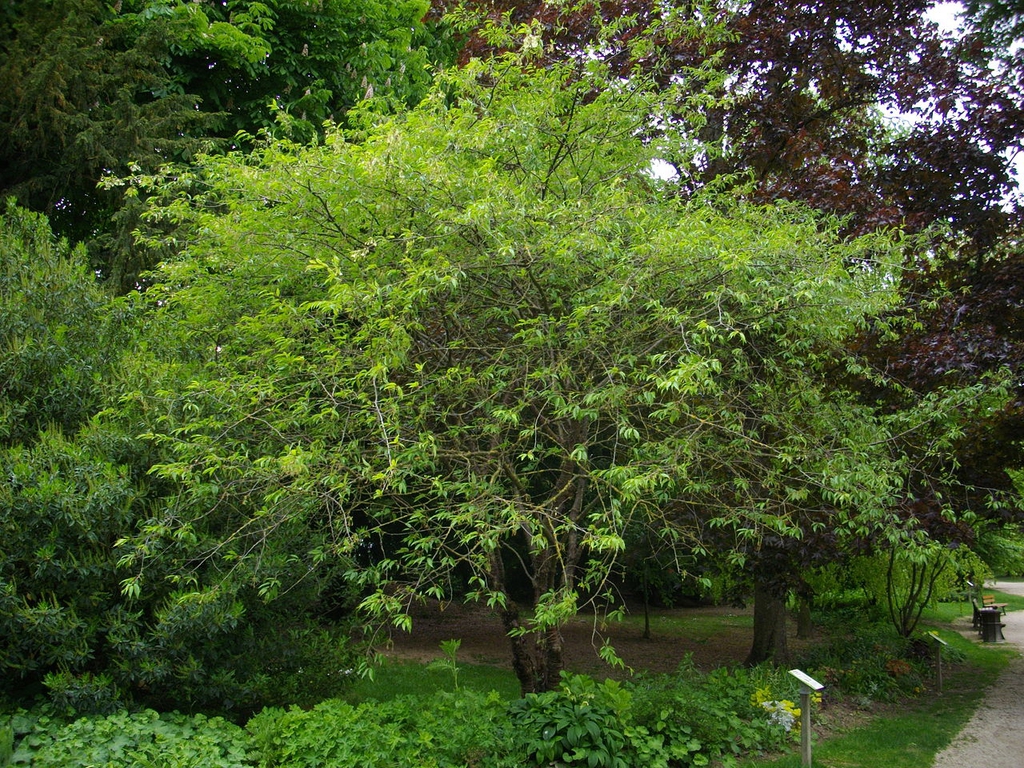
The Ornamental Cherry is a deciduous, flowering small tree in the rose family and native to western China. At maturity, it can reach a height of 30 feet with an equal spread. It has shiny, smooth, red-brown bark that can provide color in a winter garden. It is also distinguished by the narrow and finely toothed leaves that are rather willow-like. The tree also produces small white blossoms in early spring followed by cherry-like red fruit. The genus name comes from the Latin for plum or cherry. The species name means "saw-like teeth"", referring to the margins of the leaves.
Ornamental Cherry is best grown in fertile, moist, well-drained soils in full sun or partial shade. This plant tolerates poor soil, but does not tolerate standing water. Good soil drainage is essential. You can prune as needed after the flowers bloom to preserve its shape.
While typically found in USDA zones 5 and 6, this shrub will grow in the mountainous areas of North Carolina.
Diseases, Insect Pests, and Other Plant Problems:
Ornamental Cherry is susceptible to many insect pests and diseases including cankers, leaf spot, die back, leaf curl, powdery mildew, root rot and fireblight. Potential insects include aphids, scale, borers, leafhoppers, caterpillars, tent caterpillars, Japanese beetles and Spider mites.
- See this plant in the following landscape :
- Cultivars / Varieties:
-
- Tags:


- Cultivars / Varieties:
-
- Tags:
-
-
Attributes:
- Genus:
- Prunus
- Species:
- serrula
- Family:
- Rosaceae
- Life Cycle:
- Woody
- Recommended Propagation Strategy:
- Grafting
- Stem Cutting
- Country Or Region Of Origin:
- Western China and Tibet
- Wildlife Value:
- This is a larval host plant to Eastern Tiger Swallowtail (Papilio glaucus). You may see three flights from February-November in the deep south and two flights from May-September in the north.
- Edibility:
- The fruit is edible, but the tree is grown more for its ornamental value than its fruit. Also, ingesting quantities of other plant parts can be problematic.
- Dimensions:
- Height: 20 ft. 0 in. - 30 ft. 0 in.
- Width: 20 ft. 0 in. - 30 ft. 0 in.
-
-
Whole Plant Traits:
- Plant Type:
- Tree
- Woody Plant Leaf Characteristics:
- Deciduous
- Habit/Form:
- Multi-stemmed
- Pyramidal
- Rounded
- Growth Rate:
- Medium
- Maintenance:
- Low
- Texture:
- Medium
-
-
Cultural Conditions:
- Light:
- Full sun (6 or more hours of direct sunlight a day)
- Partial Shade (Direct sunlight only part of the day, 2-6 hours)
- Soil Texture:
- Clay
- High Organic Matter
- Loam (Silt)
- Soil pH:
- Acid (<6.0)
- Alkaline (>8.0)
- Neutral (6.0-8.0)
- Soil Drainage:
- Good Drainage
- Moist
- Occasionally Dry
- Available Space To Plant:
- 24-60 feet
- NC Region:
- Mountains
- USDA Plant Hardiness Zone:
- 5a, 5b, 6a, 6b
-
-
Fruit:
- Fruit Color:
- Red/Burgundy
- Fruit Value To Gardener:
- Edible
- Display/Harvest Time:
- Spring
- Fruit Type:
- Drupe
- Fruit Length:
- < 1 inch
- Fruit Description:
- Half inch, oval, bright red fruit follows the blossoms.
-
-
Flowers:
- Flower Color:
- White
- Flower Inflorescence:
- Umbel
- Flower Value To Gardener:
- Showy
- Flower Bloom Time:
- Spring
- Flower Shape:
- Dome
- Flower Size:
- < 1 inch
- Flower Description:
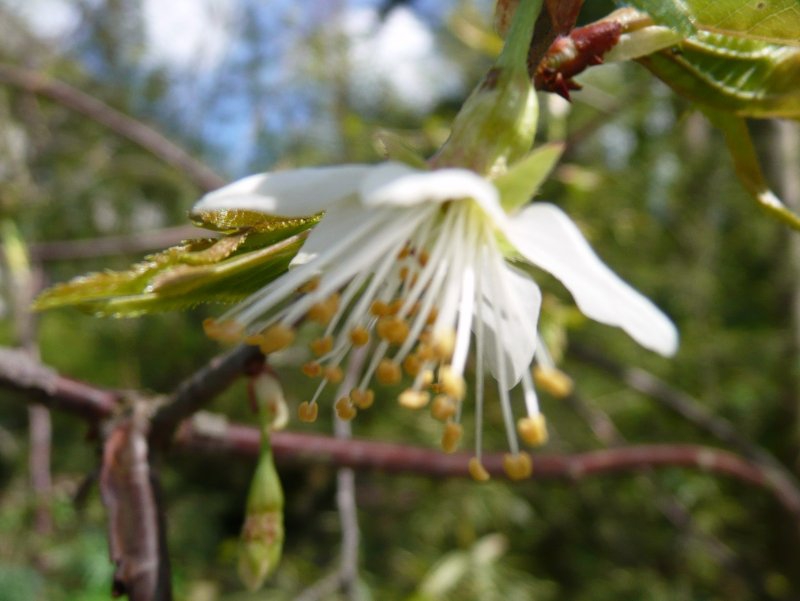
- Half inch white flowers, bourne singly or in 2 to 4 flower umbrels in March and April as the foliage emerges.
-
-
Leaves:
- Woody Plant Leaf Characteristics:
- Deciduous
- Leaf Color:
- Green
- Leaf Value To Gardener:
- Showy
- Deciduous Leaf Fall Color:
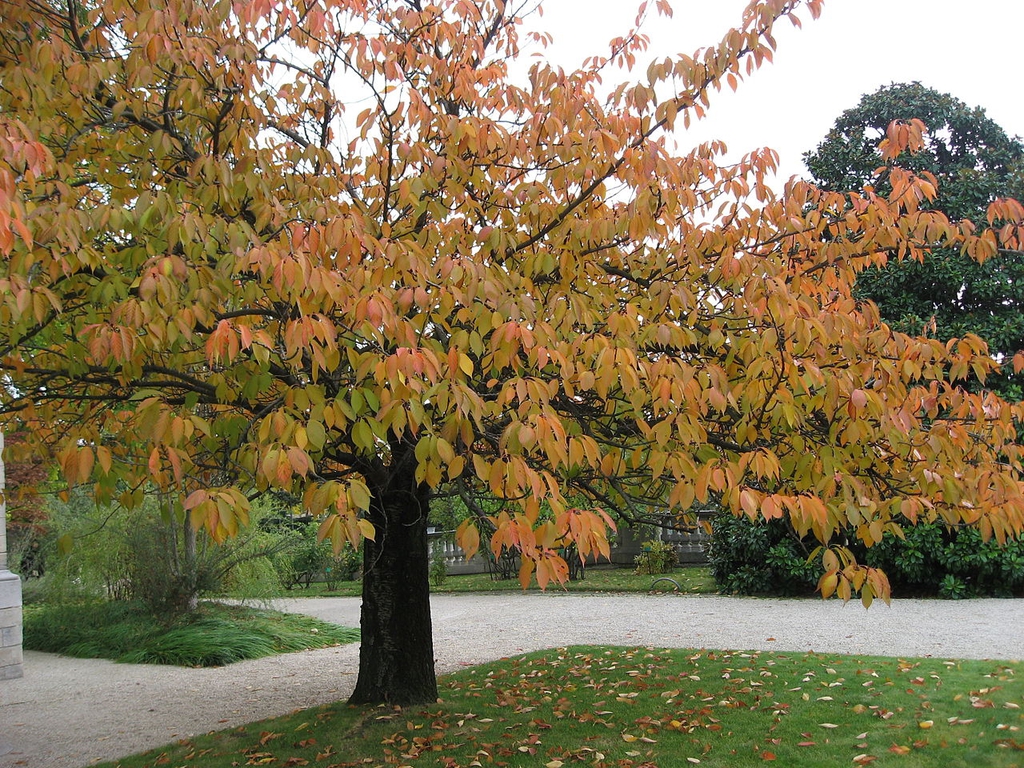
- Insignificant
- Leaf Type:
- Simple
- Leaf Arrangement:
- Alternate
- Leaf Shape:
- Lanceolate
- Leaf Margin:
- Serrate
- Hairs Present:
- No
- Leaf Length:
- 3-6 inches
- Leaf Width:
- 1-3 inches
- Leaf Description:
- Two to four inch, alternate, simple leaves with serrated margins. Leaves are narrow, lance-shaped, willow-like, and dark green. It does not display fall color.
-
-
Bark:
- Bark Color:
- Dark Brown
- Red/Burgundy
- Surface/Attachment:
- Peeling
- Smooth
- Bark Description:
- Ornamental, glistening, red brown to mahogany colored bark with horizontal lenticles. The old bark peels like a birch to reveal the polished reddish brown, copper brown or mahogany brown new bark.
-
-
Stem:
- Stem Is Aromatic:
- No
-
-
Landscape:
- Landscape Location:
- Lawn
- Landscape Theme:
- Butterfly Garden
- Pollinator Garden
- Winter Garden
- Design Feature:
- Flowering Tree
- Attracts:
- Butterflies
- Pollinators
- Problems:
- Problem for Cats
- Problem for Dogs
- Problem for Horses