


Plantago virginica
Common Name(s):
Previously known as:
- Plantago virginica var. viridescens
- Phonetic Spelling
- plan-TA-go vir-JIN-ih-kuh
- Description
-
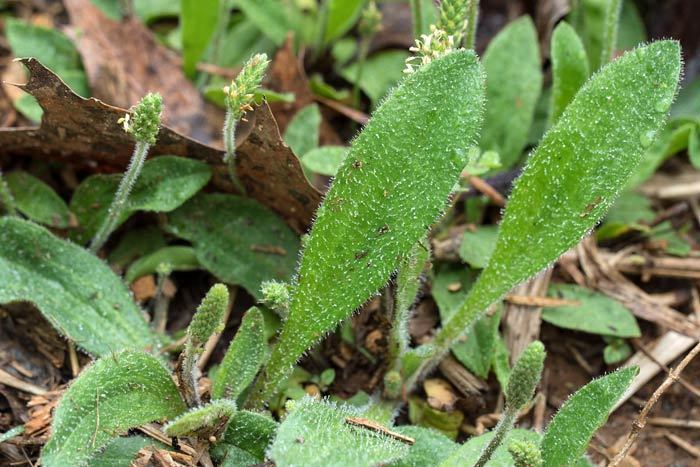
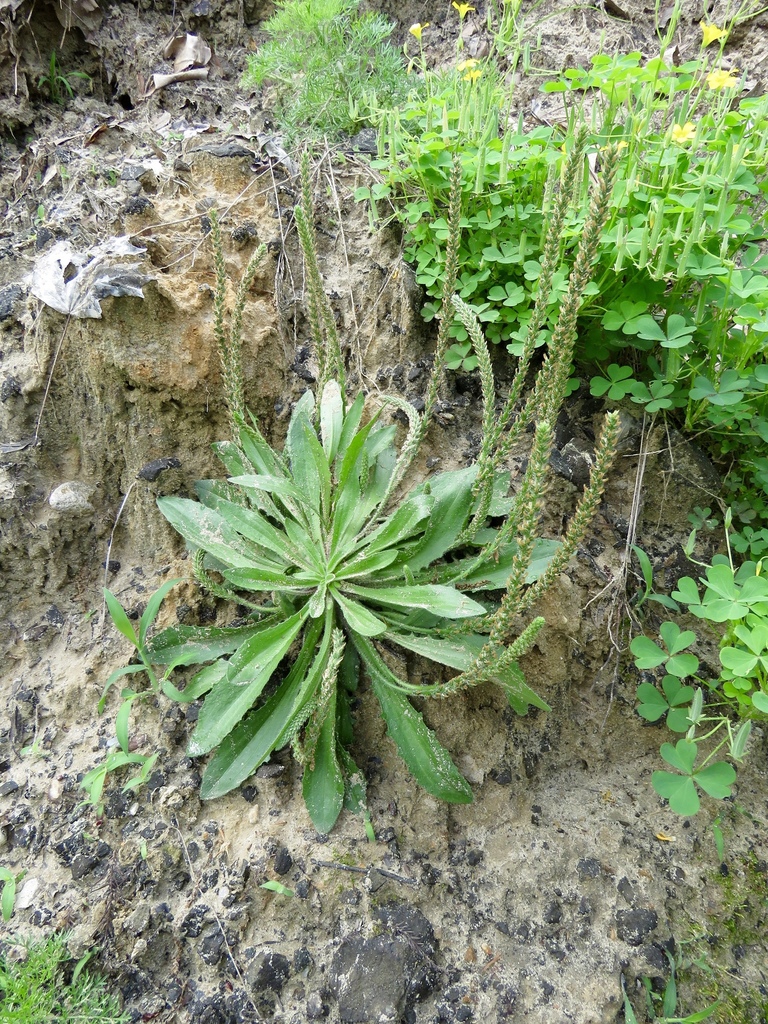
Paleseed Plantain is a winter annual or biennial flowering weed in the plantain family, a North American native often found in sandy prairies and fields, rocky cliffs or slopes, gravelly areas along railroads and roadsides, and disturbed areas. The plant has very woolly foliage in the form of a rosette of basal leaves and a taproot. An 8 inch flowering stalk with small green and hairy flowers rises from the basal leaves.
Paleseed Plantain prefers full sun, moist to occasionally dry conditions, and sandy or rocky soil. It tends to grow most easily in soils composed of larger grains, which tends to limit its spread.
Paleseed Plantain spreads low to the ground. It is a self-seeding plant, but not as prolific a self-seeder as some of the other plantains and so will not become a problem in lawns and landscapes unless the soil is especially sandy or gravelly.
Diseases, Insect Pests, and Other Plant Problems:
No known diseases or insect pests.
- See this plant in the following landscape :
- Cultivars / Varieties:
-
- Tags:




- Cultivars / Varieties:
-
- Tags:
-
-
Attributes:
- Genus:
- Plantago
- Species:
- virginica
- Family:
- Plantaginaceae
- Life Cycle:
- Annual
- Biennial
- Recommended Propagation Strategy:
- Seed
- Country Or Region Of Origin:
- Southeastern Canada to Mexico
- Distribution:
- Introduced to southern China, Japan, Korea, and Taiwan.
- Wildlife Value:
- Food source for small insects such as beetles and weevils.
- Dimensions:
- Height: 0 ft. 3 in. - 1 ft. 0 in.
- Width: 0 ft. 3 in. - 1 ft. 0 in.
-
-
Whole Plant Traits:
- Plant Type:
- Annual
- Native Plant
- Weed
- Habit/Form:
- Erect
- Spreading
- Growth Rate:
- Rapid
- Maintenance:
- Medium
- Texture:
- Coarse
-
-
Cultural Conditions:
- Light:
- Full sun (6 or more hours of direct sunlight a day)
- Soil Texture:
- Clay
- Loam (Silt)
- Sand
- Shallow Rocky
- Soil Drainage:
- Moist
- Occasionally Dry
- Available Space To Plant:
- Less than 12 inches
- NC Region:
- Coastal
- Mountains
- Piedmont
- USDA Plant Hardiness Zone:
- 3a, 3b, 4a, 4b, 5a, 5b, 6a, 6b, 7a, 7b, 8a, 8b, 9a, 9b
-
-
Fruit:
- Fruit Color:
- Brown/Copper
- Fruit Type:
- Capsule
- Fruit Description:
- Each fertile flower is replaced by an oblongoid seed capsule that splits open around the middle to release its seeds.
-
-
Flowers:
- Flower Color:
- Green
- White
- Flower Inflorescence:
- Spike
- Flower Value To Gardener:
- Showy
- Flower Bloom Time:
- Spring
- Summer
- Flower Petals:
- Bracts
- Colored Sepals
- Flower Size:
- < 1 inch
- Flower Description:
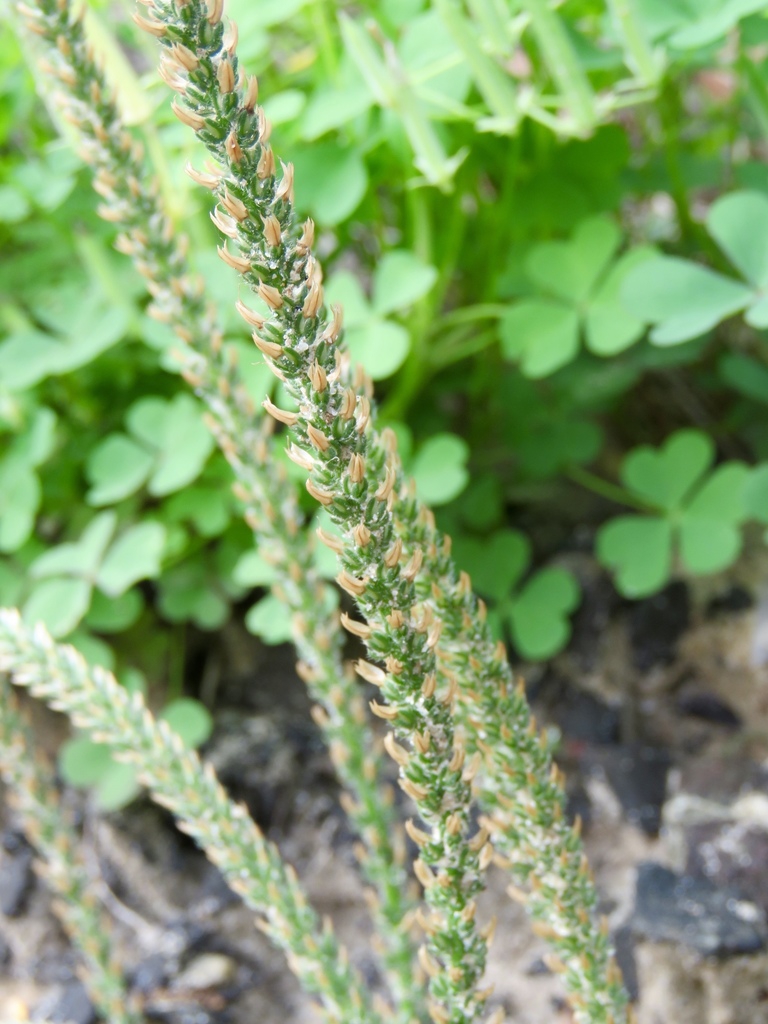
- A 4 to 8 inch flowering stalk rises from the basal leaves; the upper two-thirds of each stalk is a cylindrical floral spike densely covered with small flowers and their bracts. The lower one-third is bare, densely hairy, and often reddish toward the bottom. The flowers can be unisexual, bisexual, or sterile, an 1/8 of an inch long with a narrow corolla with 4 erect lobes and a calyx with 4 sepals. The corolla becomes tan or brown with maturity, while the sepals are green and hairy. The bracts of the flowers are green and hairy like the sepals. The blooming period occurs from mid-spring to early summer. The flowers are wind-pollinated.
-
-
Leaves:
- Leaf Color:
- Green
- Leaf Feel:
- Smooth
- Soft
- Leaf Type:
- Simple
- Leaf Arrangement:
- Rosulate
- Leaf Shape:
- Oblanceolate
- Obovate
- Ovate
- Leaf Margin:
- Entire
- Hairs Present:
- Yes
- Leaf Length:
- > 6 inches
- Leaf Width:
- 1-3 inches
- Leaf Description:
- Small rosettes of medium green leaves with 3 to 5 veins can grow to 3 to 6 inches long and 2 to 3 inches wide in various shapes of oblanceolate, obovate, and oval. Petioles are reddish and winged. The leaves are smooth with ciliate margins (i.e., fringes of hair), blunt tips and they taper gradually to winged petioles. The upper surface of each leaf has white hairs, while the lower surface is woolly pubescent with longer white hairs along the veins.
-
-
Stem:
- Stem Is Aromatic:
- No
- Stem Surface:
- Hairy (pubescent)
-
-
Landscape:
- Landscape Theme:
- Native Garden
- Problems:
- Weedy