


Picea orientalis
Common Name(s):
Previously known as:
- Abies orientalis
- Picea withmanniana
- Picea wittmanniana
- Phonetic Spelling
- PY-see-uh or-ee-en-TAY-liss
- Description
-
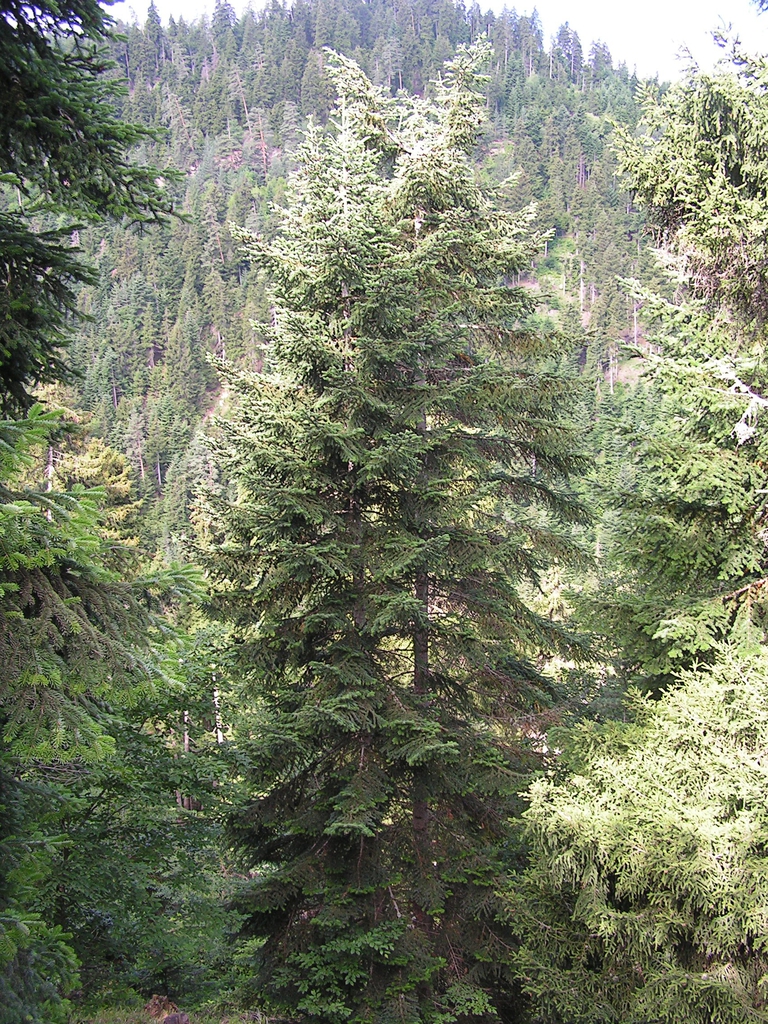
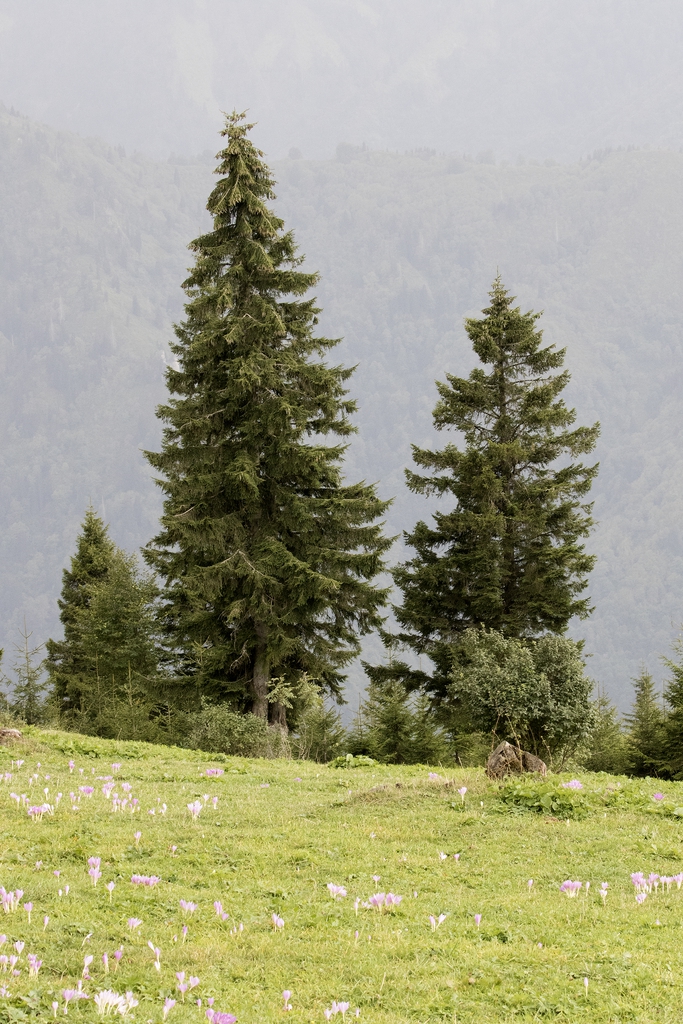
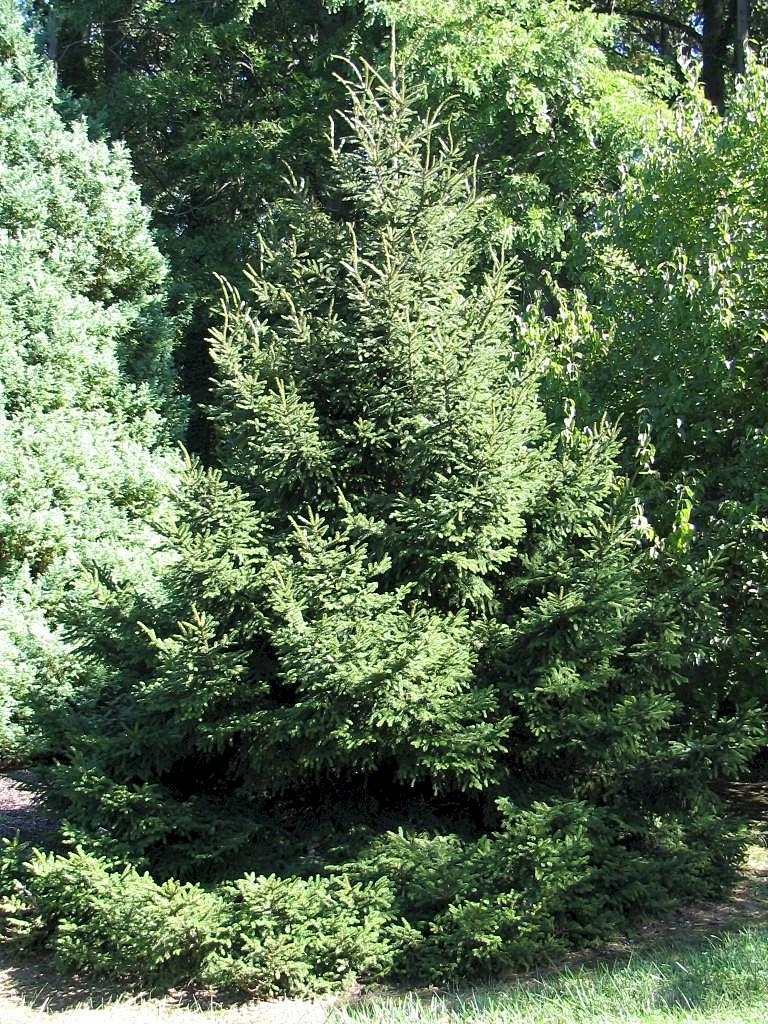
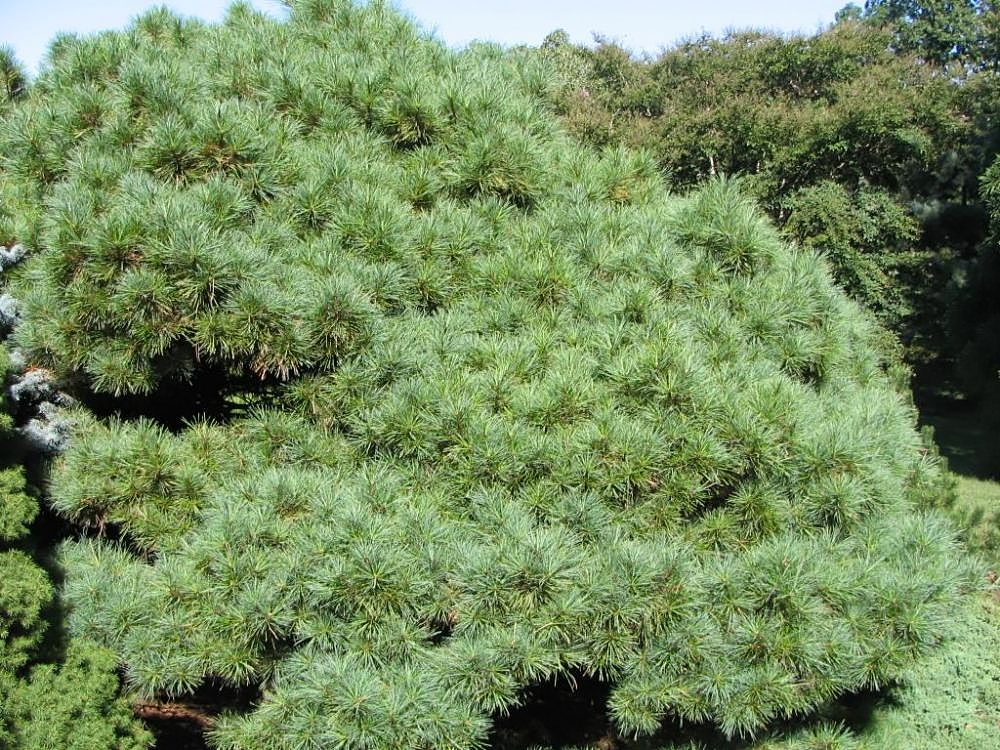
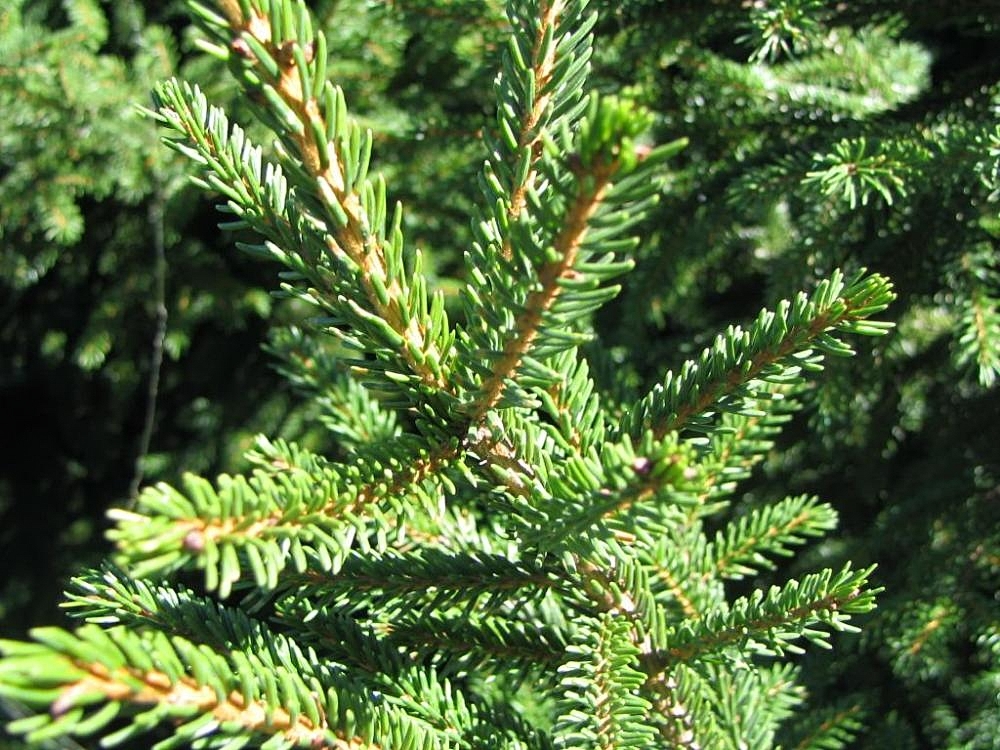
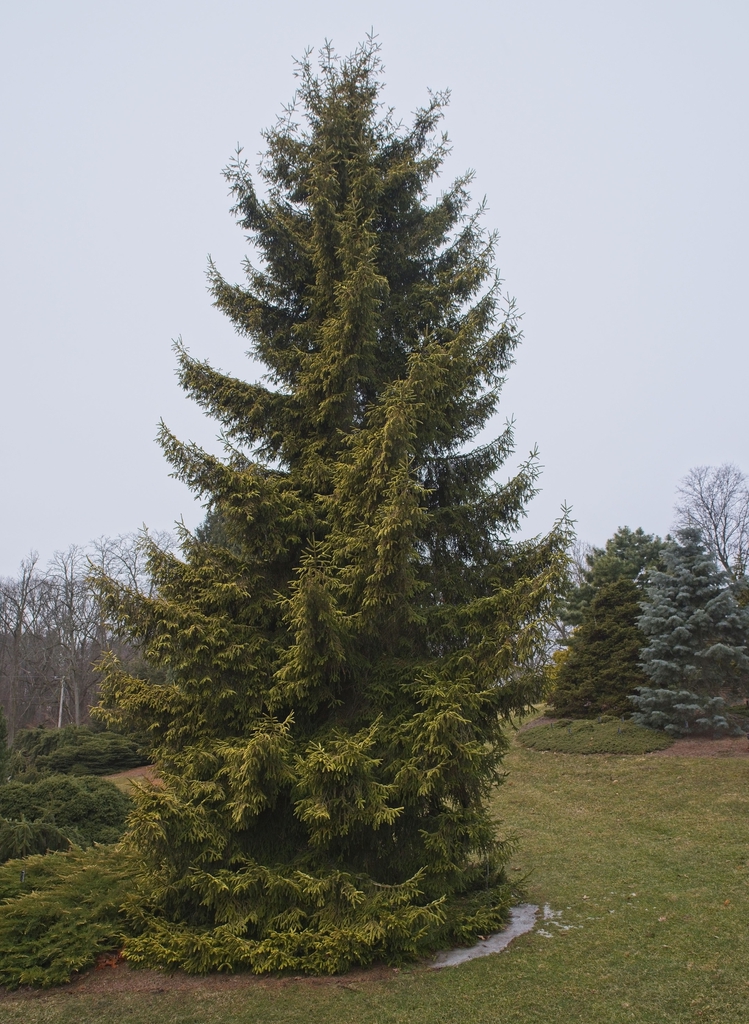
Oriental spruce is a medium- to large-sized, needled evergreen conifer native to the Caucasus Mountains and northeastern Turkey. It has a narrow, pyramidal, dense, multi-stemmed habit and grows 50-70 feet tall and 15-25 feet wide. The bark is brown and exfoliates as the tree matures. Its needles are flat, short, stiff, glossy, and dark green. The pollen cones are red, and the female seed cones are initially purple and ripen to brown. The specific epithet orientalis means "of the Orient" or "eastern." This conifer belongs to the pine family (Pinaceae).
Prefers sun and rich, moist, well-drained soil. It will tolerate poor soils and is drought-tolerant once established. Like many other conifers, it prefers cool summers and is hardy in zones 4-7. It likely would not thrive in the hot, humid climate of the southeastern United States. In colder climates, it needs protection from strong cold winter winds.
The Oriental spruce is an attractive conifer and may be used as an accent or specimen in a large home landscape or park. It may also be considered as a foundation planting or windbreak.
Insects, Diseases, and Other Plant Problems: Monitor for spider mites, aphids, scale, budworms, and bagworms. Needle cast, canker, and rust can occur. Overwatering or poor soil drainage can cause root rot. Good air circulation can prevent fungal diseases. Otherwise, it has no serious insect pest or disease issues.
- See this plant in the following landscape :
- Cultivars / Varieties:
-
- 'Atrovirens'
Tree, erect, conical, with dark green, needle-like leaves - 'Aurea'
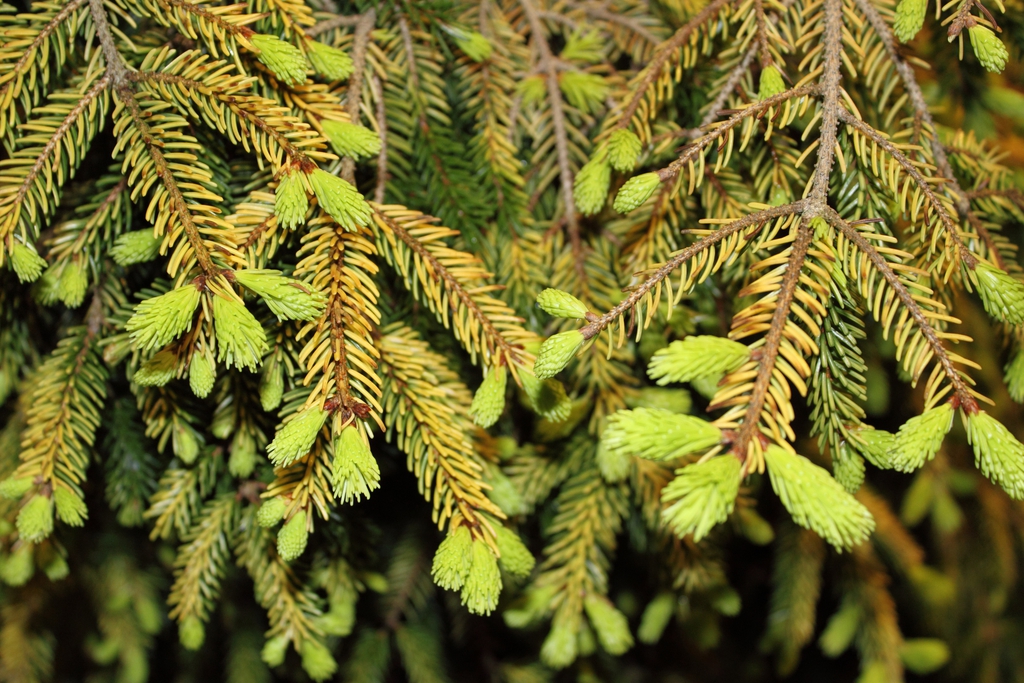
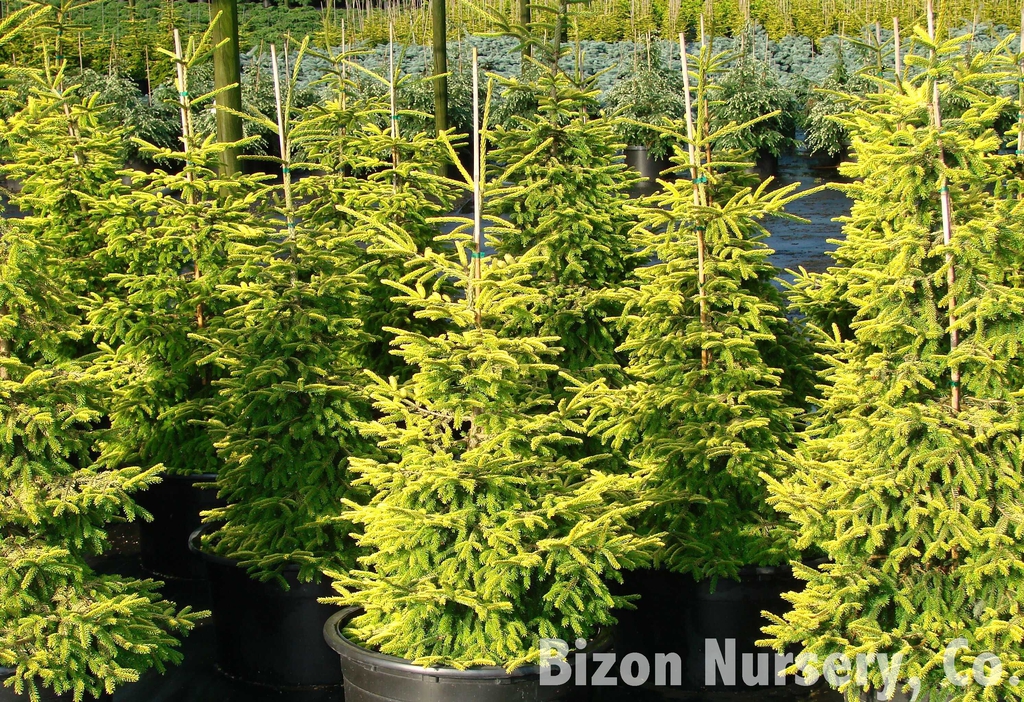
Bright yellow new growth - 'Aureospicata'
Light yellow young needles, turning green by summer - "Barnes"
Shrub, dwarf, with a nested form - 'Bergman's Gem'
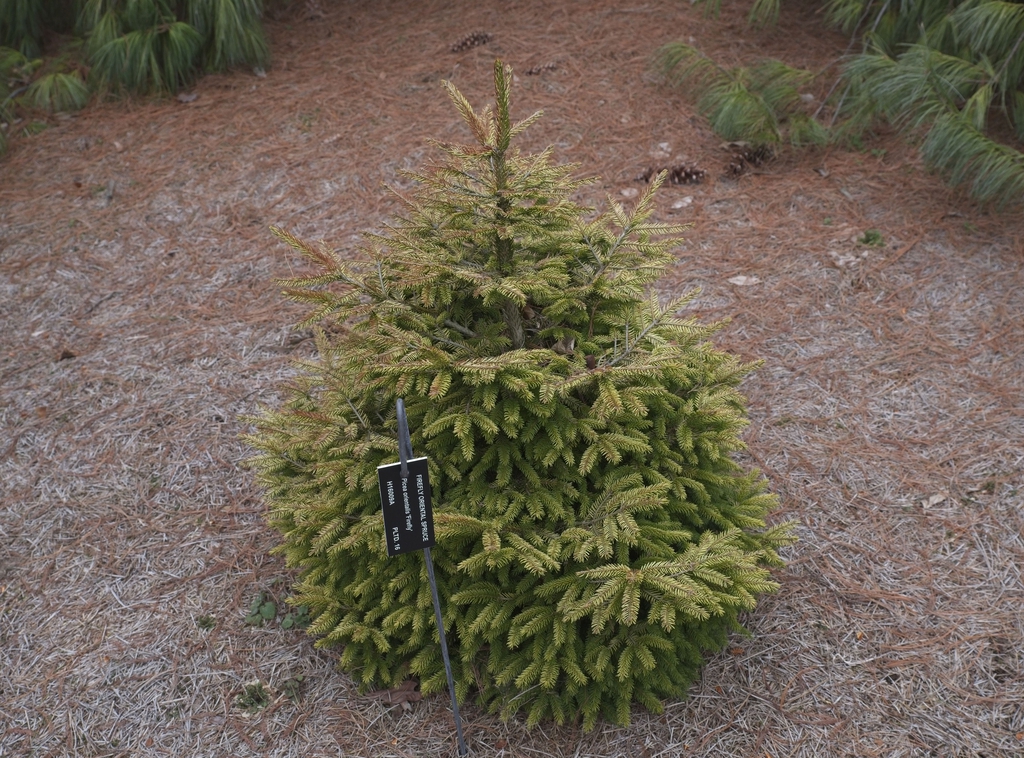
Dwarf, globe-shaped when young, then conical, with dark green needles - 'Firefly'
Dwarf, conical, up to 6 ft. tall and 3 ft. wide; bright yellow needles in the spring, then golden; the interior foliage is green - 'Gowdy'
Erect, slender, columnar, growing 4-6 ft. tall and 3-4 ft. wide, with glossy dark green needles, slow-growing
'Nana'
- 'Nigra Compacta'
Compact; appears wider than tall when young
'Skylands'
- 'Sunrise'
Dwarf, erect, conical, with deep green needles frosted with gold on the upper surfaces that are exposed to the sun

Grows 2-3 ft. tall and wide; dwarf, dense, compact, rounded habit, with dark green needles
Tree, 10-35 ft. tall and 4-12 ft. wide, slender, conical, with golden-yellow needles on the upper surface - 'Atrovirens'
- 'Atrovirens', 'Aurea', 'Aureospicata', "Barnes", 'Bergman's Gem', 'Firefly', 'Gowdy', 'Nana', 'Nigra Compacta', 'Skylands', 'Sunrise'
- Tags:


- Cultivars / Varieties:
-
- 'Atrovirens'
Tree, erect, conical, with dark green, needle-like leaves - 'Aurea'
Bright yellow new growth - 'Aureospicata'
Light yellow young needles, turning green by summer - "Barnes"
Shrub, dwarf, with a nested form - 'Bergman's Gem'
Dwarf, globe-shaped when young, then conical, with dark green needles - 'Firefly'
Dwarf, conical, up to 6 ft. tall and 3 ft. wide; bright yellow needles in the spring, then golden; the interior foliage is green - 'Gowdy'
Erect, slender, columnar, growing 4-6 ft. tall and 3-4 ft. wide, with glossy dark green needles, slow-growing
'Nana'
- 'Nigra Compacta'
Compact; appears wider than tall when young
'Skylands'
- 'Sunrise'
Dwarf, erect, conical, with deep green needles frosted with gold on the upper surfaces that are exposed to the sun
Grows 2-3 ft. tall and wide; dwarf, dense, compact, rounded habit, with dark green needles
Tree, 10-35 ft. tall and 4-12 ft. wide, slender, conical, with golden-yellow needles on the upper surface - 'Atrovirens'
- 'Atrovirens', 'Aurea', 'Aureospicata', "Barnes", 'Bergman's Gem', 'Firefly', 'Gowdy', 'Nana', 'Nigra Compacta', 'Skylands', 'Sunrise'
- Tags:
-
-
Attributes:
- Genus:
- Picea
- Species:
- orientalis
- Family:
- Pinaceae
- Uses (Ethnobotany):
- In Turkey, wood is used to produce furniture and musical instruments.
- Life Cycle:
- Woody
- Recommended Propagation Strategy:
- Seed
- Country Or Region Of Origin:
- Northern Turkey to Caucasus
- Distribution:
- Native: North Caucasus, Transcaucasus, and Turkey. Introduced: Austria, Belgium, Denmark, Great Britain, Ireland, Italy, New Jersey, and Poland.
- Wildlife Value:
- Attracts browsers, nesting birds, and songbirds. Winter cover for deer and small game.
- Play Value:
- Buffer
- Screening
- Dimensions:
- Height: 50 ft. 0 in. - 70 ft. 0 in.
- Width: 15 ft. 0 in. - 25 ft. 0 in.
-
-
Whole Plant Traits:
- Plant Type:
- Tree
- Woody Plant Leaf Characteristics:
- Needled Evergreen
- Habit/Form:
- Conical
- Dense
- Multi-stemmed
- Pyramidal
- Growth Rate:
- Slow
- Maintenance:
- Low
- Texture:
- Medium
-
-
Cultural Conditions:
- Light:
- Full sun (6 or more hours of direct sunlight a day)
- Soil Texture:
- High Organic Matter
- Loam (Silt)
- Shallow Rocky
- Soil pH:
- Acid (<6.0)
- Neutral (6.0-8.0)
- Soil Drainage:
- Good Drainage
- Moist
- Occasionally Dry
- Available Space To Plant:
- 24-60 feet
- NC Region:
- Mountains
- Piedmont
- USDA Plant Hardiness Zone:
- 4a, 4b, 5a, 5b, 6a, 6b, 7a, 7b
-
-
Fruit:
- Fruit Color:
- Brown/Copper
- Purple/Lavender
- Red/Burgundy
- Fruit Value To Gardener:
- Showy
- Display/Harvest Time:
- Fall
- Fruit Length:
- > 3 inches
- Fruit Width:
- < 1 inch
- Fruit Description:
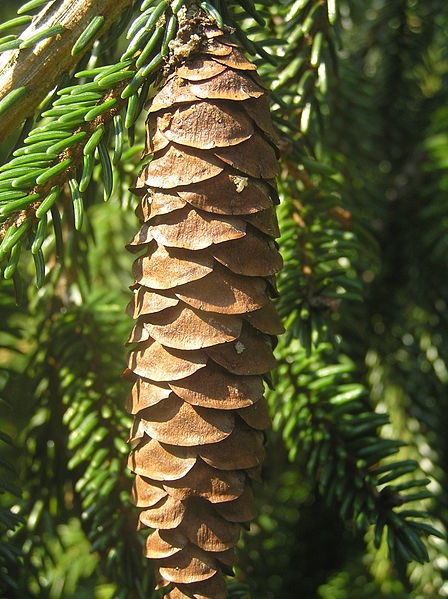
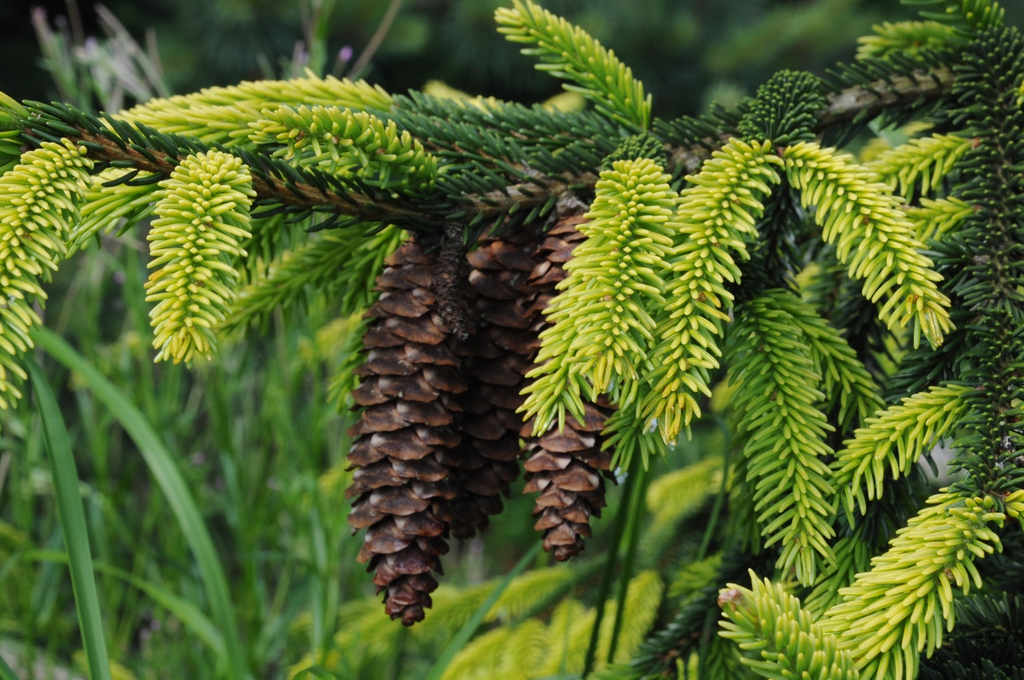
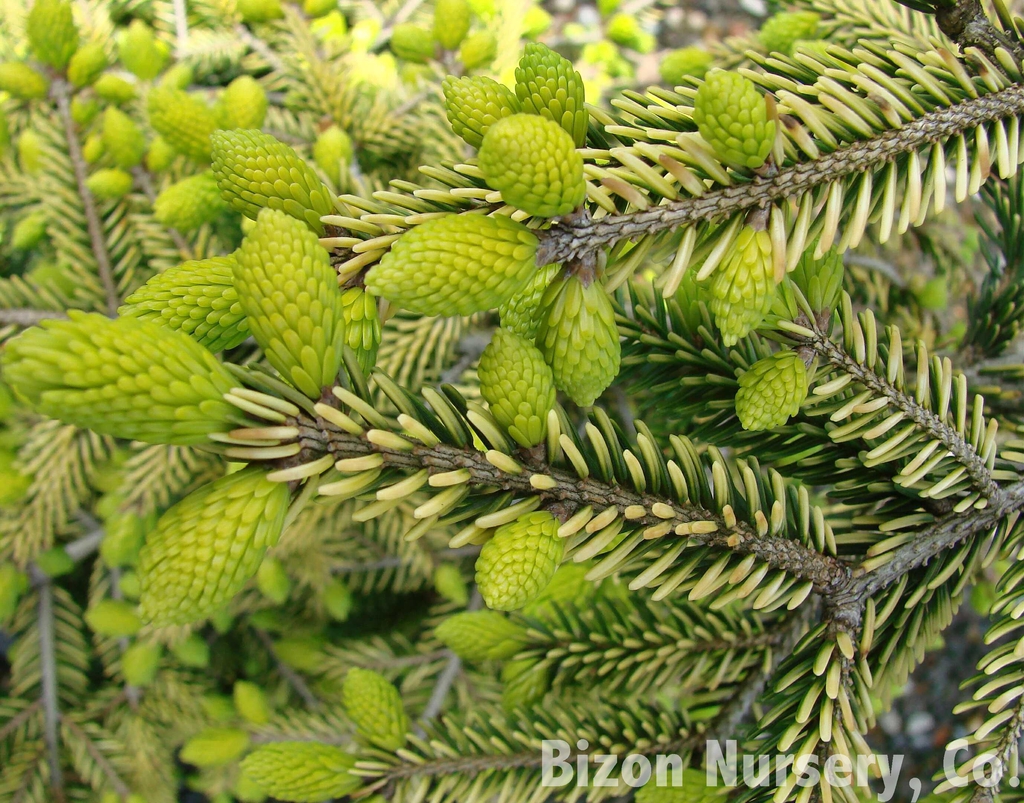
- The male pollen cones are small, red, and measure 0.4-0.8 inches long. They are usually found on the lower part of the tree in late April to early May. The female seed cones are conical and pointed, reddish-purple when young, and ripen to brown. Each seed cone measures 2-4 inches long and 0.75 inches wide. The scales have entire margins. Female cones are on the upper portion of the tree. The seeds are ovoid and brown, with a papery pale yellowish-brown wing.
-
-
Flowers:
- Flower Description:
- non-flowering
-
-
Leaves:
- Woody Plant Leaf Characteristics:
- Needled Evergreen
- Leaf Color:
- Green
- Leaf Type:
- Needles
- Leaf Arrangement:
- Other/more complex
- Leaf Shape:
- Linear
- Hairs Present:
- No
- Leaf Length:
- < 1 inch
- Leaf Width:
- < 1 inch
- Leaf Description:
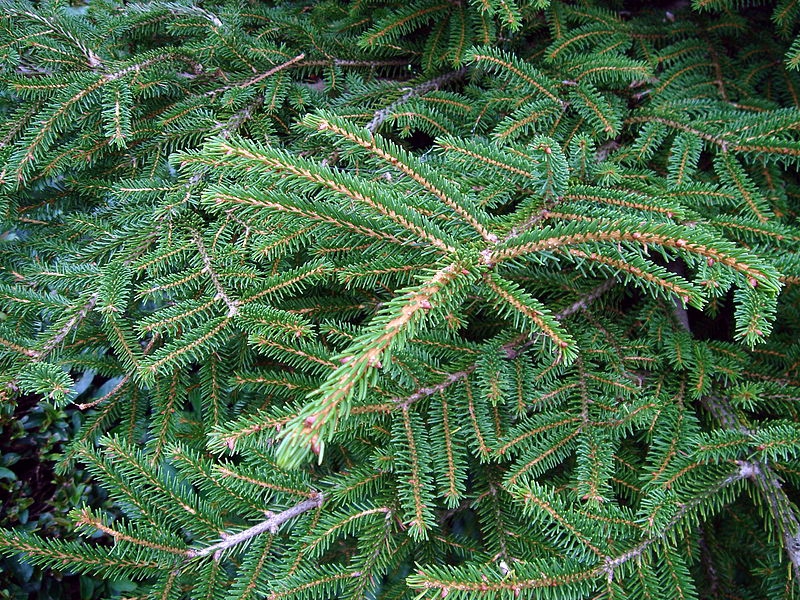
- The needles are flat, dark green, stiff, glossy, densely set, 4-sided, and measure 0.25 to 0.5 inches long, with 1 to 4 lines on each side. The needles are radially arranged and shorter than those of most spruce species.
-
-
Bark:
- Bark Color:
- Dark Brown
- Dark Gray
- Red/Burgundy
- Surface/Attachment:
- Exfoliating
- Patchy
- Ridges
- Bark Plate Shape:
- Irregular
- Round
- Bark Description:
- The young bark is pinkish-gray and smooth. As the tree matures, the bark turns gray and exfoliates in thin, rounded plates.
-
-
Stem:
- Stem Color:
- Brown/Copper
- Gray/Silver
- Orange
- Stem Is Aromatic:
- No
- Stem Surface:
- Hairy (pubescent)
- Stem Description:
- The young branches are orangish-brown, flexible, slender, and short. As the tree matures, the branches become grayish-brown with narrow ridges.
-
-
Landscape:
- Landscape Location:
- Lawn
- Meadow
- Naturalized Area
- Recreational Play Area
- Woodland
- Landscape Theme:
- Children's Garden
- Drought Tolerant Garden
- Design Feature:
- Accent
- Screen/Privacy
- Shade Tree
- Specimen
- Resistance To Challenges:
- Drought
- Poor Soil