

Picea omorika
Common Name(s):
Previously known as:
- Abies omorika
- Picea omorkia f. pendula
- Pinus omorika
- Phonetic Spelling
- PY-see-uh oh-MOR-ee-kah
- Description
-
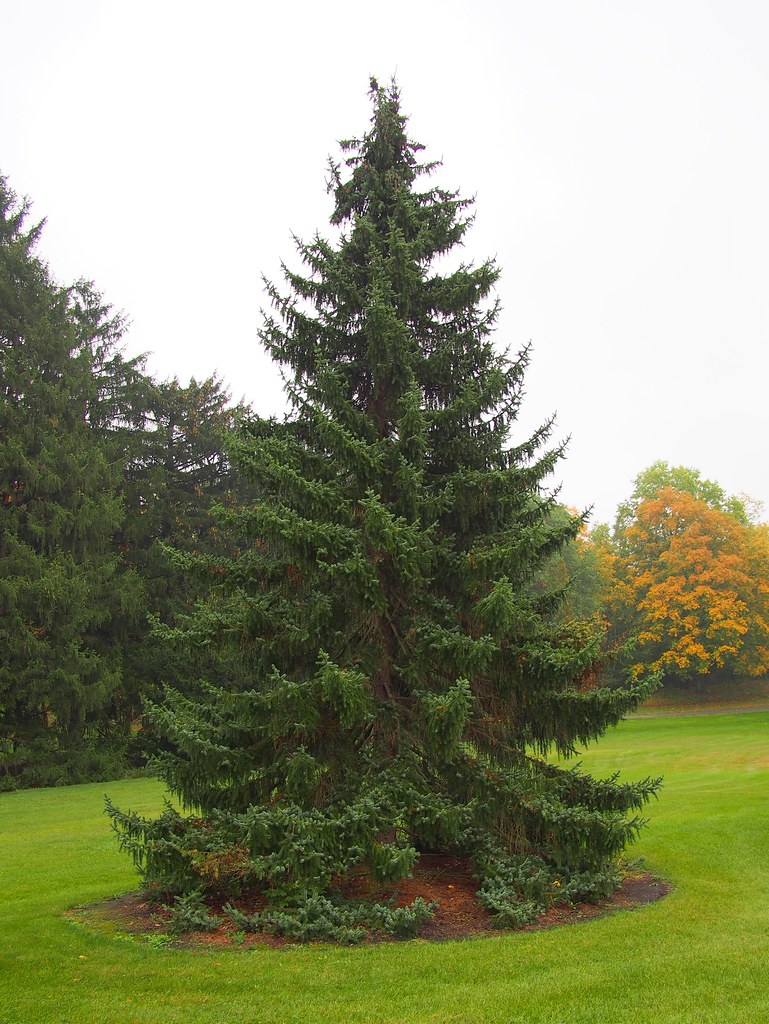
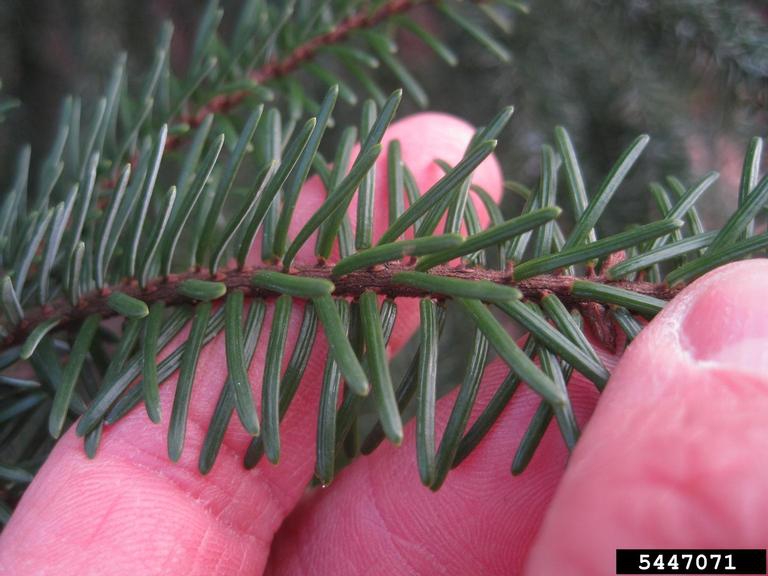
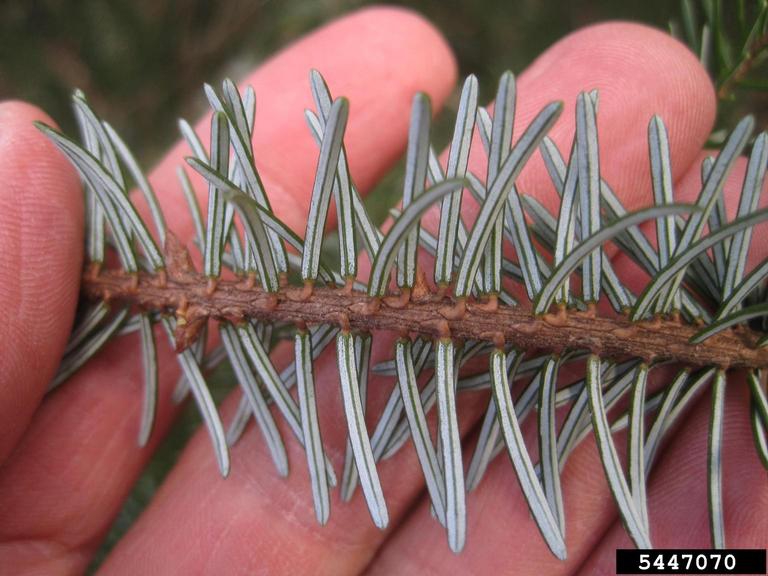
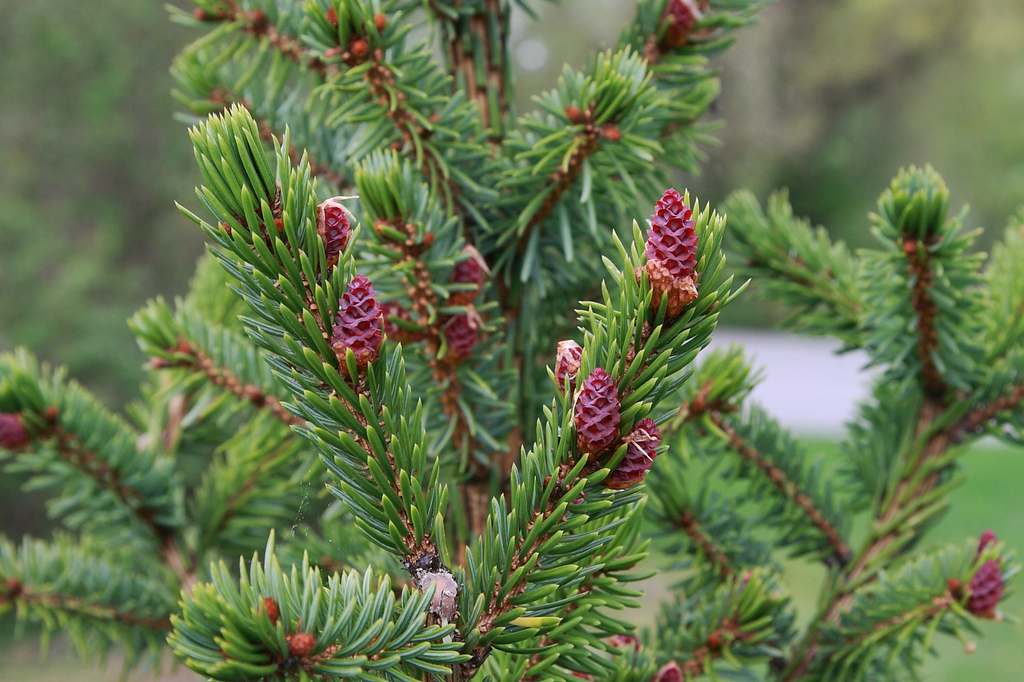
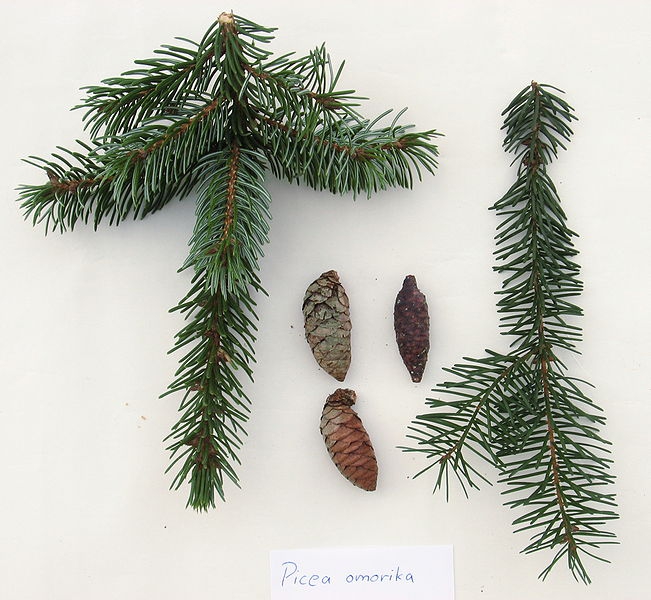
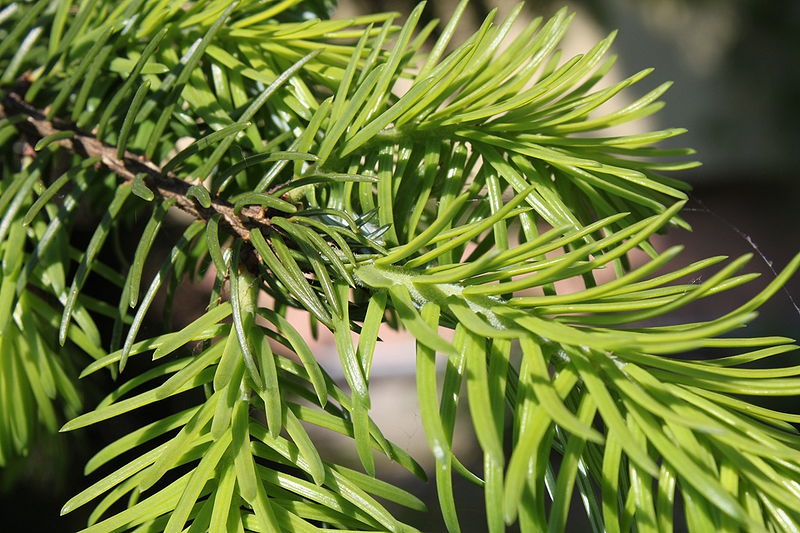
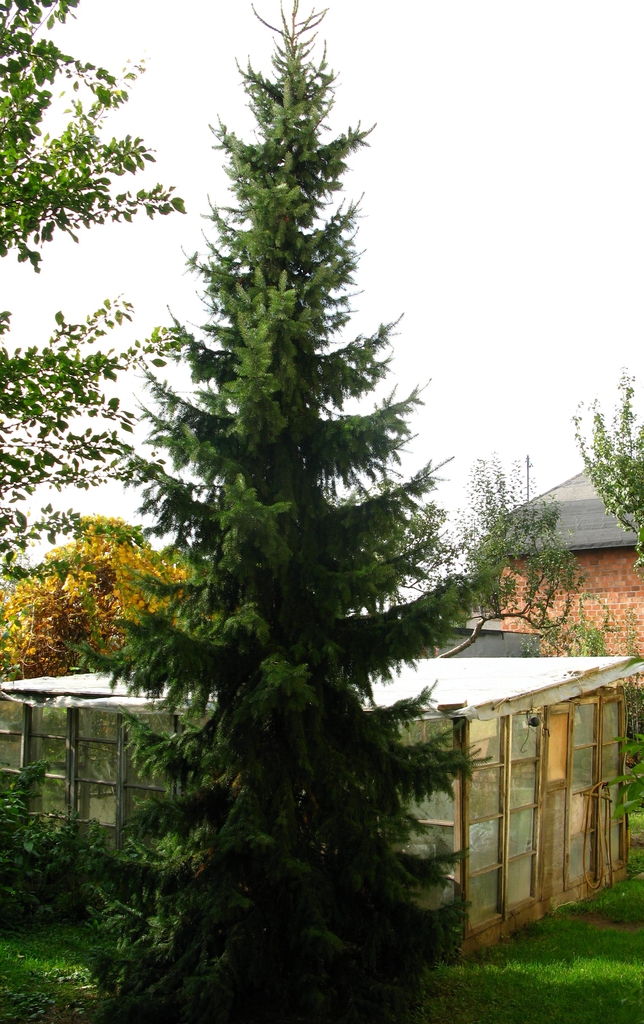
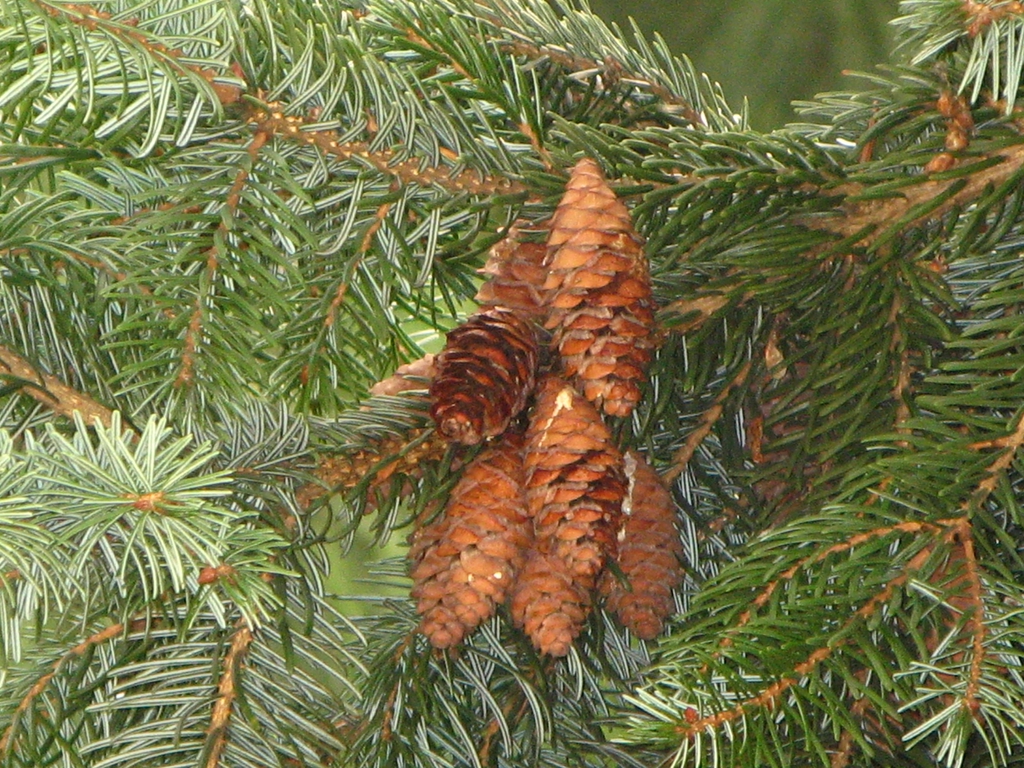
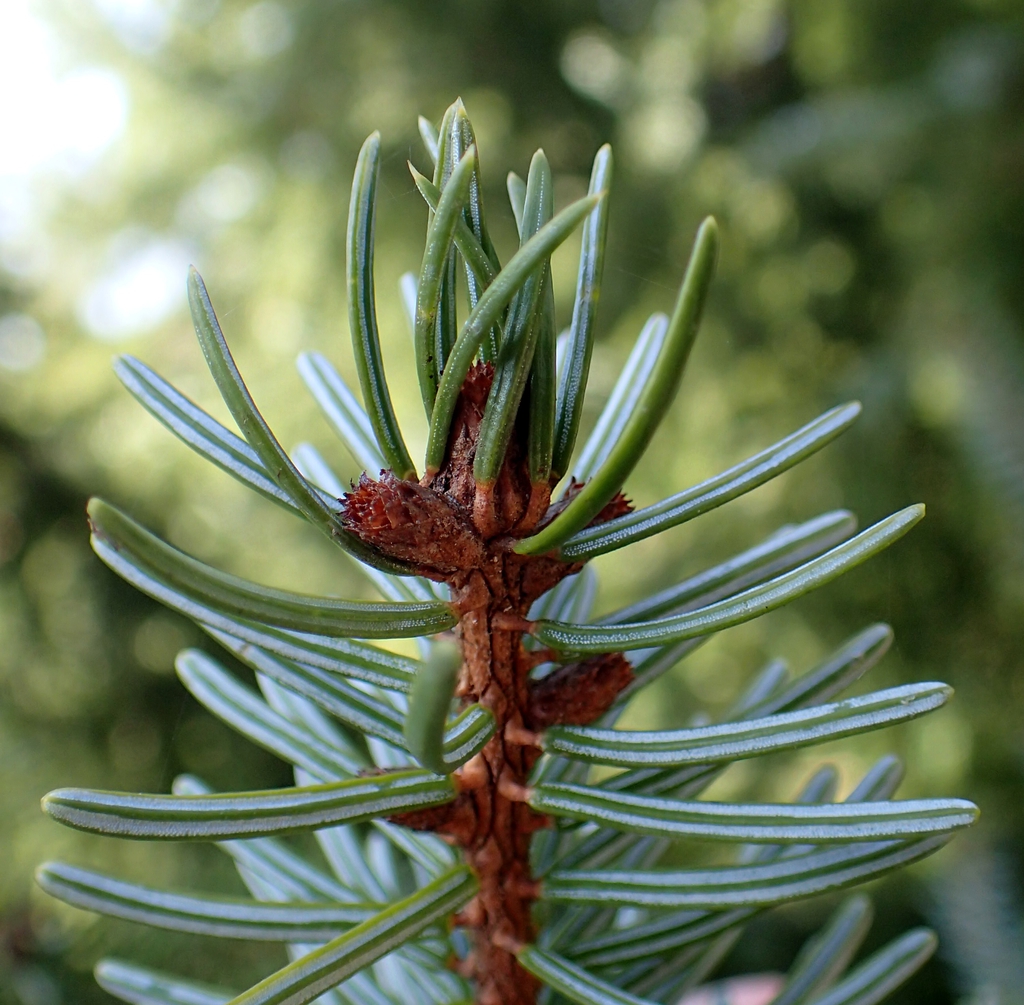
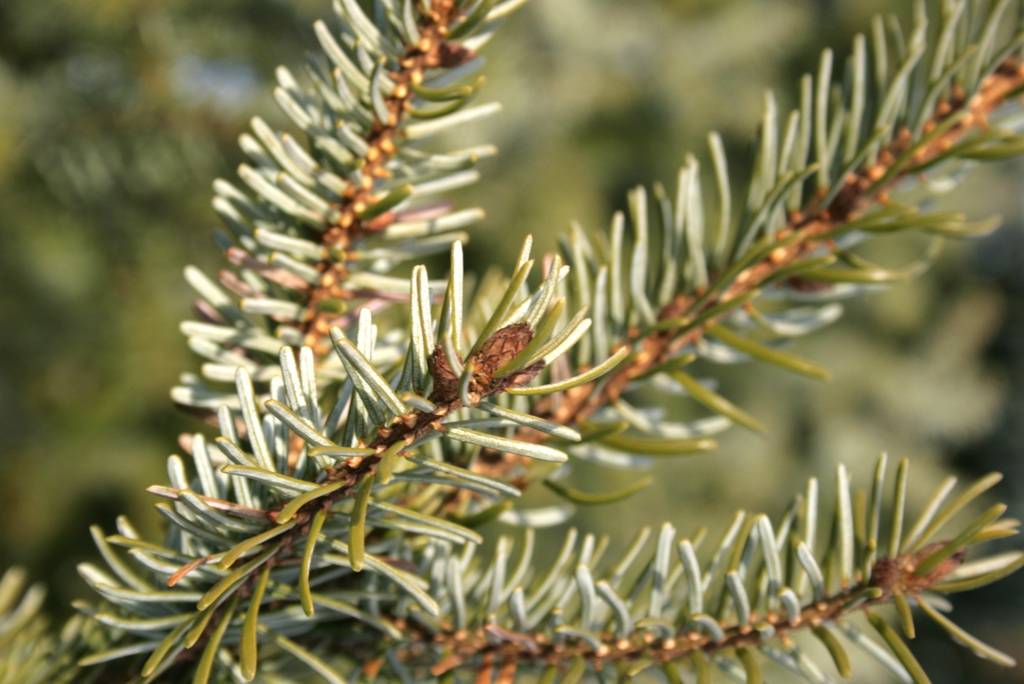
Serbian spruce is a medium-sized, needled evergreen conifer with a narrow trunk, conical crown, and weeping branches. It may grow 40-60 feet tall and 15-20 feet wide. It is one of the most attractive and adaptable spruces. This species has dark brown to reddish-brown scaly bark and bright green, flat, needle-like leaves with silvery undersides. Initially, the seed cones are violet-purple, then ripen to yellowish-brown. In 1875, Josif Pancic, a Serbian doctor and botanist, found stands of this conifer in the limestone cliffs of the Tara and Javor Mountains. It has also been found in Bosnia and Herzegovina. Unfortunately, it is now labeled as endangered in its native country. The Serbian spruce is one of two Picea species native to Europe. The species name omorika is a Serbian word for "slender." This refers to the tree's habit. Other sources state omorika is the Serbian word for "spruce." This species belongs to the pine family (Pinaceae).
The Serbian spruce prefers full sun to partial shade and moist, well-drained soils. It adapts to most soil types and prefers cool summer climates. This species may not perform well in the southeastern United States, but it adapts more readily to hot, humid conditions than many other spruce species. It is hardy in zones 4-7, deer-resistant, and tolerates urban conditions. It is intolerant of salt spray and probably shouldn't be considered as a street tree.
Consider this attractive and popular spruce as an accent or specimen in a home landscape or park. It may also serve as a screen or windbreak when planted in groups.
Insects, Diseases, and Other Plant Problems: Monitor for aphids, spider mites, budworms, and borers. May be susceptible to honey fungus. Otherwise, this species has no other serious insect pests or diseases.
- See this plant in the following landscape :
- Cultivars / Varieties:
-
- 'Blue Sky'
Upright conical habit, with light blue needles on the upper surface and silvery-blue beneath - 'Bruns'
Tree up to 14 ft. tall and 4 ft. wide, narrow habit, with light green and light blue needled-leaves
'Nana'
- 'Pendula'
Slender tree with weeping branches - 'Pendula Bruns'
Tree up to 7 ft. tall and 2 ft. wide, with a narrow, weeping habit and silvery blue-green needled leaves - 'Pimoko'
Dwarf shrub, rounded, dense habit, and thickly branched - 'Sky Trails'
Weeping habit, with blue-green needled leaves and white bands on the undersides

Dwarf, grows up to 4-8 ft. tall, slow-growing, with a dense, globose habit when young, and conical as it matures - 'Blue Sky'
- 'Blue Sky', 'Bruns', 'Nana', 'Pendula', 'Pendula Bruns', 'Pimoko', 'Sky Trails'
- Tags:


- Cultivars / Varieties:
-
- 'Blue Sky'
Upright conical habit, with light blue needles on the upper surface and silvery-blue beneath - 'Bruns'
Tree up to 14 ft. tall and 4 ft. wide, narrow habit, with light green and light blue needled-leaves
'Nana'
- 'Pendula'
Slender tree with weeping branches - 'Pendula Bruns'
Tree up to 7 ft. tall and 2 ft. wide, with a narrow, weeping habit and silvery blue-green needled leaves - 'Pimoko'
Dwarf shrub, rounded, dense habit, and thickly branched - 'Sky Trails'
Weeping habit, with blue-green needled leaves and white bands on the undersides
Dwarf, grows up to 4-8 ft. tall, slow-growing, with a dense, globose habit when young, and conical as it matures - 'Blue Sky'
- 'Blue Sky', 'Bruns', 'Nana', 'Pendula', 'Pendula Bruns', 'Pimoko', 'Sky Trails'
- Tags:
-
-
Attributes:
- Genus:
- Picea
- Species:
- omorika
- Family:
- Pinaceae
- Uses (Ethnobotany):
- Logged in the past. It has been designated as protected since 1986.
- Life Cycle:
- Woody
- Recommended Propagation Strategy:
- Seed
- Stem Cutting
- Country Or Region Of Origin:
- Bosnia, Herzegovina, and Serbia (Tara Mountains)
- Distribution:
- Native: Northwest Balkan Peninsula. Introduced: Belgium, Denmark, Germany, Great Britain, Spain, and Sweden.
- Wildlife Value:
- The seed cones are a food source for birds and small mammals. The tree provides a habitat and nesting site.
- Play Value:
- Wildlife Cover/Habitat
- Wildlife Food Source
- Wildlife Nesting
- Wind Break
- Dimensions:
- Height: 40 ft. 0 in. - 60 ft. 0 in.
- Width: 15 ft. 0 in. - 20 ft. 0 in.
-
-
Whole Plant Traits:
- Plant Type:
- Tree
- Woody Plant Leaf Characteristics:
- Needled Evergreen
- Habit/Form:
- Arching
- Conical
- Pyramidal
- Growth Rate:
- Slow
- Maintenance:
- Low
- Texture:
- Medium
-
-
Cultural Conditions:
- Light:
- Full sun (6 or more hours of direct sunlight a day)
- Partial Shade (Direct sunlight only part of the day, 2-6 hours)
- Soil Texture:
- Clay
- Loam (Silt)
- Sand
- Soil pH:
- Acid (<6.0)
- Alkaline (>8.0)
- Neutral (6.0-8.0)
- Soil Drainage:
- Good Drainage
- Moist
- Available Space To Plant:
- 24-60 feet
- NC Region:
- Mountains
- Piedmont
- USDA Plant Hardiness Zone:
- 4a, 4b, 5a, 5b, 6a, 6b, 7a, 7b
-
-
Fruit:
- Fruit Color:
- Brown/Copper
- Gold/Yellow
- Purple/Lavender
- Red/Burgundy
- Fruit Value To Gardener:
- Showy
- Display/Harvest Time:
- Fall
- Fruit Length:
- 1-3 inches
- Fruit Description:
- The pollen cones are light red. The young seed cones are violet-purple and ripen to yellowish-brown. They are 1.5 inches long, with finely toothed scales, and hang downward. Pollination occurs from April to June. The cones ripen from October to November. The seeds are tiny and winged.
-
-
Flowers:
- Flower Size:
- 1-3 inches
- Flower Description:
- Non-flowering
-
-
Leaves:
- Woody Plant Leaf Characteristics:
- Needled Evergreen
- Leaf Color:
- Gray/Silver
- Green
- Leaf Feel:
- Glossy
- Leaf Value To Gardener:
- Fragrant
- Leaf Type:
- Needles
- Leaf Shape:
- Linear
- Hairs Present:
- No
- Leaf Length:
- < 1 inch
- Leaf Width:
- < 1 inch
- Leaf Description:
- The overlapping flat needles are glossy dark green on the upper surface, with 2 white stomatal lines on the silvery underside. The needles measure 0.5 to 1 inch long, and they emit a citrus-like scent.
-
-
Bark:
- Bark Color:
- Dark Brown
- Red/Burgundy
- Surface/Attachment:
- Scaly
- Bark Description:
- The bark is thin, reddish-brown, with scaly plates.
-
-
Stem:
- Stem Is Aromatic:
- No
- Stem Form:
- Straight
- Stem Description:
- Distinctive to this species, the branches are short (up to 6') and pendant. They curl upwards at the ends.
-
-
Landscape:
- Landscape Location:
- Lawn
- Recreational Play Area
- Woodland
- Design Feature:
- Accent
- Small groups
- Specimen
- Attracts:
- Small Mammals
- Songbirds
- Resistance To Challenges:
- Deer
- Urban Conditions