


Phyllanthus tenellus
- Phonetic Spelling
- fil-LAN-thus ten-ELL-us
- Description
-
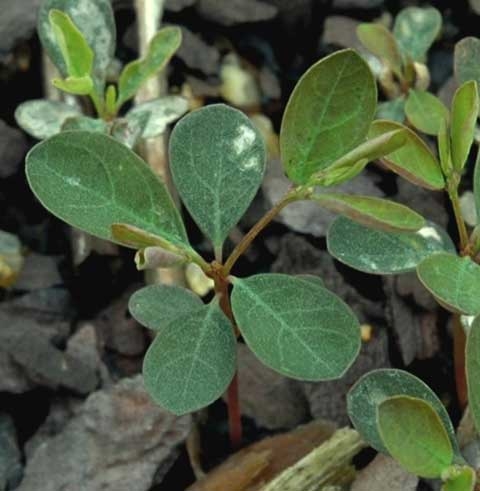
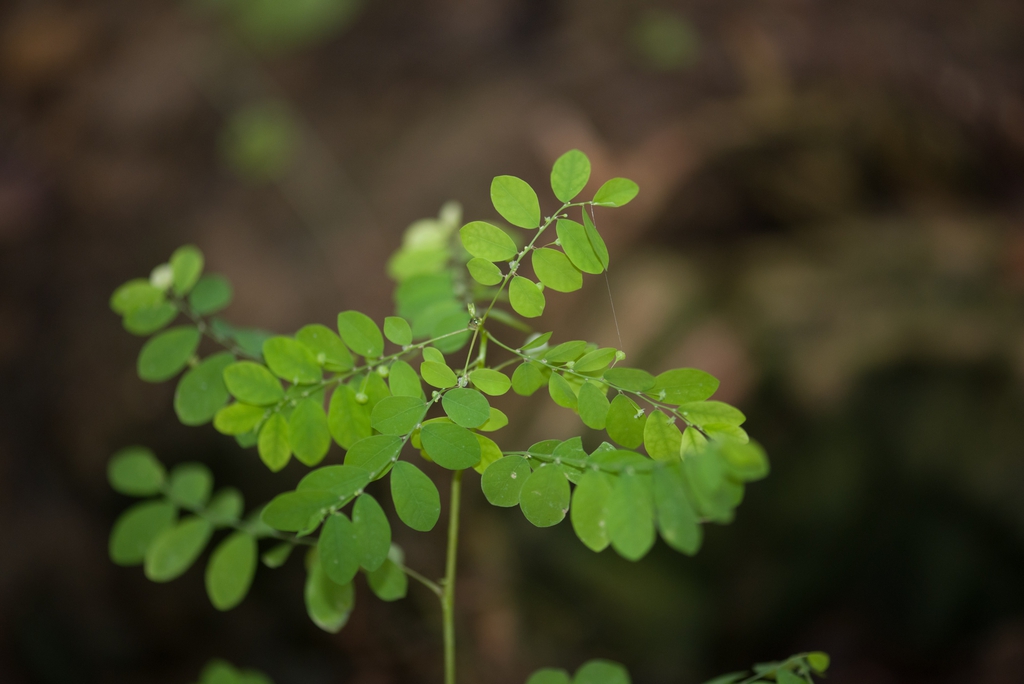
Longstalked phyllanthus (in the Leaf flower family) is an erect summer annual, although it may occur as a perennial in subtropical environments. It is native to the Mascarene Islands in the Indian Ocean, hence the common name. It is typically considered a weed in cultivated and disturbed areas. It is thought to have been introduced into Florida in the 1920's and has continued to spread ever since.
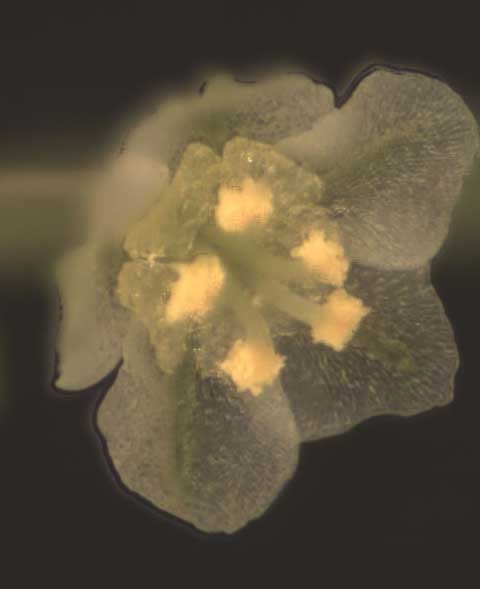
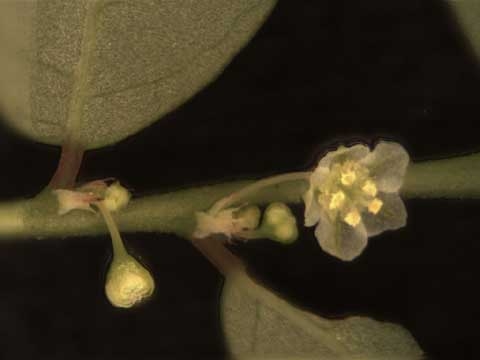
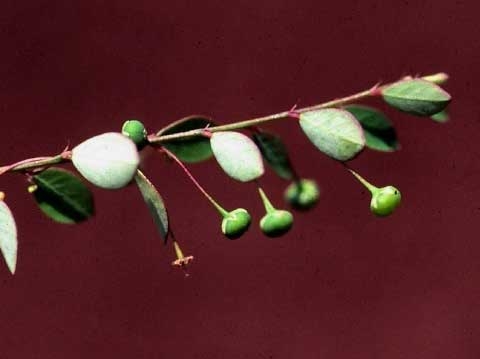
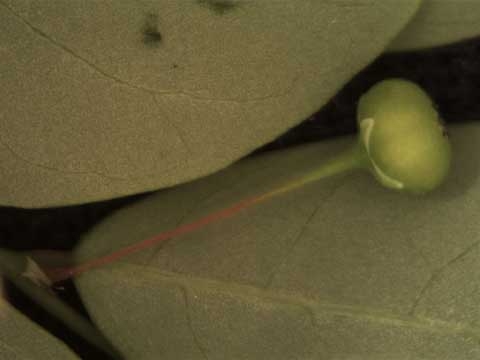
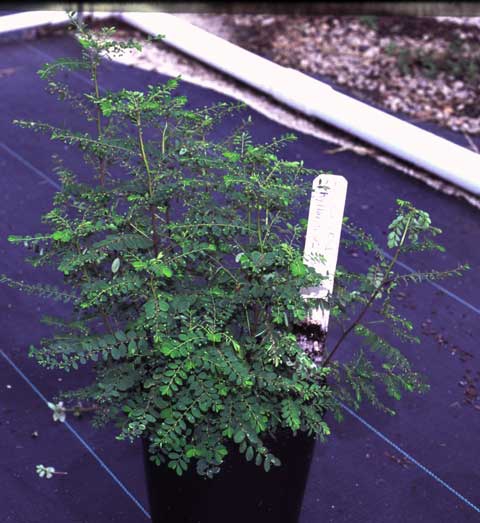
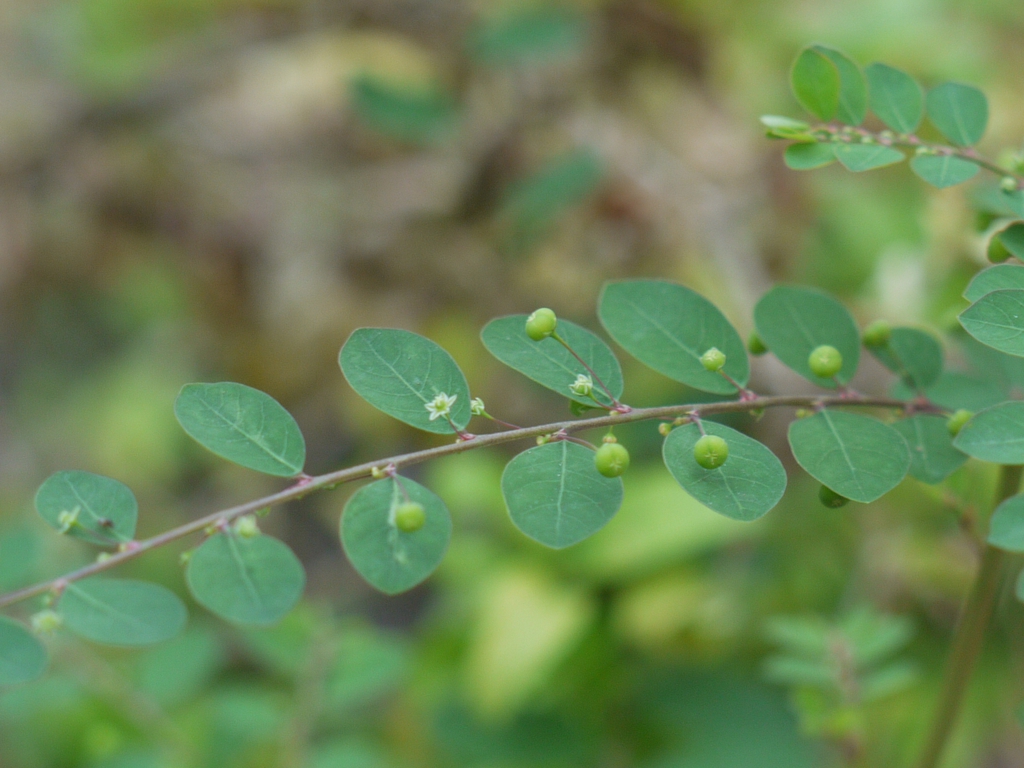
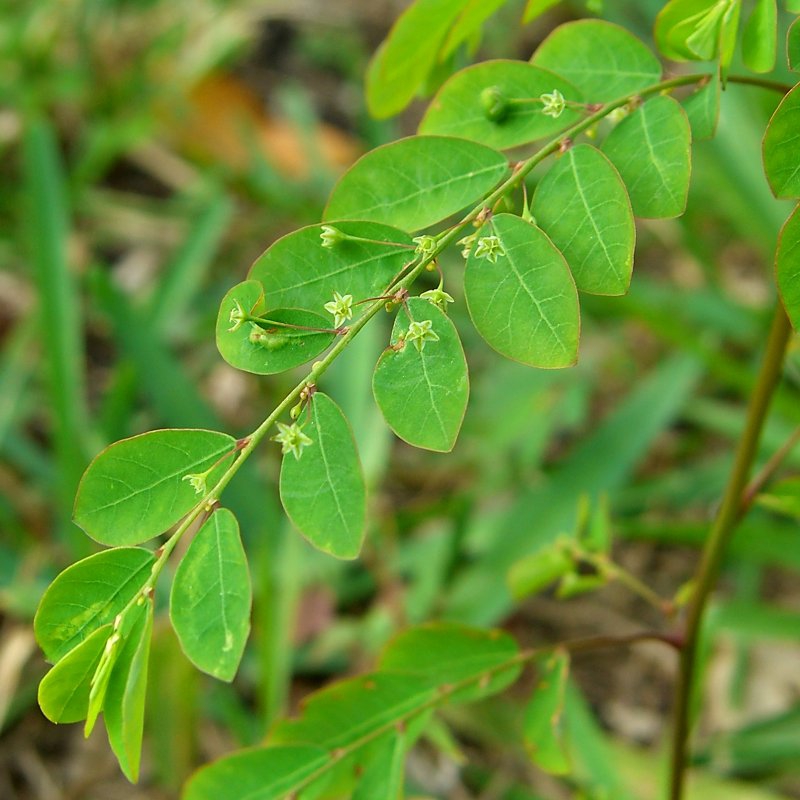
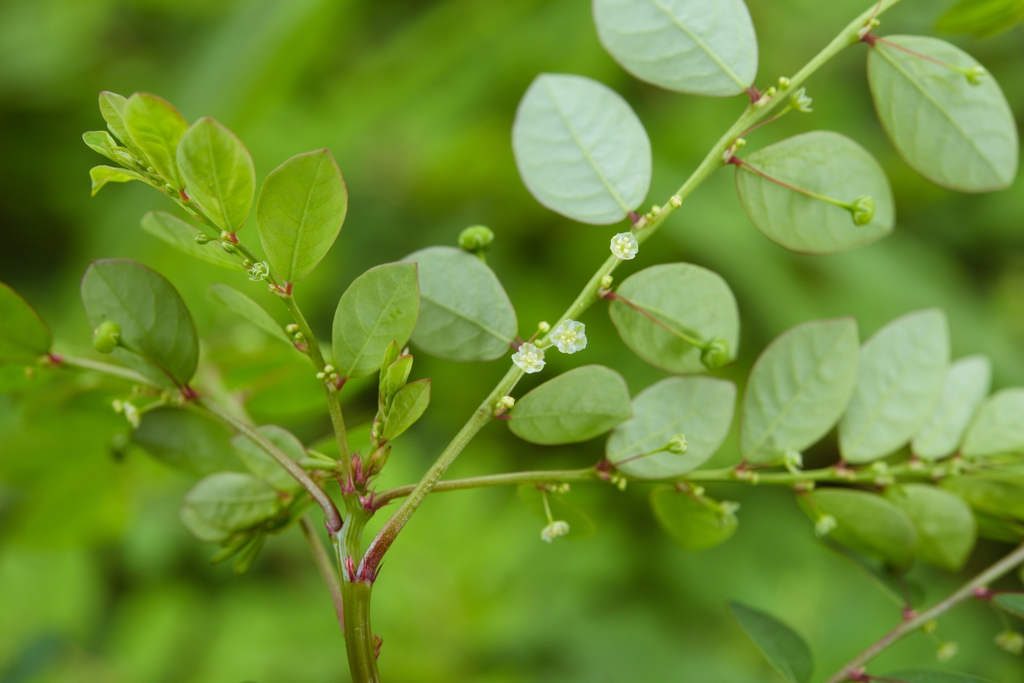
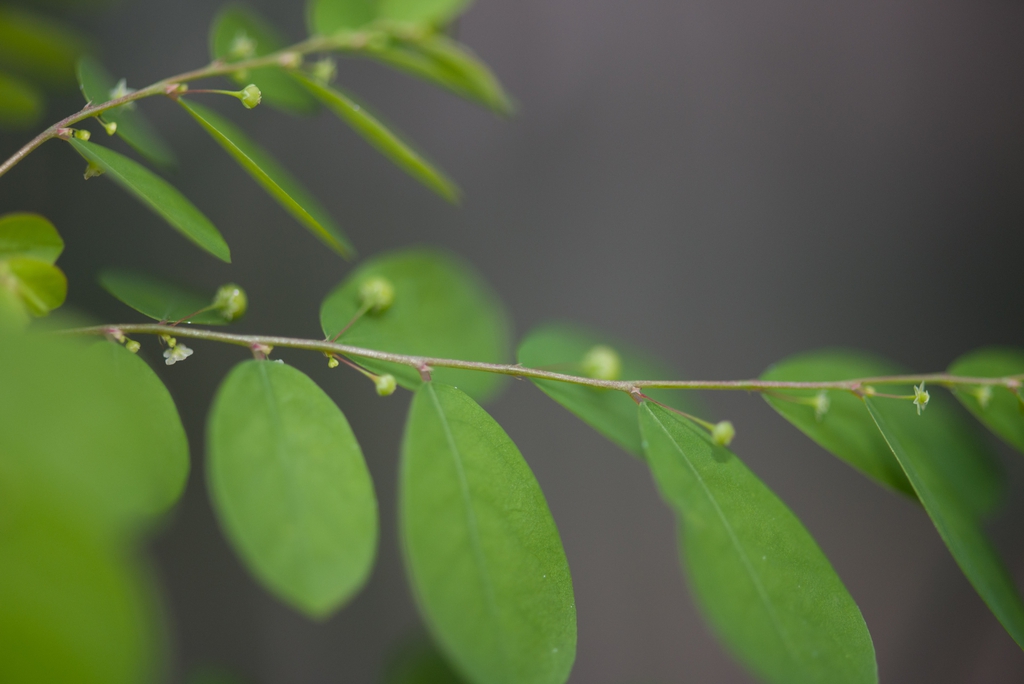
Longstalked phyllanthus typically produces a single, erect stem 2 to 3 feet in height, with little branching other than fruiting branches. Plant parts do not exude milky sap when broken. Flowers are greenish-white and round green fruits are produced on the undersides of the lateral branches in the axils of the leaves on short stalks. Seedlings emerge in summer through early autumn but may persist year-round in sub-tropical climates. Plants may flower from summer through early fall when only a few inches tall, then die after frost. Seeds are forcefully expelled short distances from the fruit when ripe.
Longstalked phyllanthus is not well controlled by most preemergence herbicides labeled for use in nursery crops. Emerged plants should be hand weeded when young to prevent seed production and spread. Herbicide efficacy rankings for this species are based on limited experimental data.
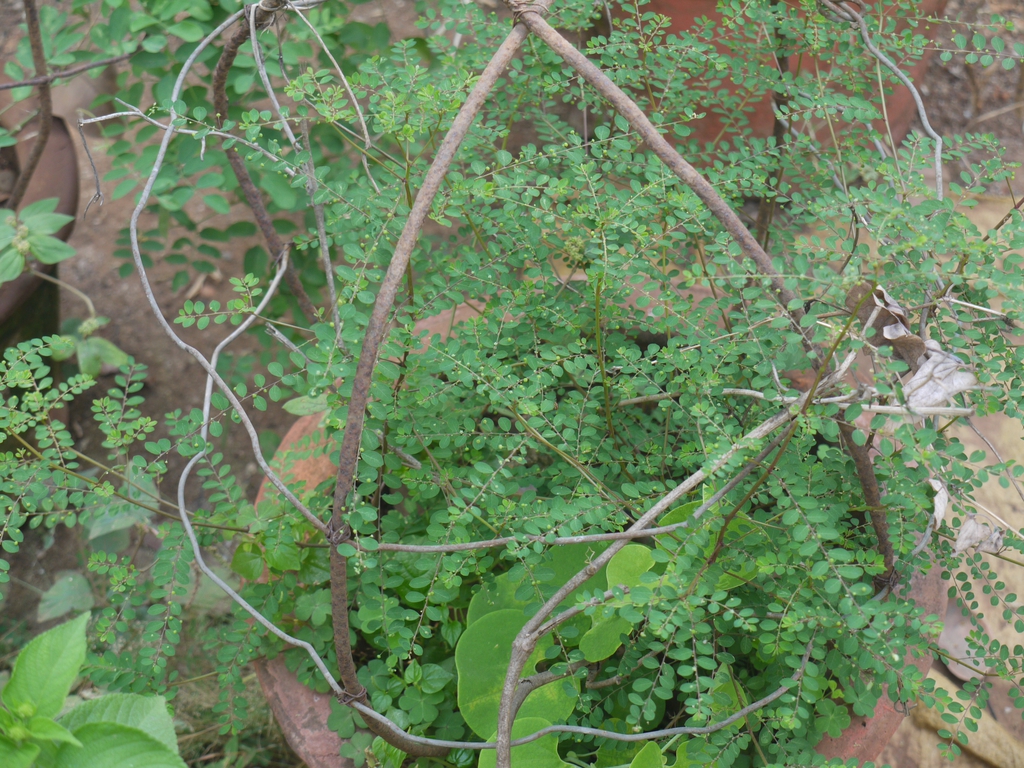
Management strategies for longstalked phyllanthus: Longstalked phyllanthus commonly grows in the potting media of container-grown ornamentals and often through drainage holes in containers or through tears in nursery fabric close to irrigation risers. It is a problem in greenhouses and landscapes including both turf areas and landscape beds. As long-stalked phyllanthus germination increases in moist environments, reducing irrigation can be effective. Group plants according to their water requirements and ensure irrigation systems are well-maintained and are applying irrigation uniformly. Hand pull long-stalked phyllanthus as soon as it is seen. Once established, both Phyllanthus species can be difficult to hand-weed due to their extensive root systems. Due to the high light requirements needed for germination, mulching can be effective.
Insects, Diseases, and Other Plant Problems: Aphids, whiteflies, spidermites and caterpillars. Diseas include fungal leaf spots & blights and sooty mold.
- See this plant in the following landscape :
- Cultivars / Varieties:
-
- Tags:


- Cultivars / Varieties:
-
- Tags:
-
-
Attributes:
- Genus:
- Phyllanthus
- Species:
- tenellus
- Family:
- Phyllanthaceae
- Life Cycle:
- Annual
- Country Or Region Of Origin:
- Tanzania to Mozambique and Arabian Peninsula
- Distribution:
- Has spread to southeastern United States, Atlantic coast of South America, parts of Europe and Africa.
-
-
Whole Plant Traits:
- Plant Type:
- Annual
- Weed
- Habit/Form:
- Erect
- Multi-stemmed
- Spreading
- Maintenance:
- High
-
-
Fruit:
- Fruit Type:
- Capsule
- Fruit Description:
- Seeds eject short distances.
-
-
Flowers:
- Flower Color:
- Green
- White
- Flower Bloom Time:
- Summer
- Flower Size:
- < 1 inch
- Flower Description:
- Small, greenish white flowers.
-
-
Leaves:
- Leaf Color:
- Green
- Leaf Shape:
- Elliptical
- Obovate
- Hairs Present:
- No
- Leaf Description:
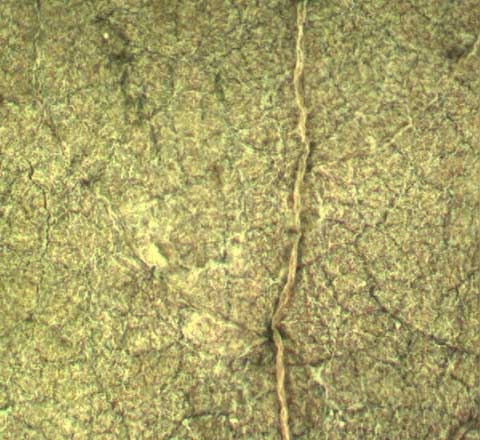
- Two rows of well developed stipules, pale green or pink. Leaf blade elliptic to obovate with both surfaces glabrous.
-
-
Stem:
- Stem Is Aromatic:
- No
- Stem Cross Section:
- Round
- Stem Surface:
- Smooth (glabrous)
- Stem Description:
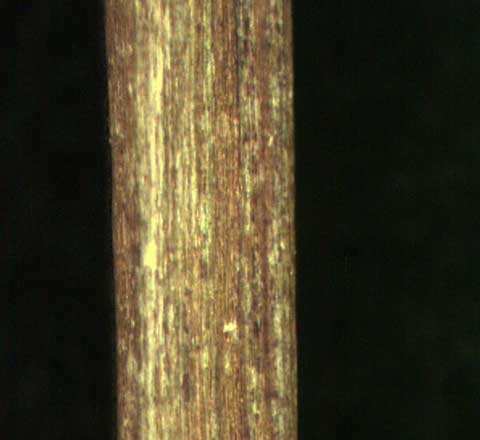
- Main stems round, sometimes rough. Leaves on secondary stems only.
-
-
Landscape:
- Problems:
- Weedy