


Syringa Philadelphus coronarius
Other Common Name(s):
Previously known as:
- Philadelphus caucasicus
- Philadelphus pallidus
- Philadelphus zeyheri
- Phonetic Spelling
- fill-uh-DEL-fus kore-uh-NAIR-ee-us
- Description
-
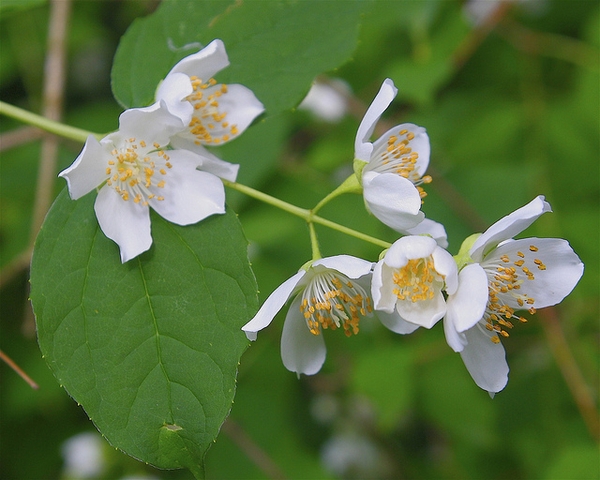
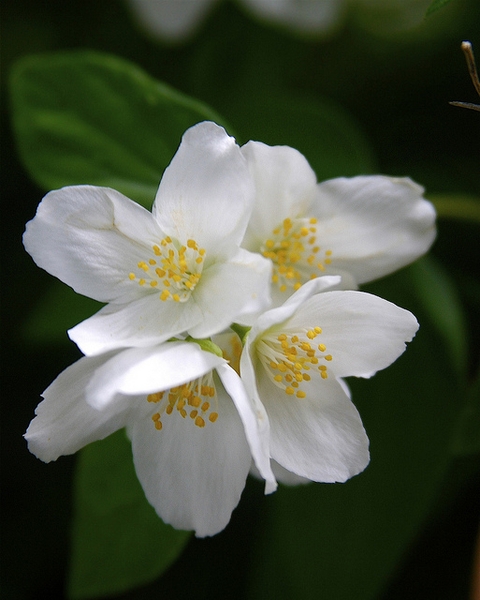
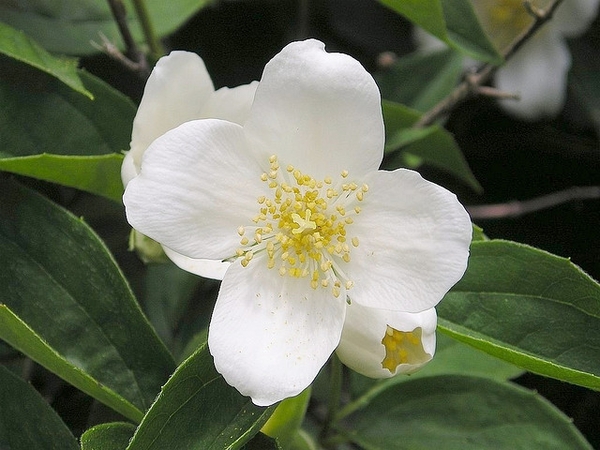
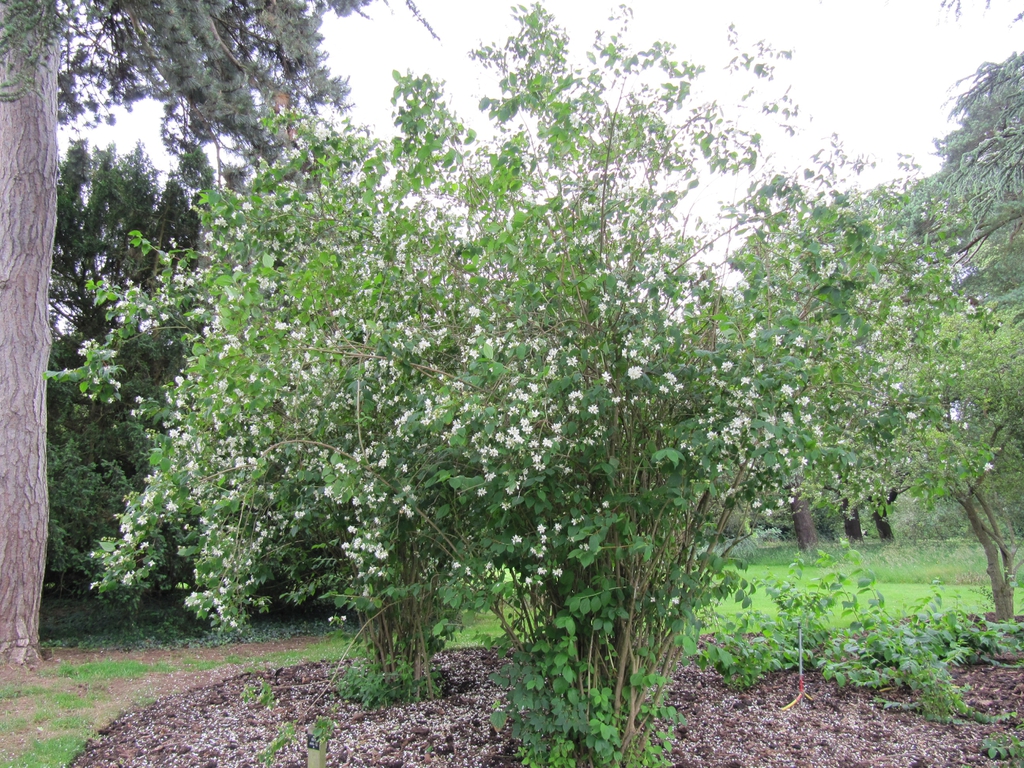
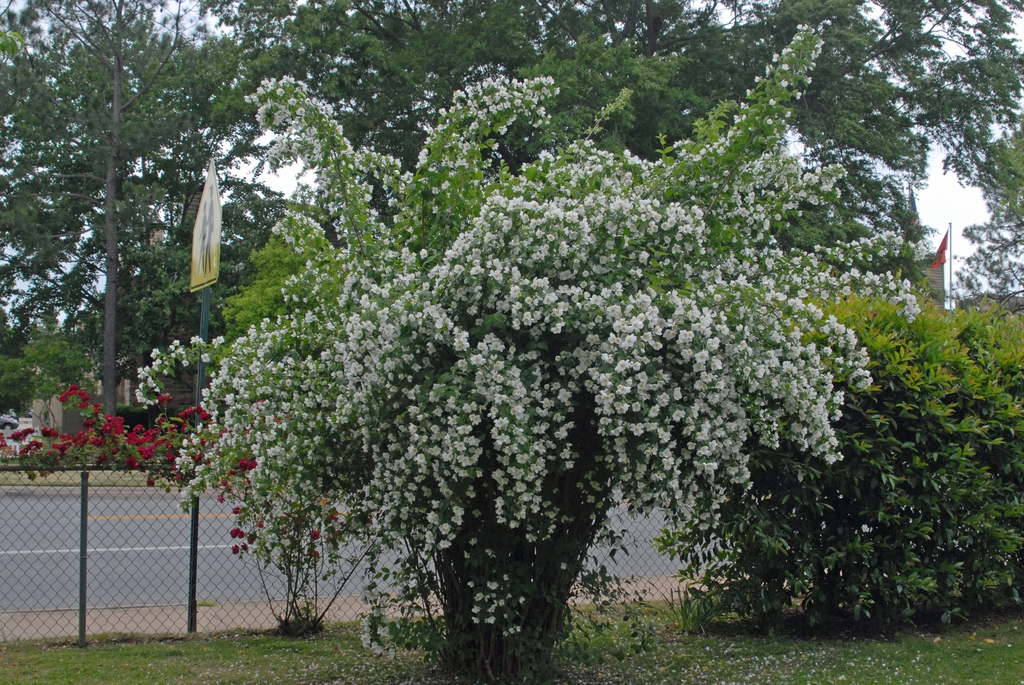
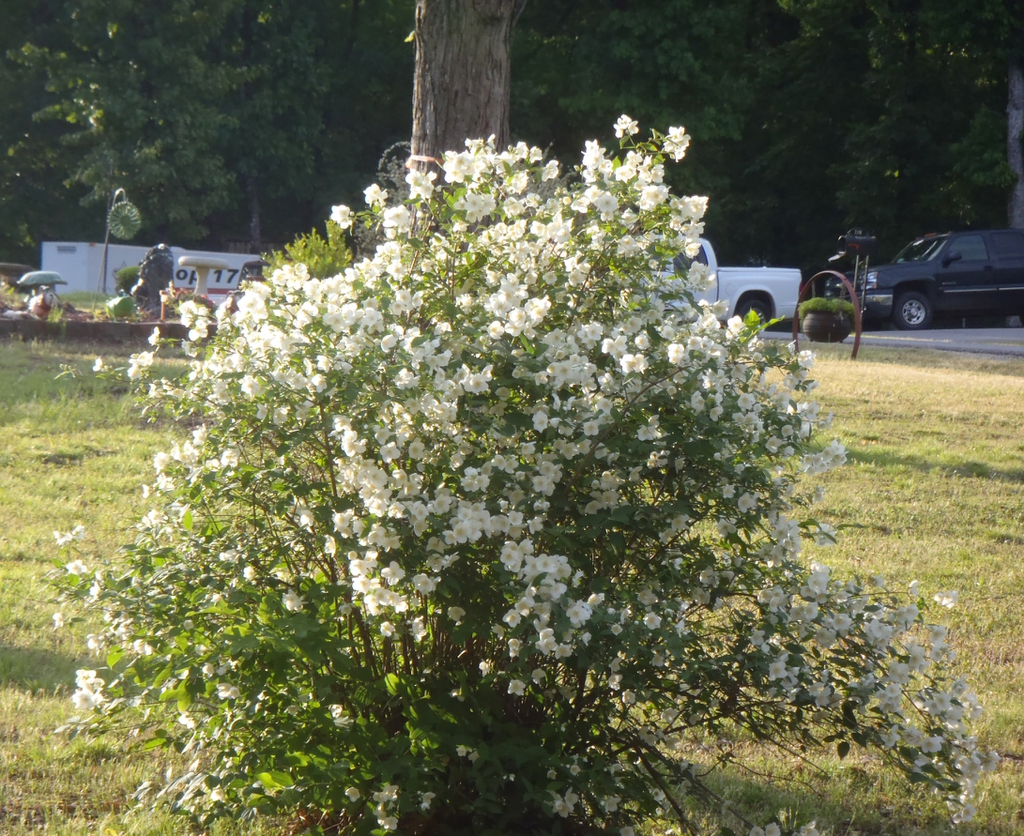
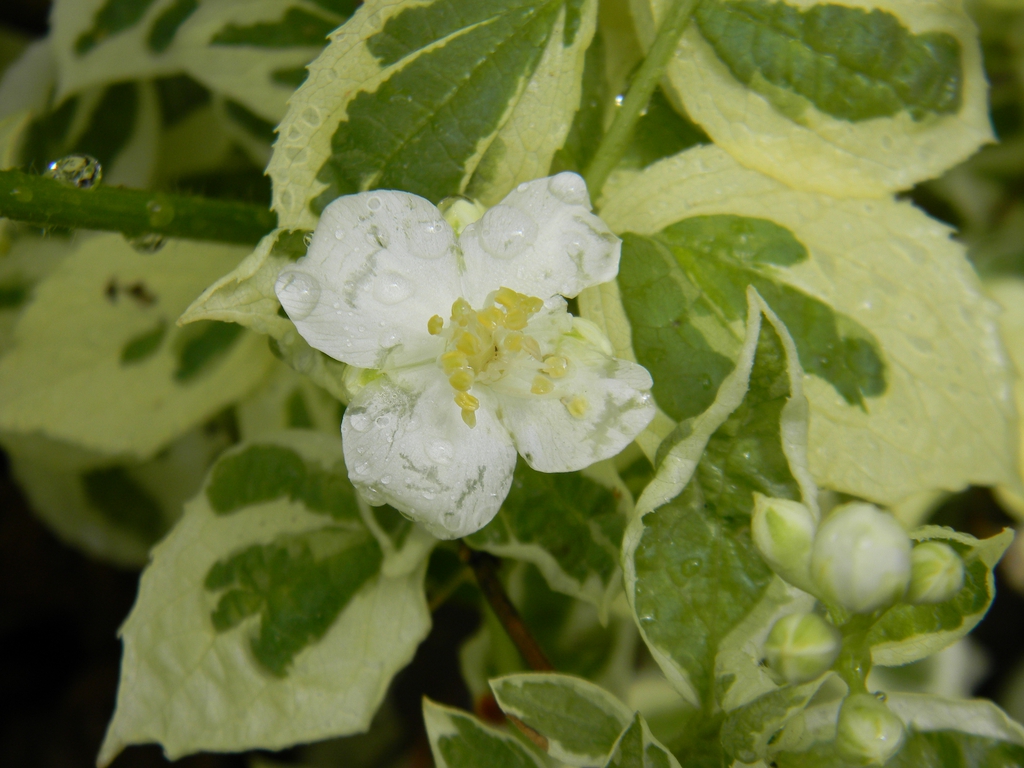
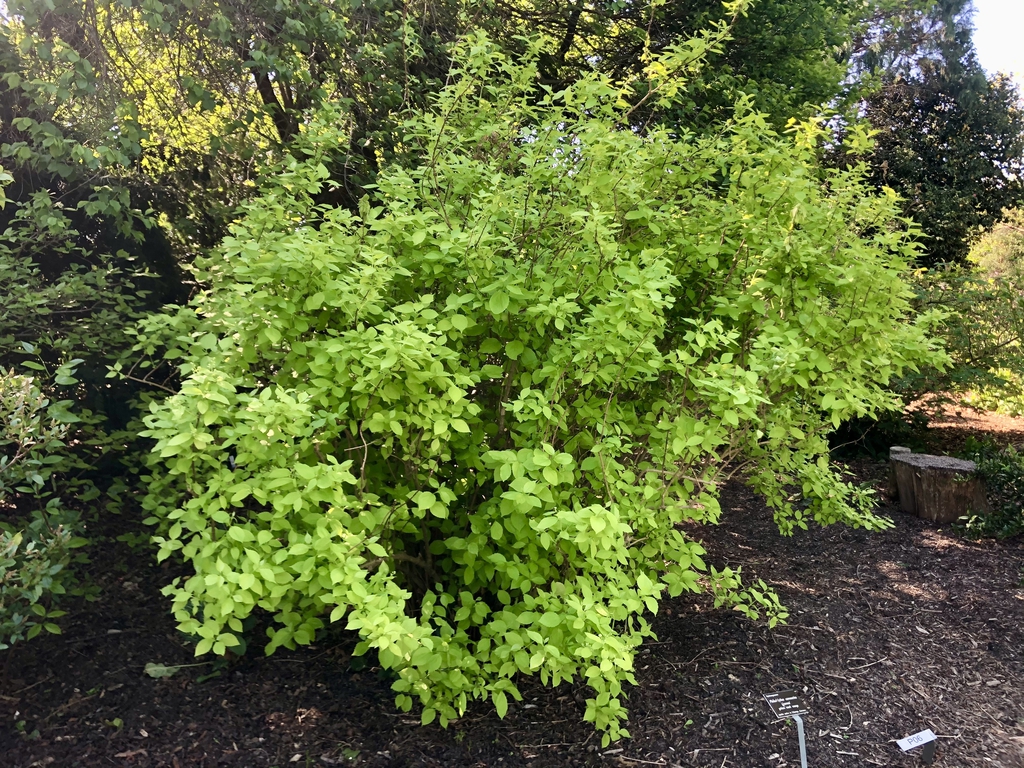
Sweet mock orange is a fast-growing, dense, rounded, flowering deciduous shrub with stiff, straight, ascending, arching branches and sweetly scented white, four-petaled late spring flowers. It is multi-stemmed and grows 10 to 12 feet tall and equally as wide. The blooms resemble an orange blossom; hence the common name, mock orange. It belongs to the hydrangea family (Hydrangeaceae) and is native to southeastern Europe and Asia Minor. The genus name Philadelphus is Greek, meaning "loving one's brother or sister." The specific epithet coronarius is Latin and refers to the flowers used as garlands.
Sweet mock orange prefers full sun to partial shade and tolerates a variety of soil types but prefers moist, well-drained soil with an acidic to neutral pH. It is drought- and wind-tolerant and deer- and rabbit-resistant. This shrub can become leggy and requires pruning to keep its shape. Prune immediately after blooming, since it flowers on the previous year's wood. To encourage new growth, prune out 1/3 of the shrub's older branches. Best propagated by stem cuttings, layering, or suckers.
While it is gorgeous in bloom and its fragrance is intoxicating, it is rather unremarkable the rest of the year. Plan your landscape design accordingly.
To enjoy its fragrance, consider planting near a patio. It makes an excellent addition to a cottage garden or used as a foundation planting, hedge, or privacy screen.
Insects, Diseases, and Other Plant Problems: No serious problems. Aphids, nematodes, scale, and leaf miners can cause some damage. Diseases such as leaf spot, canker, powdery mildew, and rust can occur. It is intolerant of poorly-drained soils.
- See this plant in the following landscape :
- Cultivars / Varieties:
-
- 'Aureus'
Grows 5 to 6 feet tall and wide, with golden foliage in the spring that become yellowish-green in the summer - 'Deutziiflorus'
Dwarf habit, with double flowers - 'Icezam' or 'Icelandic™'
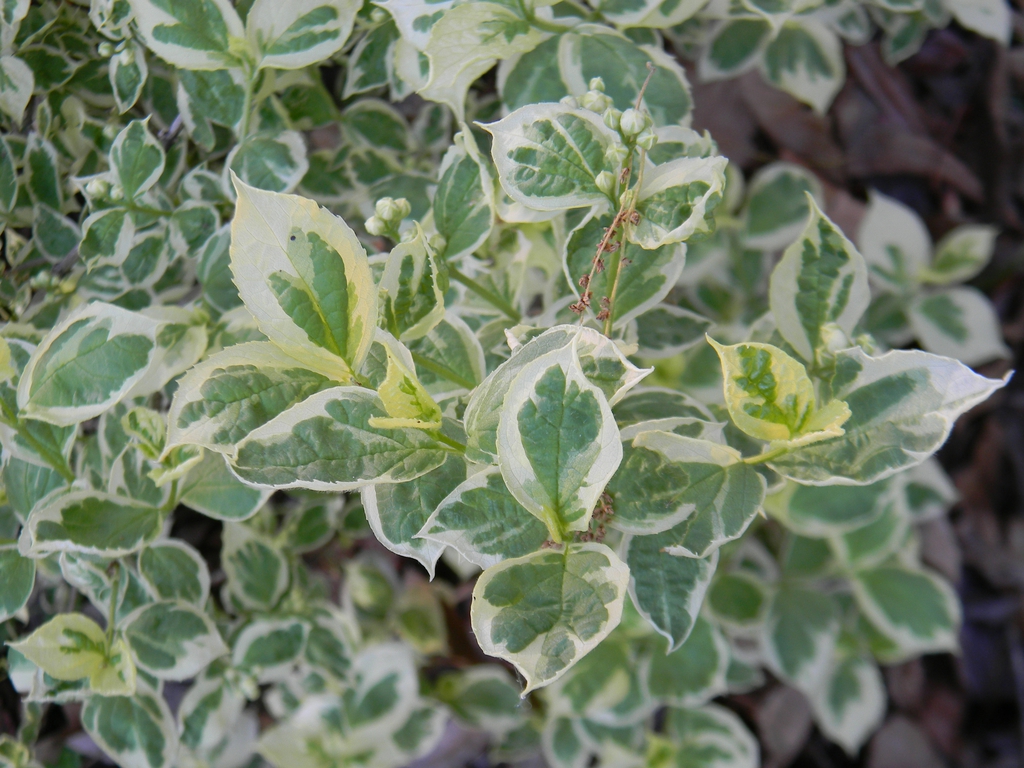
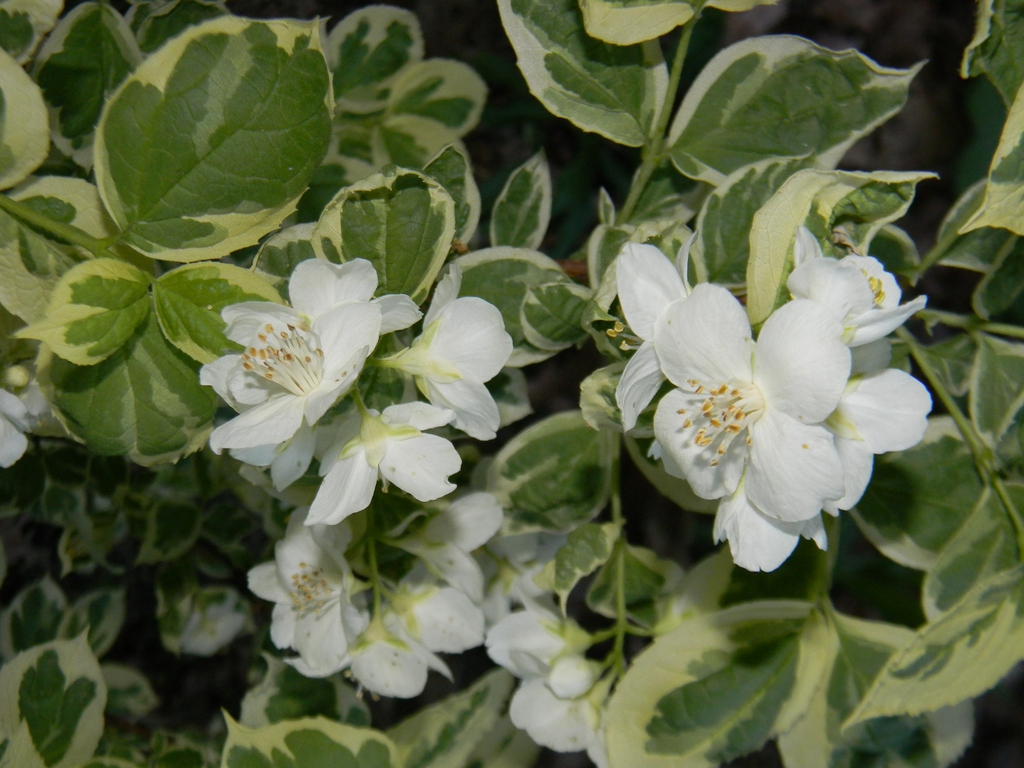
Grows 4 to 5 feet tall and wide, with green leaves variegated with creamy white edges and pure white blooms - Illuminati Arch®
Grows up to 4 feet tall and wide, hardy in zones 4b- 7b, needs very little pruning, fragrant white flowers, dark green foliage - 'Nanus'
Grows up to 3 feet tall, with shorter leaves, single flowers with a double or triple row of petals - 'Romanizam' or ROMANTIC KNIGHT
Mounding shrub with large, semi-doubled, fragrant, white flowers - 'Variegatus'
Green foliage with creamy white border
- 'Aureus'
- 'Aureus', 'Deutziiflorus', 'Icezam' or 'Icelandic™', Illuminati Arch®, 'Nanus', 'Romanizam' or ROMANTIC KNIGHT, 'Variegatus'
- Tags:


- Cultivars / Varieties:
-
- 'Aureus'
Grows 5 to 6 feet tall and wide, with golden foliage in the spring that become yellowish-green in the summer - 'Deutziiflorus'
Dwarf habit, with double flowers - 'Icezam' or 'Icelandic™'
Grows 4 to 5 feet tall and wide, with green leaves variegated with creamy white edges and pure white blooms - Illuminati Arch®
Grows up to 4 feet tall and wide, hardy in zones 4b- 7b, needs very little pruning, fragrant white flowers, dark green foliage - 'Nanus'
Grows up to 3 feet tall, with shorter leaves, single flowers with a double or triple row of petals - 'Romanizam' or ROMANTIC KNIGHT
Mounding shrub with large, semi-doubled, fragrant, white flowers - 'Variegatus'
Green foliage with creamy white border
- 'Aureus'
- 'Aureus', 'Deutziiflorus', 'Icezam' or 'Icelandic™', Illuminati Arch®, 'Nanus', 'Romanizam' or ROMANTIC KNIGHT, 'Variegatus'
- Tags:
-
-
Attributes:
- Genus:
- Philadelphus
- Species:
- coronarius
- Family:
- Hydrangeaceae
- Life Cycle:
- Woody
- Recommended Propagation Strategy:
- Layering
- Stem Cutting
- Country Or Region Of Origin:
- Northeast Turkey to the Caucasus
- Distribution:
- Native: North Caucasus, Transcaucasus, and Turkey. Introduced: Assam, Austria, Baltic States, Central European Russia, Czechoslovakia, France, Germany, Great Britain, Greece, Hungary, Ireland, Italy, Myanmar, New Brunswick, Norway, Ontario, Portugal, Quebec, Romania, Southern European Russia, Spain, Sweden, Turkmenistan, United States--AR, GA, IL, IN, KS, KY, ME, MD, MA, MI, MN, MO, NH, NJ, NY, NC, OH, PA, RI, SC, VT, VA, and WI; Uzbekistan, and West Siberia.
- Wildlife Value:
- The flowers attract hummingbirds, bees, and butterflies.
- Play Value:
- Attractive Flowers
- Attracts Pollinators
- Fragrance
- Screening
- Wind Break
- Dimensions:
- Height: 10 ft. 0 in. - 12 ft. 0 in.
- Width: 10 ft. 0 in. - 12 ft. 0 in.
-
-
Whole Plant Traits:
- Plant Type:
- Shrub
- Woody Plant Leaf Characteristics:
- Deciduous
- Habit/Form:
- Arching
- Ascending
- Dense
- Erect
- Multi-stemmed
- Rounded
- Growth Rate:
- Rapid
- Maintenance:
- Low
- Texture:
- Medium
-
-
Cultural Conditions:
- Light:
- Full sun (6 or more hours of direct sunlight a day)
- Partial Shade (Direct sunlight only part of the day, 2-6 hours)
- Soil Texture:
- Clay
- Loam (Silt)
- Sand
- Soil pH:
- Acid (<6.0)
- Neutral (6.0-8.0)
- Soil Drainage:
- Good Drainage
- Moist
- Available Space To Plant:
- 6-feet-12 feet
- NC Region:
- Coastal
- Mountains
- Piedmont
- USDA Plant Hardiness Zone:
- 4a, 4b, 5a, 5b, 6a, 6b, 7a, 7b, 8a, 8b
-
-
Fruit:
- Fruit Type:
- Capsule
- Fruit Description:
- 4-valved capsule
-
-
Flowers:
- Flower Color:
- White
- Flower Inflorescence:
- Raceme
- Flower Value To Gardener:
- Fragrant
- Good Cut
- Showy
- Flower Bloom Time:
- Spring
- Flower Shape:
- Cup
- Flower Petals:
- 4-5 petals/rays
- Flower Size:
- 1-3 inches
- Flower Description:
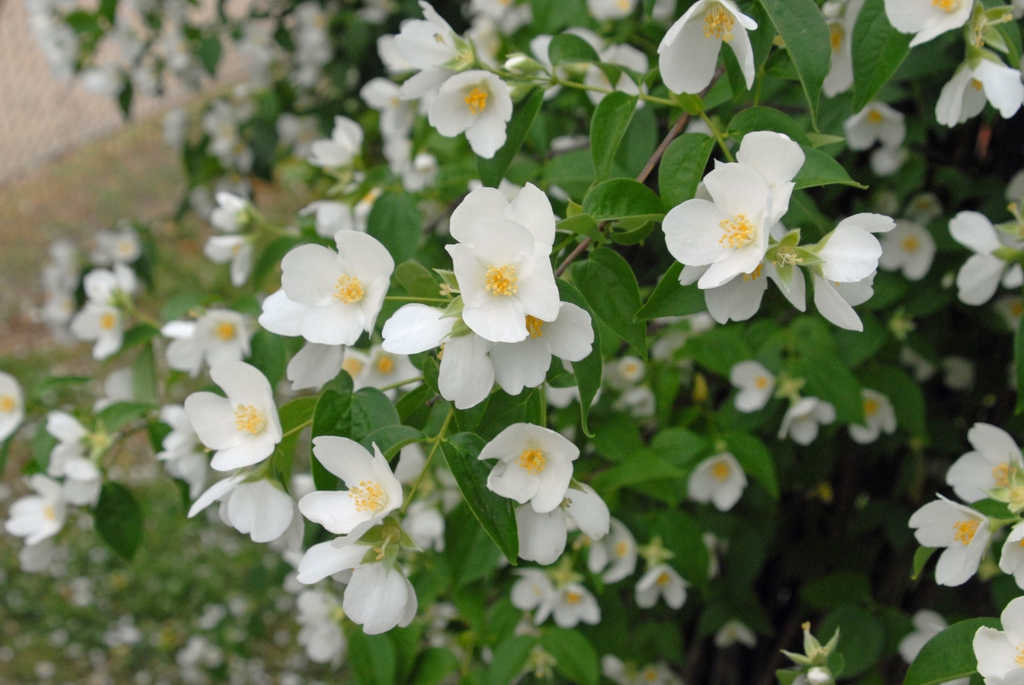
- Five to nine single, cup-shaped, fragrant, 4- petaled white blooms appear in small clusters or racemes. Each bloom measures 1.5 inches wide. The petals are oval and 3/8 inch wide. Blooms from May to June.
-
-
Leaves:
- Woody Plant Leaf Characteristics:
- Deciduous
- Leaf Color:
- Green
- Leaf Type:
- Simple
- Leaf Arrangement:
- Opposite
- Leaf Shape:
- Ovate
- Leaf Margin:
- Dentate
- Hairs Present:
- Yes
- Leaf Length:
- 3-6 inches
- Leaf Width:
- 1-3 inches
- Leaf Description:
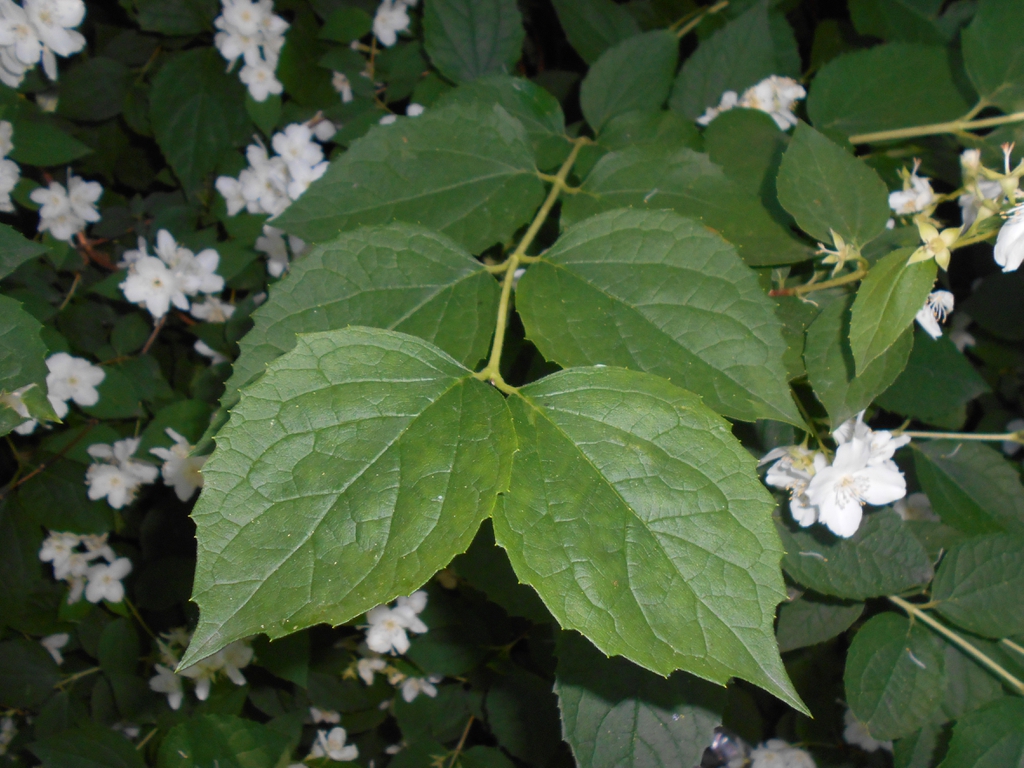
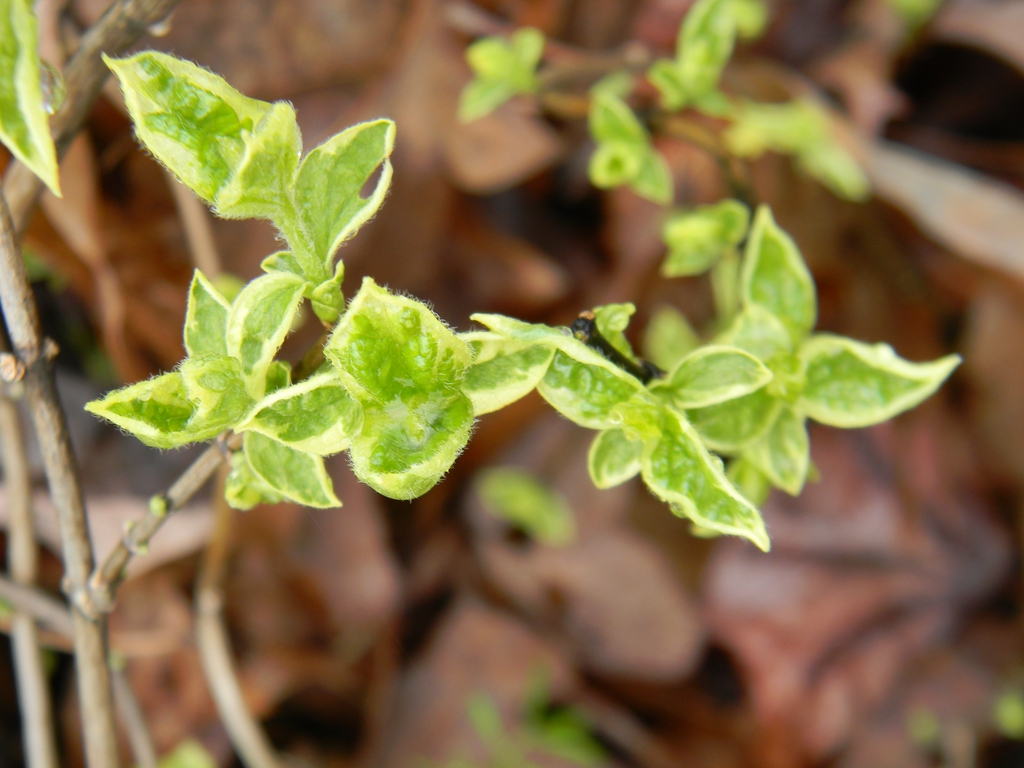
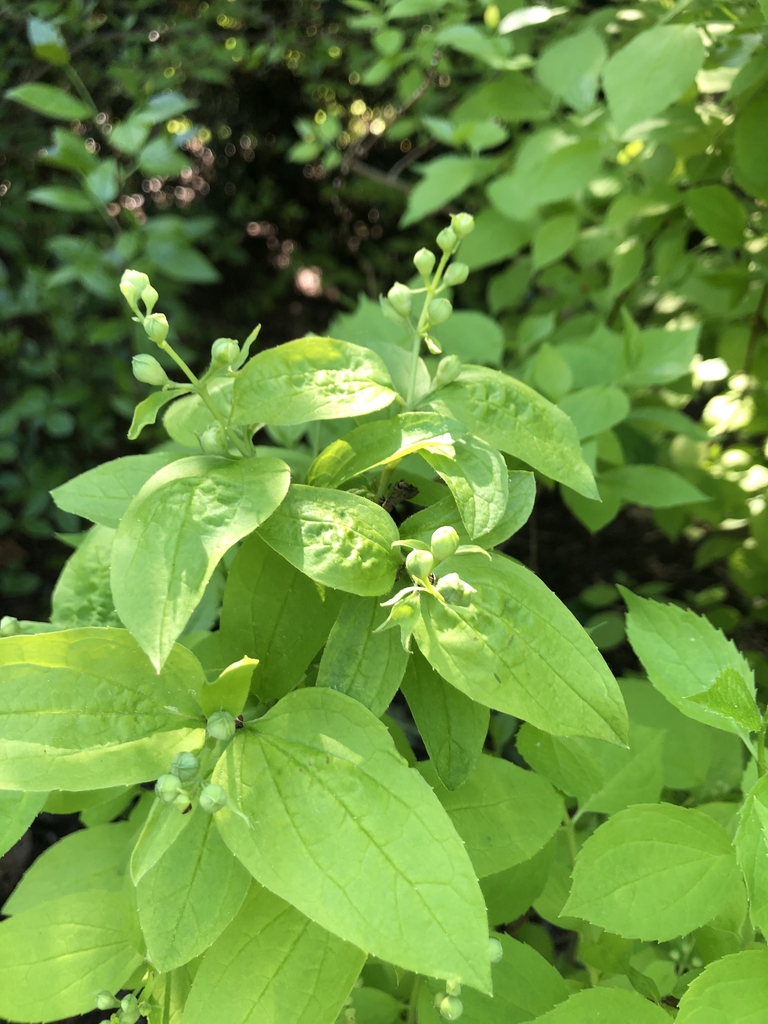
- The leaves are opposite, simple, medium to dark green, and measure 1.5 to 4 inches long and 5/8 to 2 inches wide. They are smooth except for a few hairs on the upper or lower side of the leaf and has distantly toothed margins. Non-showy fall color.
-
-
Bark:
- Bark Color:
- Dark Brown
- Surface/Attachment:
- Exfoliating
- Bark Description:
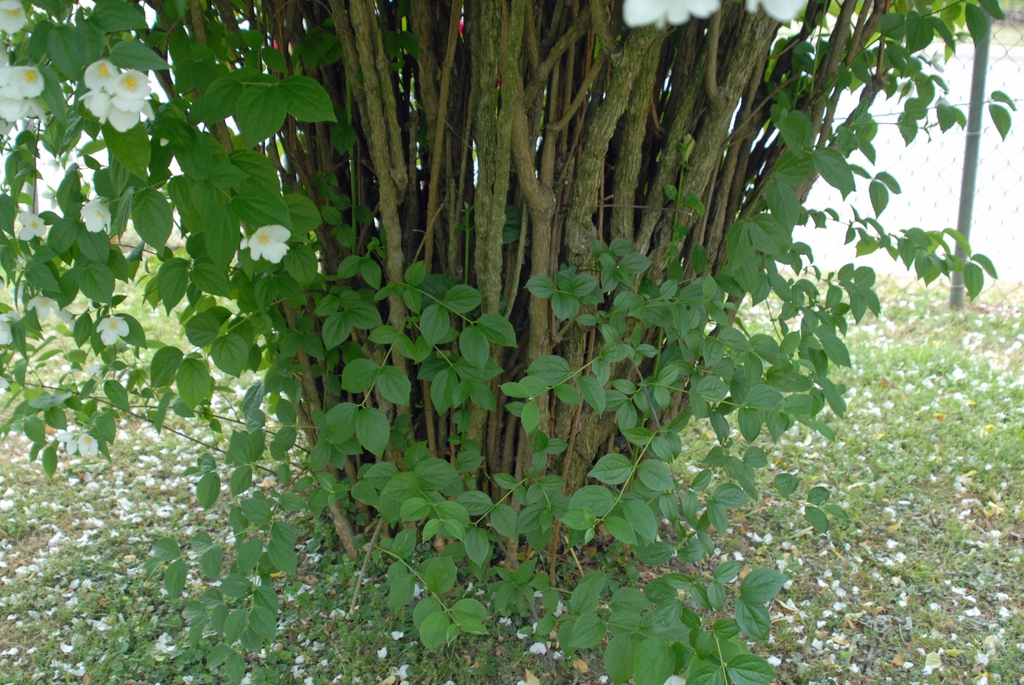
- The bark is dark brown and exfoliates as the shrub ages.
-
-
Stem:
- Stem Color:
- Green
- Stem Is Aromatic:
- No
- Stem Surface:
- Smooth (glabrous)
- Stem Description:
- The young stems are green and smooth.
-
-
Landscape:
- Landscape Location:
- Patio
- Landscape Theme:
- Butterfly Garden
- Cottage Garden
- Cutting Garden
- Drought Tolerant Garden
- Nighttime Garden
- Pollinator Garden
- Design Feature:
- Border
- Foundation Planting
- Hedge
- Screen/Privacy
- Specimen
- Attracts:
- Bees
- Butterflies
- Hummingbirds
- Resistance To Challenges:
- Deer
- Drought
- Rabbits
- Wind