



Aztec Bean Phaseolus coccineus
Other Common Name(s):
Previously known as:
- Phaseolus multiflorus
- Phonetic Spelling
- FAZ-ee-oh-lus kok-SIN-ee-us
- This plant has low severity poison characteristics.
- See below
- Description
-
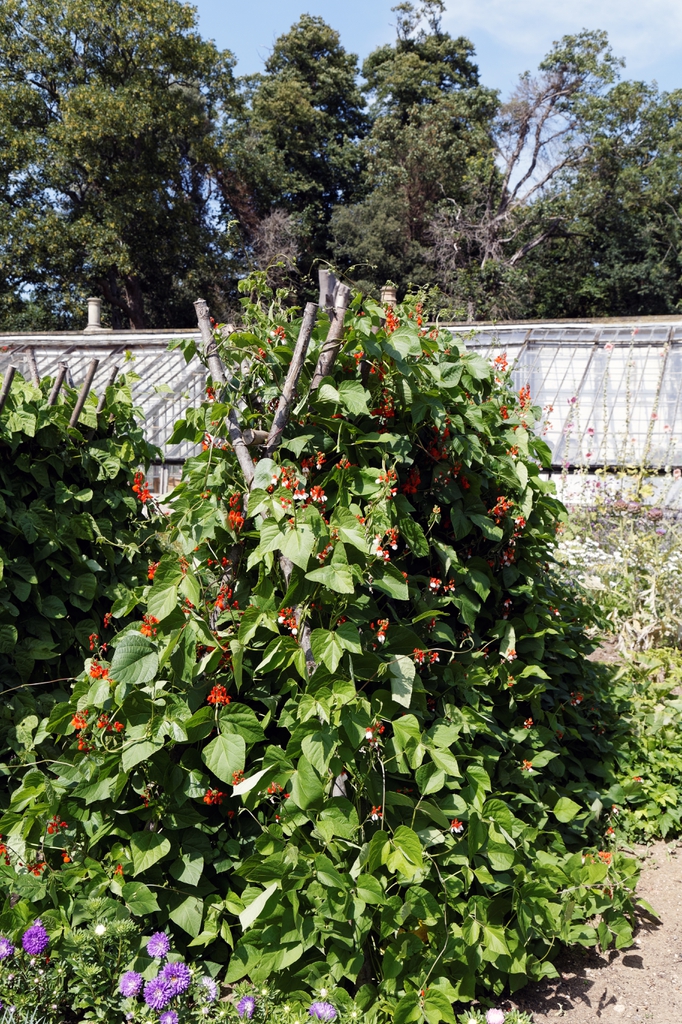
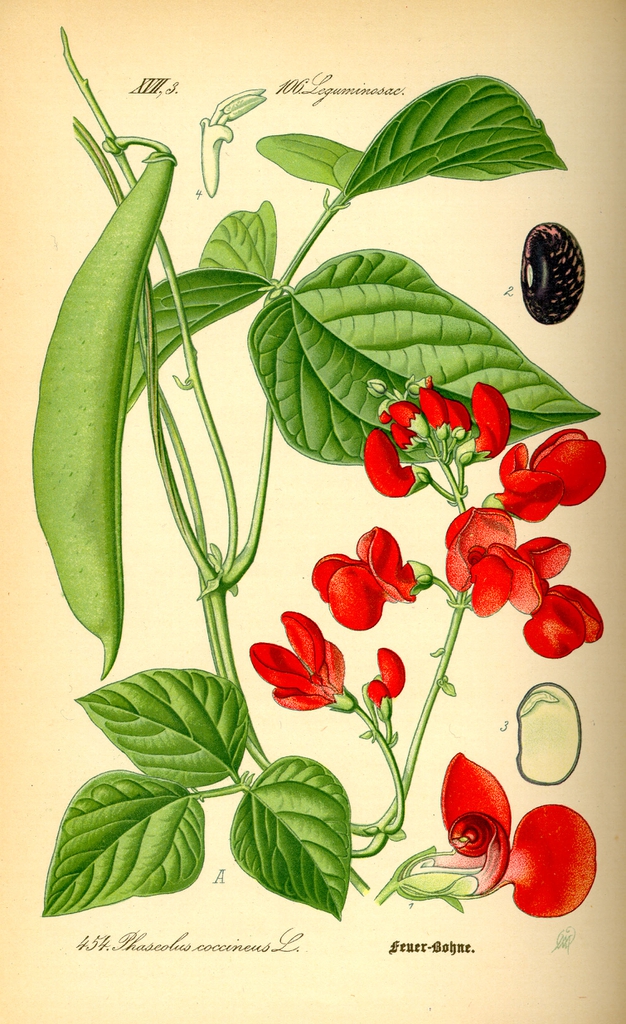
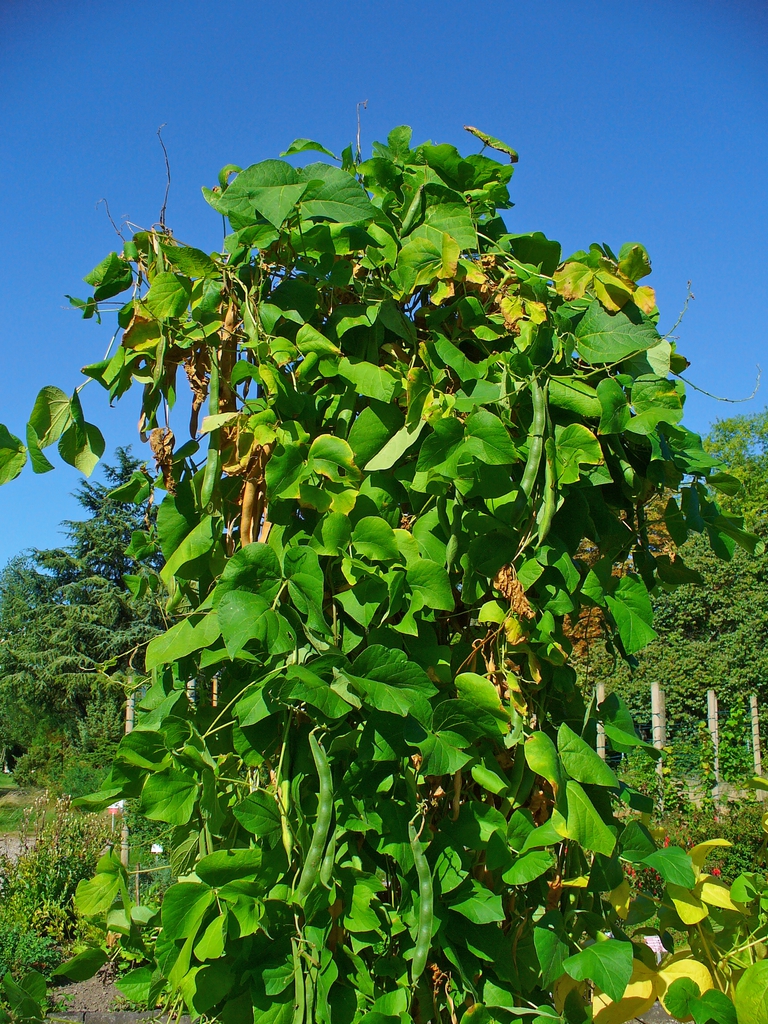
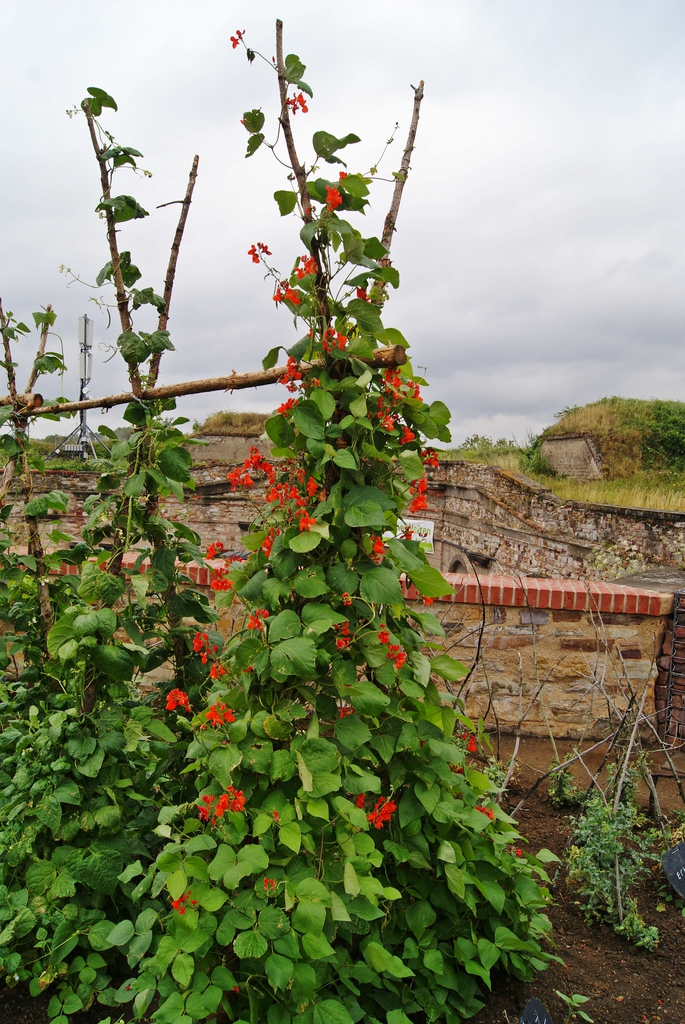
Snap Beans are an annual vegetable, grown as a vine that can mature to 12 feet, producing edible beans as well as edible flowers in summer and fall. It is native to Central and South America. It is the rare species that is grown as a vegetable food plant (beans, flowers, and leaves) and as an ornamental plant (red flowers). The genus name is Greek for fava beans. The species name means scarlet.
Snap Beans do best in consistently moist, organically rich, well drained soil sited in full sun. It is frost tender and does not do well in the shade. Sow seeds outdoors after the danger of frost has passed. In frost-free climates, Snap Beans can be grown as perennials, but at the first hint of frost, they will die back to the ground. You can start Snap Beans in pots 4 to 6 weeks before last frost and then plant outside. However, it is more typical to plant seeds outdoors at the last frost date in spring.
Plant the seeds in rows and, because it is a vine, provide poles or other support for the plant to climb on. Flower production can be abundant in hot summers and continue through the season until first fall frost. Bean production, however, may lag in hot summer temperatures. Flowers should be harvested as soon as they appear and only last a day or two. Pick beans when ripe to encourage new flowers.
Click here to see a calendar of planting schedules, time-to-harvest, and recommended spacing.
Diseases, Insect Pests, and Other Plant Problems:
Can be susceptible to mosaic viral disease, bacterial blight, anthracnose, powdery mildew and white mold. Mexican bean beetles and Japanese beetles can attack the foliage. Until established, growing plants may need some protection from slugs.
- See this plant in the following landscape :
- Cultivars / Varieties:
-
- 'Albus'
White flowers. - 'Painted lady'
Bicolored coral-red and white flowers, sweet-tasting dry beans. - 'Purple Aztec'
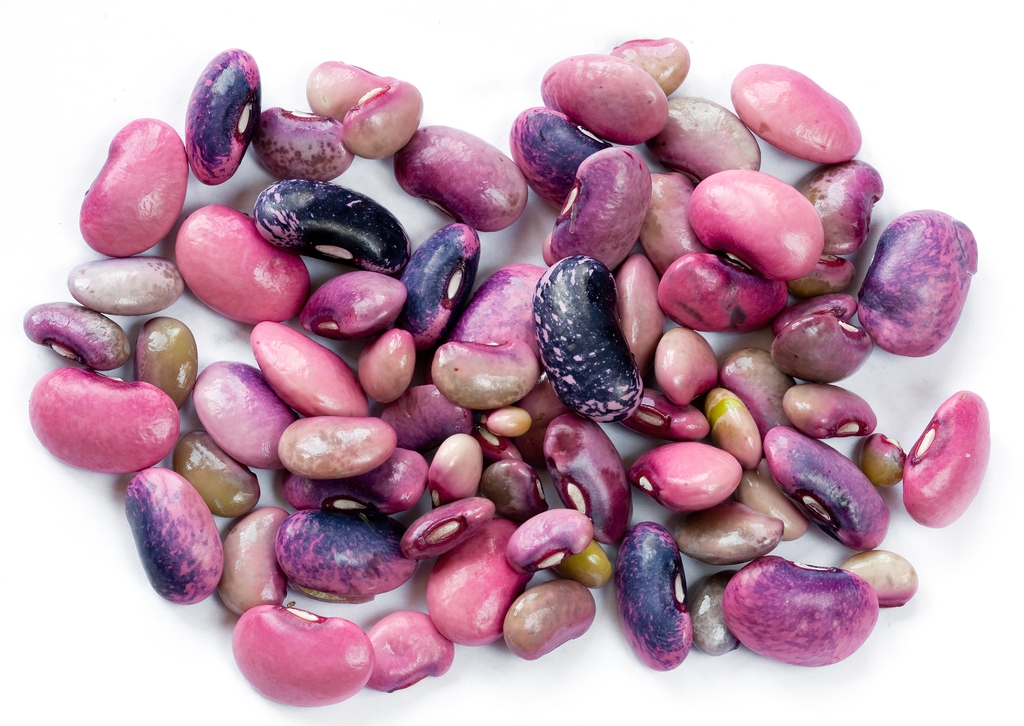
Bright flowers, vigorous climbing vines, purple-speckled seeds. - 'Sunset'
Salmon-pink to peach blossoms, 6 to 8 feet tall. - 'The Czar'
White flowers.
- 'Albus'
- 'Albus', 'Painted lady', 'Purple Aztec', 'Sunset', 'The Czar'
- Tags:


- Cultivars / Varieties:
-
- 'Albus'
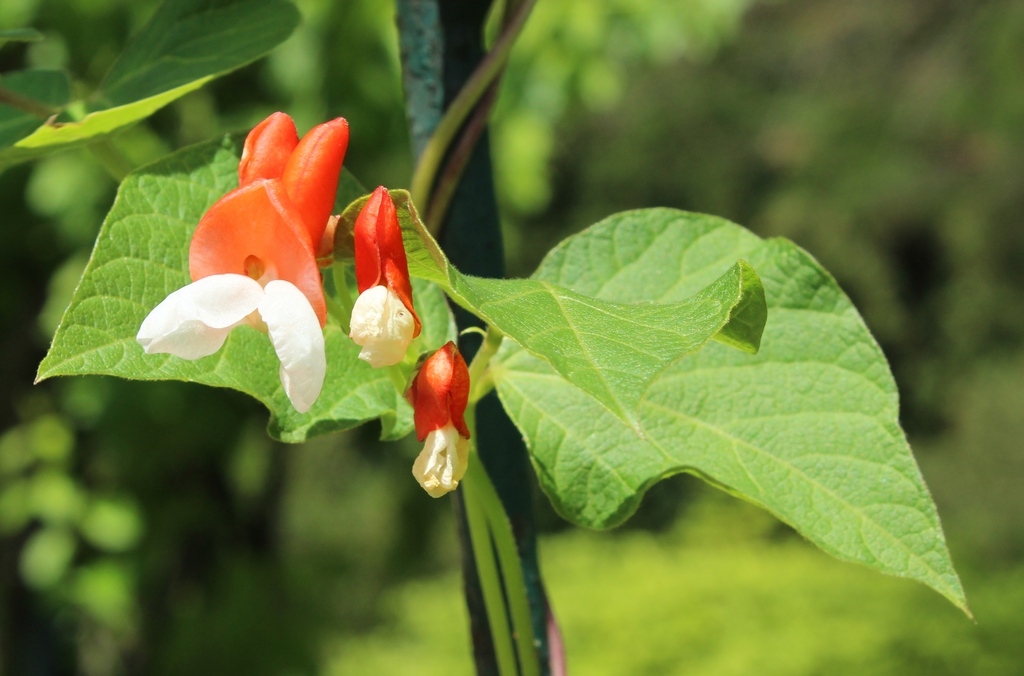
White flowers. - 'Painted lady'
Bicolored coral-red and white flowers, sweet-tasting dry beans. - 'Purple Aztec'
Bright flowers, vigorous climbing vines, purple-speckled seeds. - 'Sunset'
Salmon-pink to peach blossoms, 6 to 8 feet tall. - 'The Czar'
White flowers.
- 'Albus'
- 'Albus', 'Painted lady', 'Purple Aztec', 'Sunset', 'The Czar'
- Tags:
-
-
Attributes:
- Genus:
- Phaseolus
- Species:
- coccineus
- Family:
- Fabaceae
- Life Cycle:
- Annual
- Perennial
- Recommended Propagation Strategy:
- Seed
- Country Or Region Of Origin:
- Mexico to Nicaragua
- Distribution:
- Alabama, Great Britain, Central and Eastern Europe, China and India
- Wildlife Value:
- Attract hummingbirds, butterflies and bees.
- Climbing Method:
- Twining
- Edibility:
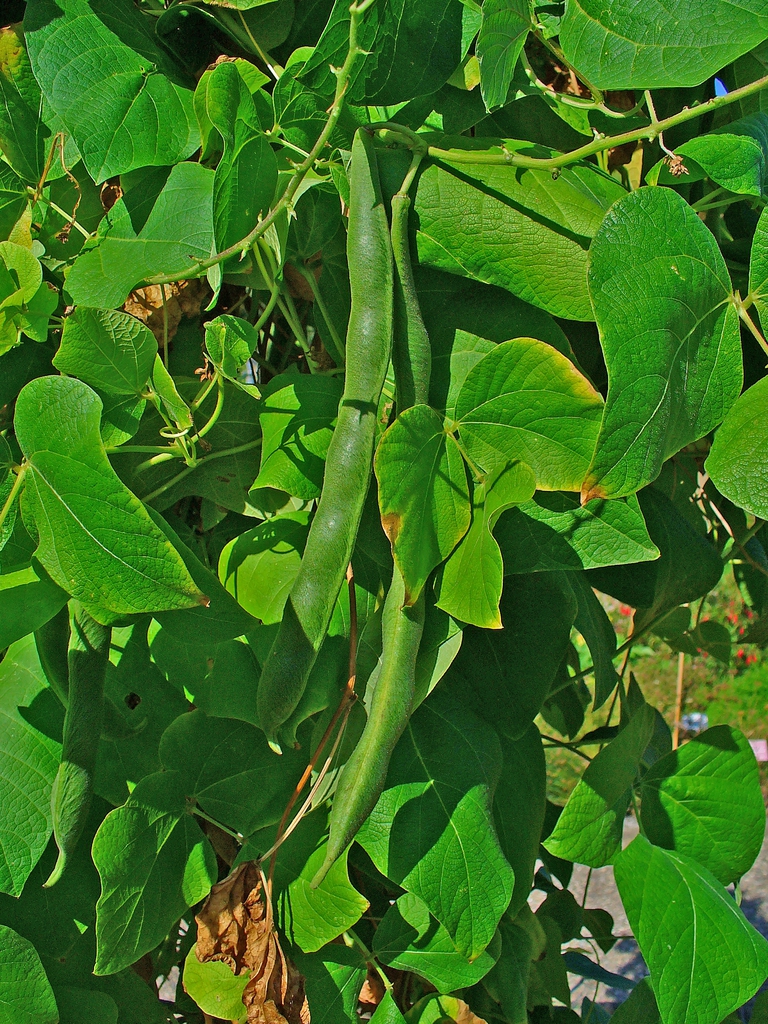
- Edible green pods that turn purple. The edible flowers are mild and crunchy. Young leaves are also edible.
- Dimensions:
- Height: 8 ft. 0 in. - 12 ft. 0 in.
- Width: 3 ft. 0 in. - 5 ft. 0 in.
-
-
Whole Plant Traits:
- Plant Type:
- Annual
- Edible
- Perennial
- Vegetable
- Vine
- Woody Plant Leaf Characteristics:
- Deciduous
- Habit/Form:
- Climbing
- Creeping
- Spreading
- Growth Rate:
- Rapid
- Maintenance:
- Medium
- Texture:
- Coarse
-
-
Cultural Conditions:
- Light:
- Full sun (6 or more hours of direct sunlight a day)
- Soil Texture:
- Clay
- High Organic Matter
- Loam (Silt)
- Soil pH:
- Neutral (6.0-8.0)
- Soil Drainage:
- Good Drainage
- Moist
- NC Region:
- Coastal
- Mountains
- Piedmont
- USDA Plant Hardiness Zone:
- 7a, 7b, 8a, 8b, 9a, 9b, 10a, 10b, 11a, 11b
-
-
Fruit:
- Fruit Color:
- Green
- Purple/Lavender
- Fruit Value To Gardener:
- Edible
- Showy
- Display/Harvest Time:
- Fall
- Summer
- Fruit Type:
- Legume
- Fruit Length:
- > 3 inches
- Fruit Description:
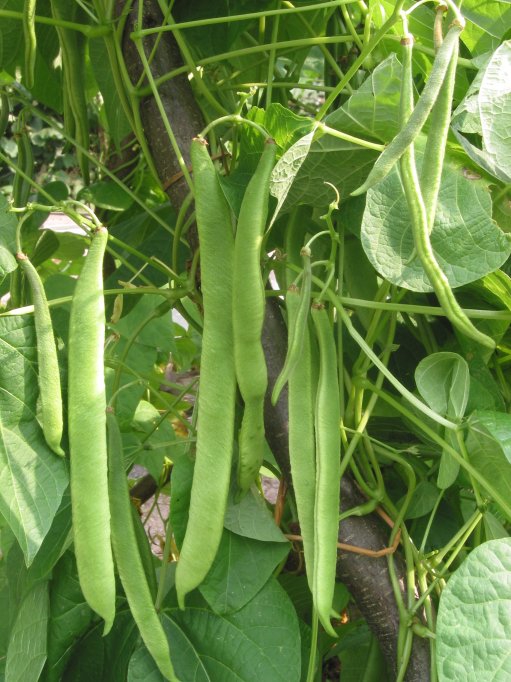
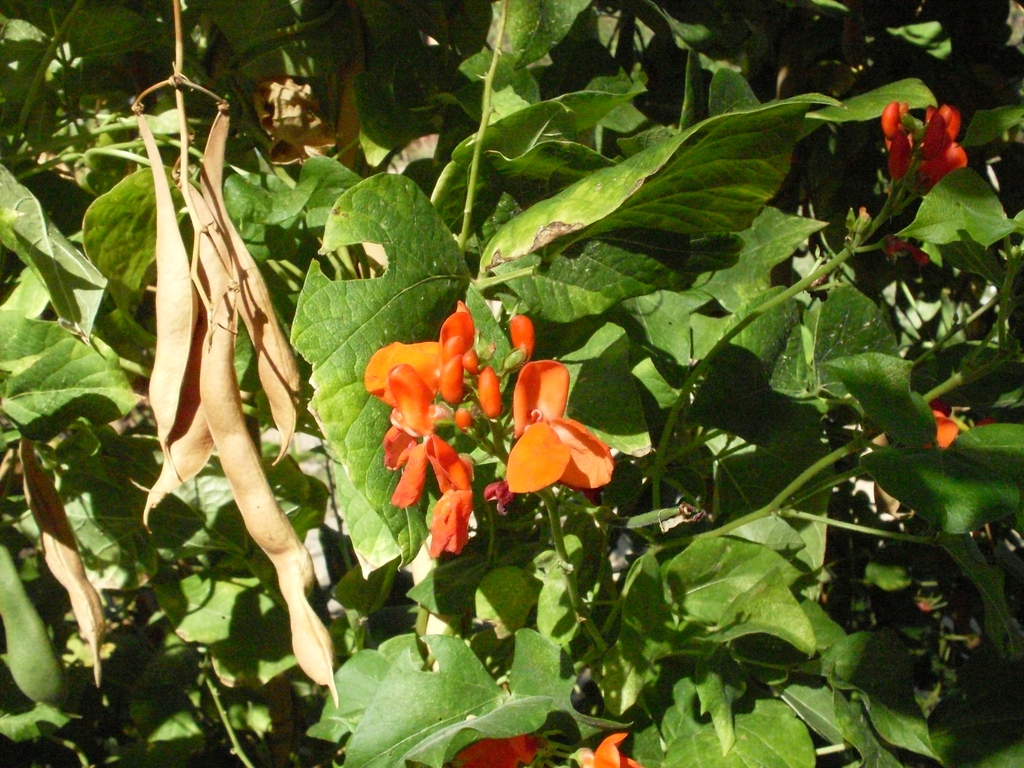
- Edible green pods that turn purple. Pick beans when young (3 to 5 inches long). If left on the vine, they will develop into large tough pods.
-
-
Flowers:
- Flower Color:
- Orange
- Red/Burgundy
- White
- Flower Inflorescence:
- Raceme
- Flower Value To Gardener:
- Edible
- Showy
- Flower Bloom Time:
- Fall
- Summer
- Flower Size:
- 1-3 inches
- Flower Description:
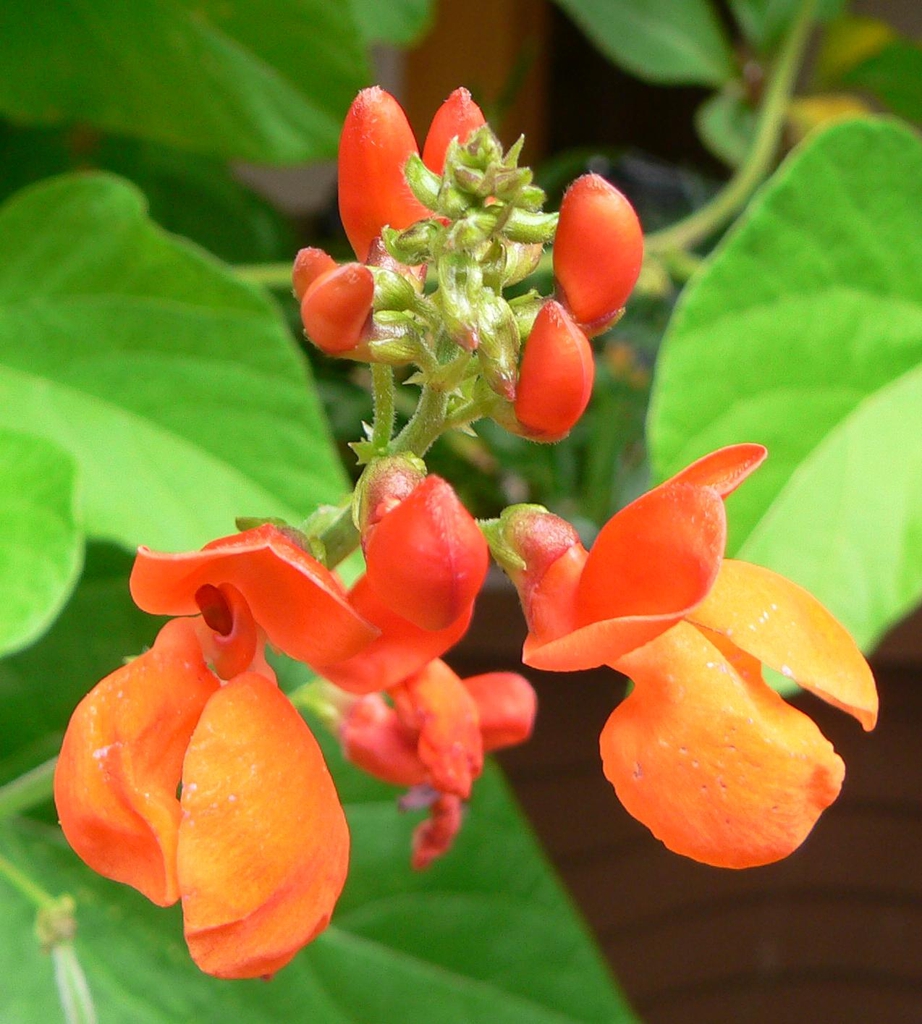
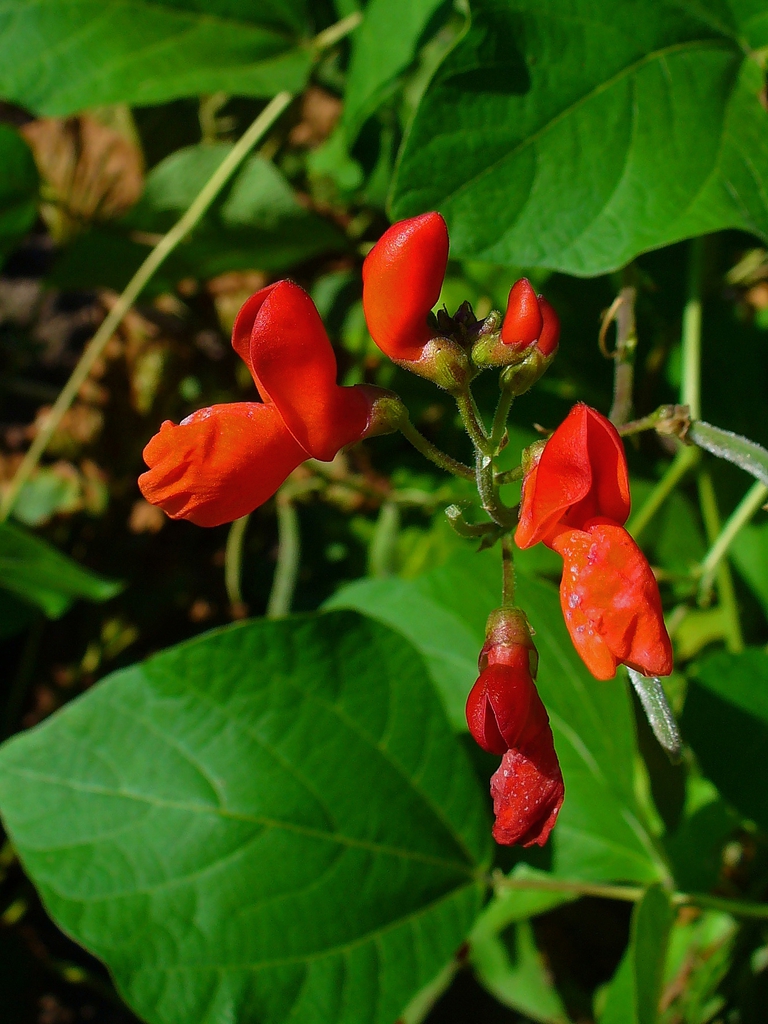
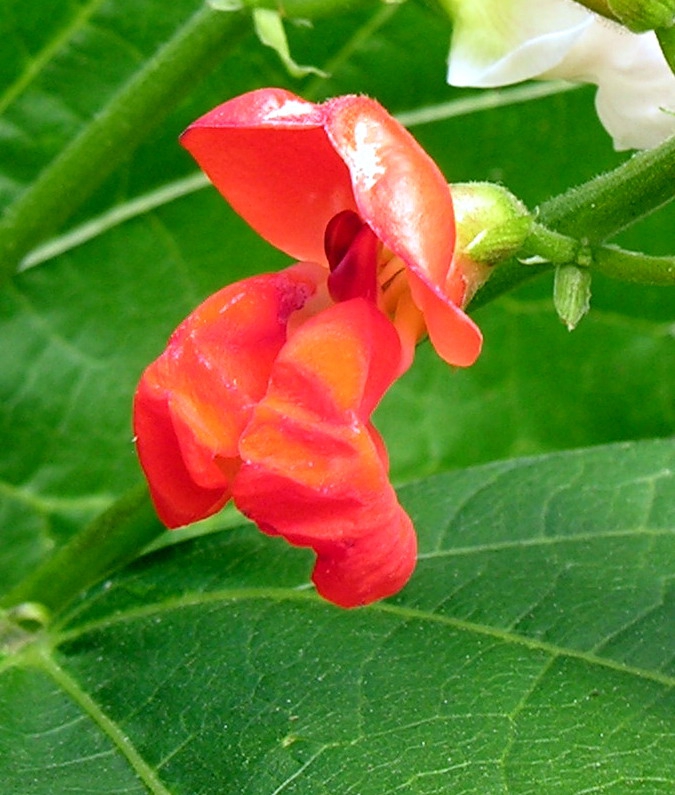
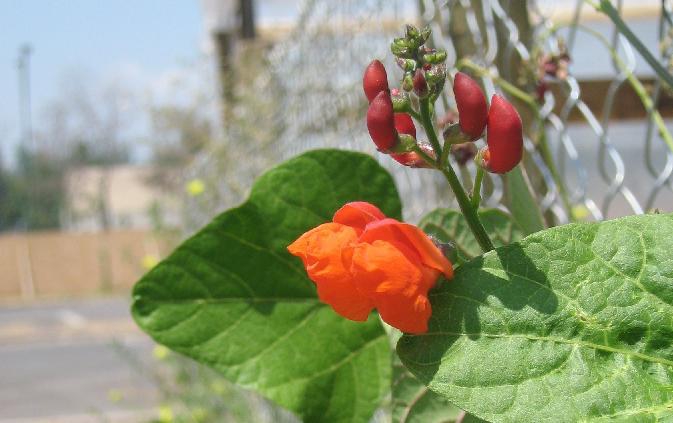
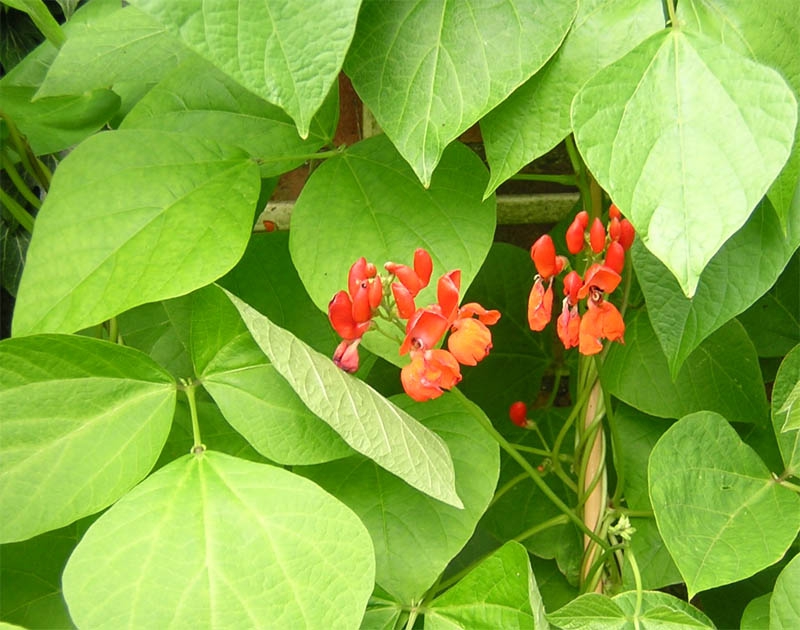
- Blossom from mid summer to frost in loose clusters of 1 1/4 inch long, scarlet (sometimes white), pea-like flowers on stems to 8 inches long from the leaf axils.
-
-
Leaves:
- Woody Plant Leaf Characteristics:
- Deciduous
- Leaf Color:
- Green
- Leaf Value To Gardener:
- Edible
- Leaf Shape:
- Ovate
- Hairs Present:
- No
- Leaf Length:
- 3-6 inches
- Leaf Description:
- Leaves are trifoliate, with each leaf having three broad-ovate leaflets to 3 to 5 inches long.
-
-
Stem:
- Stem Is Aromatic:
- No
-
-
Landscape:
- Landscape Location:
- Vertical Spaces
- Landscape Theme:
- Edible Garden
- Design Feature:
- Accent
- Attracts:
- Bees
- Butterflies
- Hummingbirds
-
-
Poisonous to Humans:
- Poison Severity:
- Low
- Poison Symptoms:
- In large amounts, the raw or undercooked beans can cause severe nausea, vomiting, and diarrhea. Usually resolves within a few hours.
- Poison Toxic Principle:
- Trace amounts of phytohaemagglutinin, a lectin
- Causes Contact Dermatitis:
- No
- Poison Part:
- Seeds



