



Dew Flower Penstemon cobaea
Other Common Name(s):
- Phonetic Spelling
- PEN-stem-on ko-BEE-uh
- Description
-
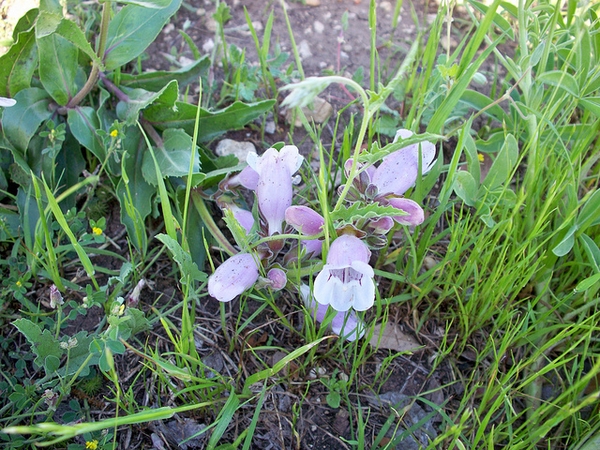
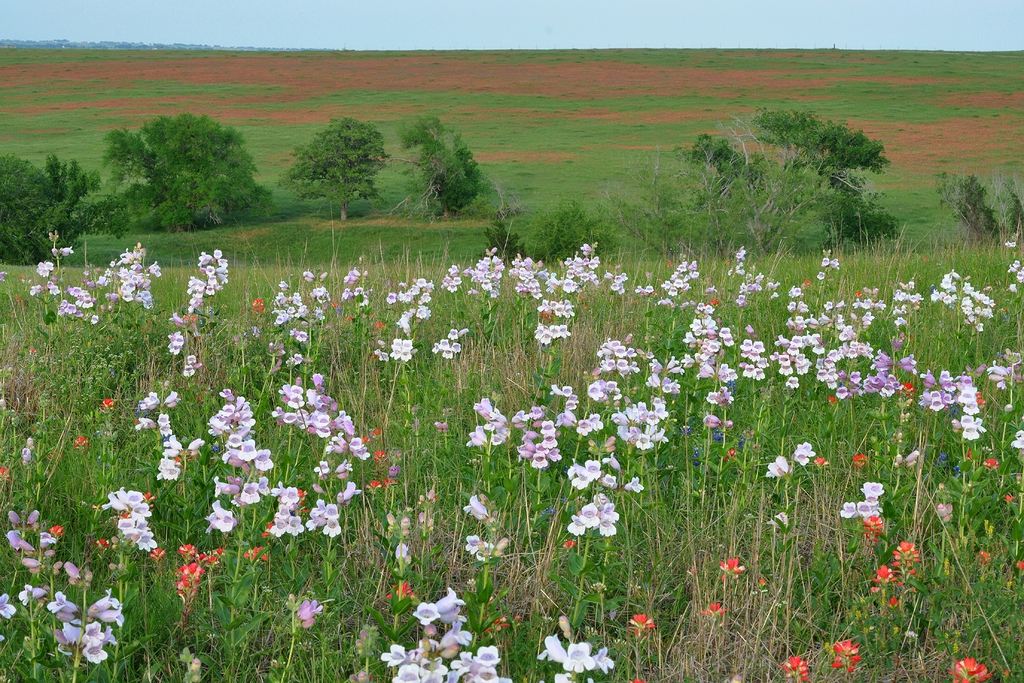
Dew Flower is a flowering, herbaceous perennial in the plantain family native to the south central United States. It is common to the prairies or rocky bluffs of the western plains and to the Ozarks. It can reach a height of 2 feet at maturity with a spread of about 18 inches and produces large white and pink to violet blossoms that appear in early spring. The genus name refers to the one stamen of five that is sterile, a configuration common to this genus. The Penstemon genus are commonly called beardtongues because the sterile stamen can be hairy. The species name honors the Spanish missionary and naturalist Father Cobo.
Dew Flower does best in dry to medium, well-drained soil in full sun. It can tolerate poor soil and periods of drought, but does poorly in wet or poorly-drained soils. You can cut back the stems after flowering to avoid self seeding, or wait for the seeds to ripen. Keep in mind that Dew Flower may go dormant during the summer. The plant propagates from from seed and blooms in the second year after planting. Collect the seeds in summer when the capsules are brown and seeds are black.
The Dew Flower is somewhat similar in appearance to P. grandiflorus and its flowers are equally large in size. However, unlike P. grandiflorus, the Dew Flower has pubescent stems and sessile, rather that clasping, upper leaves and bracts.
Diseases, Insect Pests and Other Plant Problems:
No known diseases or insect pests. This plant does not like wet feet and wet, poorly drained, soil can lead to root rot.
- See this plant in the following landscape :
- Cultivars / Varieties:
-
- Tags:


- Cultivars / Varieties:
-
- Tags:
-
-
Attributes:
- Genus:
- Penstemon
- Species:
- cobaea
- Family:
- Plantaginaceae
- Life Cycle:
- Perennial
- Recommended Propagation Strategy:
- Seed
- Country Or Region Of Origin:
- Arkansas, Iowa, Kansas, Missouri, Nebraska, Oklahoma, Texas
- Distribution:
- Arizona, Colorado, Illinois, New Mexico, Ohio
- Wildlife Value:
- Members of the genus Penstemon support the specialized bee Osmia (Melanosmia) distincta.
- Dimensions:
- Height: 1 ft. 0 in. - 2 ft. 0 in.
- Width: 1 ft. 0 in. - 1 ft. 6 in.
-
-
Whole Plant Traits:
- Plant Type:
- Herbaceous Perennial
- Wildflower
- Habit/Form:
- Clumping
- Erect
- Maintenance:
- Low
- Texture:
- Coarse
-
-
Cultural Conditions:
- Light:
- Full sun (6 or more hours of direct sunlight a day)
- Partial Shade (Direct sunlight only part of the day, 2-6 hours)
- Soil Texture:
- Loam (Silt)
- Sand
- Shallow Rocky
- Soil pH:
- Acid (<6.0)
- Soil Drainage:
- Good Drainage
- Occasionally Dry
- Available Space To Plant:
- 12 inches-3 feet
- USDA Plant Hardiness Zone:
- 5a, 5b, 6a, 6b, 7a, 7b, 8a, 8b
-
-
Fruit:
- Fruit Color:
- Brown/Copper
- Display/Harvest Time:
- Summer
- Fruit Type:
- Capsule
- Fruit Description:
- Black seeds in brown capsule.
-
-
Flowers:
- Flower Color:
- Pink
- Purple/Lavender
- White
- Flower Inflorescence:
- Panicle
- Flower Value To Gardener:
- Showy
- Flower Bloom Time:
- Spring
- Flower Shape:
- Tubular
- Flower Petals:
- Bracts
- Flower Size:
- 1-3 inches
- Flower Description:
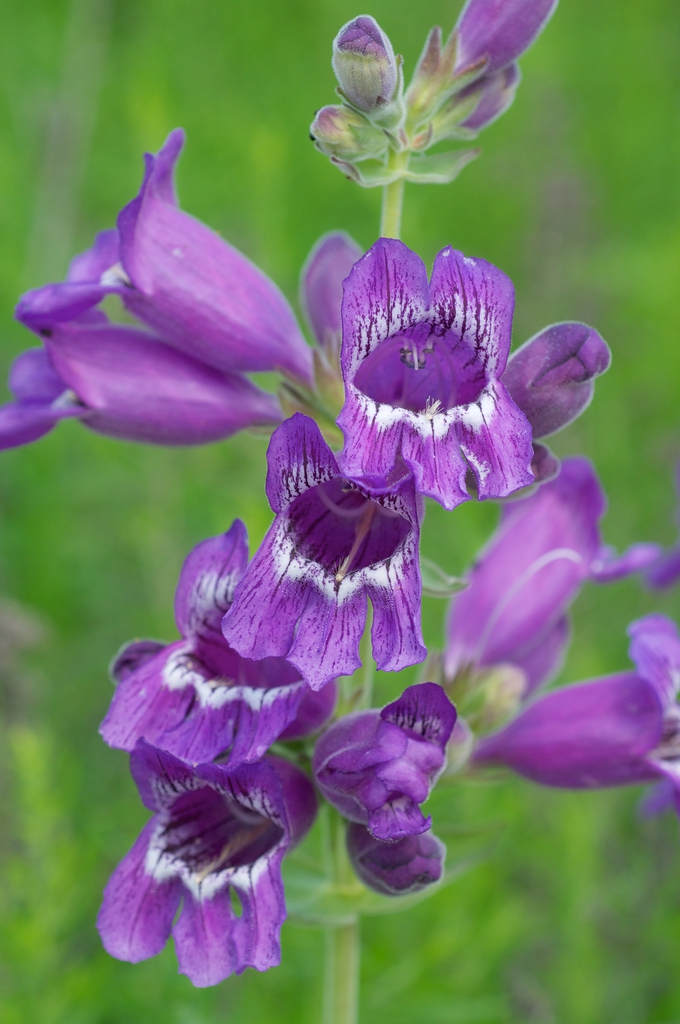
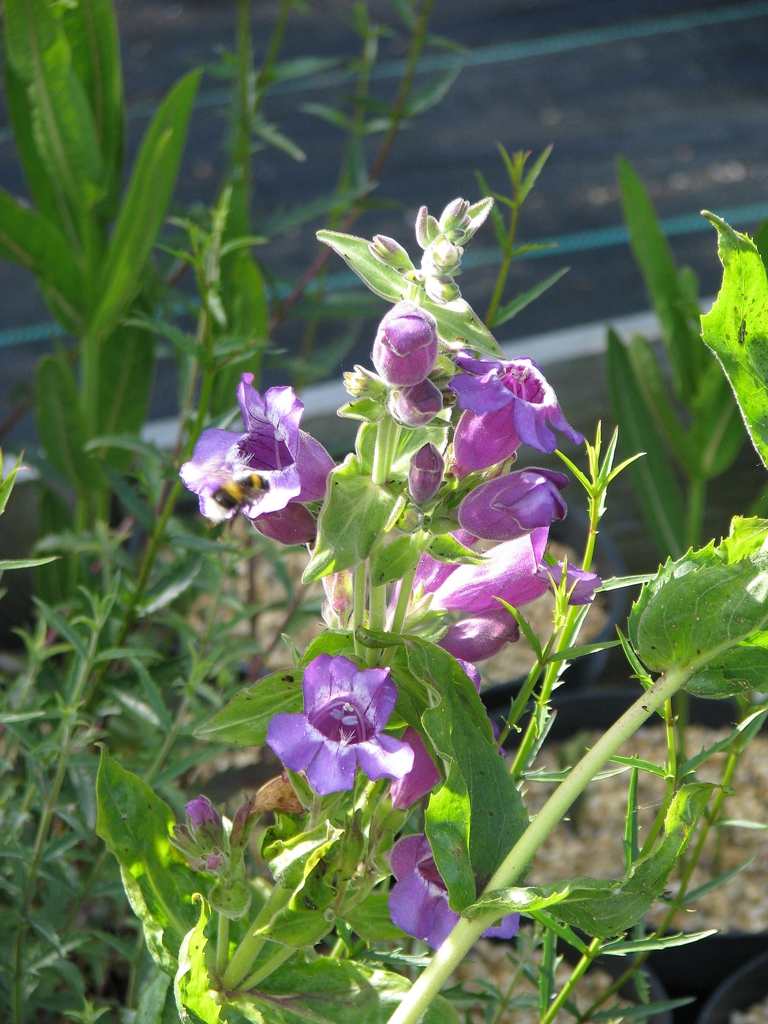
- Showy, white to deep purple flowers in loose, terminal panicles, 2 inches long. Flowers have a short bloom season in mid-spring and are somewhat larger than most penstemons. Flowers are tubular with purple lines inside the floral tube.
-
-
Leaves:
- Leaf Color:
- Green
- Leaf Feel:
- Rough
- Leaf Arrangement:
- Opposite
- Leaf Shape:
- Elliptical
- Lanceolate
- Leaf Margin:
- Entire
- Hairs Present:
- Yes
- Leaf Length:
- 3-6 inches
- Leaf Width:
- 1-3 inches
- Leaf Description:
- Downy, sessile leaves, lanceolate to elliptic in shape, 4 3/4 inches long and 2 inches wide. Leaves are thick, paired and become smaller up the stem. The lower, basal, leaves often wither by the time of flowering in May.
-
-
Stem:
- Stem Is Aromatic:
- No
- Stem Form:
- Straight
- Stem Surface:
- Hairy (pubescent)
- Stem Description:
- One to three stout stems rise from a woody rhizome. Flowers sit atop the erect, rigid, downy stems.
-
-
Landscape:
- Landscape Theme:
- Butterfly Garden
- Drought Tolerant Garden
- Native Garden
- Rock Garden
- Design Feature:
- Border
- Small groups
- Attracts:
- Butterflies
- Hummingbirds
- Pollinators
- Specialized Bees
- Resistance To Challenges:
- Deer
- Drought
- Dry Soil
- Poor Soil



