


Peltandra sagittifolia
Common Name(s):
- Phonetic Spelling
- pelt-AN-dra sag-it-ee-FOH-lee-uh
- This plant has medium severity poison characteristics.
- See below
- Description
-
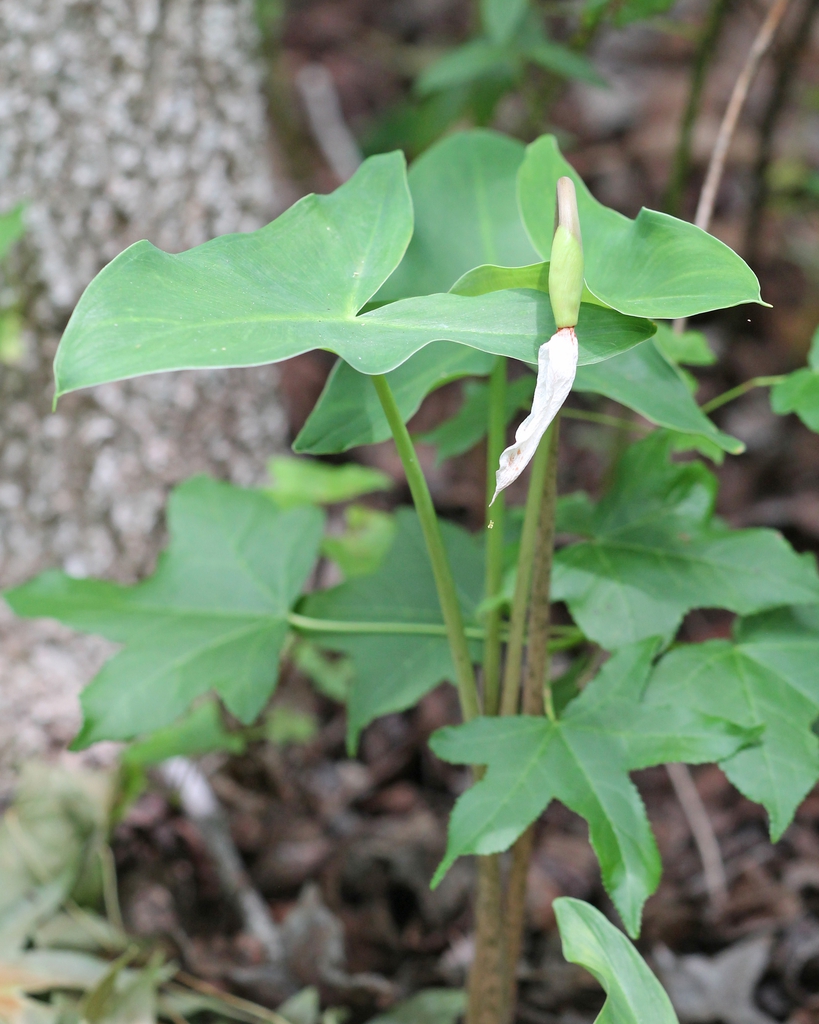
White Arrow Arum is a flowering, herbaceous perennial, aquatic plant in the arum family, native to North Carolina and most often found in pocosin openings of the blackwater swamps of the Coastal Plain. This is a plant that lives in shallow water and river banks and has ornamental blooms consisting of a yellow spathe backed by a prominent white hood.
White Arrow Arum is an emergent aquatic plant that grows in wet, acidic, consistently boggy, soils in freshwater up to 6 inches deep. It requires acidic soils with a mean pH of 4.8 (range 4.0 to 6.0). It does best sited in full sun or partial shade. It will tolerate deep shade. In the right environment, the plant will spread, forming colonies, but it is not an aggressive spreader. White Arrow Arum is similar to Peltandra virginica in preferring a wet habitat, but is not as cold hardy as the more northern species.
White Arrow Arum is rare to uncommon on the Coastal Plain and is designated a significantly rare species in North Carolina. It is not recommended for the home landscape.
Diseases, Insect Pests, and Other Plant Problems:
No known diseases or insect pests.
- See this plant in the following landscape :
- Cultivars / Varieties:
-
- Tags:

- Cultivars / Varieties:
-
- Tags:
-
-
Attributes:
- Genus:
- Peltandra
- Species:
- sagittifolia
- Family:
- Araceae
- Life Cycle:
- Perennial
- Recommended Propagation Strategy:
- Division
- Seed
- Country Or Region Of Origin:
- South eastern United States
- Distribution:
- North Carolina south to Florida and west to Mississippi.
- Edibility:
- Plant is toxic, but cooking eliminates the toxic element.
-
-
Whole Plant Traits:
- Plant Type:
- Herbaceous Perennial
- Native Plant
- Water Plant
- Wildflower
- Habit/Form:
- Clumping
- Creeping
- Spreading
- Maintenance:
- Low
-
-
Cultural Conditions:
- Light:
- Full sun (6 or more hours of direct sunlight a day)
- Partial Shade (Direct sunlight only part of the day, 2-6 hours)
- Soil Texture:
- High Organic Matter
- Loam (Silt)
- Soil pH:
- Acid (<6.0)
- Soil Drainage:
- Frequent Standing Water
- Occasionally Wet
- NC Region:
- Coastal
- USDA Plant Hardiness Zone:
- 5a, 5b, 6a, 6b, 7a, 7b, 8a, 8b, 9a, 9b
-
-
Fruit:
- Fruit Color:
- Red/Burgundy
- Display/Harvest Time:
- Summer
- Fruit Type:
- Berry
- Fruit Description:
- Displays clusters of bright red berries from August to September.
-
-
Flowers:
- Flower Color:
- Gold/Yellow
- White
- Flower Inflorescence:
- Spadix
- Flower Value To Gardener:
- Showy
- Flower Bloom Time:
- Spring
- Summer
- Flower Shape:
- Dome
- Flower Description:
- Yellow spathe with a prominent white hood blooms from March into August.
-
-
Leaves:
- Leaf Color:
- Green
- Purple/Lavender
- Leaf Type:
- Simple
- Leaf Arrangement:
- Alternate
- Hairs Present:
- No
- Leaf Length:
- 3-6 inches
- Leaf Description:
- Basal leaves, green mottled with dark green to purple-green spots, glaucous, 1 1/2 to 4 inches long.
-
-
Stem:
- Stem Is Aromatic:
- No
-
-
Landscape:
- Landscape Location:
- Coastal
- Naturalized Area
- Pond
- Landscape Theme:
- Native Garden
- Rain Garden
- Water Garden
- Attracts:
- Songbirds
-
-
Poisonous to Humans:
- Poison Severity:
- Medium
- Poison Symptoms:
- The plant is toxic if consumed affecting the mouth and digestive tract. However, the toxic element, calcium oxylate, is eliminated by thoroughly cooking or drying the plant.
- Poison Toxic Principle:
- Calcium oxylate
- Causes Contact Dermatitis:
- No
- Poison Part:
- Flowers
- Leaves
- Stems