



Pandanus tectorius
Common Name(s):
- Phonetic Spelling
- PAN-dan-us tek-TOR-ee-us
- Description
-
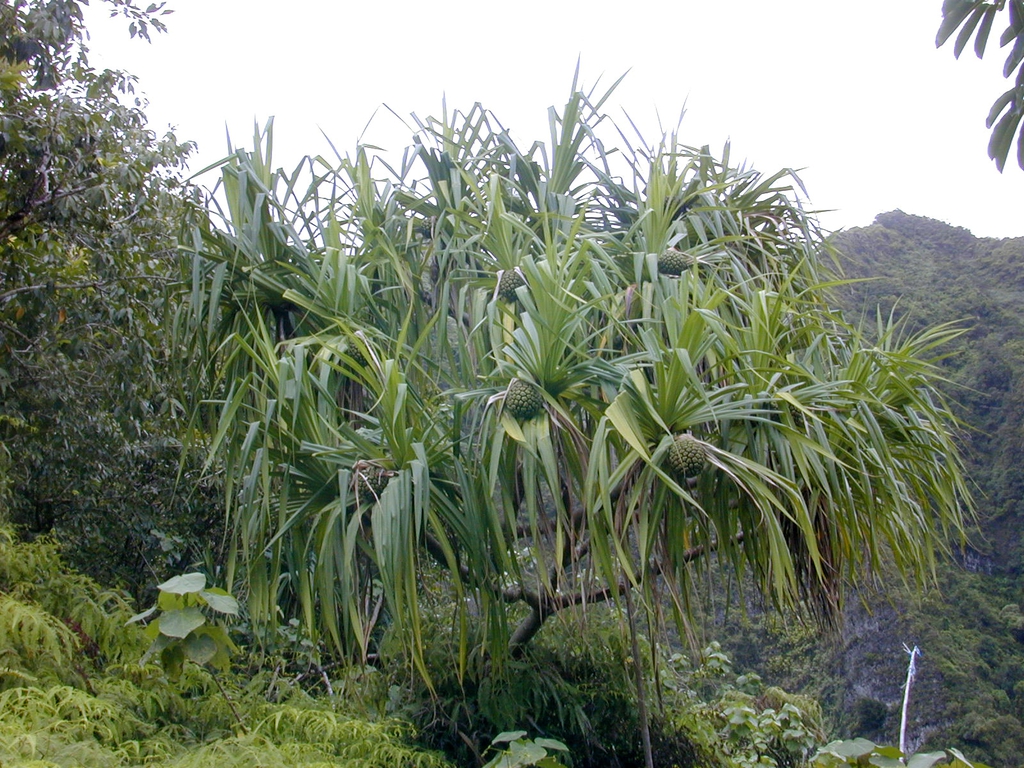
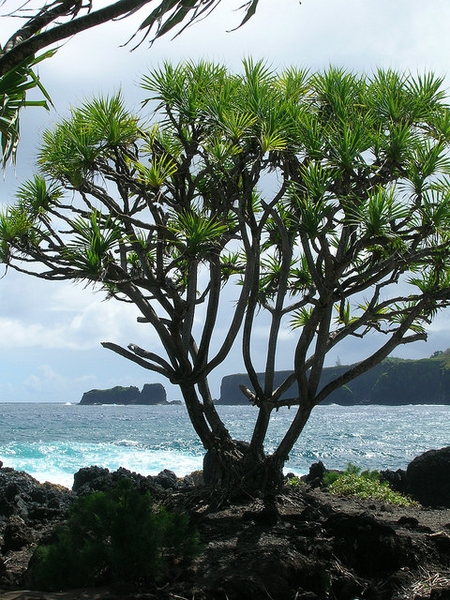
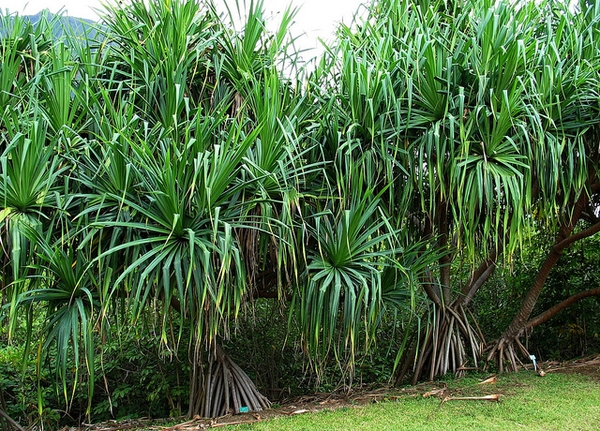
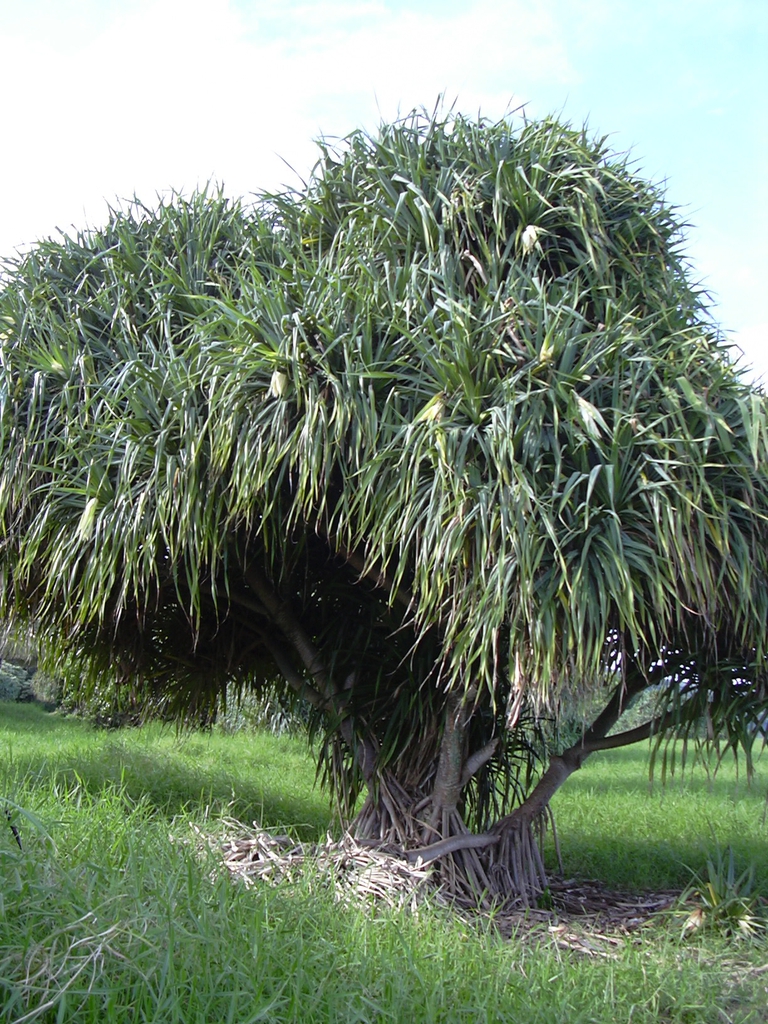
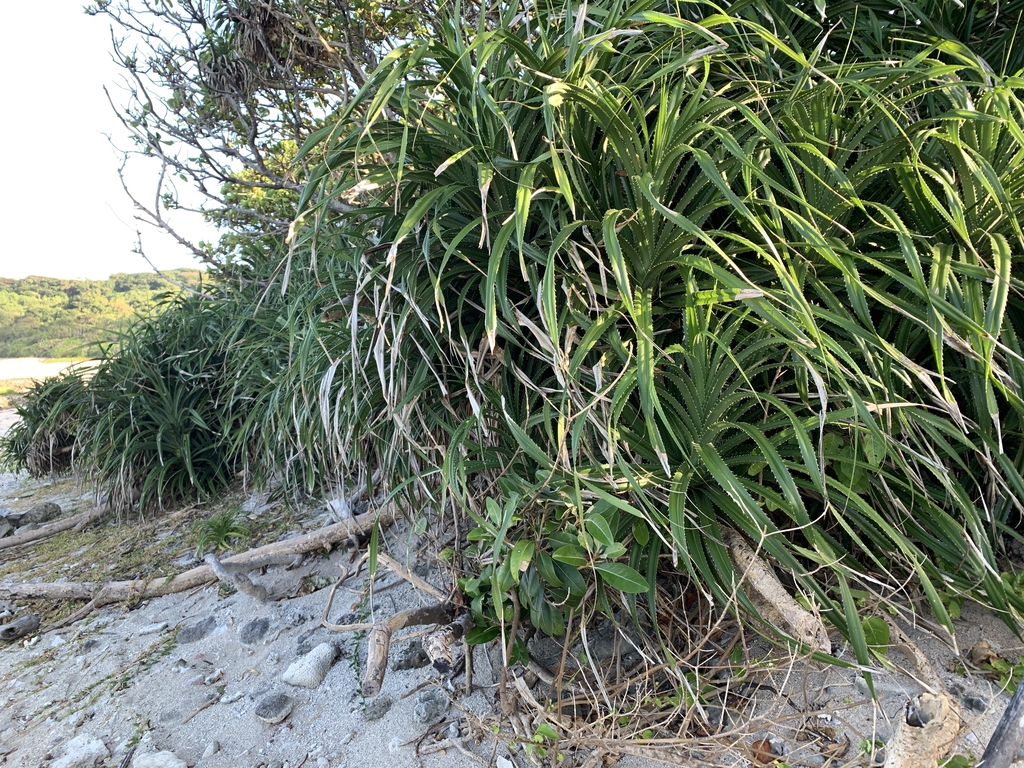
Pandanus is a genus of over 600 species of tropical plants in the screwpine family. The tectorius species, commonly called Screw Pine, is a palm-like evergreen tree that is native to Australia and southeast Asia. At maturity, it can reach a height of 20 feet with a slightly larger spread. It has sword-shaped leaves arranged in a spiral and blooms of fragrant bracts in colors that depend on the sex of the tree, white for male and green for female. The fruits are edible, similar to pineapples, and a significant food source in Micronesia. The genus name comes from the Malayan name, pandan. The species name means of the roofs of houses referring to the use of leaves for roof thatching.
Screw Pine does best in moist, well-drained soil in full sun or partial shade. It is winter hardy to USDA Zones 10-12, but it does not tolerate frost. It is a tropical plant that prefers warm, humid conditions, including salt spray and wind. In areas north of USDA Zone 10 (north of the southern tip of Florida), it should be grown in containers and overwintered indoors when temperatures drop.
Propagate by seed, cuttings or root suckers. For houseplants, place container indoors in bright diffused light. Trees grown from seed can take up to 15 years to flower; those grown from cuttings usually flower in about 3 years.
Screw Pine is the only species of Pandanus formally recognized from the Hawaiian Islands. It is thought to be indigenous, but it may have been introduced by the early Polynesians. It is found on all the main islands of Hawaii..
Diseases, Insect Pests, and Other Plant Problems:
No serious insect or disease problems. Plants grown as houseplants can be susceptible to scale and mites.
- See this plant in the following landscape :
- Cultivars / Varieties:
-
- 'Aureus'
Creamy yellow-green leaves with green margins. Nearly unarmed. - 'Veitchii'
White or silvery margins in a spiral, grown as an ornamental.
- 'Aureus'
- 'Aureus', 'Veitchii'
- Tags:


- Cultivars / Varieties:
-
- 'Aureus'
Creamy yellow-green leaves with green margins. Nearly unarmed. - 'Veitchii'
White or silvery margins in a spiral, grown as an ornamental.
- 'Aureus'
- 'Aureus', 'Veitchii'
- Tags:
-
-
Attributes:
- Genus:
- Pandanus
- Species:
- tectorius
- Family:
- Pandanaceae
- Uses (Ethnobotany):
- Leaves are woven into thatch for roofs, boat sails, mats, baskets, and hats.
- Life Cycle:
- Woody
- Recommended Propagation Strategy:
- Root Cutting
- Seed
- Stem Cutting
- Country Or Region Of Origin:
- Austrailia, Madagascar, southeast Asia, southwestern Pacific.
- Distribution:
- Introduced to Central America, Puerto Rico, Malay Peninsular.
- Edibility:
- Fruits are a significant food source in Micronesia (eaten raw or cooked). Extract from flowers is distilled into a flavoring for meats, desserts and drinks.
- Dimensions:
- Height: 10 ft. 0 in. - 20 ft. 0 in.
- Width: 10 ft. 0 in. - 25 ft. 0 in.
-
-
Whole Plant Traits:
- Plant Type:
- Tree
- Woody Plant Leaf Characteristics:
- Broadleaf Evergreen
- Habit/Form:
- Ascending
- Erect
- Multi-stemmed
- Maintenance:
- Medium
- Appendage:
- Spines
-
-
Cultural Conditions:
- Light:
- Full sun (6 or more hours of direct sunlight a day)
- Partial Shade (Direct sunlight only part of the day, 2-6 hours)
- Soil Texture:
- Loam (Silt)
- Sand
- Soil pH:
- Acid (<6.0)
- Neutral (6.0-8.0)
- Soil Drainage:
- Good Drainage
- Moist
- Available Space To Plant:
- 24-60 feet
- USDA Plant Hardiness Zone:
- 10a, 10b, 11a, 11b, 12a, 12b
-
-
Fruit:
- Fruit Color:
- Green
- Red/Burgundy
- Fruit Value To Gardener:
- Edible
- Showy
- Fruit Type:
- Schizocarp
- Fruit Length:
- > 3 inches
- Fruit Width:
- > 3 inches
- Fruit Description:
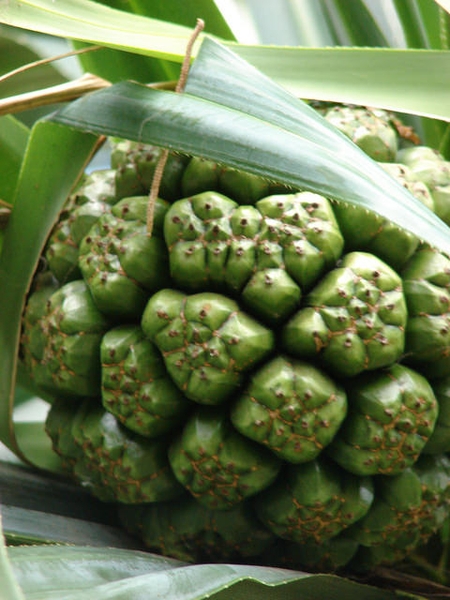
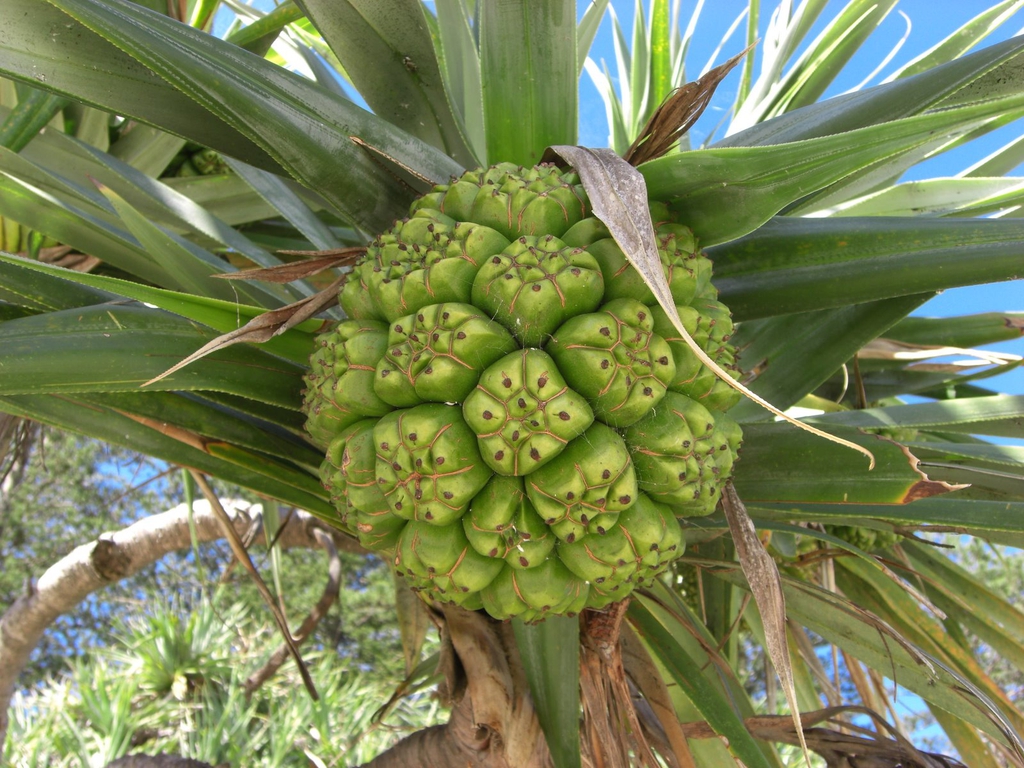
- Edible, ovoid to rounded, segmented fruits (syncarps to 8 inches diameter) similar to pineapples. Fruits mature from green to yellow to red. Fragrant when ripe.
-
-
Flowers:
- Flower Color:
- Green
- White
- Flower Inflorescence:
- Raceme
- Flower Value To Gardener:
- Fragrant
- Showy
- Flower Petals:
- Bracts
- Flower Description:
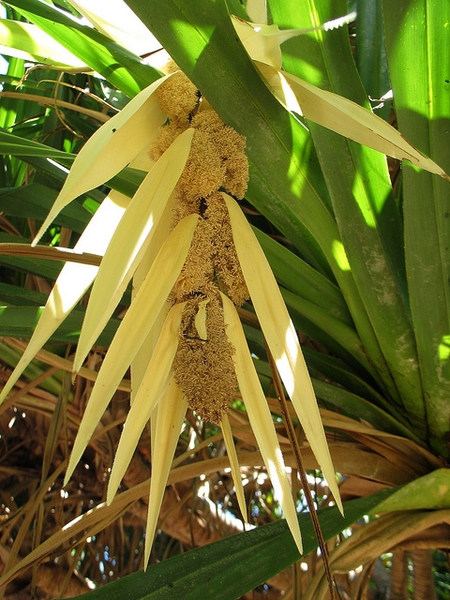
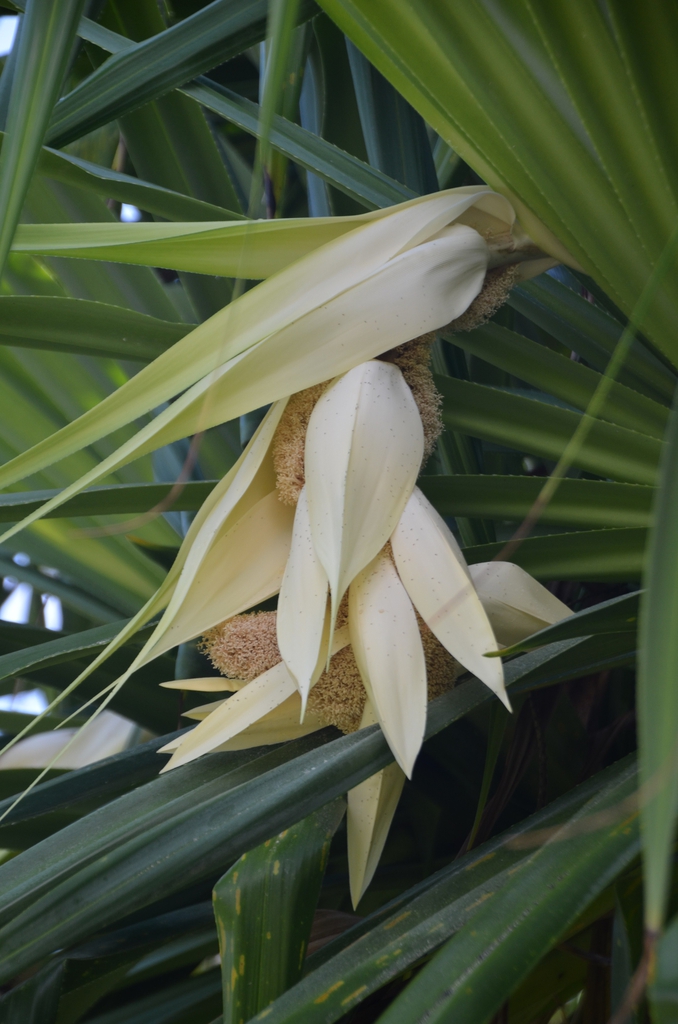
- Dioecious (male and female flowers appear on separate trees). Foot long clusters of male flowers are tiny and fragrant, blooming in drooping clusters of showy white bracts. Female flowers are compact greenish flower heads.
-
-
Leaves:
- Woody Plant Leaf Characteristics:
- Broadleaf Evergreen
- Leaf Color:
- Green
- Leaf Shape:
- Linear
- Hairs Present:
- No
- Leaf Length:
- > 6 inches
- Leaf Width:
- 1-3 inches
- Leaf Description:
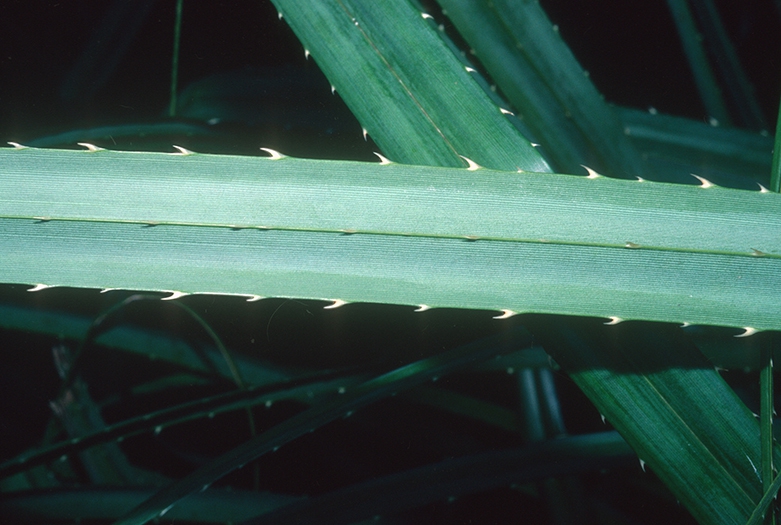
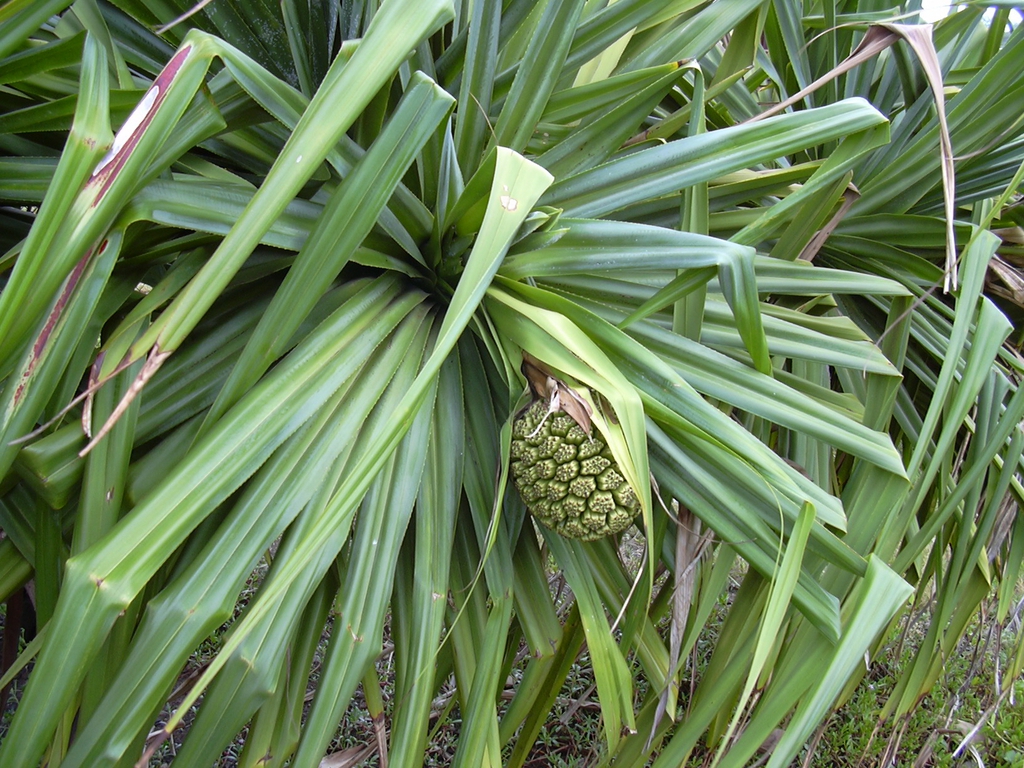
- Long (2 to 6 feet), spiny-margined, light green leaves spirally arranged at the branch ends (hence the common name). Most varieties have spines along the edges and on the midribs of the leaves.
-
-
Bark:
- Bark Color:
- Dark Gray
- Bark Description:
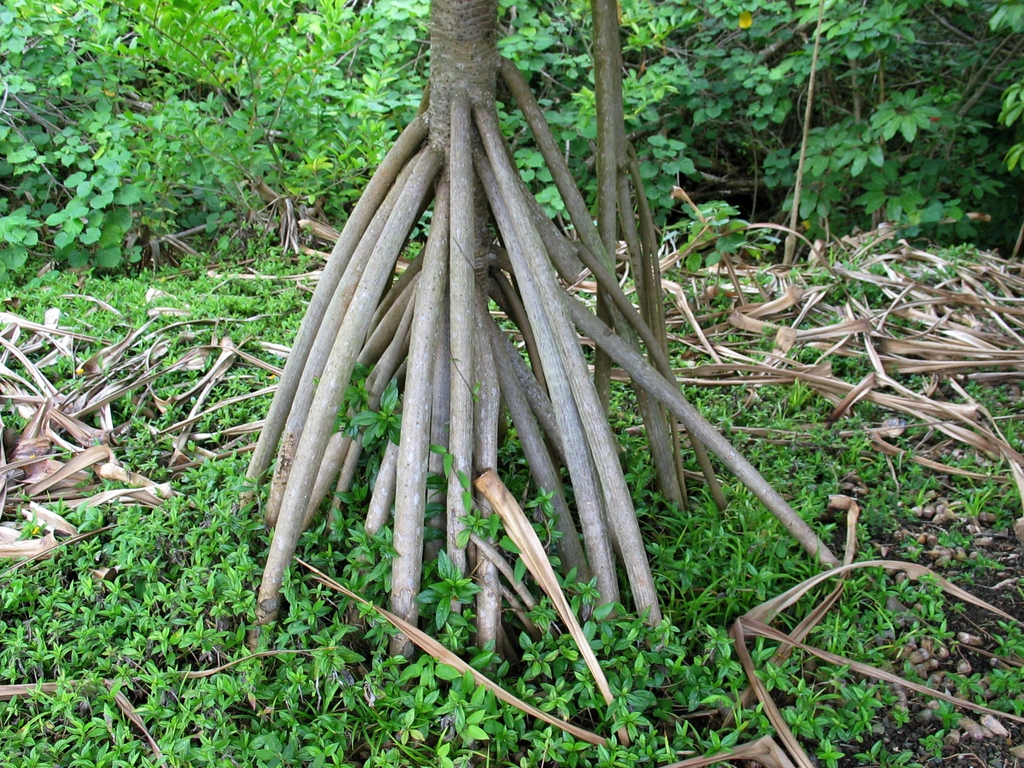
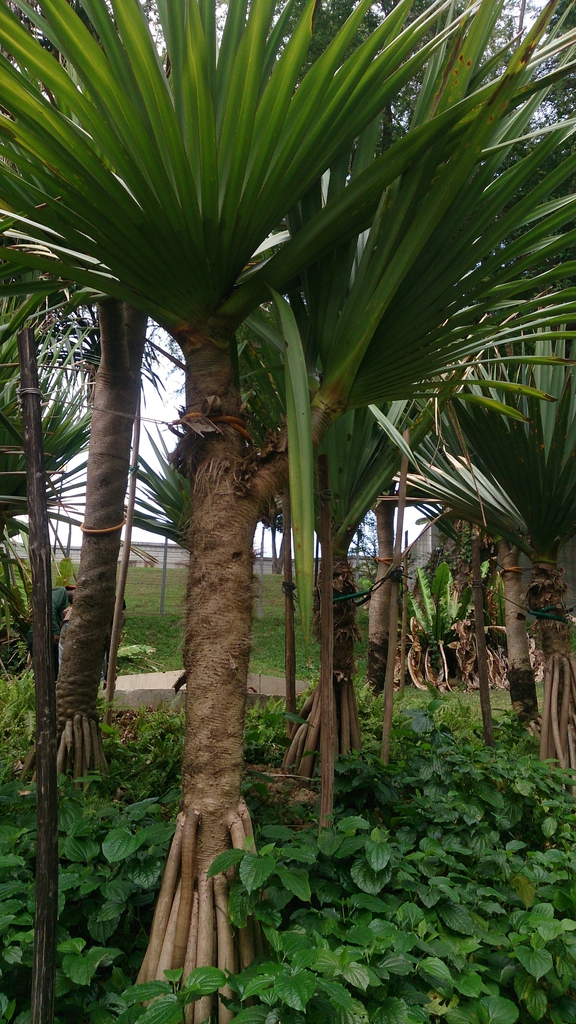
- Trunk supported by aerial roots that anchor the tree in its native sandy coastal soil.
-
-
Stem:
- Stem Is Aromatic:
- No
-
-
Landscape:
- Landscape Location:
- Container
- Houseplants
- Landscape Theme:
- Asian Garden
- Resistance To Challenges:
- Drought



