


Oxytropis
- Phonetic Spelling
- ok-SEE-troh-pus
- This plant has medium severity poison characteristics.
- See below
- Description
-
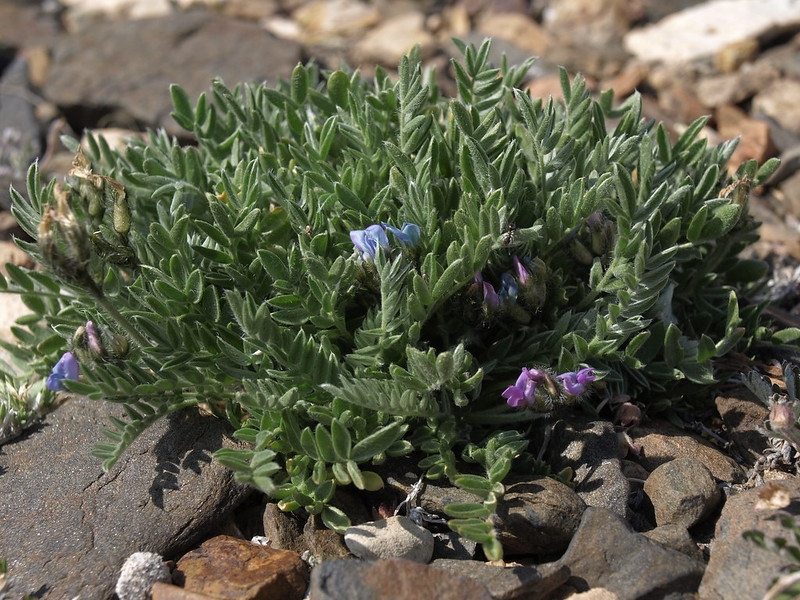
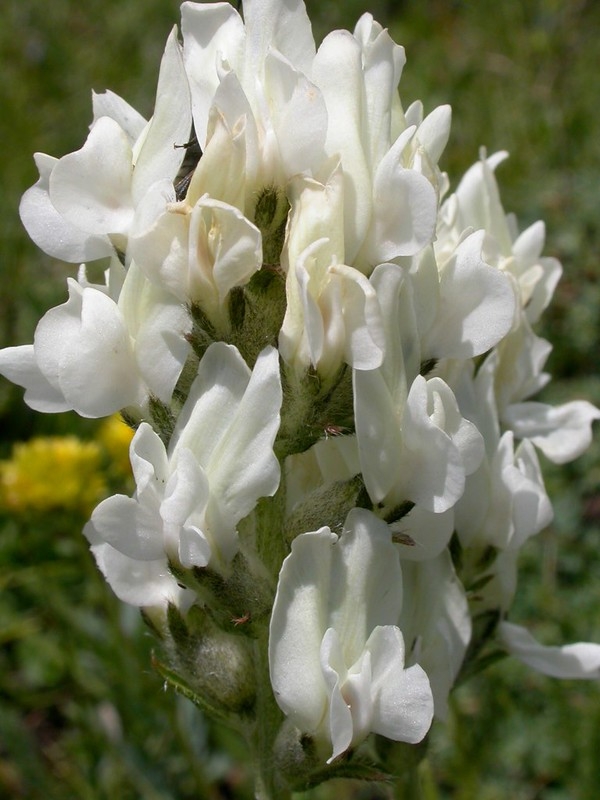
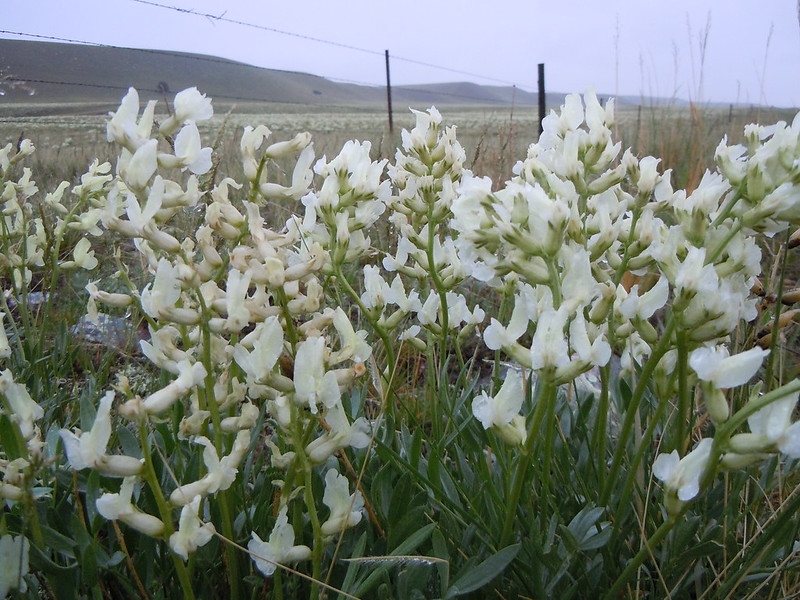
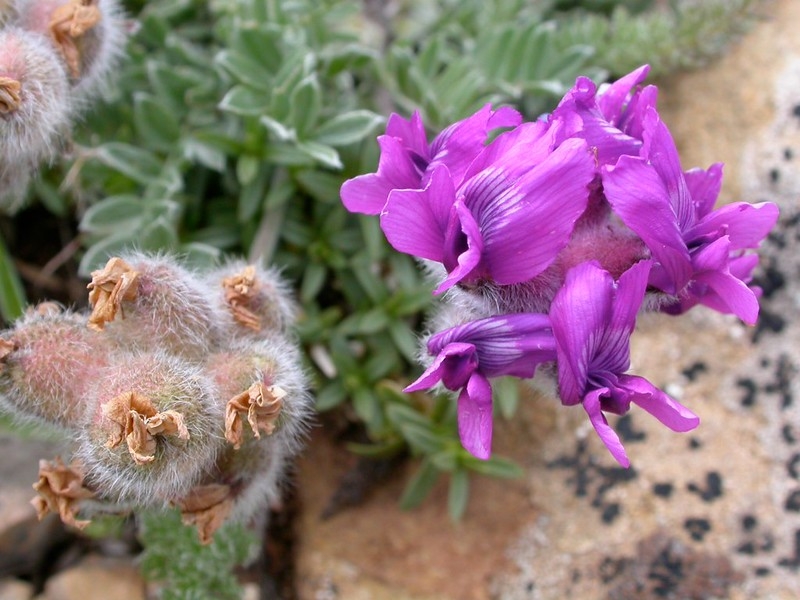
Locoweed is a genus of 611 species of flowering, herbaceous perennial plants in the bean family and native to most of the northern hemisphere. It is often found in dry prairies. The plants tend to be hairy and produce showy racemes of white, pink, yellow, or purple flowers on leafless stems. The leaves of most species are green and basal.
Locoweed does well in sandy or loamy soils that are well-drained and occasionally dry, and sited in full sun. These plants do not transplant well, but can be grown in a pot and then planted in a permanent spot when still small.
This plant is toxic to grazing animals, especially cattle and horses. Some species of Locoweed have a symbiotic relationship with Rhizobia, a soil bacteria. The bacteria forms nodules on the roots of Locoweed and fixes atmospheric nitrogen. Without the nitrogen, these plants may fail to flourish.
Diseases, Insect Pests, and Other Plant Problems:
No known diseases or insect pests.
- See this plant in the following landscape :
- Cultivars / Varieties:
-
- Tags:


- Cultivars / Varieties:
-
- Tags:
-
-
Attributes:
- Genus:
- Oxytropis
- Family:
- Fabaceae
- Life Cycle:
- Perennial
- Recommended Propagation Strategy:
- Seed
- Country Or Region Of Origin:
- Temperate Northern Hemisphere
- Distribution:
- Native from the Arctic to Texas.
-
-
Whole Plant Traits:
- Plant Type:
- Herb
- Herbaceous Perennial
- Perennial
- Weed
- Habit/Form:
- Clumping
- Mounding
-
-
Cultural Conditions:
- Light:
- Full sun (6 or more hours of direct sunlight a day)
- Soil Texture:
- Loam (Silt)
- Sand
- Soil pH:
- Acid (<6.0)
- Alkaline (>8.0)
- Neutral (6.0-8.0)
- Soil Drainage:
- Good Drainage
- Occasionally Dry
- USDA Plant Hardiness Zone:
- 2a, 2b, 3a, 3b, 4a, 4b, 5a, 5b, 6a, 6b, 7a, 7b, 8a, 8b
-
-
Fruit:
- Fruit Type:
- Legume
- Fruit Description:
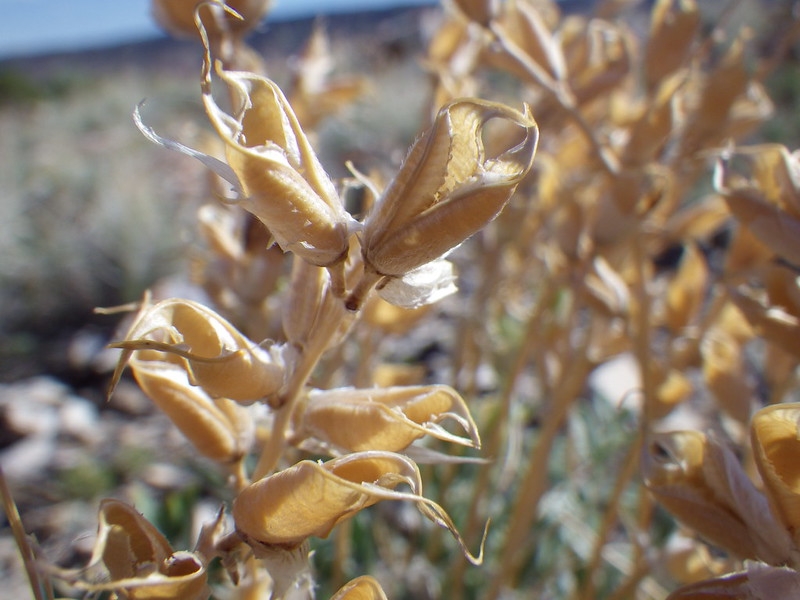
- The plant produces legume pods containing the seeds.
-
-
Flowers:
- Flower Color:
- Gold/Yellow
- Pink
- Purple/Lavender
- White
- Flower Inflorescence:
- Raceme
- Flower Shape:
- Cup
- Flower Description:
- Depending on species. the plant produces raceme inflorescences of pink, purple, white, or yellow pea-like flowers with sharply beaked keels. Some species produce spikes or umbels.
-
-
Leaves:
- Leaf Color:
- Green
- Leaf Type:
- Compound (Pinnately , Bipinnately, Palmately)
- Leaf Arrangement:
- Alternate
- Leaf Margin:
- Entire
- Hairs Present:
- Yes
- Leaf Description:
- The leaves are basal, generally entire and stipuled.
-
-
Stem:
- Stem Is Aromatic:
- No
- Stem Form:
- Straight
- Stem Surface:
- Hairy (pubescent)
- Stem Description:
- The stems are leafless.
-
-
Landscape:
- Problems:
- Problem for Horses
- Weedy